
The story of the Crystal Cathedral is often told through the lens of religious history or financial cautionary tales. However, from a strategic perspective, it represents one of the most fascinating case studies in brand architecture, personal branding, and the eventual decay of a corporate identity. Once a global beacon of “Possibility Thinking,” the Crystal Cathedral’s transition from a media powerhouse to a cautionary tale of bankruptcy and rebranding offers profound insights for modern brand strategists.
To understand what happened to the Crystal Cathedral, one must look beyond the glass walls and examine the branding mechanics that built it, the personality-driven marketing that sustained it, and the strategic drift that ultimately led to its dissolution.
1. The Architecture of a Brand: Visual Identity and Media Dominance
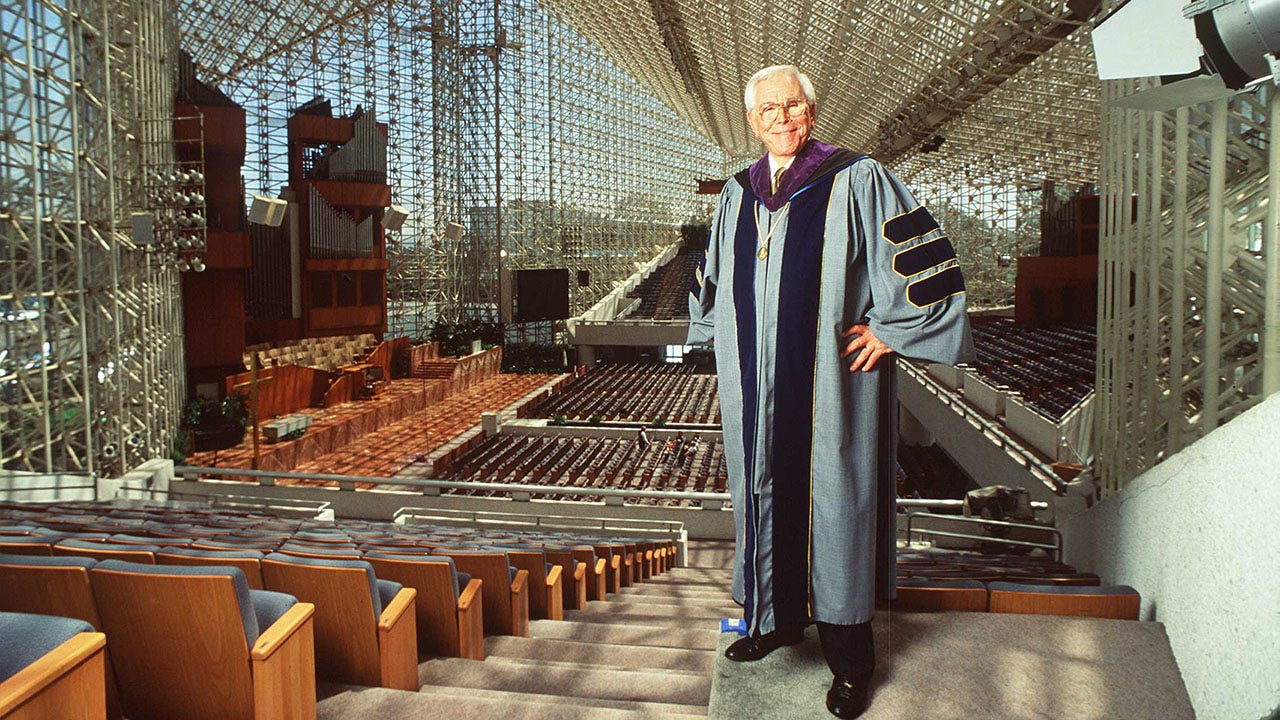
In the world of brand strategy, the physical headquarters of a company is often its most potent symbol. For the Garden Grove Community Church—the original name of the organization—the construction of the Crystal Cathedral was a masterstroke of visual branding.
Architecture as a Marketing Differentiator
Most religious brands of the mid-20th century relied on traditional, somber aesthetics. Robert H. Schuller, the brand’s visionary, chose a different path. By commissioning Philip Johnson to design a structure made of more than 10,000 glass panes, Schuller created a “transparent” brand. The building wasn’t just a place of worship; it was a landmark that communicated openness, modernity, and limitlessness. In branding terms, the architecture served as a “Unique Selling Proposition” (USP), making the ministry instantly recognizable in a crowded marketplace of ideas.
The “Hour of Power” as a Global Media Product
The Crystal Cathedral brand was not confined to Orange County, California. Through the Hour of Power television program, the brand achieved global scale. At its peak, it was the most-watched religious program in the world. This was a masterclass in content marketing before the term existed. Schuller understood that his “product”—a message of optimism—needed a high-production-value delivery system. The cathedral served as a massive television studio, providing a backdrop of grandeur that reinforced the brand’s message of prosperity and success.
2. The Founder’s Dilemma: The Risks of a Personality-Driven Brand
The success of the Crystal Cathedral was inextricably linked to the personal brand of Robert H. Schuller. While personality-driven brands can achieve rapid growth through charisma and relatability, they face significant “key-man risk.”
“Possibility Thinking” as a Brand Tagline
Every successful brand needs a core philosophy. Schuller’s “Possibility Thinking” was the intellectual property that drove the ministry. It was a positive, non-confrontational iteration of Christianity that appealed to a broad demographic, including the unchurched. By positioning the brand around a psychological benefit—hope and self-esteem—Schuller successfully differentiated his organization from more dogmatic competitors. However, the brand became so synonymous with Schuller’s voice that the institution struggled to exist independently of his persona.
The Failure of Succession Planning
In brand management, the transition from a founder to a successor is the most volatile period in an organization’s lifecycle. The Crystal Cathedral’s downfall was accelerated by a series of failed leadership handoffs. When Robert A. Schuller (the founder’s son) took the reins, the brand began to fracture. Internal conflicts regarding the creative direction of the television program and the theological “voice” of the brand led to his departure.
When a brand’s leadership is in flux, the consumer—or in this case, the congregant and donor—loses trust. The lack of a clear, unified successor meant the brand lost its “North Star,” leading to a diluted message that no longer resonated with its core audience.
3. Brand Overextension and the Erosion of Equity
One of the most common pitfalls in brand strategy is overextension—committing to expenditures and sub-brands that the core business cannot support. For the Crystal Cathedral, this manifested as a “brand ego” that outpaced its financial reality.
The High Cost of Brand Maintenance
The very thing that made the brand famous—the glass cathedral—became its greatest liability. The “brand artifact” required millions of dollars in annual maintenance. When economic downturns hit, the organization found itself “asset rich but cash poor.” In branding, if the cost of maintaining your image exceeds the value generated by your product, the business model is unsustainable. The ministry continued to spend on high-production pageants like the Glory of Christmas, which, while enhancing the brand’s prestige, contributed to a mounting debt that eventually exceeded $50 million.
Internal Conflict as Brand Toxin
A brand is only as strong as its internal culture. In the final decade of the Crystal Cathedral, public reports of family infighting and lawsuits between the Schullers and the board of directors became public knowledge. In the realm of corporate identity, internal misalignment is a “brand toxin.” For a brand built on the values of harmony and “possibility,” the public spectacle of litigation and debt was a catastrophic contradiction. The “brand promise” of a better life was negated by the reality of the organization’s internal chaos.
4. The Ultimate Rebrand: Transitioning to Christ Cathedral
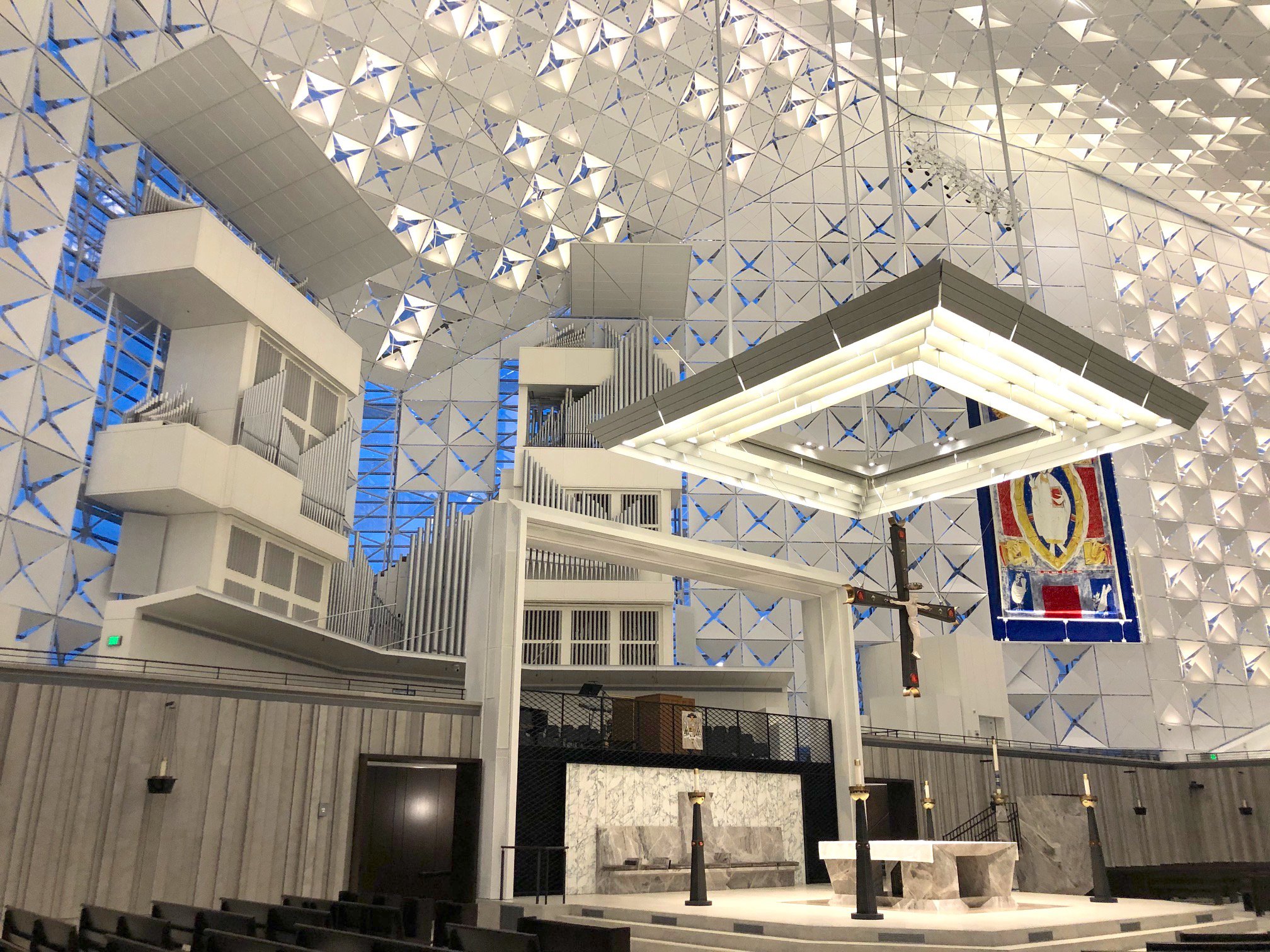
In 2011, following a Chapter 11 bankruptcy filing, the Crystal Cathedral brand reached its terminal point. However, the physical asset underwent one of the most significant “pivots” in architectural and religious history when it was purchased by the Roman Catholic Diocese of Orange.
Managing a Tactical Brand Pivot
The Catholic Church faced a unique branding challenge: how to occupy a world-famous space without inheriting the baggage of the previous, failed brand. Their strategy was one of “respectful replacement.” They renamed the campus “Christ Cathedral,” a subtle but significant shift that moved the focus from the material (Crystal) to the theological (Christ).
Architectural Preservation vs. Identity Shift
The Diocese invested over $70 million to renovate the interior, making it suitable for Catholic liturgy while preserving the iconic glass exterior. From a design strategy perspective, this was a “re-skinning” of the brand. They kept the high-equity visual asset (the building) but completely overhauled the “user experience” (the service) and the “corporate culture” (the theology). This allowed the new owners to capitalize on the landmark’s fame while distancing themselves from the Schuller family’s legacy.
5. Strategic Lessons for Modern Brand Management
The trajectory of the Crystal Cathedral offers several enduring lessons for brand strategists, marketing executives, and entrepreneurs.
The Danger of Visual-First Strategy
While the “Crystal” aspect of the cathedral was its most potent marketing tool, it eventually overshadowed the organizational mission. Brands must ensure that their “packaging”—no matter how iconic—does not become a financial anchor that drags down the core business. A brand must be able to survive even if its most famous physical asset is lost.
Building Beyond the Founder
The most successful brands—think Apple post-Jobs or Disney post-Walt—successfully institutionalize the founder’s values so the brand can thrive without them. The Crystal Cathedral failed this test. By failing to develop a brand identity that was larger than Robert H. Schuller, the organization ensured its own obsolescence upon his retirement.
Adaptability in the Digital Age
Finally, the Crystal Cathedral’s decline coincided with a shift in how media is consumed. While they dominated the era of broadcast television, they were slow to adapt to the fragmented, digital-first world of social media and on-demand content. A brand that relies on a single channel (in this case, legacy TV) is vulnerable to “platform risk.”

Conclusion: A Legacy Reframed
Today, the “Crystal Cathedral” no longer exists as a legal or religious entity, but its story remains a foundational text in the study of brand evolution. It serves as a reminder that even the most brilliant visual identities and the most successful marketing campaigns cannot save a brand from the fundamental errors of poor succession planning, financial overreach, and internal misalignment.
What happened to the Crystal Cathedral was not just a bankruptcy; it was the inevitable conclusion of a brand that grew too large for its own infrastructure. In its place stands the Christ Cathedral—a testament to the fact that while a brand may die, a well-built asset can always be rebranded for a new era. For those in the world of brand strategy, the lesson is clear: build with vision, but sustain with discipline. Without the latter, even the most magnificent glass house is destined to shatter.
aViewFromTheCave is a participant in the Amazon Services LLC Associates Program, an affiliate advertising program designed to provide a means for sites to earn advertising fees by advertising and linking to Amazon.com. Amazon, the Amazon logo, AmazonSupply, and the AmazonSupply logo are trademarks of Amazon.com, Inc. or its affiliates. As an Amazon Associate we earn affiliate commissions from qualifying purchases.