
When we discuss the history of technology, the conversation often centers on the Industrial Revolution or the Digital Age. However, the period between 618 and 906 CE—the era of the Tang Dynasty in China—represents perhaps the most significant concentration of technological advancement in human history. To understand what happened to China during these three centuries is to witness the birth of a “technological superpower” that laid the groundwork for the modern global tech stack.
From the world’s first mass-communication tools to revolutionary mechanical engineering, the Tang era was a period where institutional stability met high-level R&D. This article explores the disruptive technologies of 618–906 CE and how they reshaped the world’s technical landscape.
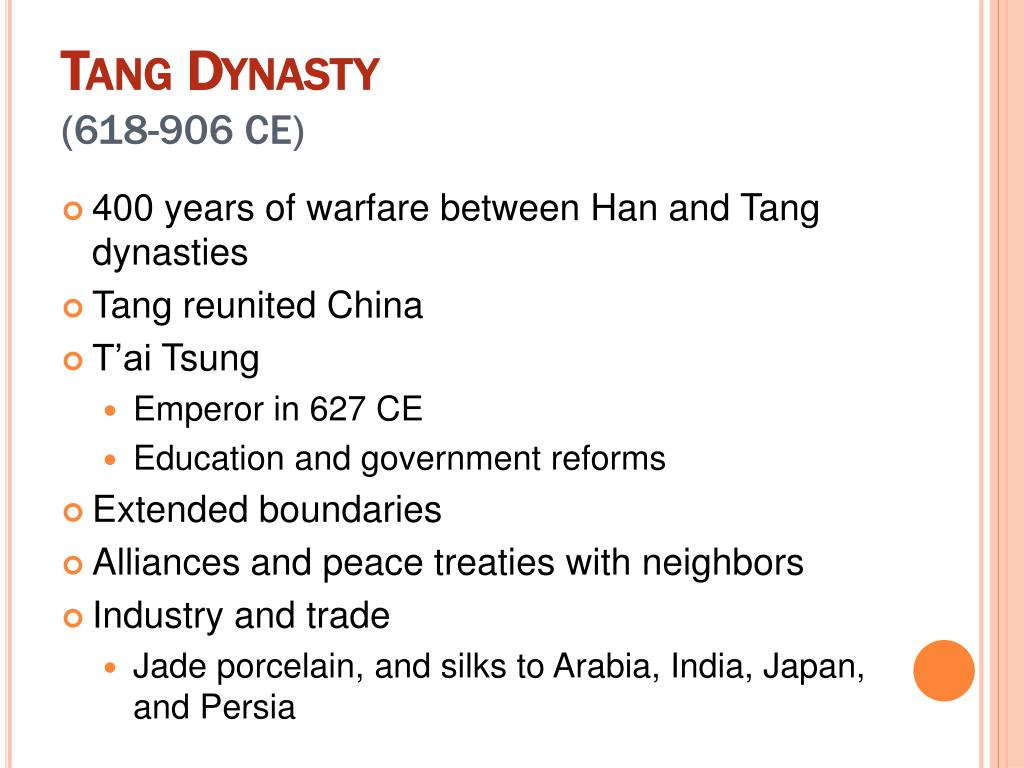
The Silicon Valley of the Silk Road: A Culture of R&D
The technological explosion of the Tang Dynasty did not happen in a vacuum. It was the result of a deliberate socio-political ecosystem that prioritized intellectual merit and the cross-pollination of ideas.
Institutional Support for Intellectual Capital
The Tang government formalized the Imperial Examination system, which, while focused on the classics, created a highly literate administrative class. This “knowledge economy” demanded a high volume of texts, maps, and bureaucratic tools. When a society creates a massive demand for data management, technology inevitably rises to meet it. This period saw the state investing heavily in astronomical observatories and medical research facilities, functioning much like modern government-funded research labs.
The Open-Source Exchange of the Silk Road
During 618–906 CE, Chang’an (modern-day Xi’an) was the most connected city on Earth. It served as a global hub where Persian engineers, Indian mathematicians, and Central Asian craftsmen exchanged techniques. This was the “open-source” era of antiquity. The “tech transfer” along the Silk Road introduced new methods of metallurgy, textile production, and medicine to China, while Chinese innovations in paper and chemistry began their westward journey.
Hardware Disruptions: The Birth of Printing and Automation
The most profound technological shift during this era was the transition from manual data entry (hand-copying) to automated reproduction. If the internet is the “Software Revolution,” the Tang Dynasty provided the “Hardware Revolution” that made global literacy possible.
Woodblock Printing: The World’s First Mass Media
Before the Tang Dynasty, information was a luxury good. Between the 7th and 9th centuries, Chinese engineers perfected woodblock printing. By carving characters into wooden blocks, applying ink, and pressing paper, they created a scalable method of information dissemination. The “Diamond Sutra,” printed in 868 CE, stands as the world’s oldest surviving dated printed book. This wasn’t just a religious milestone; it was a technological one. It proved that content could be replicated with precision and speed, effectively ending the monopoly of the elite on technical and philosophical knowledge.
Mechanical Engineering and the Escapement Mechanism
The Tang era saw a massive leap in mechanical complexity. The monk and mathematician Yi Xing developed the world’s first water-driven escapement mechanism in 725 CE. This was a critical component for mechanical clocks, allowing for the precise measurement of time by regulating the release of energy. This level of precision engineering—integrating gears, wheels, and shafts—was centuries ahead of similar developments in Europe. It represented a shift toward “automation,” where machines could perform complex tasks without constant human intervention.
Early Chemical Engineering: The Discovery of Gunpowder
Perhaps the most famous “accidental” tech discovery occurred in the search for longevity. Taoist alchemists, experimenting with sulfur, charcoal, and saltpeter, discovered the explosive properties of what we now know as gunpowder. While initially used for fireworks and signaling (early communication tech), it soon evolved into military applications. This represented a fundamental shift in chemical engineering—learning to manipulate the energetic properties of minerals for kinetic results.
Civil Tech: Infrastructure and Supply Chain Optimization
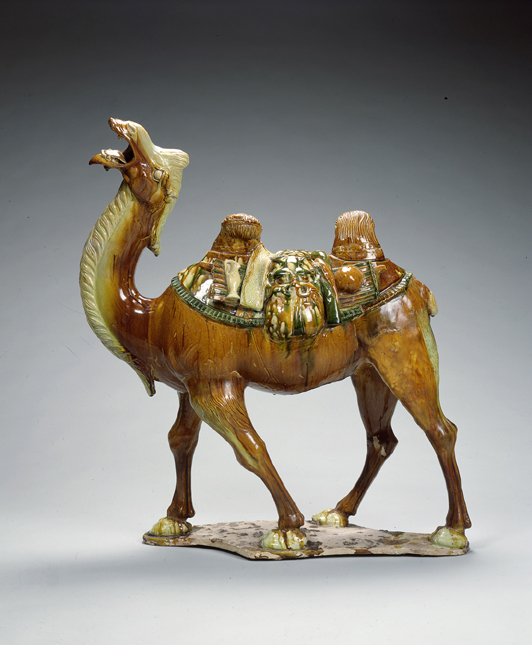
A superpower is defined by its ability to move people, goods, and water. Between 618 and 906 CE, China revolutionized civil engineering to manage its vast geography and growing population.
The Grand Canal and Hydraulic Engineering
While started in the previous dynasty, the Tang expanded and optimized the Grand Canal into a sophisticated logistical network. This wasn’t just a ditch; it was a managed hydraulic system involving locks, dams, and reservoirs. Tang engineers mastered “flash locks” to move heavy barges across varying elevations. This infrastructure functioned as the high-speed rail of the 7th century, enabling a seamless supply chain that connected the agricultural south with the political north.
Ship-Building and Maritime Navigation
The Tang period saw the development of “Junk” ships, which introduced several critical naval technologies. The use of stern-post rudders allowed for much better steering in rough seas, and the invention of watertight compartments prevented a single hull breach from sinking the entire vessel. These hardware upgrades allowed China to dominate maritime trade routes, reaching as far as the Persian Gulf and Africa, centuries before the “Age of Discovery.”
Agricultural Tech: The Curved-Shaft Plow
Innovation wasn’t limited to the cities. The introduction of the curved-shaft plow (Jiangdong Plow) revolutionized food production. This tool allowed for deeper tilling and better control, significantly increasing crop yields. In tech terms, this was a “process optimization” that allowed a smaller percentage of the population to feed a larger one, freeing up labor for the specialized crafts and administrative roles that fueled the dynasty’s growth.
Legacy Systems: Tang Tech in the Global Stack
The technologies developed during 618–906 CE were not ephemeral; they became “legacy systems” that formed the foundation of global civilization. The transition of these technologies to the West—often via the Islamic world—changed the course of history.
The Paper Trail
While paper was invented earlier, the Tang perfected its mass production and used it for everything from tea packaging to the first instances of paper currency (primitive “flying cash”). The capture of Chinese papermakers at the Battle of Talas in 751 CE led to the establishment of paper mills in Samarkand and Baghdad. This tech transfer was the catalyst for the Islamic Golden Age and, eventually, the European Renaissance.
Advanced Cartography and Mathematics
Tang scientists made significant strides in grid-based cartography. Using sophisticated geometry and surveying tools, they produced maps of incredible accuracy. This mathematical rigor extended to their calendar systems and astronomical calculations, which were used to predict eclipses and seasonal changes with a margin of error that would be impressive even by 19th-century standards.
Lessons for Modern Tech: Why the Tang Era Eventually Ended
The decline of the Tang Dynasty after 906 CE offers a cautionary tale for modern tech leaders and nations. Despite their massive technological lead, internal instability and “technical debt” eventually took their toll.
The Risk of Institutional Stagnation
As the Tang bureaucracy became bloated, the focus shifted from innovation to maintenance. When a system stops rewarding “disruption” and starts focusing on “preservation,” its technological edge begins to dull. The decentralized nature of late Tang politics meant that large-scale infrastructure projects—like the maintenance of the Grand Canal—began to fail.
The Importance of Resilience in Systems
The An Lushan Rebellion in the mid-8th century proved that even the most advanced technological society is vulnerable to systemic shocks. High-tech civilizations require stability to maintain their R&D pipelines. When the “server” (the central government) crashed, the “applications” (innovation and trade) suffered for decades.

Conclusion: The Tang Blueprint
What happened to China in 618–906 CE was the creation of a blueprint for a modern technological society. It proved that when a culture values empirical observation, invests in infrastructure, and encourages the global exchange of ideas, it can leapfrog centuries of development.
From the printed word to the mechanical clock, the Tang Dynasty wasn’t just a period of Chinese history; it was a foundational era for the global tech stack. Today’s software engineers, mechanical designers, and logistics experts are, in many ways, the spiritual successors to the Tang innovators who first dared to automate the world. We live in a world built on the woodblocks and gears of 7th-century China.
aViewFromTheCave is a participant in the Amazon Services LLC Associates Program, an affiliate advertising program designed to provide a means for sites to earn advertising fees by advertising and linking to Amazon.com. Amazon, the Amazon logo, AmazonSupply, and the AmazonSupply logo are trademarks of Amazon.com, Inc. or its affiliates. As an Amazon Associate we earn affiliate commissions from qualifying purchases.