
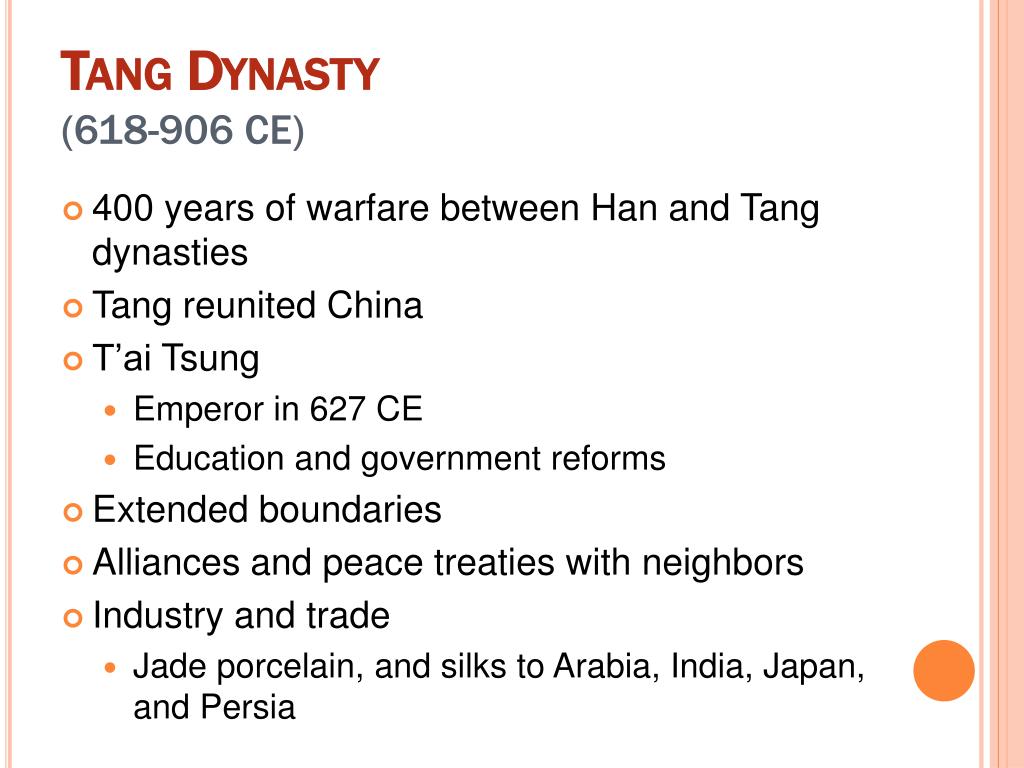
The period between 618 CE and 906 CE encapsulates the vast majority of the Tang Dynasty, an era often celebrated as one of China’s golden ages. Beyond its cultural efflorescence, military prowess, and administrative sophistication, the Tang Dynasty stands as a monumental case study in economic evolution, financial innovation, and the eventual, devastating consequences of fiscal mismanagement. To understand “what happened” during these nearly three centuries is to delve into the intricate financial mechanisms that fueled its rise, sustained its zenith, and ultimately precipitated its dramatic decline, setting the stage for centuries of fragmentation. This article will explore the economic and financial trajectory of the Tang, revealing how its monetary policies, trade networks, taxation systems, and fiscal crises profoundly shaped its destiny.
The Tang Dynasty’s Economic Ascent: Foundations of Prosperity
The early Tang Dynasty inherited a fragmented and war-torn China from the short-lived Sui Dynasty. Its initial rulers recognized that a stable and prosperous empire required a robust economic foundation, primarily derived from agriculture and a centralized fiscal system. The strategies they implemented laid the groundwork for an unprecedented era of wealth and stability.
Rebuilding the Imperial Treasury and Agrarian Reforms
Upon its establishment in 618 CE, the Tang government prioritized the revitalization of the agrarian economy, which was the bedrock of its financial power. The Equal-field System (Juntianzhi), inherited and refined from previous dynasties, was crucial. This system aimed to distribute land equally among peasant households, ensuring that each family had a plot for cultivation. In return, these households were liable for taxes in grain, textiles, and corvée labor – collectively known as the Zuyongdiao (Grain, Labor, Textile) system. This direct link between land ownership and tax obligations created a stable and predictable revenue stream for the central government, replenishing imperial coffers and funding state projects.
The system also fostered social stability by reducing land concentration among powerful aristocrats and ensuring that a broad base of the population contributed to the state. Strategically, the Tang also maintained vast state granaries, accumulating surplus grain as a buffer against famine and price fluctuations. This “ever-normal granary” system was a vital form of economic insurance, stabilizing food prices and preventing widespread social unrest that could undermine the fiscal base. These early policies created a financially secure state capable of funding its ambitious military campaigns and expansive bureaucracy.
Trade, Tribute, and the Silk Road Economy
While agriculture formed the base, trade provided the dynamism and luxury that characterized the Tang’s golden age. The empire’s internal markets flourished, with bustling urban centers like Chang’an becoming major commercial hubs. More significantly, the Tang Dynasty presided over a revival and expansion of the Silk Road, transforming it into a vibrant artery of international commerce. Goods such as silk, porcelain, tea, and lacquerware flowed westward, while exotic goods, precious metals, horses, spices, and cultural influences traveled eastward.
The Silk Road generated substantial wealth for the Tang state through customs duties, taxation on merchants, and the indirect economic benefits of increased commercial activity. Furthermore, the Tang maintained an elaborate tribute system with neighboring states and peoples. While ostensibly a political submission, the tribute system was also a significant economic exchange. Tributary states brought valuable goods and resources to the Tang court, which in turn bestowed lavish gifts, cementing its cultural and economic influence. These trade and tribute networks were not merely avenues for acquiring goods; they were integral to the Tang’s economic power, contributing significantly to the imperial treasury and fostering an environment of commercial prosperity that permeated urban life.
Innovations in Finance and Administration
The scale and complexity of the Tang Empire necessitated innovative financial and administrative solutions to manage its vast economy. As the empire grew, so did the need for more sophisticated methods of transaction and revenue collection.
The Birth of Paper Money and Credit Systems
Perhaps one of the most groundbreaking financial innovations of the Tang era was the development of early forms of paper credit, precursors to true paper money. The immense volume of copper coinage required for transactions across the vast empire became cumbersome, especially for long-distance trade. To address this, merchants and banks began issuing “Flying Money” (Feiqian). These were essentially commercial drafts or bills of exchange, allowing merchants to deposit cash in one location and withdraw it in another, avoiding the risks and bulk of transporting large quantities of coinage. While not government-issued fiat currency in the modern sense, Feiqian represented a crucial step towards non-metallic forms of exchange and demonstrated a sophisticated understanding of credit.
Alongside Feiqian, private credit institutions and pawnshops proliferated in urban centers, offering loans and financial services. These developments signaled a growing financial sophistication within the Tang economy, facilitating commerce and capital movement far beyond what a purely coin-based system could achieve. They laid the conceptual groundwork for the later, full-scale adoption of paper currency in subsequent dynasties.
Tax Reforms and State Monopolies
As the empire matured and economic conditions shifted, the initial Zuyongdiao tax system proved inadequate, especially as land ownership patterns changed and population mobility increased. This led to the pivotal Two-Tax System (Liangshuifa), introduced in 780 CE. This reform fundamentally altered China’s fiscal policy by shifting the tax base from individuals (and their labor) to land and wealth, regardless of status or registration. Taxes were assessed twice a year, in summer and autumn, based on the actual amount of land owned and the household’s assets. This more flexible system aimed to capture revenue from a broader segment of the population, including the growing merchant class, and adapt to changing demographics.

Furthermore, the Tang government strategically leveraged state monopolies, particularly over salt and iron. These essential commodities were produced under state control, and their sale generated substantial, consistent revenue for the imperial treasury. The salt monopoly, in particular, proved to be an invaluable and often indispensable source of income, especially during periods of fiscal strain. These reforms and state controls demonstrated the Tang’s evolving approach to public finance, attempting to optimize revenue generation in an increasingly complex and dynamic economy.
The Financial Strain: Seeds of Decline
Despite its early successes and financial innovations, the Tang Dynasty was not immune to economic challenges. A combination of internal strife, military overstretch, and structural fiscal weaknesses gradually eroded its financial stability, planting the seeds of its eventual decline.
The An Lushan Rebellion and its Economic Aftermath
The An Lushan Rebellion (755-763 CE) marked an irreversible turning point for the Tang Dynasty, devastating its economic foundations. This catastrophic civil war, which raged for eight years, laid waste to vast swathes of the northern heartland, depopulating major cities, destroying infrastructure, and crippling agricultural production. The economic cost was immense: the central government’s tax base shrunk dramatically due to lost population and ravaged farmlands. The shift of economic power began to move south, as the north struggled to recover.
Crucially, the rebellion necessitated the rise of powerful regional military governors (Jiedushi), who were granted significant autonomy to suppress the insurgency. In return for their services, these governors were often allowed to retain local tax revenues to fund their armies. This fundamental breach of central financial control proved to be a lasting wound. The Jiedushi effectively siphoned off revenue that previously flowed to Chang’an, severely weakening the imperial treasury and transforming provincial administrations into semi-independent financial entities. The central government’s ability to collect and redistribute wealth across the empire was irrevocably compromised.
Inflation, Currency Debasement, and Fiscal Imbalance
The post-rebellion era saw a desperate struggle by the central government to maintain its finances. Increased military spending was required to keep the remaining Jiedushi in check and defend borders, while revenues dwindled. This led to a series of fiscally unsound measures, including the issuance of iron coins and other forms of currency debasement. The introduction of less valuable coinage often led to inflation, eroding public trust in the currency and destabilizing markets. People began to hoard more stable copper coins or revert to bartering, further complicating the government’s ability to collect taxes and conduct transactions.
The fiscal imbalance became chronic. Imperial expenditures consistently outstripped revenues, leading to a vicious cycle of financial desperation. Attempts to raise taxes often met with resistance, fueling social discontent. Corruption flourished as officials sought to enrich themselves amidst the chaos, further siphoning off resources and undermining the legitimacy of the tax collection system. The once-robust financial machinery of the Tang was now sputtering, unable to meet the demands of a vast and increasingly fragmented empire.
The Erosion of Economic Power and Collapse
The final century of the Tang Dynasty was characterized by a gradual but relentless erosion of central economic power, culminating in total systemic collapse. The once-integrated financial system fractured, and the imperial state became increasingly unable to assert its authority or maintain order.
Decline of Central Authority and Regional Autonomy
The financial autonomy granted to the Jiedushi following the An Lushan Rebellion proved to be a fatal flaw. These regional governors, effectively warlords, not only retained local tax revenues but also established their own taxation systems, raised private armies, and often engaged in internecine warfare. The central government found itself financially starved, lacking the resources to pay its own officials, maintain its capital, or field an effective imperial army. Its ability to influence or control the provinces diminished to near zero.
This fragmentation of financial power meant that the central state could no longer project economic stability across the empire. Inter-provincial trade suffered as regional powers imposed their own levies and protection rackets. The grand infrastructure projects and public works that characterized the early Tang, crucial for economic connectivity, fell into disrepair due to lack of central funding. The empire’s economic unity was shattered, replaced by a patchwork of competing fiscal regimes.

Economic Disruption and Social Unrest
The protracted financial decline had devastating consequences for the general populace. As the central government weakened, so did its capacity to manage disasters, maintain law and order, or prevent exploitation. Famine, exacerbated by years of neglect of irrigation systems and chronic instability, became more frequent and severe. Peasant rebellions, such as the massive Huang Chao Rebellion (874-884 CE), erupted across the empire, driven by desperation, crushing taxes imposed by local strongmen, and a complete loss of faith in the imperial system.
These rebellions further destroyed infrastructure, disrupted trade routes, and decimated populations, completing the unraveling of the Tang economic system. The cycle was self-reinforcing: economic hardship fueled unrest, which in turn caused more economic destruction, further depleting any remaining state revenues. The once-thriving markets and sophisticated credit systems crumbled under widespread chaos and insecurity. Ultimately, the imperial court became a shadow of its former self, financially bankrupt and politically impotent, leading to its overthrow in 907 CE.
The “what happened” to China between 618 CE and 906 CE is a profound lesson in the financial underpinnings of imperial power. The Tang Dynasty began as an economic marvel, leveraging sophisticated agrarian policies, flourishing trade, and innovative financial instruments to achieve unparalleled prosperity. Yet, a combination of catastrophic civil war, the subsequent decentralization of financial authority, and chronic fiscal mismanagement ultimately led to a terminal decline. Its story is a vivid testament to how even the mightiest empires can crumble when their financial foundations are eroded, demonstrating the delicate balance required between economic growth, centralized fiscal control, and political stability. The financial lessons of the Tang’s rise and fall continue to resonate, highlighting the enduring importance of sound economic governance.
aViewFromTheCave is a participant in the Amazon Services LLC Associates Program, an affiliate advertising program designed to provide a means for sites to earn advertising fees by advertising and linking to Amazon.com. Amazon, the Amazon logo, AmazonSupply, and the AmazonSupply logo are trademarks of Amazon.com, Inc. or its affiliates. As an Amazon Associate we earn affiliate commissions from qualifying purchases.