
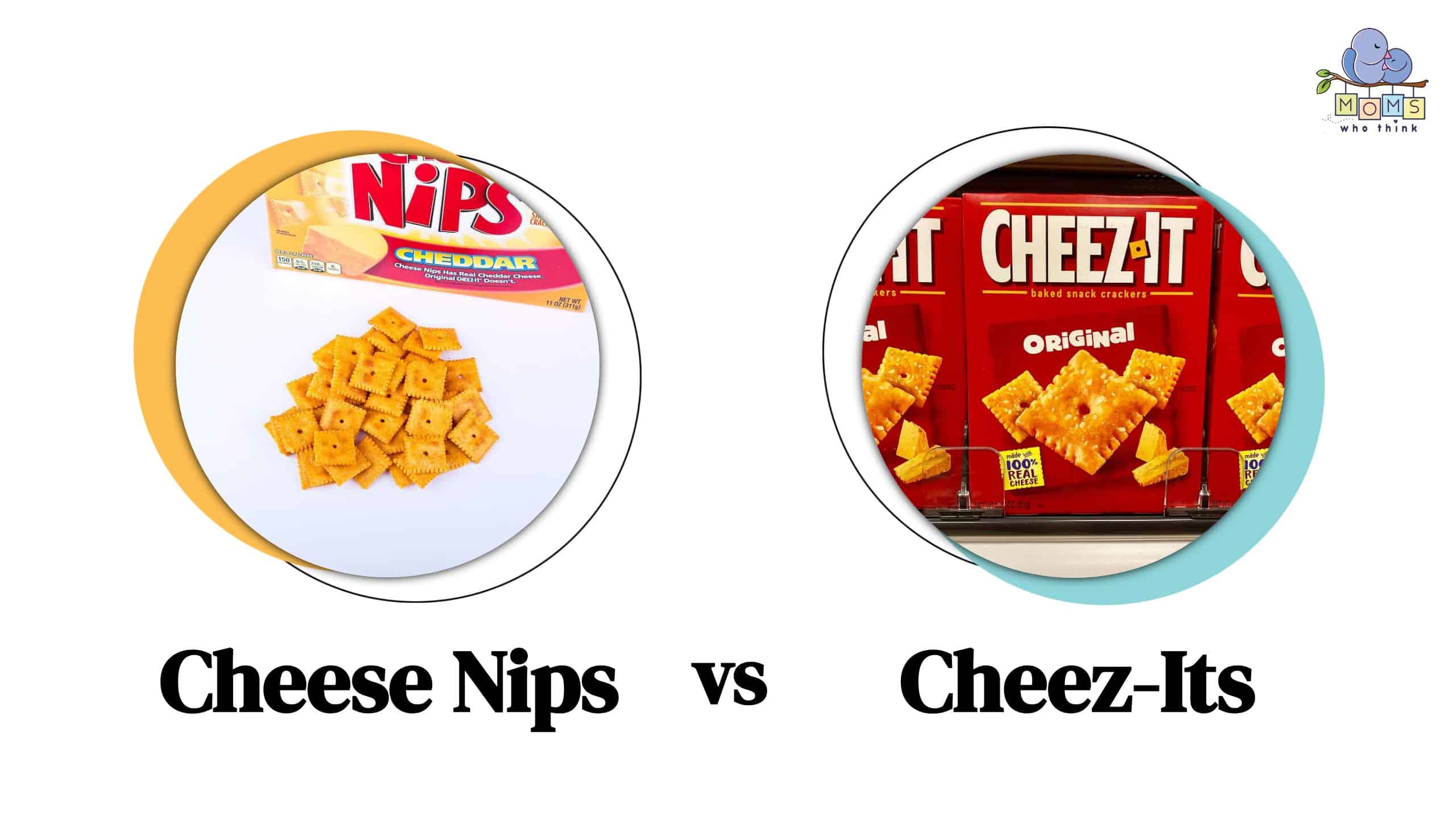
In the highly competitive landscape of the American snack food industry, few battles have been as enduring—or as lopsided—as the rivalry between Cheese Nips and Cheez-It. For decades, these two orange, square, salt-flecked crackers occupied adjacent shelf space in grocery aisles across the country. Yet, today, one has become a billion-dollar “megabrand” under the Kellanova (formerly Kellogg’s) umbrella, while the other has quietly vanished from the marketplace.
The disappearance of Cheese Nips is not merely a story of a product being discontinued; it is a profound case study in brand strategy, corporate portfolio rationalization, and the high cost of losing the “brand equity” war. When Mondelez International officially pulled Cheese Nips from the shelves, it signaled the end of a product that failed to carve out a distinct identity in the shadow of a dominant market leader.

The Battle for the Cracker Aisle: Cheese Nips vs. Cheez-It
To understand what happened to Cheese Nips, one must first understand the competitive dynamics of the baked snack category. Cheese Nips were produced by Nabisco, a subsidiary of Mondelez International. Their primary competitor, Cheez-It, was the flagship cracker of the Sunshine Biscuits company before being acquired by Keebler and eventually Kellogg’s.
The Origin of a Snack Food Rivalry
Cheese Nips were introduced in 1955, aiming to capture the growing market for convenient, savory snacks. For years, the two brands were locked in a “Coke vs. Pepsi” style struggle, though they never quite achieved the same level of cultural parity. While both products utilized real cheese and offered a similar crunch, their brand trajectories began to diverge as early as the 1990s.
Brand Positioning: Value vs. Heritage
From a strategic standpoint, Cheese Nips suffered from a positioning crisis. Cheez-It leaned heavily into its heritage and its “Big Cheese” flavor profile. They marketed aggressively, focusing on the quality of the aging process and the intensity of the flavor. In contrast, Cheese Nips often found themselves positioned as the “value” alternative. While they were a national brand, they frequently competed more directly with private-label (store brand) versions of the same cracker rather than elevating themselves to the premium status enjoyed by Cheez-It. This “middle-ground” position is a dangerous place for a brand to live; it lacks the prestige of the category leader and the price advantage of the generic alternative.
The Recall That Cracked the Foundation
While brand erosion happens over years, specific events can accelerate a product’s demise. For Cheese Nips, a significant turning point occurred in late 2019. Mondelez Global LLC issued a voluntary recall of a specific batch of Cheese Nips due to the potential presence of small pieces of yellow plastic. The plastic had originated from a food-grade repair tool that had broken during the manufacturing process.
The 2019 Plastic Contamination Incident
While recalls are not uncommon in the food industry, the timing and nature of this incident were particularly damaging. The recall affected 11-ounce boxes distributed nationwide. In an era of heightened consumer awareness and social media amplification, news of “plastic in crackers” spread quickly. For a brand that was already struggling to maintain its market share against a surging Cheez-It, this blow to consumer trust was catastrophic.
Crisis Management and Consumer Trust
The cost of a recall extends far beyond the logistics of removing product from shelves. It includes the loss of “slotting fees”—the expensive payments manufacturers make to retailers to secure shelf space. When a product is pulled, that space is immediately filled by a competitor. Once a brand loses its physical footprint in a retail environment, winning it back requires a massive reinvestment in marketing and trade promotions. Mondelez, looking at the diminishing returns of the Cheese Nips brand, faced a difficult decision: reinvest millions to rehabilitate a second-tier brand or cut their losses.
Strategic Portfolio Rationalization: Why Mondelez Let Go
The ultimate fate of Cheese Nips was decided in a corporate boardroom, not just on the grocery shelf. Mondelez International is one of the world’s largest snack companies, owning iconic brands like Oreo, Ritz, and Chips Ahoy! In recent years, the company has shifted its strategy toward “portfolio rationalization.”

The Rise of “Big Bets” in Corporate Strategy
Modern CPG (Consumer Packaged Goods) strategy favors “Power Brands”—products that have the potential for global scale, high margins, and clear differentiation. Brands like Oreo are considered “Power Brands” because they can be expanded into endless variations (flavors, sizes, co-branding). Cheese Nips, conversely, was a “tactical brand.” It existed primarily to capture a slice of the cheese cracker market and to deny that space to competitors.
As Mondelez refined its focus, the company began prioritizing health-conscious snacks and its most profitable “Global Power Brands.” In this lean strategic framework, there was little room for a product that was consistently being outperformed by a competitor.
Rationalizing the SKU: The Death of the Number Two
In the world of retail, the “number two” brand in a niche category is often the most vulnerable. Retailers have limited shelf space and prefer to stock the category leader (Cheez-It) alongside their own private-label version (which offers higher margins for the retailer). This leaves the second-place national brand squeezed in the middle. Mondelez recognized that the marketing dollars required to keep Cheese Nips relevant were better spent on growing Ritz or expanding the Oreo line. Consequently, they began a phased discontinuation, quietly removing the product from various markets until it was effectively gone from the North American portfolio by 2020.
Branding Lessons from the Disappearance of Cheese Nips
The story of Cheese Nips serves as a cautionary tale for brand managers and corporate strategists. It highlights several critical principles of brand longevity and market defense.
The Importance of Distinctive Assets
One of the primary reasons Cheese Nips failed to survive was a lack of “distinctive brand assets.” According to the Ehrenberg-Bass Institute, brands survive by being easy to remember and easy to buy. While Cheez-It had a very specific box design and a clear “Real Cheese” narrative, Cheese Nips struggled to establish a visual or emotional hook that separated them from the pack. They were “the other square cracker.” Without a unique selling proposition (USP), a brand becomes a commodity, and commodities are easily replaced.
The Cost of Under-Marketing
Brand equity is like a battery; it must be constantly recharged through marketing and innovation. Over the last decade of its life, Cheese Nips saw significantly less advertising spend compared to Cheez-It. Kellogg’s invested in sports sponsorships, viral social media campaigns, and innovative flavor expansions (like Cheez-It Snap’d). Mondelez, perhaps seeing the writing on the wall, chose not to match this investment for Cheese Nips. This lack of “Share of Voice” led directly to a loss of “Share of Mind,” and eventually, “Share of Market.”
Failure to Innovate
Innovation is the lifeblood of the snack category. While Cheez-It was experimenting with different textures, “Extra Toasty” variants, and high-protein options, Cheese Nips remained largely stagnant. They did attempt licensed tie-ins (such as crackers shaped like popular cartoon characters), but these were short-term tactical plays rather than long-term brand building. When a brand stops evolving, it begins to die.
The Future of the Snack Category: Lessons for Modern Brands
The exit of Cheese Nips from the marketplace has left a vacuum that has been quickly filled—not by another traditional brand, but by a combination of Cheez-It’s expansion and the rise of premium, artisanal cheese snacks.
The Shift Toward Premiumization
Today’s consumer is increasingly looking for “permissible indulgence.” This has given rise to brands like Whisps (made of 100% baked cheese) or Simple Mills (almond flour-based crackers). These brands offer a clear value proposition: better ingredients or specific dietary benefits. Cheese Nips, a highly processed flour-based snack, lacked the “health-halo” or the “gourmet” appeal required to compete in the modern snack landscape.
Corporate Focus and Agility
For a conglomerate like Mondelez, the discontinuation of Cheese Nips was a rational move to increase organizational agility. By stripping away underperforming SKUs, the company can react faster to trends in the “Well-being” snack segment. However, for the loyal consumer base that preferred the specific saltiness and texture of Cheese Nips, the loss is a reminder that in the world of corporate branding, nostalgia rarely trumps the bottom line.
In conclusion, the disappearance of Cheese Nips was the result of a “perfect storm” of branding failures: a lack of clear differentiation, a devastating product recall, and a corporate shift toward high-growth “Power Brands.” It serves as a stark reminder that even a household name can vanish if it fails to maintain its relevance in an increasingly crowded and ruthless marketplace. As the snack aisle continues to evolve, the brands that survive will be those that invest not just in their product, but in a distinct, irreplaceable identity.
aViewFromTheCave is a participant in the Amazon Services LLC Associates Program, an affiliate advertising program designed to provide a means for sites to earn advertising fees by advertising and linking to Amazon.com. Amazon, the Amazon logo, AmazonSupply, and the AmazonSupply logo are trademarks of Amazon.com, Inc. or its affiliates. As an Amazon Associate we earn affiliate commissions from qualifying purchases.