
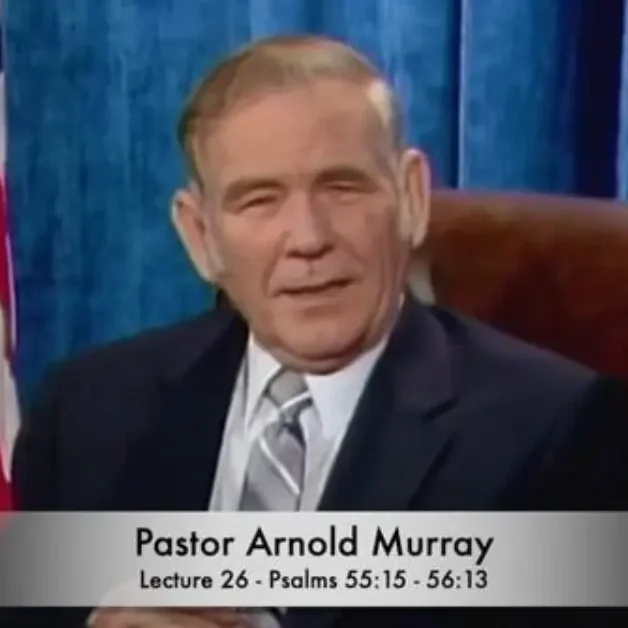
The intersection of personality and institutional identity is one of the most complex challenges in brand strategy. When a brand is built entirely around the charisma, voice, and specific intellectual property of a single individual, its longevity is perpetually at risk. This phenomenon, often referred to as “Key Person Risk,” is nowhere more evident than in the case of Arnold Murray and his media empire, Shepherd’s Chapel.
Arnold Murray, who passed away in 2014, was more than a religious figure; he was the architect of a massive personal brand that utilized emerging technology and niche marketing long before these terms became corporate buzzwords. To understand what happened to Arnold Murray is to understand the lifecycle of a personal brand—from its rapid scaling via satellite distribution to its current state as a legacy brand managed by his successors.

The Architecture of a Personal Brand: The Arnold Murray Model
In the world of brand strategy, Arnold Murray represents a masterclass in unique positioning. While his contemporaries in the 1980s and 90s were building “megachurches” with high-production values and musical performances, Murray chose a minimalist, academic-style approach. This was not an accident; it was a deliberate branding choice that targeted a specific demographic: the “truth-seeker.”
The Power of Unique Positioning
Every successful brand needs a Unique Selling Proposition (USP). Murray’s USP was his “Chapter and Verse, Line by Line” teaching method. By positioning himself as a scholar rather than a traditional orator, he created a brand identity centered on “unfiltered truth” and “biblical literacy.” In marketing terms, this is known as “authority positioning.” By distancing himself from mainstream religious institutions, he built a “challenger brand” that appealed to individuals who felt alienated by traditional corporate religious structures.
Building a Community through Direct Distribution
Long before influencers used YouTube to bypass traditional media, Arnold Murray used satellite technology. He understood that the platform is as important as the message. By securing 24-hour satellite feeds, he ensured that his personal brand was available globally, 365 days a year. This created a “constant presence” brand strategy, ensuring that his audience could engage with his content at any time. This ubiquity built a level of brand loyalty that few modern creators can match, turning viewers into a cohesive, global community.
Navigating the Leadership Vacuum: Brand Succession Strategies
The ultimate test of any personal brand is the “Succession Phase.” When the founder—the face and voice of the company—is no longer present, the brand must decide whether to pivot, rebrand, or double down on its original identity. Following Arnold Murray’s passing in February 2014, the Shepherd’s Chapel faced a critical strategic crossroads.
The Challenge of Continuity in Personal Brands
In corporate identity, a transition from a founder like Steve Jobs to Tim Cook requires a shift from “visionary-led” to “process-led” branding. For Arnold Murray’s organization, the transition was even more delicate because the brand was his persona. The strategy employed was one of “Legacy Preservation.” Instead of attempting to replace Arnold with a new, equally charismatic figure who might alienate the existing base, the organization focused on maintaining the “core product”—Arnold’s recorded teachings—while slowly introducing new leadership.
Dennis Murray and the Preservation of Voice
Succession was kept “in-house,” with his son Dennis Murray taking over the primary administrative and ministerial duties. From a branding perspective, this was a move to maintain “brand heritage.” By keeping the leadership within the family, the organization signaled stability to its investors (donors) and consumers (followers). Dennis Murray did not attempt to replicate his father’s specific style; instead, he acted as a bridge, ensuring the brand’s values remained intact while the “product line” transitioned from live broadcasts to archival-led programming.
Digital Transformation and Brand Longevity

In the decade since Arnold Murray’s death, the brand has had to grapple with the shift from analog satellite dominance to the digital-first era. A brand that does not evolve its delivery system eventually becomes a relic. What happened to Arnold Murray’s empire is a lesson in digital asset management.
Transitioning from Satellite to Streaming
The Shepherd’s Chapel was an early adopter of satellite technology, but the modern consumer demands on-demand access. The brand’s strategy shifted toward digitizing thousands of hours of video and audio content. By moving the “Arnold Murray” brand into the digital space—through specialized streaming apps and YouTube—the organization ensured that his personal brand remained “discoverable.” In modern marketing, this is the “long-tail” strategy: utilizing a massive library of content to capture niche audiences over an extended period.
Curating an Archive as a Modern Brand Asset
For a legacy brand, the archive is the most valuable asset. The Shepherd’s Chapel has effectively transformed Arnold Murray from a “live personality” into a “content library.” This is similar to how brands like the Walt Disney Company or the estates of iconic musicians manage their IP. By carefully curating which teachings are broadcast and how they are packaged, the brand maintains a high perceived value. They aren’t just selling information; they are selling a specific “brand experience” that is consistently delivered through the archival voice of the founder.
Brand Identity and Controversy Management
No brand exists without controversy, and Arnold Murray’s personal brand was no exception. His teachings often fell outside the mainstream, leading to significant criticism. However, from a brand strategy perspective, these controversies actually served to strengthen the “Brand Moat.”
Maintaining Core Values Amidst Criticism
A brand that tries to please everyone often ends up standing for nothing. Murray’s brand leaned into its “outsider” status. When faced with theological criticism, the brand did not pivot or apologize to align with mainstream expectations. Instead, it doubled down on its unique interpretations. This created a “Fortress Brand” effect, where the core audience felt a sense of “us versus them.” In niche marketing, this type of polarization can actually increase customer lifetime value (CLV) because the remaining audience is fiercely loyal and highly engaged.
The Loyalty Factor: Why Niche Brands Outlast General Ones
The reason the Arnold Murray brand remains relevant today, despite the founder being gone for a decade, is the depth of the niche. In the “Attention Economy,” a small, dedicated audience is often more sustainable than a large, fickle one. By focusing on a very specific type of biblical interpretation, the brand created a “moat” that competitors find difficult to cross. The “What happened to…” question is answered by the fact that the brand didn’t need to stay in the headlines; it only needed to stay in the homes of its dedicated followers.
Conclusion: The Perpetual Brand
The story of Arnold Murray is a significant case study in personal branding and corporate continuity. He successfully transitioned from a local figure in Gravette, Arkansas, to a global media personality, and finally, into a posthumous legacy brand.
What happened to Arnold Murray? Physically, he passed away, but strategically, his brand was successfully “institutionalized.” Through the careful management of his son and a dedicated administrative team, the “Arnold Murray” identity has been detached from his physical presence and attached to a vast, digital content ecosystem.
For modern entrepreneurs and brand strategists, the lesson is clear:
- Differentiate early: Find a niche and own it.
- Control the distribution: Own the platforms where your audience lives.
- Plan for succession: Ensure that your intellectual property can survive without your daily involvement.
Today, the Arnold Murray brand continues to thrive, not through new innovations, but through the disciplined execution of a legacy strategy that prioritizes brand heritage, digital accessibility, and a steadfast commitment to a unique market position.
aViewFromTheCave is a participant in the Amazon Services LLC Associates Program, an affiliate advertising program designed to provide a means for sites to earn advertising fees by advertising and linking to Amazon.com. Amazon, the Amazon logo, AmazonSupply, and the AmazonSupply logo are trademarks of Amazon.com, Inc. or its affiliates. As an Amazon Associate we earn affiliate commissions from qualifying purchases.