
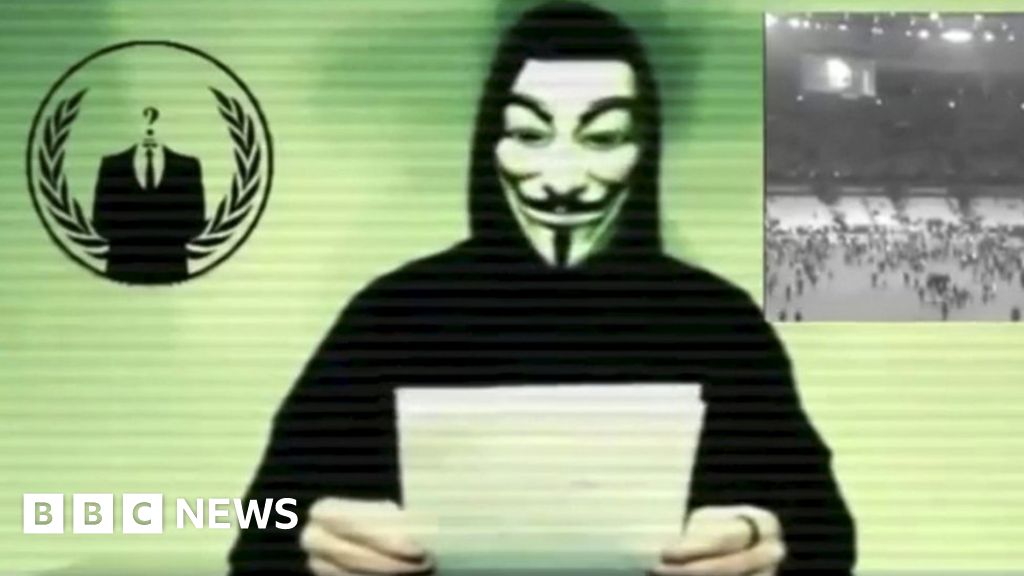
In the early 2010s, no name carried more weight in the digital security landscape than “Anonymous.” Adopting the iconic Guy Fawkes mask as their visual shorthand, this leaderless collective of hackers and activists redefined the intersection of technology and political dissent. They were the architects of massive Distributed Denial of Service (DDoS) attacks, the whistleblowers of corporate negligence, and the face of a new era of digital protest. However, in recent years, the loud, high-profile operations that once dominated global headlines seem to have dissipated. To understand what happened to Anonymous, one must look past the headlines and examine the evolution of cybersecurity, the professionalization of hacking, and the technological shifts that changed the nature of online anonymity forever.
The Technological Architecture of a Decentralized Movement
To understand the trajectory of Anonymous, it is essential to analyze the technological tools that enabled their rise. Unlike traditional organizations, Anonymous operated without a central server, a formal headquarters, or a verified roster of members. This decentralization was their primary defense, but it was also built on specific technical infrastructures that eventually became their Achilles’ heel.
The 4chan Era and the Birth of Project Chanology
The collective originated on the imageboard 4chan, specifically within the /b/ board. In its infancy, the technology was primitive; users coordinated “raids” on websites through sheer volume. The turning point into serious digital security threats came with “Project Chanology” in 2008, targeting the Church of Scientology. This was the first time the collective used its technical prowess for a sustained campaign, transitioning from mere “trolling” to organized digital activism.
How DDoS Attacks Became a Digital Protest Tool
The primary weapon of Anonymous was the Distributed Denial of Service (DDoS) attack. By using a tool called the Low Orbit Ion Cannon (LOIC), the collective allowed thousands of non-technical users to participate in attacks. The LOIC would flood a target server with TCP or UDP packets, overwhelming its bandwidth and forcing the site offline. While technically simple compared to modern zero-day exploits, the sheer scale of participation—often peaking during “Operation Payback” against PayPal, Visa, and MasterCard—demonstrated how collective digital action could disrupt global financial giants.
The Technological Crackdown and Structural Shifts
The decline of the “classic” Anonymous era was not a result of a lack of interest, but rather a direct consequence of the rapid advancement in law enforcement technology and digital forensics. As the collective’s targets became more prestigious, the resources allocated to stopping them grew exponentially.
Law Enforcement’s Evolution: FBI, Interpol, and Operation Lockdown
By 2011, federal agencies had caught up to the decentralized nature of hacktivism. The FBI and international agencies began utilizing advanced metadata analysis and social engineering to penetrate the collective’s communication channels. The “technological” victory for law enforcement came when they successfully flipped high-ranking members, such as Hector “Sabu” Monsegur, a core developer for the splinter group LulzSec. By using Sabu’s own credentials and monitoring his encrypted communications, the FBI was able to map the network’s topography, leading to dozens of arrests worldwide. This created a “trust vacuum” within the tech community that Anonymous has never fully recovered from.
The Vulnerability of IRC and Traditional Communication Channels
In the early days, Anonymous relied heavily on Internet Relay Chat (IRC) networks to coordinate. While IRC is a resilient protocol, it is inherently transparent if the server is compromised or monitored. As digital security matured, the lack of end-to-end encryption on mainstream IRC channels meant that packet sniffing and IP logging became simple tasks for state-sponsored agencies. The collective’s failure to migrate early enough to more secure, hardened communication protocols made their organizational structure visible to those with the technical means to watch.

Fragmentation: From Hacktivism to State-Sponsored Cyber Warfare
As the original “hive mind” fractured under legal pressure, the landscape of cyber security underwent a massive shift. The tactics pioneered by Anonymous—leaking documents, defacing websites, and disrupting services—were adopted by more sophisticated, often state-aligned actors.
The LulzSec Divergence and the Risk of Centralized Leadership
A significant portion of the technical talent within Anonymous branched off into smaller, more aggressive groups like LulzSec and AntiSec. These groups moved away from “protest” and toward pure data exfiltration and the exploitation of SQL injections to dump massive databases. However, because these groups were smaller and more centralized, they were easier to track. The era of LulzSec proved that while a small group of talented hackers could cause massive damage to companies like Sony or Stratfor, they lacked the “anonymity in numbers” that protected the broader collective.
How Modern Cyber Tactics Have Moved Beyond the Mask
The “spirit” of Anonymous hasn’t disappeared; it has evolved into a different technological niche. Today, the most impactful digital disruptions are rarely carried out by anonymous volunteers. Instead, they are the work of Advanced Persistent Threats (APTs)—groups often funded by nation-states that use the same “plausible deniability” tactics Anonymous used, but with far greater technical sophistication. The line between a “hacktivist” and a “cyber soldier” has blurred, making it harder for a genuine grassroots movement to stand out in a sea of state-sponsored noise.
The State of Digital Security in the Post-Anonymous Era
While the name “Anonymous” still appears during major global events—such as the 2022 invasion of Ukraine or various social justice movements—the technical reality of these operations has changed. The world of digital security is far more robust than it was in 2010.
The Proliferation of Encrypted Messaging and Dark Web Infrastructure
Modern activists who identify with the Anonymous ethos have largely abandoned the public-facing tools of the past. Coordination now happens on platforms like Signal or Telegram, or within specialized forums on the Tor network. These technologies provide layers of encryption and obfuscation that LOIC and IRC never could. However, this move to the “Dark Web” has also made the movement less visible to the general public, contributing to the perception that Anonymous has “disappeared.”
Lessons for Corporate and Governmental Digital Defense
The legacy of Anonymous is perhaps most visible in the current state of corporate digital security. The “Anonymous era” forced companies to take DDoS protection seriously, leading to the rise of services like Cloudflare and Akamai, which provide massive traffic scrubbing capabilities. It also highlighted the dangers of poor SQL database management and the importance of “Least Privilege” access controls. Today’s CISO (Chief Information Security Officer) views the threats once posed by Anonymous as basic “hygiene” issues, focusing instead on ransomware and supply chain attacks, which are the modern evolutions of the disruption Anonymous pioneered.

Conclusion: A Legacy Integrated into Modern Tech
What happened to Anonymous? They didn’t so much disappear as they were absorbed into the fabric of the modern internet. The collective served as a “proof of concept” for the power of decentralized digital action. However, the technology that allowed them to thrive—open boards, simple DDoS tools, and unmonitored IRCs—has been superseded by more sophisticated security measures and more invasive surveillance.
Today, the “Anonymous” label is more of a brand or a digital stencil than a cohesive technical group. When the mask appears now, it is often used by disparate groups across the globe to signal an alignment with the values of transparency and anti-censorship. From a technical perspective, the era of the “casual hacktivist” is largely over, replaced by a highly professionalized environment where digital security is a constant arms race. While the specific collective known as Anonymous may no longer dominate the headlines with the same frequency, the technological lessons learned during their peak continue to shape how we protect, attack, and communicate in the digital age. The mask remains, but the code behind it has changed forever.
aViewFromTheCave is a participant in the Amazon Services LLC Associates Program, an affiliate advertising program designed to provide a means for sites to earn advertising fees by advertising and linking to Amazon.com. Amazon, the Amazon logo, AmazonSupply, and the AmazonSupply logo are trademarks of Amazon.com, Inc. or its affiliates. As an Amazon Associate we earn affiliate commissions from qualifying purchases.