
In the realm of brand strategy, few narratives offer a more poignant case study in the perils of inauthentic identity than the life of Jay Gatsby. While F. Scott Fitzgerald’s The Great Gatsby is often read as a critique of the American Dream, Chapter 8 serves as the definitive post-mortem of a personal brand that failed to sustain its own mythos. In this chapter, the glossy veneer of the “Gatsby” persona is stripped away, revealing the fragile infrastructure of James Gatz beneath. For modern marketers, personal branders, and corporate strategists, Chapter 8 is not just a tragic finale; it is a masterclass in the consequences of narrative dissonance and the failure of crisis management.
The Deconstruction of the “Jay Gatsby” Identity
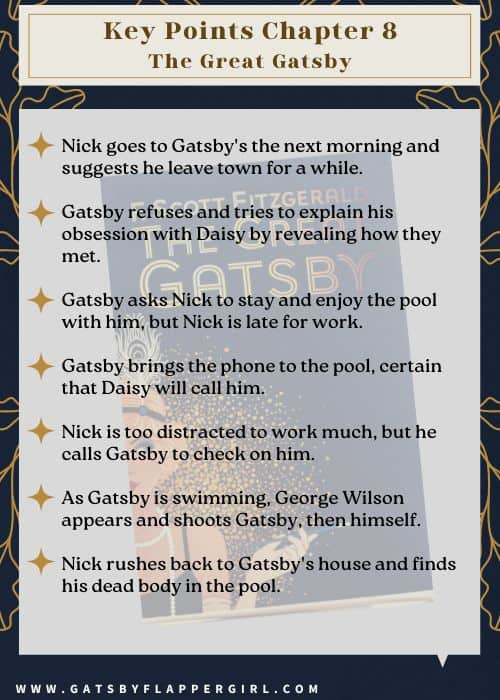
Chapter 8 begins in the quiet, dusty aftermath of the previous night’s crisis. It is here that the brand “Jay Gatsby” officially enters its liquidation phase. For years, Gatsby curated a high-end, mysterious, and opulent corporate identity. However, as the chapter unfolds, the “About Us” section of his life is rewritten with the uncomfortable truth of his origins.
From James Gatz to Jay Gatsby: The Perils of Inauthentic Origin Stories
A foundational element of any successful brand is its origin story. It provides the “Why” behind the “What.” Jay Gatsby’s brand was built on a fabricated history—Oxford education, inherited wealth, and heroic wartime exploits. In Chapter 8, Gatsby finally confesses the truth to Nick Carraway: he was a penniless young man who fell in love with a girl of high social standing.
This revelation highlights a critical branding error: the “Gatsby” brand was built on a value proposition that it could not fulfill. When a brand’s projected image deviates too far from its operational reality, the resulting “brand gap” creates a vulnerability. Gatsby’s failure was not his ambition, but his insistence on an origin story that required constant, exhausting maintenance. In modern branding, transparency is a currency; Gatsby, conversely, traded in shadows, making his brand’s eventual collapse inevitable.
The Narrative Pivot: When the Brand Truth Emerges
In the early hours following the accident, Gatsby recounts his time in Louisville with Daisy. He admits that he took her “under false pretenses,” essentially marketing himself as a man of her own social class. This was his first major “pivot,” but it was a pivot based on deception rather than evolution.
In Chapter 8, we see the exhaustion of this pivot. The narrative he worked so hard to maintain—the parties, the shirts, the library of unread books—no longer serves its purpose. The “market” (Daisy) has moved on, and the “investor” (Gatsby) is left with a brand identity that no longer fits the current landscape. This serves as a reminder that a brand must be rooted in an authentic core; otherwise, the first major market shift will render the entire identity obsolete.
Crisis Management and the Failure of Shielding the Brand
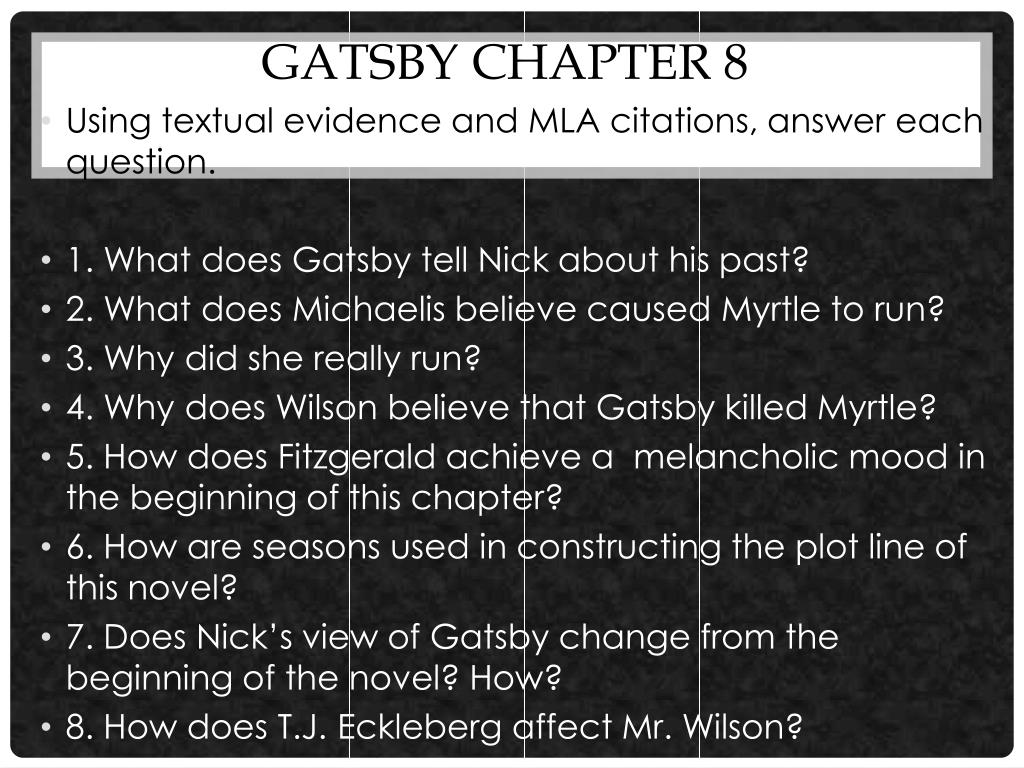
Chapter 8 is essentially a sequence of failed crisis management. Following the hit-and-run death of Myrtle Wilson, Gatsby finds himself at the center of a PR nightmare. His reaction, however, is a textbook example of how not to handle a corporate or personal scandal.
The Valley of Ashes: Damage Control in a High-Stakes PR Crisis
The “Valley of Ashes” represents the collateral damage of the elite’s negligence. In Chapter 8, the fallout of Myrtle’s death moves from the roadside to the mansion. Gatsby’s strategy is one of total insulation. He waits at his house, disconnected from the shifting sentiment of the public and the legal authorities.
In brand management, silence during a crisis is often interpreted as guilt or indifference. Gatsby’s refusal to communicate or to distance himself from the incident—driven by his desire to protect Daisy—leads to a total loss of control over the narrative. While he believes he is being noble, from a strategic standpoint, he is allowing a third party (the grieving and misguided George Wilson) to define the final chapter of his brand story.
Taking the Fall: The Risks of Brand Partnerships and Alliances
One of the most significant lessons in Chapter 8 is the danger of “co-branding” with a partner whose values do not align with your own. Gatsby’s brand was inextricably linked to Daisy Buchanan. He viewed her as the ultimate endorsement of his success. However, in Chapter 8, it becomes clear that Daisy is a “toxic asset.”
By taking the blame for the accident that Daisy caused, Gatsby commits his brand’s resources to protect an entity that has already divested from him. This lack of a “mutually beneficial” partnership results in Gatsby’s total ruin. In business, a brand is only as strong as its weakest association. Gatsby’s unwavering loyalty to a partner who provided no ROI (Return on Investment) eventually led to the literal destruction of his brand and his life.
The Fatal Flaw of Stagnant Branding: Chasing a Dead Market
A core theme of Chapter 8 is Gatsby’s inability to accept that his target market has changed. He remains anchored to a vision of the past, refusing to update his strategy even when the data—Daisy’s choice to stay with Tom—clearly indicates a shift in the market.
The “Green Light” Metric: Over-investing in a Sunk Cost
Throughout the novel, the green light at the end of Daisy’s dock served as Gatsby’s Key Performance Indicator (KPI). In Chapter 8, that light is no longer a symbol of hope but a marker of a sunk cost. Gatsby has spent five years and a fortune building a brand specifically for a “market of one.”
When a brand focuses too narrowly on a single demographic or goal, it lacks the agility to survive when that goal becomes unattainable. Gatsby’s refusal to “pivot” his brand after the events at the Plaza Hotel is his strategic undoing. He waits by the pool, hoping for a “phone call” (a lead) that will never come. In branding, over-investing in a failing strategy because of the resources already spent—the “Sunk Cost Fallacy”—is a path to certain bankruptcy.
Market Misalignment: Failing to Evolve with the Modern Era
Chapter 8 emphasizes the seasonal shift from summer to autumn. The “fire” of the summer is gone, yet Gatsby insists on using his pool—a summer amenity—on the first day of fall. This symbolizes his refusal to evolve.
A brand that fails to adapt to the “season” of its industry will quickly become irrelevant. Gatsby’s brand was built for the roaring success of the 1920s boom, but by Chapter 8, the atmosphere has become somber and reflective. His inability to transition his personal brand from “The Extravagant Host” to a more grounded, realistic identity reflects a common corporate failure: the belief that what worked yesterday will work forever.
The Final Audit: Why the Gatsby Brand Failed to Sustain
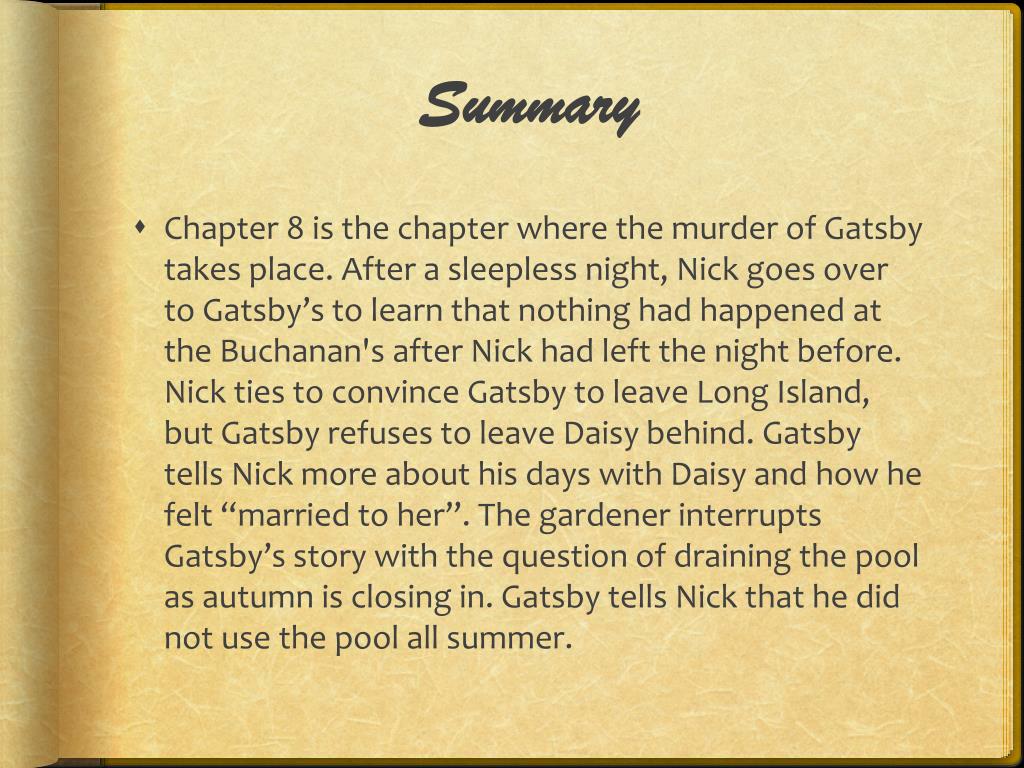
The chapter concludes with the tragic death of Jay Gatsby at the hands of George Wilson. From a brand perspective, this is the final audit. When the books are closed, we see exactly why the “Gatsby” brand lacked the equity required for long-term survival.
The Lack of Brand Equity and Genuine Advocacy
Brand equity is the value of a brand based on consumer perception and loyalty. In the final pages of the chapter, we see that despite the thousands who attended his parties, Gatsby had no true brand advocates. His “customers” were there for the free product (the parties), not for the brand itself.
When the brand faced its ultimate crisis in Chapter 8, there was no one to defend it. Daisy disappeared, his business associates vanished, and only Nick Carraway remained—someone who was more of an observer than a stakeholder. This highlights a vital lesson for personal branding: a brand built on transactions rather than relationships will never survive a downturn. Gatsby built a spectacle, but he failed to build a community.
Post-Mortem: Building a Resilient Personal Brand in the Modern Age
The “death” of the Gatsby brand in Chapter 8 serves as a warning for today’s digital age. In an era of influencers and corporate transparency, the “Gatsby approach”—creating a high-gloss, fabricated identity—is more tempting than ever, yet more dangerous.
To build a resilient brand, one must prioritize:
- Authenticity: Ensure the brand narrative matches the internal reality.
- Diversification: Do not tie the brand’s entire value to a single person or goal.
- Active Crisis Management: Control the narrative during a scandal rather than retreating.
- Relationship Equity: Invest in genuine advocacy rather than superficial engagement.
In the end, what happened in Chapter 8 of The Great Gatsby was the inevitable collision of a false brand and a harsh reality. Jay Gatsby died waiting for a signal from a market that had already closed. For the modern strategist, his story is a reminder that while you can “buy” a brand image, you cannot buy brand soul. Without a foundation of truth and a strategy for evolution, even the most glittering brand will eventually face its own Chapter 8.
aViewFromTheCave is a participant in the Amazon Services LLC Associates Program, an affiliate advertising program designed to provide a means for sites to earn advertising fees by advertising and linking to Amazon.com. Amazon, the Amazon logo, AmazonSupply, and the AmazonSupply logo are trademarks of Amazon.com, Inc. or its affiliates. As an Amazon Associate we earn affiliate commissions from qualifying purchases.