
The Gilded Age, a term coined by Mark Twain and Charles Dudley Warner in their 1873 novel The Gilded Age: A Tale of Today, refers to the post-Civil War era stretching roughly from the 1870s to the turn of the 20th century. While superficially brilliant, “gilded” implied that the era’s opulence and prosperity merely concealed widespread social problems and political corruption. From a financial perspective, however, this period was an epochal crucible that forged modern American capitalism, redefined wealth creation, and laid down many of the fundamental structures of business finance, investment, and economic disparity that continue to shape the nation. Understanding “what happened” during this pivotal time is crucial for appreciating the roots of today’s financial landscape.

The Dawn of Industrial Capitalism and Unprecedented Wealth Creation
The Gilded Age was fundamentally an era of explosive economic expansion driven by rapid industrialization. Following the Civil War, the United States was ripe for unprecedented growth, possessing abundant natural resources, a growing labor force fueled by immigration, and a government largely committed to a policy of laissez-faire economics. This combination created fertile ground for massive capital accumulation and the emergence of industrial behemoths.
The Engines of Growth: Steel, Oil, and Railroads
At the heart of Gilded Age economic prosperity were a handful of transformative industries. Railroads, perhaps more than any other sector, physically unified the nation, facilitating the movement of goods, people, and capital across vast distances. The construction of transcontinental lines, often financed by intricate bond schemes and government land grants, created immense fortunes for figures like Cornelius Vanderbilt and Leland Stanford. This infrastructure, in turn, fueled demand for steel, elevating Andrew Carnegie to the zenith of the steel industry. His relentless focus on cost-cutting, vertical integration, and technological innovation transformed steel production into an efficient, large-scale enterprise. Simultaneously, John D. Rockefeller meticulously built Standard Oil, dominating the burgeoning petroleum industry through aggressive consolidation, strategic acquisitions, and a ruthless pursuit of efficiency that drove down costs and eliminated competitors. These industries were not merely businesses; they were the very sinews of a new industrial economy, demanding colossal capital investments and generating unprecedented returns.
From Entrepreneurs to Titans: The Rise of Industrial Barons
The Gilded Age is synonymous with the rise of “Robber Barons” or “Captains of Industry” – individuals whose entrepreneurial drive, strategic brilliance, and often ethically questionable tactics amassed staggering personal wealth. Men like Carnegie, Rockefeller, Vanderbilt, and J.P. Morgan were not just businessmen; they were architects of entirely new financial and industrial systems. They understood the power of scale, the leverage of capital, and the importance of market control. Their empires were built on foresight, aggressive competition, and an unwavering commitment to profit. While their methods often drew criticism for monopolistic practices and exploitation, their contributions to infrastructure development, job creation, and the sheer scale of American industrial output were undeniable. They represent the ultimate manifestation of personal wealth accumulation driven by astute business finance strategies, from aggressive mergers and acquisitions to optimizing production costs.
The Birth of Modern Corporations and Financial Capital
The scale of Gilded Age enterprises necessitated new organizational structures. The era witnessed the full maturation of the modern corporation as the dominant business entity. Corporations offered advantages like limited liability for investors, the ability to raise vast sums of capital through stock issuance, and perpetual existence independent of their founders. This transition was critical for financing the massive infrastructure projects and industrial complexes of the era. Furthermore, the Gilded Age saw the entrenchment of financial capital – the money used for investment and speculation – as a distinct and powerful force. Investment banks, led by figures like J.P. Morgan, played an increasingly crucial role in underwriting corporate bonds and stocks, facilitating mergers, and providing the liquidity necessary for rapid industrial expansion. This marked a profound shift, establishing the financial sector as a powerful intermediary and driver of economic activity, a role it maintains to this day.
Investment, Speculation, and the Mechanics of Capital Accumulation
The economic dynamism of the Gilded Age was inextricably linked to sophisticated, albeit often unregulated, financial markets. Investment was not merely a passive activity; it was a high-stakes game that reflected the inherent risks and gargantuan rewards of an expanding economy.
Fueling Expansion: The Role of Wall Street and Banking
Wall Street, already a hub of financial activity, solidified its position as the nerve center of American capital during the Gilded Age. Investment banks, commercial banks, and stock exchanges all expanded dramatically to meet the demands of a rapidly industrializing nation. Banks served as crucial intermediaries, channeling savings and foreign capital into productive investments like railroad construction, factory building, and resource extraction. J.P. Morgan & Co., for instance, was instrumental in financing and reorganizing major corporations, demonstrating the immense power that concentrated financial capital could wield. These institutions were not just providers of funds; they were shapers of industry, often taking seats on corporate boards and influencing strategic decisions, effectively merging finance with industrial governance. The sophisticated financial instruments and services developed during this time laid the groundwork for modern investment banking and corporate finance.
Investment Strategies of the Era: Risk and Reward
Investment during the Gilded Age was characterized by both immense opportunity and significant risk. Fortunes were made through shrewd investments in nascent industries, but fortunes were also lost through reckless speculation and market manipulation. Common investment strategies included buying shares in rapidly growing industries (like railroads and steel), investing in real estate in burgeoning urban centers, and participating in the bond markets that funded everything from municipal infrastructure to corporate expansion. Insider trading, market corners, and outright stock manipulation were common tactics in an environment with minimal regulatory oversight. This was an era where personal connections, privileged information, and aggressive tactics often yielded significant returns, highlighting the nascent, yet powerful, dynamics of capital allocation and wealth generation. The concept of “risk capital” was very much alive, with high potential rewards balanced against the very real possibility of total loss.
Financial Panics and Market Volatility: Lessons from the Past

Despite the pervasive optimism, the Gilded Age was punctuated by severe financial panics and economic depressions, notably the Panic of 1873, the Panic of 1884, and the Panic of 1893. These crises revealed the inherent fragility of a rapidly expanding, largely unregulated financial system. They were often triggered by factors such as speculative bubbles (e.g., railroad overexpansion), inadequate banking reserves, agricultural downturns, and international monetary instability (like debates over the gold standard). These panics led to widespread bankruptcies, unemployment, and social unrest. For investors and businesses, they underscored the brutal realities of market cycles and the importance of liquidity and prudent financial management. The Gilded Age’s financial crises served as harsh, albeit ultimately instructive, lessons, eventually leading to calls for greater financial regulation and the eventual establishment of the Federal Reserve System in the early 20th century.
Wealth Disparity and the Seeds of Economic Inequality
While the Gilded Age produced extraordinary wealth for a select few, it also amplified existing social and economic inequalities. The “gilding” of prosperity obscured a stark reality of widespread poverty, challenging the very notion of widespread economic progress.
The Gilded Facade: Extreme Riches Amidst Widespread Poverty
The vast fortunes amassed by the industrial magnates stood in stark contrast to the living conditions of the majority of Americans. While the upper echelons of society reveled in unprecedented luxury – building elaborate mansions, hosting extravagant parties, and engaging in conspicuous consumption – millions toiled in factories and mines for meager wages, often living in overcrowded, unsanitary urban tenements. This extreme divergence in wealth was a defining characteristic of the Gilded Age. The average worker’s income barely covered subsistence, while the wealthiest families controlled an enormous percentage of the nation’s capital and productive assets. This era thus laid the foundation for modern discussions on income inequality, wealth concentration, and the societal implications of unchecked capitalism.
Labor’s Struggle: Wages, Working Conditions, and Early Unions
The pursuit of profit and industrial efficiency often came at the expense of the working class. Factory workers, miners, and railroad laborers faced long hours (often 10-12 hours a day, six days a week), dangerous working conditions, and minimal pay. Women and children were often employed in factories for even lower wages. In response to these harsh realities, the Gilded Age witnessed the nascent stirrings of the organized labor movement. Unions like the Knights of Labor and the American Federation of Labor began to form, advocating for better wages, shorter hours, and improved working conditions. Strikes, often met with violent repression by private security forces or even the military, became common, highlighting the intense economic friction between capital and labor. These struggles were fundamentally about the distribution of wealth and power within the burgeoning industrial economy.
Philanthropy and the “Gospel of Wealth”
Paradoxically, some of the era’s greatest accumulators of wealth also became its most significant philanthropists. Andrew Carnegie, for instance, articulated his “Gospel of Wealth,” arguing that the rich had a moral obligation to use their fortunes for the betterment of society. He famously endowed thousands of libraries, universities, and research institutions. John D. Rockefeller also became a massive benefactor, particularly in education and medicine. While these philanthropic endeavors undoubtedly provided immense public good, they also represented a form of wealth redistribution dictated by the wealthy themselves, rather than by public policy or collective bargaining. This complex interplay of wealth accumulation, ethical considerations, and private sector social responsibility continues to be a central theme in discussions about wealth management and societal impact today.
The Regulatory Landscape and Nascent Business Finance Ethics
The sheer scale of Gilded Age enterprises and the significant economic and social issues they raised inevitably led to questions about regulation and business ethics, laying the groundwork for future governmental oversight.
Laissez-Faire Economics and its Consequences
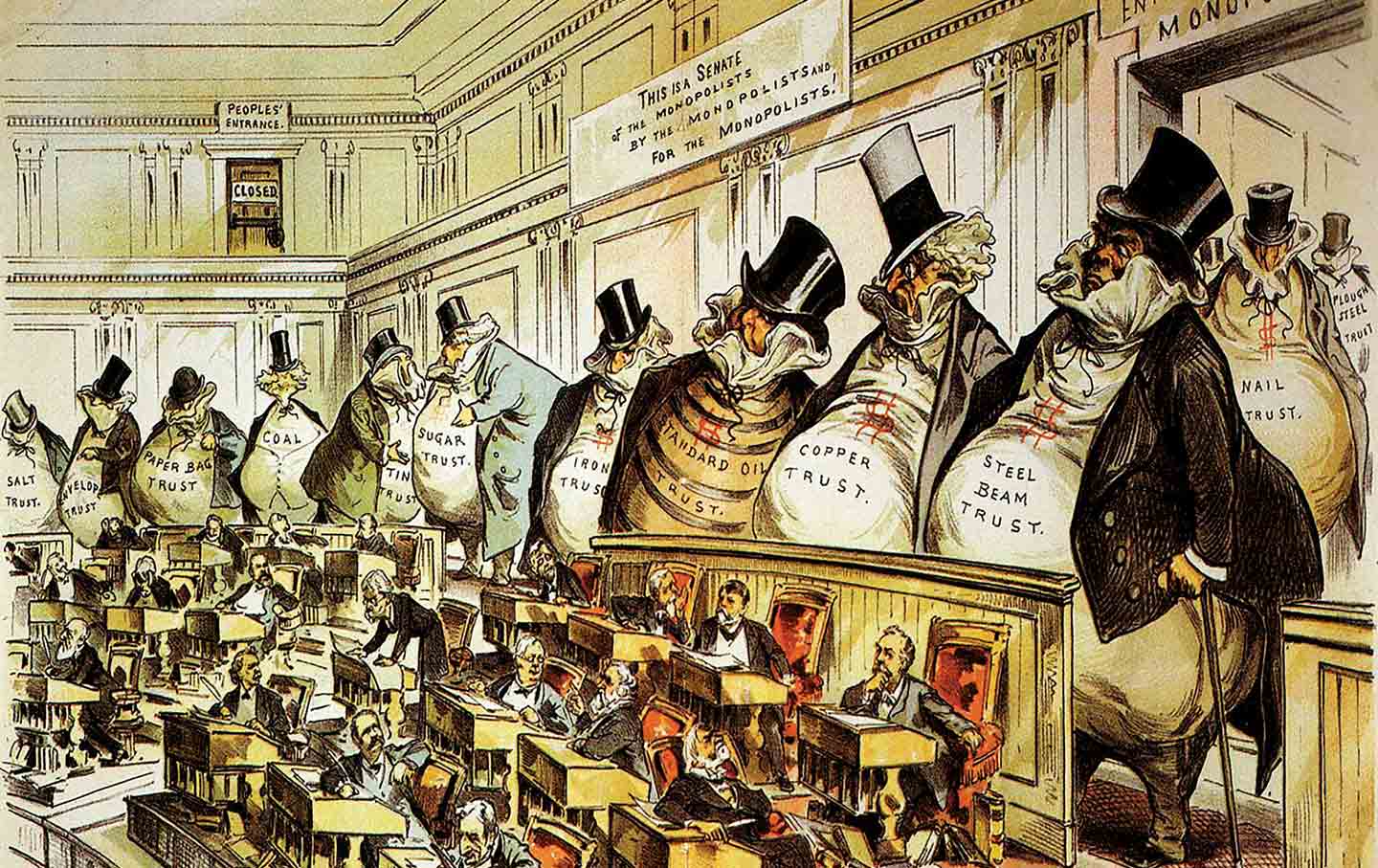
A defining feature of the Gilded Age’s economic philosophy was laissez-faire capitalism – the belief that the government should interfere as little as possible in economic affairs. Proponents argued that an unfettered market would naturally lead to efficiency and prosperity. In practice, this minimal regulation allowed industrial titans to consolidate power, form monopolies and trusts, and engage in practices that stifled competition. While it facilitated rapid industrial growth, it also led to market distortions, price fixing, and a lack of consumer or worker protection. The long-term consequences of this hands-off approach — including severe economic inequality and periodic financial crises — ultimately fueled public demand for government intervention.
Early Attempts at Antitrust: Sherman Act and Its Limitations
As the power of monopolies grew, public outcry mounted, leading to the first significant federal attempts to regulate corporate power. The Sherman Antitrust Act of 1890 was a landmark piece of legislation, designed to outlaw monopolistic business practices and restrict cartels. It declared illegal “every contract, combination in the form of trust or otherwise, or conspiracy, in restraint of trade or commerce among the several States, or with foreign nations.” However, the act’s initial enforcement was weak, and courts often interpreted it narrowly, sometimes even using it against labor unions. Its limitations highlight the nascent understanding of corporate power and the challenges of regulating complex financial and industrial structures in a free-market economy. It was a crucial first step, but its real impact would only be felt in later eras, after more robust enforcement mechanisms were put in place.
The Evolution of Business Finance Practices
The Gilded Age spurred a profound evolution in business finance. The need for large-scale capital led to the development of sophisticated investment banking, the widespread use of corporate bonds and stocks, and the creation of complex holding companies and trusts to manage vast industrial empires. Financial reporting, while not yet standardized or transparent by modern measures, began to take shape as companies sought to attract investors. Mergers and acquisitions became a primary strategy for growth and market dominance, shifting the landscape of competitive enterprise. This period saw the informal codification of many financial strategies and instruments that, with refinement and regulation, would become standard practices in the 20th and 21st centuries. The “what happened” in the Gilded Age was nothing short of the birth of modern American finance, a system of capital creation and allocation that, despite its initial excesses, laid the foundation for the economic superpower the United States would become.
aViewFromTheCave is a participant in the Amazon Services LLC Associates Program, an affiliate advertising program designed to provide a means for sites to earn advertising fees by advertising and linking to Amazon.com. Amazon, the Amazon logo, AmazonSupply, and the AmazonSupply logo are trademarks of Amazon.com, Inc. or its affiliates. As an Amazon Associate we earn affiliate commissions from qualifying purchases.