
While the 1960s are often remembered through the lens of social upheaval, iconic music, and geopolitical tension, the decade simultaneously served as the most critical incubation period for modern technology. This was the era when computing transitioned from room-sized oddities used for ballistic calculations into the foundational architecture of the information age. From the birth of the microprocessor to the first handshake of the internet, the 1960s engineered the digital reality we inhabit today. To understand our current era of AI, cloud computing, and ubiquitous connectivity, we must look back at the technological breakthroughs that defined this transformative decade.
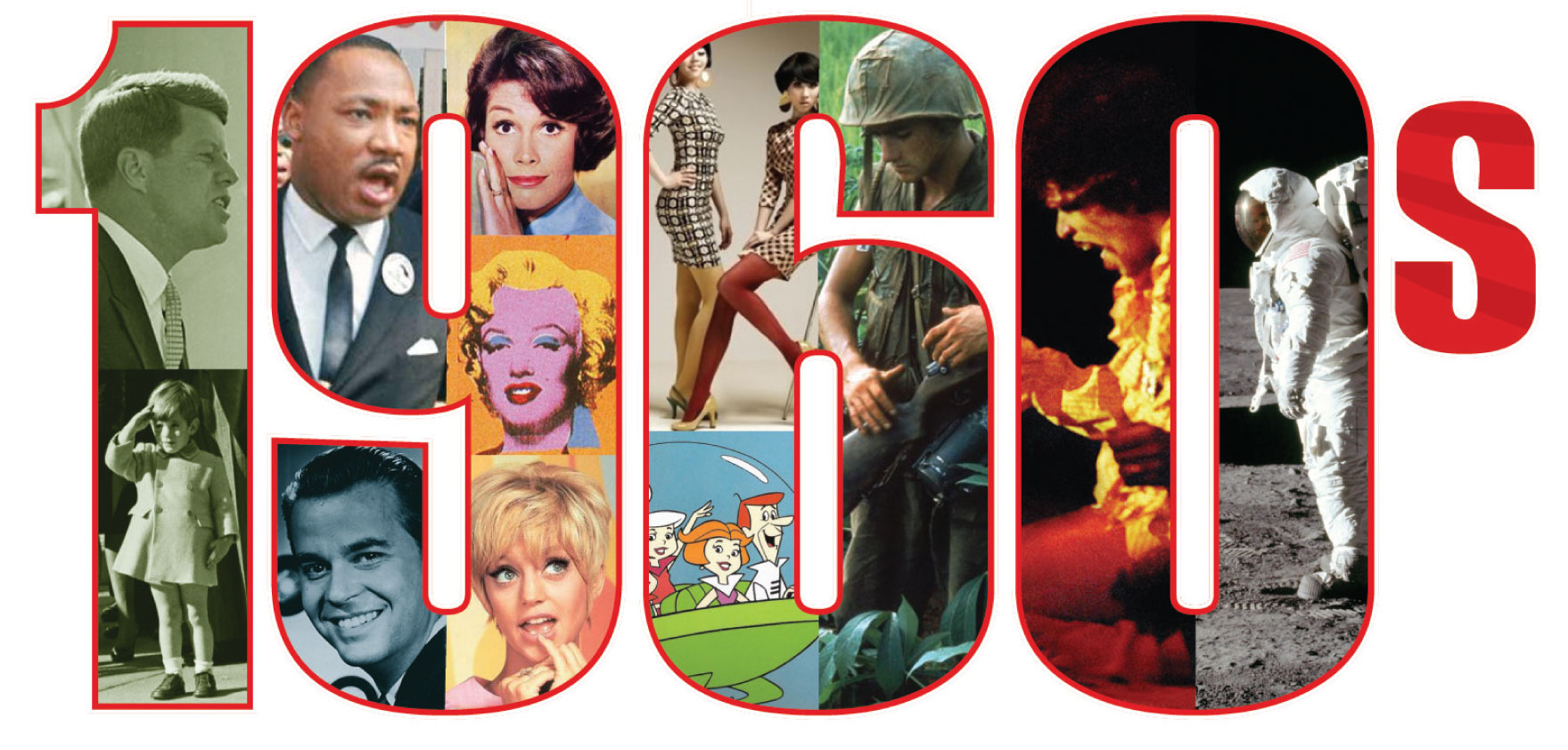
The Mainframe Revolution and the Birth of Standardized Computing
At the dawn of the 1960s, computers were idiosyncratic. Each machine was essentially a bespoke build with its own unique operating system and software requirements. If a company upgraded its hardware, it often had to rewrite its entire library of software from scratch. This changed in 1964 with a monumental shift in hardware philosophy.
IBM System/360: The Great Standardizer
The introduction of the IBM System/360 is arguably the most significant event in corporate tech history. Before the System/360, “compatibility” was a foreign concept. IBM’s $5 billion gamble—a sum larger than the Manhattan Project—involved creating a family of computers that shared the same instruction set. This meant that a business could start with a small mainframe and move to a larger one without losing its investment in software. It established the concept of computer architecture as a stable platform, a philosophy that remains the bedrock of everything from Windows to iOS.
The Transition from Vacuum Tubes to Transistors
The 1960s saw the final death knell for the vacuum tube. While the transistor was invented in the late 1940s, it wasn’t until the 60s that it reached the reliability and scale necessary to replace tubes entirely in high-end computing. Transistors were smaller, cooler, and infinitely more reliable. This shift allowed computers to move out of climate-controlled bunkers and into more diverse environments, facilitating the “minicomputer” revolution led by companies like Digital Equipment Corporation (DEC). The PDP-8, released in 1965, became the first successful commercial minicomputer, proving that technology could be powerful without occupying an entire floor of a building.
ARPANET: Wiring the First Global Brain
If the mainframe provided the “brain,” the 1960s also provided the “nervous system.” In the heat of the Cold War, the United States Department of Defense sought a communication system that could survive a nuclear strike. The result was ARPANET (Advanced Research Projects Agency Network), the direct ancestor of the modern internet.
Packet Switching: The Language of the Web
In the early 60s, communication relied on “circuit switching”—the same tech used by telephone operators. If a line was cut, the conversation ended. Researchers like Paul Baran and Donald Davies conceptualized “packet switching,” a method of breaking data into small chunks that could take various routes to a destination and be reassembled upon arrival. This was a radical departure from linear communication and is the fundamental protocol that allows the modern internet to function at scale today.
The First Node and the “LO” Heard Round the World
In October 1969, the first message was sent over ARPANET between UCLA and the Stanford Research Institute. The intended message was the word “LOGIN.” The system crashed after the first two letters, making “LO” the first digital transmission in the history of networked computing. While humble, this connection proved that heterogeneous computers—machines made by different manufacturers—could talk to one another. By the end of 1969, four nodes were connected, marking the birth of a decentralized digital world.
The Integrated Circuit and the Birth of Silicon Valley
The most physically transformative tech trend of the 1960s was the move toward extreme miniaturization. Before this decade, even transistor-based circuits were “discrete,” meaning each component had to be wired together by hand. The invention and refinement of the Integrated Circuit (IC) changed everything.
Fairchild Semiconductor and the “Traitorous Eight”
The story of 1960s tech is inseparable from the story of Fairchild Semiconductor. A group of brilliant engineers, including Robert Noyce and Gordon Moore, defected from Shockley Semiconductor to form Fairchild. They mastered the “planar process,” a method of printing transistors onto silicon wafers. This wasn’t just a manufacturing tweak; it was the birth of Silicon Valley. By the mid-60s, these “Fairchildren” would go on to found companies like Intel and AMD, cementing the silicon-based hardware cycle that still drives tech innovation today.
Moore’s Law: The Prophecy of Progress
In 1965, Gordon Moore made an observation that would become the most famous “law” in technology. He noted that the number of transistors on a microchip was doubling roughly every two years while the cost was halving. This wasn’t just a statistical observation; it became a self-fulfilling prophecy for the tech industry. It set the pace for the next 50 years of development, giving software engineers the confidence that hardware would always get faster, smaller, and cheaper, allowing for increasingly complex applications like AI and 3D rendering.
The Software Evolution: From Punch Cards to High-Level Languages
As hardware became more capable, the 1960s saw a desperate need for better ways to instruct these machines. The decade saw software transition from a secondary concern into a disciplined field of engineering.
COBOL and FORTRAN: Bridging the Human-Machine Gap
The 1960s were the golden age of high-level programming languages. COBOL (Common Business-Oriented Language) was developed to allow business data processing to be written in something resembling English, while FORTRAN (Formula Translation) empowered scientists and engineers. These languages abstracted the hardware, meaning programmers no longer had to understand the intricate electrical pathways of the CPU to write a program. Remarkably, billions of lines of COBOL code still run the backends of modern global banks today.
The Emergence of the Operating System
The 1960s introduced the concept of the Operating System (OS) as we know it. Projects like MULTICS (Multiplexed Information and Computing Service) began exploring “time-sharing.” In the 50s, only one person could use a computer at a time. By the late 60s, multiple users could log into a single mainframe via terminals simultaneously. This led directly to the development of UNIX at Bell Labs in 1969. UNIX would become the foundation for the macOS, Linux, and Android systems that dominate the modern tech ecosystem.
The “Mother of All Demos” and the Vision of Personal Computing
While much of 60s tech was locked away in corporate or military labs, the decade ended with a glimpse into the future of the consumer experience. Many of the “modern” UI elements we take for granted were actually conceptualized during this period.
Douglas Engelbart’s 1968 Vision
In December 1968, Douglas Engelbart delivered what is now known as “The Mother of All Demos.” In a 90-minute presentation, he demonstrated the computer mouse, hypertext, multiple windows, and even real-time video conferencing. At a time when most people interacted with computers via stacks of paper punch cards, Engelbart showed a world where technology was an interactive tool for the human mind. His work at the Stanford Research Institute provided the blueprint that Xerox PARC, and later Apple and Microsoft, would use to create the Personal Computer revolution of the 1980s.

The Legacy of the 1960s in the Modern Era
The 1960s did more than just provide historical trivia; they established the “logic” of the modern world. The decade taught the tech industry that compatibility matters more than isolation (IBM), that decentralized networks are more resilient than centralized ones (ARPANET), and that silicon-based scaling is the engine of economic growth (Moore’s Law).
When we look at our smartphones today, we are seeing the 1960s in their ultimate, refined form. The sensors are the descendants of 60s aerospace tech; the apps run on languages evolved from 60s compilers; and the internet they connect to is the direct expansion of a four-node experiment from 1969. The 1960s were not just a decade of change; they were the decade that built the foundation for everything that came after.
aViewFromTheCave is a participant in the Amazon Services LLC Associates Program, an affiliate advertising program designed to provide a means for sites to earn advertising fees by advertising and linking to Amazon.com. Amazon, the Amazon logo, AmazonSupply, and the AmazonSupply logo are trademarks of Amazon.com, Inc. or its affiliates. As an Amazon Associate we earn affiliate commissions from qualifying purchases.