
The 2001 cult classic Donnie Darko has long been a subject of intense scrutiny, not just by film theorists, but by tech enthusiasts, physicists, and system architects. At first glance, the film’s ending appears to be a surrealist tragedy involving a teenage boy, a jet engine, and a giant rabbit. However, when viewed through the lens of modern technology—specifically simulation theory, temporal mechanics, and system redundancy—the ending reveals itself to be a complex “system reboot.” To understand what happened at the end of Donnie Darko, we must look past the emotional narrative and analyze the underlying “software” of the universe as depicted in the film’s internal logic.
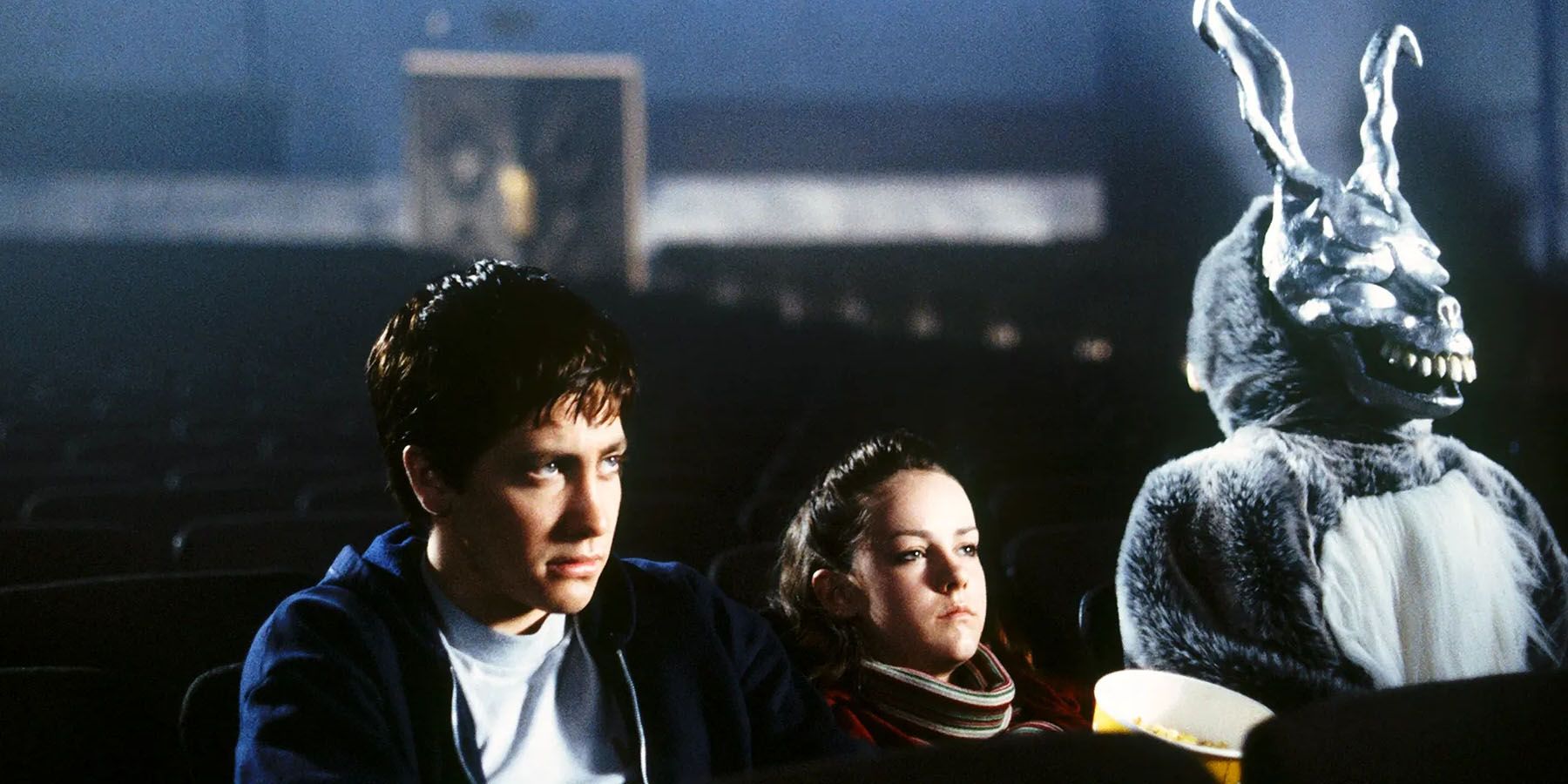
The Architecture of the Tangent Universe: A Glitch in the System
To grasp the ending, one must first understand the environment in which the majority of the film takes place. According to the “Philosophy of Time Travel” (the fictional technical manual within the movie), the universe is occasionally prone to structural instability. In tech terms, this is a “system error” or a “data corruption” event.
Understanding the Tangent Universe as a Sandbox Environment
The moment the jet engine falls through Donnie’s roof at the beginning of the movie, the Primary Universe (the stable build) is corrupted. To prevent a total system crash, reality creates a “Tangent Universe.” In computing, this is analogous to a “Sandbox” or a “Virtual Machine” (VM). It is a temporary, isolated environment where a specific set of processes can run without permanently damaging the main operating system.
The Tangent Universe is inherently unstable and can only sustain itself for approximately 28 days. If the anomaly (the “Artifact”) is not resolved by the end of this period, the Tangent Universe will collapse into a singularity, potentially deleting the Primary Universe along with it.
The Artifact: Duplicate Data and Identity Conflicts
The jet engine is what tech experts would call an “Artifact”—a piece of duplicate data that has no origin point within the Tangent Universe. Because it is made of metal (a “Vessel”), it violates the laws of physics and creates a logic loop. The entire mission of the film’s narrative is to “patch” this error. The ending is the moment the patch is successfully deployed, and the temporary environment is decommissioned.
The Living Receiver: Donnie as the System Administrator
In the hierarchy of the film’s temporal mechanics, Donnie is not a mere victim; he is the “Living Receiver.” If we view the universe as a complex network, Donnie is assigned the role of System Administrator or Lead Developer. He is granted “super-user” permissions—including telekinesis, fire-starting, and temporal foresight—to ensure that the Artifact is returned to the Primary Universe.
The Manipulated Dead: User Interface and Guidance Systems
Donnie does not navigate this debugging process alone. He is guided by the “Manipulated Dead” (Frank and Gretchen) and the “Manipulated Living” (his friends and family). In the context of modern AI and UI design, Frank acts as a sophisticated User Interface (UI). Frank provides the “prompts” that Donnie must follow to reach the desired output.
Every action Donnie takes—flooding the school, burning down Jim Cunningham’s house—is a necessary step in a complex algorithm designed to ensure that Donnie is in the exact right place, at the exact right time, with the exact right motivation to move the jet engine. The ending is the successful execution of this script.
Temporal Latency and the Path of the Fourth Dimension
One of the most tech-forward concepts in the film is the visual representation of “spears” or “liquid paths” emerging from people’s chests. In modern networking, we might view these as “predictive pathways” or “low-latency data streams.” These spears show where a person is projected to move in the immediate future. By following these streams, Donnie is interacting with the “source code” of the Tangent Universe, allowing him to see the pre-determined path necessary to resolve the temporal conflict.
The Final Act: The System Rollback and Data Recovery
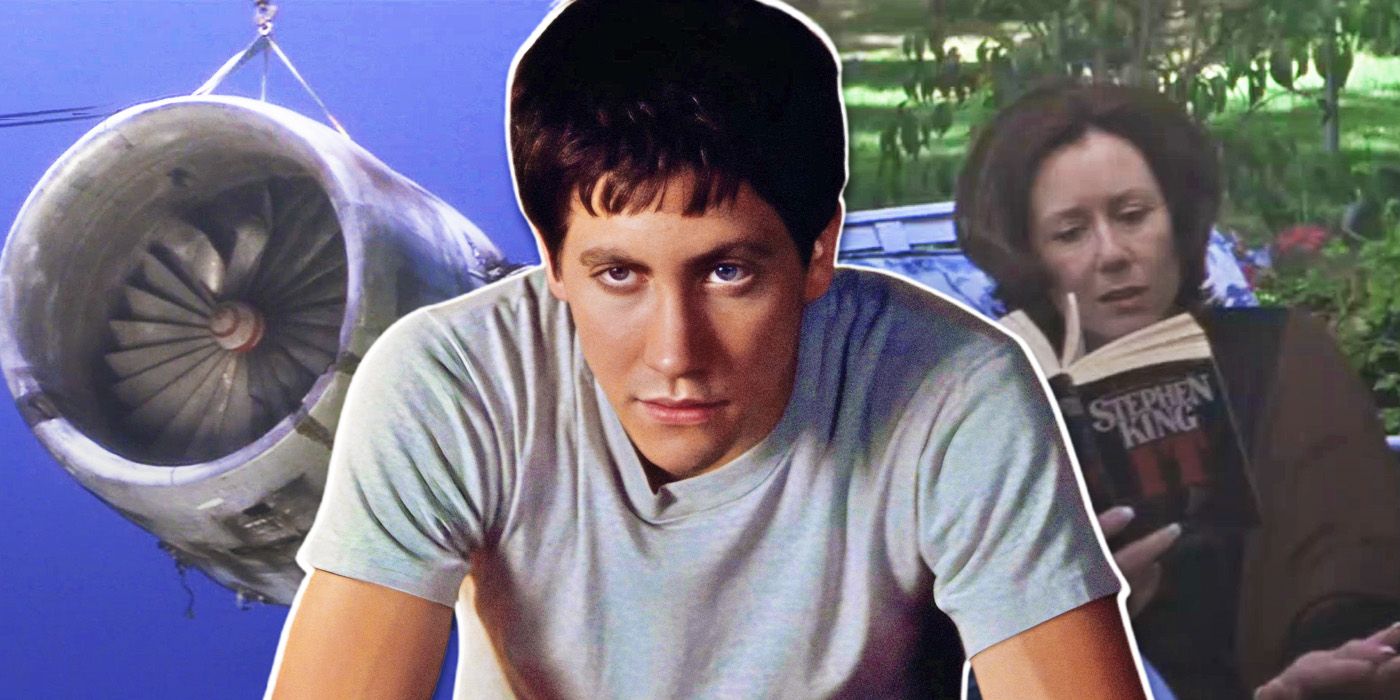
The climax of the film occurs on the 28th day. At this point, the Tangent Universe has reached its expiration date. What happens next is a masterclass in “System Rollback” procedures.
Executing the Return of the Artifact
At the end of the film, Donnie sits on a hill and watches a localized wormhole (a data transfer portal) open over his house. Using his telekinetic abilities (his administrator privileges), he rips the jet engine off the plane his mother is on and guides it through the portal. This is the moment of “Data Re-entry.” By moving the Artifact from the Tangent Universe back into the Primary Universe, he fulfills the requirements of the “Philosophy of Time Travel.”
The Reboot: Returning to the Primary Universe
Once the Artifact is sent back, the Tangent Universe is deleted. The film’s “ending” shows Donnie back in his bed, laughing. This isn’t the Donnie from the Tangent Universe; it is the Donnie of the Primary Universe, now restored to the original timeline. However, there is a “caching” issue. In many tech rollbacks, certain fragments of data—known as “residual data”—remain.
This explains why characters like Frank, Gretchen, and the neighbors wake up with a sense of “déjà vu” or lingering emotional trauma. They don’t remember the events of the 28 days (the simulation), but the “cache” hasn’t been completely cleared.
The Sacrifice: A Logic Requirement
The most debated part of the ending is why Donnie stays in bed to be killed by the engine. From a technical perspective, this is a “redundancy check.” In the Tangent Universe, Donnie survived because he was led out of the room by Frank. In the Primary Universe (the restored version), there is no Frank to lead him out. For the timeline to remain “clean” and free of the anomalies that caused the Tangent Universe in the first place, Donnie must exist within the standard laws of cause and effect. His death is the final “commit” in the version control system of reality.
Emerging Tech and the Donnie Darko Paradigm
The ending of Donnie Darko mirrors several emerging fields in today’s tech landscape, from Quantum Computing to Large Language Model (LLM) behavior.
Many-Worlds Interpretation and Quantum Debugging
In quantum computing, a qubit can exist in multiple states simultaneously until it is observed. The Tangent Universe is essentially a “superposition” of reality. The ending represents the “collapse of the wave function,” where the universe chooses the stable path over the unstable one. The film suggests that our reality might be constantly “debugging” itself in ways we cannot perceive, much like a background process on a server.
Simulation Theory and Narrative Branching
Modern gaming and interactive software often use “branching narratives” (like in Detroit: Become Human or Black Mirror: Bandersnatch). Donnie Darko is a cinematic representation of a branching narrative that successfully merges back into the “Master Branch.” The ending shows us that while thousands of variables (the 28 days of the movie) can change, a well-coded system will always seek a “Stable Release” (the Primary Universe).
AI and Predictive Modeling
If we consider Frank as a predictive AI, the ending is the result of thousands of simulations. Frank “knew” what would happen because he was operating from a point of data-rich foresight. Today, we use predictive modeling in everything from cybersecurity to weather forecasting to anticipate “system crashes” before they happen. Donnie’s journey is the human embodiment of an AI model running a simulation to find the one path that leads to a successful recovery.

Conclusion: The Ultimate Patch
What happened at the end of Donnie Darko was not merely a dream or a mental breakdown; it was the successful resolution of a catastrophic temporal error. Through the lens of technology, we can see the film as a sophisticated exploration of system architecture and data integrity.
Donnie Darko acted as the ultimate “White Hat Hacker,” identifying a critical vulnerability in the space-time continuum and executing a patch that saved the “Server of Reality” at the cost of his own “Process.” The ending is a haunting reminder that even in a world governed by strict logical rules and temporal software, the “human element” is often the most critical component in ensuring the system continues to run. By understanding the Tangent Universe as a sandbox and the ending as a system rollback, we gain a deeper appreciation for the film’s technical brilliance and its enduring relevance in an era defined by simulation and digital complexity.
aViewFromTheCave is a participant in the Amazon Services LLC Associates Program, an affiliate advertising program designed to provide a means for sites to earn advertising fees by advertising and linking to Amazon.com. Amazon, the Amazon logo, AmazonSupply, and the AmazonSupply logo are trademarks of Amazon.com, Inc. or its affiliates. As an Amazon Associate we earn affiliate commissions from qualifying purchases.