
For consumers managing celiac disease or gluten sensitivity, the holiday season can be a minefield of hidden ingredients. Halloween, in particular, presents a unique challenge: while many traditional candies are inherently gluten-free, the risks of cross-contamination in manufacturing and the prevalence of wheat-based thickeners in processed sweets necessitate a strategic approach to label reading. Mastering the identification of safe treats isn’t just about health—it is a critical aspect of personal brand management for parents and individuals navigating dietary restrictions in social settings. When you understand exactly what brands align with your safety requirements, you transition from a position of anxiety to one of proactive, informed consumption.
The Strategic Importance of Brand Verification
In the realm of dietary management, your choice of consumables functions as an extension of your personal health brand. Whether you are curating a bowl for trick-or-treaters or selecting safe options for your children, the ability to discern which manufacturers maintain rigorous gluten-free standards is an essential skill. Trusting a brand is not merely about reading a label once; it is about understanding the supply chain and manufacturing transparency of the confectionery industry.
Understanding Manufacturing Processes
Many large-scale candy companies produce products on shared equipment. This is where the risk of cross-contact arises. A product may not contain gluten as an intentional ingredient, but if it is processed on the same line as wheat-heavy products, the risk of contamination remains. When vetting Halloween candy, consumers must learn to differentiate between products labeled “Gluten-Free” (which typically means the company has tested the product to meet FDA standards of less than 20 parts per million of gluten) and those that are simply “wheat-free.”
Leveraging Official Resources
The most effective strategy for safety is utilizing the resources provided by the National Celiac Association and individual brand websites. Major corporations like Hershey’s and Mars provide comprehensive lists of their gluten-free offerings that are updated annually. By making it a habit to cross-reference these lists, you treat your dietary safety with the same precision you would apply to any professional endeavor. Staying informed is the most powerful tool in your kit for minimizing risk.
Navigating the “Big Three” Candy Manufacturers
The confectionery market is dominated by a few massive conglomerates. Because these companies produce the vast majority of candy found in Halloween buckets, understanding their specific gluten-free policies is the most efficient way to manage your holiday strategy.
Hershey’s and the Standardized List
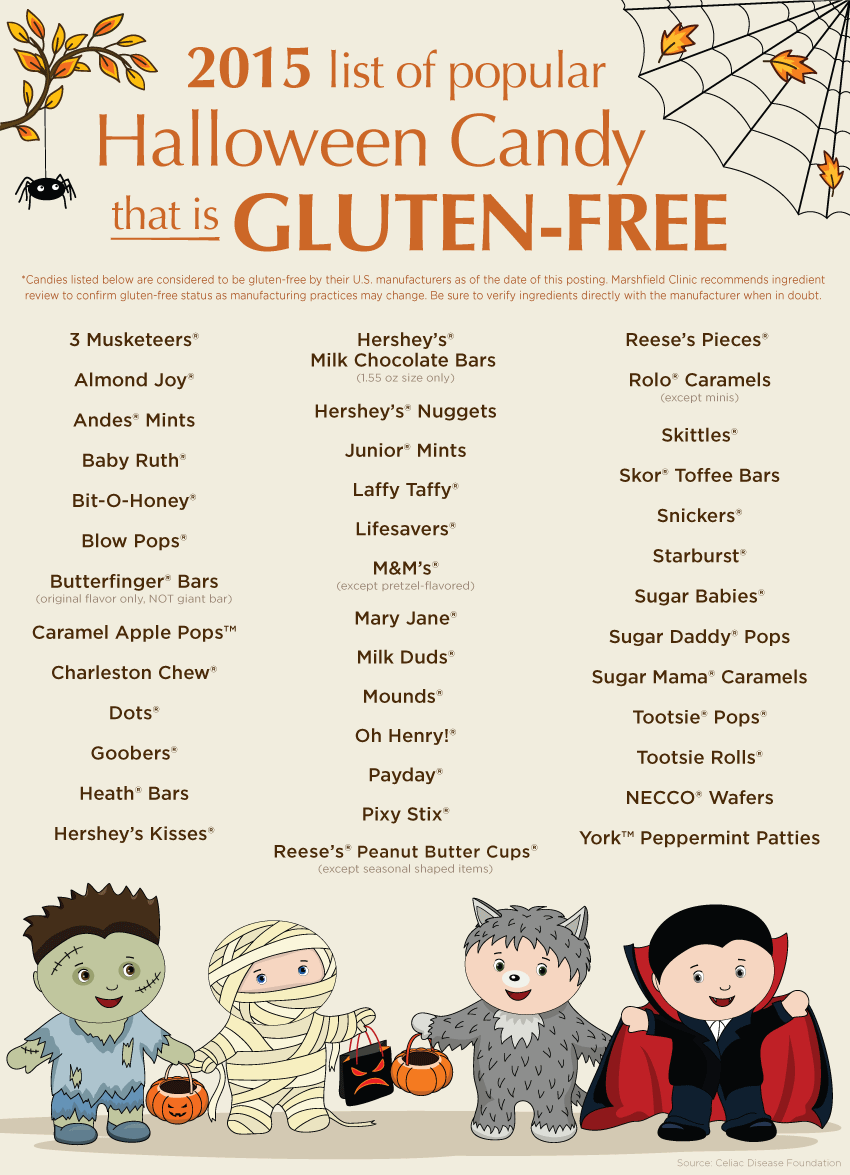
Hershey’s is one of the most transparent manufacturers regarding gluten. They explicitly state which of their products are gluten-free and frequently update this list on their corporate website. Staples such as Hershey’s Kisses (standard milk chocolate only) and various Reese’s Peanut Butter Cup varieties (excluding seasonal shapes, which are often produced in different facilities) generally fall into the safe category. By focusing your attention on the products they explicitly label, you streamline your shopping process and significantly reduce the mental labor involved in reading every individual wrapper.
Mars Wrigley and Risk Mitigation
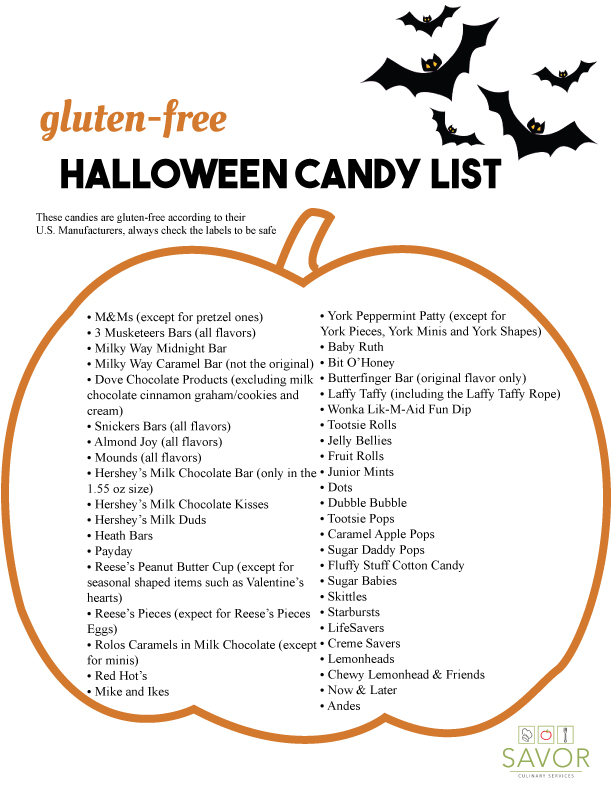
Mars Wrigley products, including M&Ms, Snickers, and Skittles, are widely popular during the Halloween season. While many of these products do not contain gluten ingredients, the company is often more cautious about labeling them as strictly “Gluten-Free.” This is a prime example of why corporate communication matters. When a brand does not provide a gluten-free label, it is often due to the potential for cross-contamination at the facility level. For those with high sensitivity, the strategic choice is to stick to the items Mars explicitly identifies as safe on their official allergen portal.
Nestlé and Global Variability
It is important to note that candy formulations can change based on the country of manufacture. A product that is gluten-free in one market may contain barley malt or wheat starch in another. For the savvy consumer, this means verifying labels locally. Never assume that a package bought at a discount store carries the same ingredient profile as one purchased at a major supermarket, as supply chains can vary.
Seasonal Hazards: Why Shapes Matter
One of the most overlooked aspects of gluten-free candy shopping is the “seasonal shape” phenomenon. Many consumers operate under the assumption that if a standard chocolate bar is safe, its holiday-themed version must be as well. This is a common and dangerous misconception.
The Problem with Seasonal Molds
Confectionery companies often contract production for seasonal items—such as pumpkins, ghosts, or bats—to different facilities or use different molding processes that involve wheat-based dusting agents to prevent sticking. This is why a standard Reese’s Cup may be gluten-free, while a Reese’s Peanut Butter Pumpkin might carry a “may contain” warning or even contain wheat as a thickener.
Developing a Verification Routine
Before purchasing large bags of seasonal candy for your household or for trick-or-treaters, apply a rigorous verification routine:
- Check the UPC/Batch Code: Use the manufacturer’s online lookup tool if available.
- Read the Allergen Statement: Look specifically for the “contains” or “may contain” statements.
- Ignore “Natural Flavors”: If you are unsure about the source of natural flavors, skip the product. Companies that are dedicated to being gluten-free will explicitly state their status on the packaging.
- Assume Nothing: If the packaging does not explicitly state it is gluten-free, do not assume it is safe based on past years’ experiences. Brands frequently adjust manufacturing processes and suppliers.
Building a Safe and Inclusive Halloween Experience
If you are hosting or participating in neighborhood festivities, managing dietary expectations is part of responsible social strategy. Whether you are dealing with your own health needs or ensuring inclusivity for others, the goal is to create an environment where the focus remains on the joy of the holiday rather than the anxiety of potential illness.
The “Teal Pumpkin” Project
The Teal Pumpkin Project is a strategic initiative aimed at raising awareness for food allergies and dietary restrictions. By placing a teal pumpkin on your doorstep, you signal to parents and children that you offer non-food treats or safe, gluten-free options. This not only builds community trust but also provides a safe, stress-free experience for children with celiac disease. From a branding perspective, this is a proactive way to demonstrate inclusivity and community leadership.
Curation as a Solution
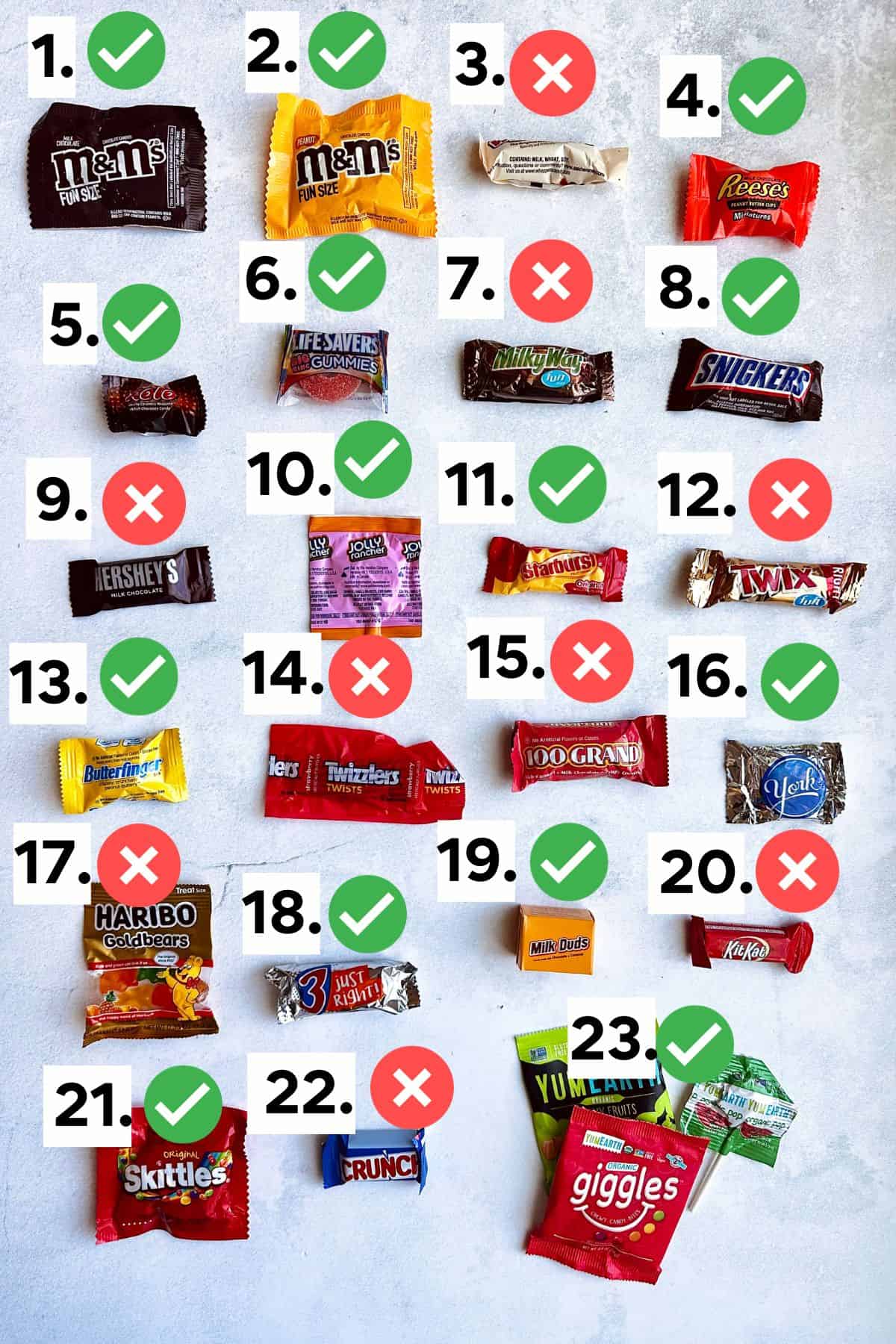
Instead of relying on random variety packs, which are notorious for being a “lottery” of potential allergens, consider curating your own supply. Buying specific, certified gluten-free bags ensures that you know exactly what is in every piece of candy. While it may require a slightly higher initial investment of time and money, the peace of mind is an invaluable return on investment.
Educating the Next Generation
Finally, teaching children to be their own advocates is the most important long-term strategy. When children learn to read labels and recognize which brands are safe, they are gaining a life skill that transcends Halloween. They learn to take ownership of their health, ask the right questions, and approach their dietary needs with confidence rather than fear. By modeling this behavior, you provide them with a framework for managing their health independently as they grow. Ultimately, Halloween should be a celebration, and with the right strategy, it can be both safe and entirely gluten-free.
aViewFromTheCave is a participant in the Amazon Services LLC Associates Program, an affiliate advertising program designed to provide a means for sites to earn advertising fees by advertising and linking to Amazon.com. Amazon, the Amazon logo, AmazonSupply, and the AmazonSupply logo are trademarks of Amazon.com, Inc. or its affiliates. As an Amazon Associate we earn affiliate commissions from qualifying purchases.