
For decades, the question “What hairstyle is best for me?” was answered through a mix of intuition, thumbing through physical lookbooks at a salon, and the subjective expertise of a stylist. However, as we move deeper into the 2020s, the intersection of beauty and technology has fundamentally shifted this paradigm. We are no longer reliant on guesswork. Today, the convergence of Artificial Intelligence (AI), Augmented Reality (AR), and computer vision is providing a data-driven answer to one of the most common grooming dilemmas.
This technological revolution in personal aesthetics allows individuals to simulate thousands of variations in seconds, leveraging complex algorithms that analyze facial geometry, skin undertones, and hair density. For the tech-savvy consumer, finding the “perfect” look is now an exercise in digital precision.

The Evolution of Virtual Try-On: Augmented Reality in Hair Styling
The most immediate answer to the question of personal style comes from Augmented Reality (AR). AR has transitioned from a novelty feature in social media filters to a sophisticated tool used by major tech firms and beauty conglomerates to provide realistic previews of physical changes.
How AR Mirrors and Mobile Apps Work
Modern “Virtual Try-On” (VTO) technology utilizes sophisticated tracking software to map the user’s face in real-time. Unlike static photo editors of the past, contemporary AR hair applications use “mesh tracking.” This involves identifying hundreds of points on a user’s face to create a 3D model that moves as the user moves. When you turn your head, the digital hairstyle follows, maintaining its perspective and volume. This is achieved through high-frame-rate processing, ensuring that the digital overlay feels like a natural extension of the user.
The Transition from 2D Filters to 3D Volumetric Mapping
Early iterations of hair-styling apps often looked “pasted on” because they were essentially 2D stickers. The current frontier involves volumetric mapping and depth sensing. Utilizing LIDAR (Light Detection and Ranging) technology found in modern smartphones, apps can now understand the distance between the camera and the user’s forehead, ears, and shoulders. This allows the software to tuck hair behind a digital ear or show how a bob might rest on a specific shoulder height, providing a much more accurate answer to whether a style suits an individual’s physical frame.
Generative AI and the Future of Personalized Consultations
While AR helps us see a style, Generative AI helps us discover it. The rise of Large Language Models (LLMs) and Diffusion Models has introduced a level of personalization that mimics—and sometimes exceeds—the traditional consultation.
Using Generative Models for Photorealistic Simulation
Generative Adversarial Networks (GANs) are the engines behind the most realistic “what if” scenarios. By training on millions of high-resolution images of diverse hairstyles and face shapes, these models can generate a photorealistic image of a user with a completely new look. If a user asks, “How would I look with a platinum blonde buzz cut?” the AI doesn’t just overlay a color; it recalculates how light would bounce off that specific texture and how it would contrast with the user’s specific skin tone.
AI-Powered Style Recommendation Engines
Beyond simple visualization, AI-driven engines now act as style consultants. By integrating “Expert Systems,” these platforms can process a user’s preferences (e.g., “I need a low-maintenance style for a corporate environment”) and cross-reference them with their facial data. The result is a curated list of recommendations backed by aesthetic data. These engines utilize “machine learning” to understand trends, ensuring the suggestions are not just geometrically correct but also culturally relevant.
Biometric Analysis: Determining Style Through Facial Recognition Algorithms
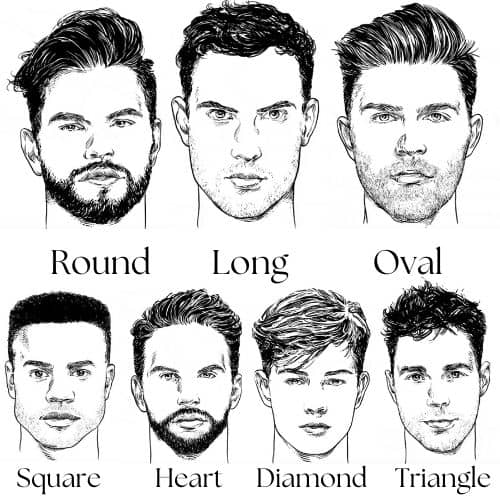
To truly answer “what hairstyle is best for me,” software must first understand the “me.” This is where biometric analysis and computer vision play a critical role. Technology can now categorize facial features with a level of objectivity that the human eye often lacks.
Analyzing Face Shape and Bone Structure via Computer Vision
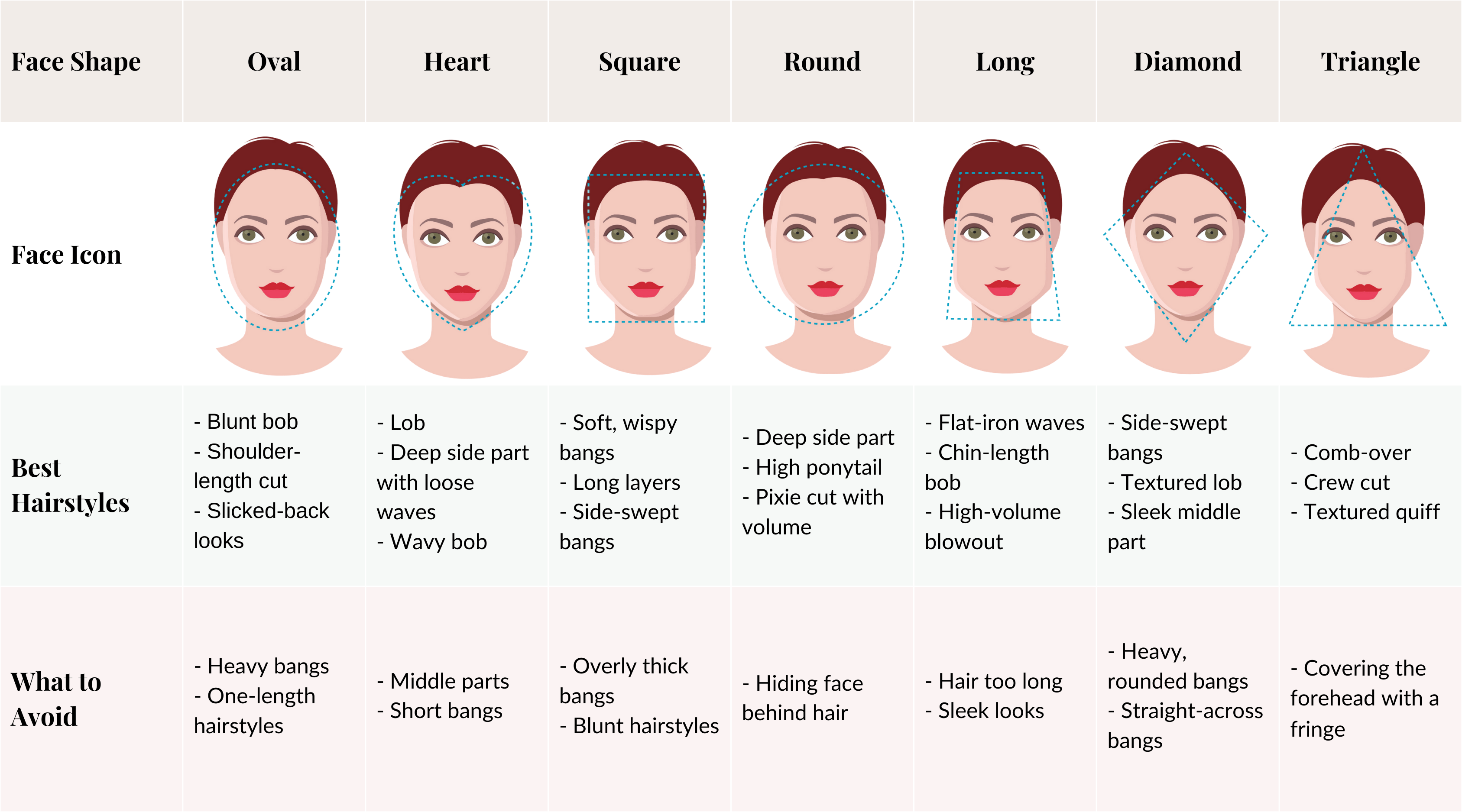
The cornerstone of hair styling is face shape—oval, square, heart, or round. Computer vision algorithms use “landmark detection” to measure the ratios of the forehead, cheekbones, and jawline. For instance, if the algorithm detects a high width-to-height ratio in the mid-face, it may suggest styles that add vertical volume to balance a rounder face shape. This removes the subjectivity of “I think I have a square face” and replaces it with geometric certainty.
Color Theory and Skin Tone Calibration Software
Choosing a hair color is as much about chemistry and physics as it is about fashion. Advanced beauty tech uses “spectrophotometry” principles—digitally simulated—to analyze the undertones of a user’s skin. By determining whether a user has cool (blue/pink) or warm (yellow/golden) undertones through the camera’s RGB sensors, the software can recommend specific hair pigments that prevent the skin from looking “washed out.” This tech-driven color matching ensures that the chosen style enhances the user’s natural palette.
The Intersection of Hardware and Grooming Tech
The software is only one part of the equation. The hardware we interact with in our homes and professional salons is becoming increasingly “smart,” turning the bathroom mirror into a sophisticated diagnostic tool.
Smart Mirrors as Integrated Wellness Hubs
The “Smart Mirror” is no longer a concept from science fiction. Companies are developing mirrors equipped with built-in cameras and displays that run background AI analysis while you brush your teeth. These devices can track hair growth, monitor scalp health through high-definition zoom, and even suggest minor adjustments to a hairstyle based on the day’s weather data (e.g., suggesting an updo for high-humidity days).
Precision Robotics and the Future of Automated Haircuts
While we are not yet at the stage of fully autonomous robotic barbers, the technology is hovering on the horizon. Precision robotics, guided by the same AI that determines “the best style,” are being tested for high-accuracy tasks like neckline trimming and uniform fading. These machines use haptic feedback and real-time spatial mapping to ensure they never deviate from the digitally mapped “ideal” cut. This represents the ultimate bridge between a digital recommendation and a physical reality.
Privacy and Ethics in Beauty Tech Data
As we entrust algorithms with our biometric data to find the perfect hairstyle, a new set of technological challenges arises regarding data security and the ethics of digital representation.
Securing Biometric Face Data
The data required to answer “what hairstyle is best for me” is deeply personal—it is your face. Tech companies in this space are now forced to implement “Edge Computing,” where the facial analysis happens locally on the user’s device rather than being uploaded to a cloud server. This reduces the risk of biometric identity theft. Furthermore, the use of end-to-end encryption for “style profiles” ensures that your aesthetic data remains your own.
The Future of Decentralized Beauty Profiles
We are seeing the emergence of decentralized identity (DID) in the beauty tech world. Imagine a “Digital Style Passport” stored on a blockchain. This profile would contain your precise facial measurements, skin tone data, and hair history. When you visit a new stylist or use a new app, you grant temporary access to this data, ensuring a consistent and optimized experience across any platform or salon globally. This tech-centric approach ensures that the answer to “what hairstyle is best for me” remains consistent, regardless of which tool you are using.
In conclusion, the journey to finding the perfect hairstyle has been transformed into a sophisticated technological workflow. From the initial AR simulation and AI-driven consultation to the biometric analysis of one’s bone structure, technology has provided us with the tools to eliminate aesthetic risk. As these tools become more integrated into our daily hardware and our digital identities, the “perfect look” becomes less of an elusive dream and more of a calculated, data-driven reality.
aViewFromTheCave is a participant in the Amazon Services LLC Associates Program, an affiliate advertising program designed to provide a means for sites to earn advertising fees by advertising and linking to Amazon.com. Amazon, the Amazon logo, AmazonSupply, and the AmazonSupply logo are trademarks of Amazon.com, Inc. or its affiliates. As an Amazon Associate we earn affiliate commissions from qualifying purchases.