
For decades, the question “what haircut looks best on me?” was met with subjective advice from stylists or the rudimentary flipping of pages through physical lookbooks. Today, that question has transitioned from a matter of opinion to a sophisticated problem-solving exercise rooted in computer vision, augmented reality (AR), and generative artificial intelligence. The intersection of technology and personal grooming has birthed a new industry—Beauty Tech—where algorithms provide a level of precision that traditional consultations simply cannot match.
The shift toward technology-driven styling is not merely a novelty; it is a response to the complex geometry of the human face. Determining the ideal haircut requires an analysis of facial proportions, bone structure, hair texture, and even skin tone. By leveraging advanced software and hardware, individuals can now visualize potential outcomes with photorealistic accuracy, reducing the “risk” associated with a major aesthetic change.

The Evolution of Virtual Try-On: From Static Filters to Real-Time AR
The early iterations of “virtual makeover” software were often clunky and unconvincing. They relied on static 2D image overlays that rarely aligned with the user’s unique contours. However, the current landscape of digital styling is defined by sophisticated Augmented Reality (AR) and Computer Vision (CV) frameworks that operate in real-time.
Computer Vision and Facial Landmark Mapping
The foundation of any modern “haircut simulator” is facial landmarking. Using libraries such as OpenCV or Dlib, developers can identify specific coordinates on a user’s face—typically 68 distinct points around the eyes, eyebrows, nose, mouth, and jawline. When a user asks, “what haircut looks best on me?” the software first constructs a digital “mesh” of their face.
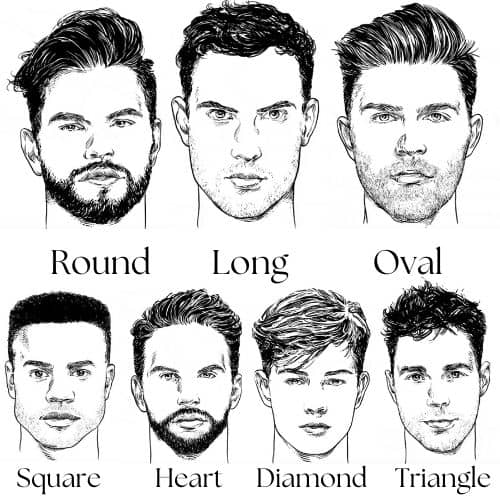
This mesh allows the software to understand the three-dimensional depth of the head. Advanced algorithms can detect the distance between the eyes relative to the width of the jaw, effectively categorizing the user into one of the standard face shapes: oval, square, heart, diamond, or round. By mapping these landmarks, the AR engine can anchor a virtual hairstyle to the user’s head so that as the user moves or tilts their head, the hair moves synchronously, maintaining the illusion of reality.
The Role of Generative AI and GANs
While AR handles the “placement” of a haircut, Generative AI handles the “realism.” Generative Adversarial Networks (GANs) have revolutionized the way we visualize hair. Unlike older software that used “sticker-like” assets, modern AI tools can generate hair textures that blend seamlessly with the user’s actual hairline.
In-painting techniques allow the AI to remove the user’s current hair from the image and replace it with a new style while realistically calculating how light would fall on the new strands. This level of hyper-personalization ensures that the recommendation isn’t just a generic template, but a custom-generated visualization of how a specific cut interacts with the user’s specific features.
Top Software and AI Tools for Style Discovery
The market for style discovery is bifurcated into consumer-facing mobile applications and professional-grade enterprise solutions designed for high-end salons. Both segments utilize powerful back-end technology to provide actionable insights into personal grooming.
Consumer-Facing Mobile Applications
For the individual user, the journey often begins on a smartphone. Apps like L’Oréal’s “Style My Hair” or specialized AI platforms utilize cloud computing to process complex graphical data. These apps often employ “Neural Hair Rendering,” a process that simulates the physics of hair.
The tech stack behind these apps often includes TensorFlow or PyTorch, which power the deep learning models trained on millions of images of different hair types. These models learn to distinguish between fine, thinning hair and thick, curly hair, allowing the app to suggest cuts that are physically possible for the user. If the AI detects a high forehead or a strong jaw, it can automatically filter its library to show styles that provide the necessary visual balance.
Enterprise Solutions and Smart Mirrors
In the professional sector, the “Smart Mirror” represents the pinnacle of salon technology. These are not merely screens; they are IoT-enabled devices equipped with high-definition cameras and depth sensors (similar to LiDAR).
When a client sits in front of a smart mirror, the device performs a comprehensive “diagnostic.” It analyzes the scalp health, hair density, and color history. For a stylist, this tool provides a data-driven baseline for the consultation. The mirror can overlay different lengths and colors on the client’s reflection, allowing for a collaborative decision-making process. The data generated during these sessions is often stored in a CRM (Customer Relationship Management) system, creating a digital history of the client’s aesthetic evolution.
The Data Science of Aesthetics: How Algorithms Determine Face Shapes
To answer “what haircut looks best on me,” an algorithm must quantify beauty and balance. This is achieved through mathematical geometry and aesthetic ratios that have been digitized into software logic.
Mathematical Geometry in Style Selection
Software developers program aesthetic “rules” into their styling engines. For example, the “Golden Ratio” or the “Rule of Fifths” are often used to determine facial symmetry. If a user has a “long” face shape (oblong), the algorithm is programmed to prioritize styles that add width to the sides of the face to create the illusion of an oval shape.
The software calculates the aspect ratio of the face—the height divided by the width. A ratio of 1.5 is often considered the “ideal” oval. If the user’s ratio is higher, the AI suggests bangs or volume at the cheekbones. If the ratio is lower (a round face), the AI suggests vertical volume and length. This is not a matter of “fashion sense” but a matter of geometric compensation executed through code.
Color Theory and Skin Tone Analysis
A haircut doesn’t exist in a vacuum; it is influenced by the color and the user’s complexion. Modern styling apps use “Auto-White Balance” and color calibration to analyze the undertones of a user’s skin. By determining if a user has “cool,” “warm,” or “neutral” undertones, the software can suggest not just a cut, but a hair color that prevents the skin from appearing sallow or washed out. This involves multi-spectral imaging analysis, where the software looks at the RGB values of the skin pixels to find the perfect chromatic match.
The Future of Grooming Tech: Digital Twins and the Metaverse
As we move further into the era of Web3 and digital identity, the question of “what haircut looks best on me” extends beyond the physical world and into the digital realm. The concept of the “Digital Twin” is becoming increasingly relevant in the beauty and tech sectors.
Hyper-Personalization through Digital Twins
A Digital Twin is a highly accurate 3D model of an individual. In the future, rather than using a smartphone app for a quick look, users will maintain a persistent digital twin that they can “send” to a virtual stylist. This model would include exact hair follicle data, growth patterns, and even chemical history.
This data-rich environment allows for hyper-realistic simulations. One could simulate how a specific haircut would look after three weeks of growth, or how it would react to high humidity versus a dry climate. By running these simulations on a digital twin, the user gains a long-term perspective on their grooming choices that was previously impossible.
Integration with Virtual Try-On (VTO) Ecosystems
The integration of grooming tech into the broader e-commerce ecosystem is the next frontier. Imagine a seamless pipeline where an AI determines your best haircut, suggests the specific styling products needed to maintain it, and then allows you to “try on” those products virtually through a unified AR interface.
Retailers are already utilizing “VTO” (Virtual Try-On) for glasses and makeup; hair is the final, most complex frontier due to the fluid nature of strands. However, with the advent of Unreal Engine 5 and advanced physics engines, the rendering of individual hair strands (rather than hair as a solid mass) is becoming a reality. This allows users to see how a “shag” or “pixie cut” would actually move and bounce in real life.

Navigating the Security and Privacy of Biometric Data
As with any technology involving facial recognition and mapping, the rise of beauty tech brings significant considerations regarding digital security. To provide an answer to “what haircut looks best on me,” these apps require access to one of the most sensitive forms of data: the user’s biometric facial map.
Professional developers in this space are increasingly turning to “Edge AI,” where the facial processing happens locally on the user’s device rather than being uploaded to a central server. This minimizes the risk of data breaches. Furthermore, as the industry matures, we can expect more robust frameworks around “Biometric Privacy,” ensuring that the 3D mesh created for a haircut simulation cannot be repurposed for unauthorized facial recognition or surveillance.
The transition of the haircut from a craft to a science represents the broader trend of technological integration into our daily lives. By utilizing AI, AR, and complex geometry, we have moved past the era of grooming uncertainty. The next time you ask, “what haircut looks best on me?” the answer will not be found in a magazine, but in the sophisticated algorithms designed to understand the unique architecture of your face.
aViewFromTheCave is a participant in the Amazon Services LLC Associates Program, an affiliate advertising program designed to provide a means for sites to earn advertising fees by advertising and linking to Amazon.com. Amazon, the Amazon logo, AmazonSupply, and the AmazonSupply logo are trademarks of Amazon.com, Inc. or its affiliates. As an Amazon Associate we earn affiliate commissions from qualifying purchases.