
When discussing hunting in the Midwest, the conversation often centers on gear, season dates, and trophy bucks. However, behind every regulation is a complex financial ecosystem managed by a single, powerful entity: the Missouri Department of Conservation (MDC). While the primary question—what group sets hunting regulations in Missouri—is easily answered by identifying the MDC and its four-member Conservation Commission, the financial implications of their decisions are far-reaching.
Hunting in Missouri is not merely a pastime; it is a billion-dollar industry. The regulations set by the MDC serve as the governing “market rules” for a massive sector of the state’s economy. From license revenue and federal excise taxes to the stimulation of rural hospitality and retail markets, the financial structure of Missouri’s wildlife management is a masterclass in sustainable economic modeling.

The Financial Authority: Understanding the MDC’s Fiscal Structure
To understand how the MDC sets regulations, one must first understand how it is funded. Unlike many state agencies that rely on general tax revenue subject to the whims of the legislature, the MDC operates with a high degree of financial independence. This independence is the bedrock upon which Missouri’s hunting regulations are built.
The Constitutional Mandate and Dedicated Sales Tax
In 1976, Missouri voters took a historic step by approving a constitutional amendment that created a dedicated sales tax for conservation. This “Design for Conservation” established a 1/8th of one percent sales tax (one cent for every $8 spent) specifically for the MDC.
From a business finance perspective, this is a “dedicated revenue stream” that provides the agency with stability. Because the MDC does not have to lobby the state government for its basic operating budget every year, it can make long-term regulatory decisions based on biological data and economic sustainability rather than political expediency. This financial security allows the group to invest in long-term projects, such as habitat restoration, which ultimately increases the “asset value” of Missouri’s wildlife.
Permit Revenue and Federal Funding Cycles
While the sales tax provides the foundation, permit sales—the direct result of hunting regulations—constitute a significant portion of the MDC’s annual budget. Every time the Commission sets a season or a bag limit, they are essentially managing a “sales inventory.”
Furthermore, Missouri benefits from the Federal Aid in Wildlife Restoration Act, commonly known as the Pittman-Robertson Act. This federal tool redirects excise taxes on firearms, ammunition, and archery equipment back to the states. The catch? The amount of money a state receives is partially tied to the number of paid hunting license holders. Therefore, the regulations set by the MDC must balance conservation with hunter recruitment and retention to maximize this federal ROI (Return on Investment).
The Business of the Hunt: Economic Drivers Behind Missouri’s Regulations
The regulations set by the MDC do more than protect deer and turkey; they dictate the flow of capital across the state. When the Commission sets the dates for the firearms deer season, they are effectively scheduling a massive injection of cash into the state’s economy.
Retail and Hospitality Revenue Streams
The “opening weekend” of deer season is often compared to a major sporting event or a holiday in terms of retail impact. Thousands of hunters travel across the state, spending money on fuel, lodging, food, and supplies. In many rural Missouri counties, the revenue generated during these regulated windows represents a significant percentage of the annual income for small businesses.
From a branding and marketing perspective, Missouri has positioned itself as a premier hunting destination. By setting regulations that produce high-quality game, the MDC helps maintain a “premium brand” for Missouri outdoors. This attracts out-of-state hunters who pay significantly higher permit fees, representing a “high-margin” export of Missouri’s natural resources.
Job Creation in Rural Missouri Markets
The economic footprint of hunting regulations extends to the labor market. It isn’t just about the biologists employed by the MDC; it’s about the taxidermists, meat processors, outfitters, and specialized retail staff. According to economic impact studies, hunting and fishing support tens of thousands of jobs in Missouri.
When the MDC considers a regulation change—such as the implementation of “CWD (Chronic Wasting Disease) Management Zones”—they are also making a business decision. Restricting movement of carcasses or changing harvest limits affects the meat processing industry. Thus, the group setting these regulations must act as a quasi-regulatory board for these niche markets, ensuring that the health of the herd (the product) remains viable for the businesses that depend on it.

Investing in Sustainability: How Regulatory Decisions Protect Long-Term Asset Value
In financial terms, Missouri’s wildlife can be viewed as a capital asset. If you over-harvest, you are dipping into the “principal” of your investment. If you under-harvest, the asset can become “overvalued” and lead to a crash (in this case, disease or habitat destruction).
Managing Biological Assets for Future Dividends
The Missouri Department of Conservation uses a data-driven approach to ensure the “dividends” (the annual harvest) are sustainable. By using complex modeling—similar to what a hedge fund might use to predict market fluctuations—MDC biologists track population trends.
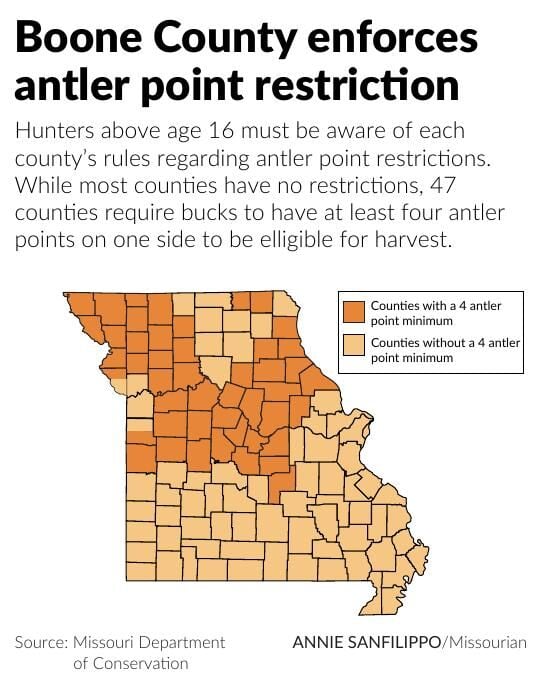
Setting regulations like “Antler Point Restrictions” (APRs) is a form of reinvestment. By allowing younger bucks to grow, the MDC is increasing the future value of the herd. For the hunter (the stakeholder), this results in a better experience and a higher-quality “product.” For the state, it ensures that the hunting industry remains robust and attractive for decades to come, rather than pursuing short-term gains that could bankrupt the resource.
Land Acquisition and Real Estate Investment
A portion of the MDC’s budget is dedicated to land acquisition. This is a direct investment in Missouri real estate. By purchasing and managing public lands, the MDC ensures that the “infrastructure” of hunting is available to the public.
This has a secondary effect on private property values. Land adjacent to well-managed MDC conservation areas often commands a premium in the real estate market. Investors and recreational landowners look to the MDC’s long-term management plans as a guarantee of the area’s ecological health, which in turn protects their financial investment in the land.
Financial Tools and Digital Transformation in Wildlife Management
The modern era of regulation setting is increasingly digital. The MDC has embraced technology not just for the sake of modernization, but as a way to increase operational efficiency and maximize revenue.
The Cost-Benefit Analysis of Mobile Licensing Systems
The “MO Hunting” app is a prime example of a financial tool used to streamline state operations. By moving away from paper-based systems toward digital permits and “Telecheck” harvest reporting, the MDC has drastically reduced its administrative overhead.
From a user experience perspective, this digital transformation lowers the “barrier to entry” for consumers. A hunter can purchase a permit on their smartphone while standing in the woods, representing an instantaneous transaction that would have been impossible twenty years ago. This ease of purchase drives “impulse buys” and ensures that the state captures revenue that might otherwise have been lost to the friction of a physical retail visit.
Data-Driven Resource Allocation for Maximum ROI
The group that sets Missouri’s regulations relies heavily on the data gathered through these digital tools. Every checked deer and every survey completed by a hunter provides data points that are used to allocate resources.
If the data shows a decline in hunter participation in a certain region, the MDC can pivot its marketing and regulatory strategy to boost engagement in that “market.” This is a sophisticated form of business analytics applied to the natural world. By understanding where the “customers” (hunters) are and what they are harvesting, the MDC can direct its field staff and habitat funding to the areas where it will have the greatest impact, ensuring a high Return on Investment for the taxpayers’ cents.
Conclusion: The Group as a Financial Steward
While the Missouri Department of Conservation is often seen through the lens of biology and law enforcement, its role as a financial steward is equally critical. The group that sets hunting regulations in Missouri is managing a complex, multi-faceted economy.
Through the strategic use of a dedicated sales tax, the careful management of biological assets, and the adoption of modern financial tools, the MDC has created a model that is the envy of many other states. Their regulations do more than define the rules of the hunt—they ensure that Missouri’s natural heritage remains a profitable, sustainable, and thriving part of the state’s financial future. For the investor, the business owner, and the citizen, the “business of conservation” is a fundamental pillar of Missouri’s prosperity.
aViewFromTheCave is a participant in the Amazon Services LLC Associates Program, an affiliate advertising program designed to provide a means for sites to earn advertising fees by advertising and linking to Amazon.com. Amazon, the Amazon logo, AmazonSupply, and the AmazonSupply logo are trademarks of Amazon.com, Inc. or its affiliates. As an Amazon Associate we earn affiliate commissions from qualifying purchases.