
The question of “what gross profit margin is good” is a cornerstone of sound business finance. It’s not a static number but a dynamic indicator that reflects a company’s operational efficiency, pricing strategy, and overall market competitiveness. Understanding and optimizing your gross profit margin is crucial for sustainable growth, investor confidence, and ultimately, long-term profitability.
Understanding the Fundamentals of Gross Profit Margin
Before diving into what constitutes a “good” gross profit margin, it’s essential to grasp its core definition and how it’s calculated. Gross profit margin is a profitability ratio that represents the percentage of revenue that remains after deducting the cost of goods sold (COGS). It essentially tells you how effectively a company is managing its production or service delivery costs relative to its sales.
Defining Gross Profit Margin
Gross profit is calculated as:
Revenue – Cost of Goods Sold (COGS) = Gross Profit
Cost of Goods Sold encompasses all direct costs associated with producing the goods or services sold by a company. This includes raw materials, direct labor, and manufacturing overhead directly tied to production. For service-based businesses, COGS might include direct labor costs of employees delivering the service and any direct expenses incurred in providing that service.
The Gross Profit Margin Formula
The gross profit margin is then calculated using the following formula:
(Gross Profit / Revenue) * 100 = Gross Profit Margin (%)
For example, if a company generates $100,000 in revenue and its COGS is $60,000, its gross profit is $40,000. The gross profit margin would then be ($40,000 / $100,000) * 100 = 40%. This means that for every dollar of revenue generated, $0.40 is left after covering the direct costs of production.
Why Gross Profit Margin Matters
The gross profit margin is a vital metric for several reasons:
- Operational Efficiency: A healthy gross profit margin indicates that a company is efficiently managing its production or service delivery costs. It suggests that the company is able to produce its goods or deliver its services at a cost that is significantly lower than the price it sells them for.
- Pricing Power: A strong gross profit margin can signal that a company has effective pricing strategies in place. It might indicate that customers are willing to pay a premium for the company’s products or services, perhaps due to brand reputation, quality, or unique features.
- Funding for Operations: The gross profit generated is what’s available to cover all other operating expenses, such as marketing, sales, administrative costs, research and development, interest expenses, and taxes. A higher gross profit margin leaves more room to cover these costs and still achieve net profitability.
- Competitive Analysis: Comparing your gross profit margin to industry benchmarks and competitors provides valuable insights into your company’s competitive positioning. A significantly lower margin might indicate an area where cost controls or pricing strategies need improvement.
- Investor Confidence: Investors often scrutinize gross profit margins as a key indicator of a company’s fundamental health and its ability to generate profits. A consistently strong margin can attract investment and boost shareholder value.
Factors Influencing a “Good” Gross Profit Margin
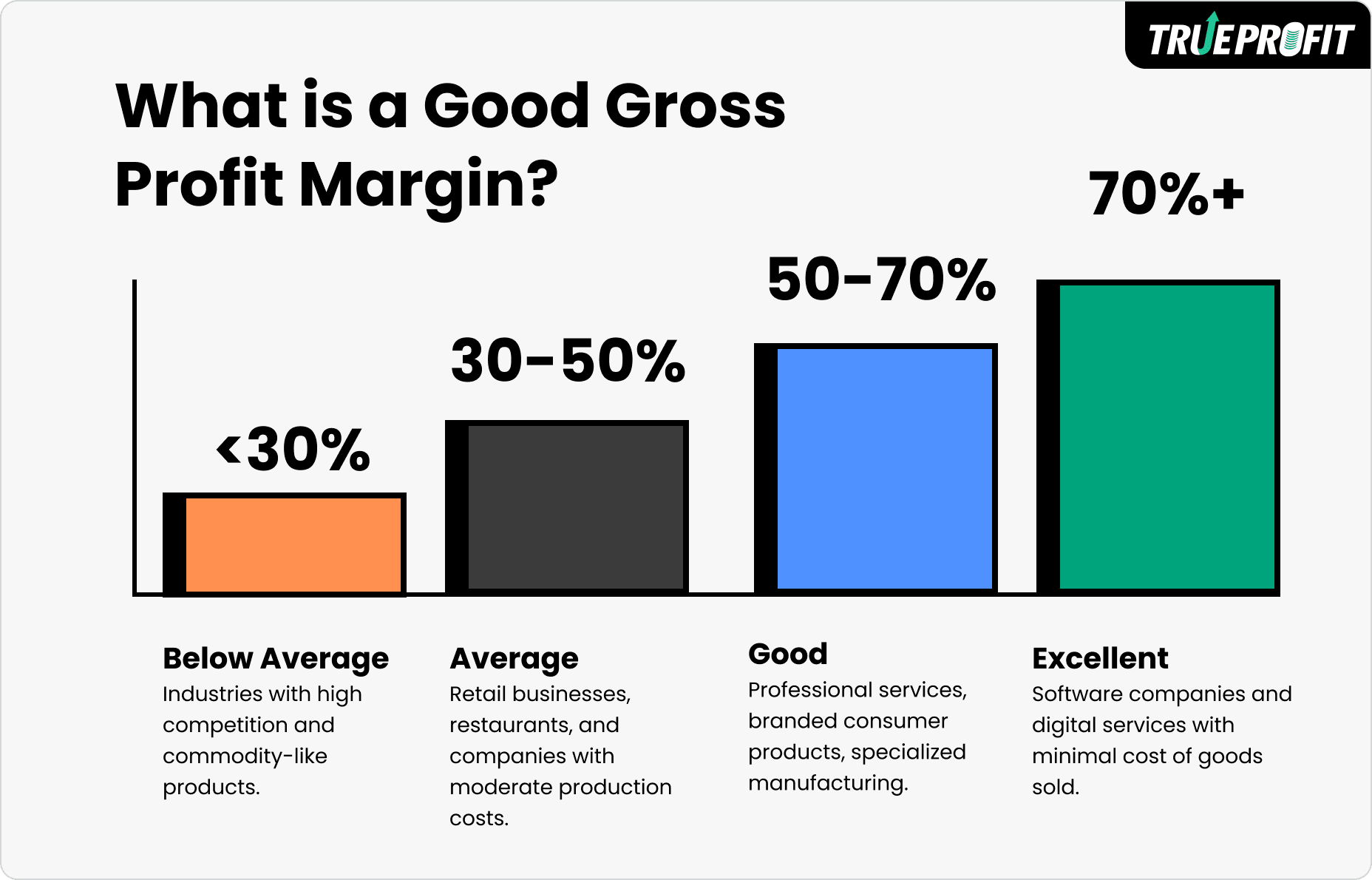
The definition of a “good” gross profit margin is highly contextual. There isn’t a single universal number that applies to all businesses. Several critical factors influence what is considered an acceptable or desirable margin:
Industry Benchmarks
The most significant determinant of a good gross profit margin is the industry in which a business operates. Different industries have vastly different cost structures and pricing models.
- High-Volume, Low-Margin Industries: Industries like grocery stores or discount retailers often operate on very thin margins. Their business model relies on selling large quantities of goods at low prices, with profitability driven by volume. A gross profit margin of 10-20% might be considered excellent in these sectors.
- Low-Volume, High-Margin Industries: Conversely, industries such as software development, pharmaceuticals, or luxury goods often command much higher gross profit margins. These businesses may have significant research and development costs or unique intellectual property, allowing them to charge premium prices for their products or services. Margins of 70-90% or even higher can be common.
- Service-Based Industries: Consulting firms, financial services, and professional services often have lower direct costs compared to manufacturing. Their primary cost is often labor. This can lead to higher gross profit margins, typically ranging from 40-60%, though it can vary widely depending on specialization and overhead.
It is imperative to research and understand the average gross profit margins for your specific industry. Resources like industry reports, financial databases (e.g., Dun & Bradstreet, IBISWorld), and competitor financial statements can provide this crucial data.
Business Model and Strategy
A company’s fundamental business model and strategic choices heavily influence its gross profit margin.
- Direct-to-Consumer (DTC) vs. Wholesale: A DTC brand selling directly to consumers often bypasses intermediaries (retailers, distributors), allowing them to capture a larger portion of the final sale price and thus achieve higher gross margins compared to selling wholesale.
- Product Differentiation and Brand Strength: Companies with strong brand equity, unique product features, or patented technology can often charge higher prices, leading to higher gross profit margins. Customers are willing to pay a premium for perceived value or exclusivity.
- Cost Leadership vs. Differentiation: Businesses pursuing a cost leadership strategy aim to be the lowest-cost producer in their industry. While they might achieve lower gross margins, their competitive advantage lies in their low price point. Differentiation strategies, on the other hand, focus on offering unique value, which can support higher prices and, consequently, higher gross margins.
- Subscription vs. One-Time Sales: Subscription-based businesses, particularly in software, often have recurring revenue streams with relatively stable COGS, which can contribute to consistent and healthy gross profit margins over time.
Stage of Business Lifecycle
The stage a business is in also impacts its gross profit margin.
- Startups: Early-stage startups might operate with lower gross profit margins as they invest heavily in product development, market penetration, and customer acquisition. Their focus may be on scaling and proving their model, sometimes at the expense of immediate margin optimization.
- Growth Stage Companies: As a company matures and gains market share, it may benefit from economies of scale, improved operational efficiencies, and increased pricing power, leading to an expansion of its gross profit margin.
- Mature Companies: Established companies might see their gross profit margins stabilize or even decline slightly due to increased competition, pressure to maintain market share through pricing, or the need to invest in innovation to stay relevant.
Economic Conditions
Broader economic factors can also influence gross profit margins. During periods of high inflation, the cost of raw materials and labor can increase, putting downward pressure on gross profit margins if companies cannot fully pass these costs on to their customers. Conversely, in a deflationary environment or during periods of strong consumer demand, companies might be able to maintain or even increase their margins.
Strategies for Improving Gross Profit Margin
Identifying what constitutes a “good” gross profit margin is the first step; actively working to improve it is the next. Several strategic approaches can be employed to enhance this crucial financial metric.
Optimizing Cost of Goods Sold (COGS)
Reducing the direct costs associated with producing goods or delivering services is a fundamental way to increase gross profit margin.
- Supplier Negotiation: Regularly review and renegotiate terms with suppliers. Explore bulk discounts, alternative suppliers, or long-term contracts to secure better pricing on raw materials or components.
- Process Improvement and Efficiency: Streamline production processes to reduce waste, labor time, and energy consumption. Implementing lean manufacturing principles or adopting more efficient service delivery methodologies can significantly cut COGS.
- Inventory Management: Efficient inventory management is critical. Overstocking can lead to carrying costs, obsolescence, and potential markdowns, all of which impact COGS. Just-in-time (JIT) inventory systems or sophisticated demand forecasting can help minimize these issues.
- Technological Adoption: Investing in automation or advanced manufacturing technologies can reduce labor costs, improve quality, and increase output, thereby lowering the per-unit cost of production.
- Product Redesign: Sometimes, redesigning a product to use less expensive materials, simplify manufacturing, or reduce shipping weight can lead to substantial COGS reductions without compromising quality or customer satisfaction.
Enhancing Pricing Strategies
Pricing is a direct lever for influencing gross profit margin. The goal is to maximize revenue while keeping COGS in check.
- Value-Based Pricing: Instead of cost-plus pricing, consider value-based pricing. Understand the perceived value of your product or service to the customer and price accordingly. If your offering provides significant benefits, customers may be willing to pay a premium.
- Tiered Pricing and Bundling: Offer different product or service tiers with varying features and price points to cater to diverse customer segments. Bundling complementary products or services can also increase the average revenue per customer and potentially improve overall margin.
- Dynamic Pricing: In certain industries, especially online, dynamic pricing models that adjust prices based on demand, time, or other factors can optimize revenue and margins.
- Strategic Price Increases: Periodically review your pricing to ensure it reflects current market conditions, increased value, and inflation. Communicate price increases effectively to customers, highlighting the benefits they continue to receive.
- Reducing Discounts and Promotions: While discounts can drive sales volume, excessive or poorly planned promotions can erode gross profit margins. Analyze the effectiveness of discounts and consider more targeted or value-added promotional strategies.
Focusing on Higher-Margin Products or Services
Not all products or services contribute equally to profitability.
- Product Mix Analysis: Regularly analyze the profitability of your entire product or service portfolio. Identify your highest-margin offerings and strategically promote them. Consider phasing out or repricing low-margin items that consume resources without delivering sufficient returns.
- Upselling and Cross-selling: Encourage sales teams to focus on upselling customers to higher-tier products or services and cross-selling complementary items. These strategies can increase the average transaction value and often come with better margins.
Benchmarking and Continuous Improvement
Achieving a “good” gross profit margin isn’t a one-time accomplishment; it’s an ongoing process of monitoring, analysis, and adaptation.
Setting Realistic Targets
Based on industry benchmarks, your business model, and your company’s strategic goals, set specific, measurable, achievable, relevant, and time-bound (SMART) targets for your gross profit margin. These targets should be regularly reviewed and adjusted as market conditions or business strategies evolve.
Regular Financial Monitoring
Implement a system for regular tracking and reporting of your gross profit margin. This involves accurate accounting of revenue and COGS. Monthly or quarterly reviews should be standard practice. Key performance indicators (KPIs) related to COGS, such as material costs per unit or labor costs per service hour, should also be closely monitored.
Competitive Landscape Analysis
Continuously observe your competitors’ pricing, product offerings, and any publicly available financial data. Understanding how your gross profit margin stacks up against theirs can highlight areas of strength or weakness and inform strategic decisions.

Adapting to Market Changes
The business environment is constantly evolving. Be prepared to adapt your pricing, cost structures, and product development strategies in response to new technologies, changing consumer preferences, economic shifts, and competitive pressures. Agility is key to maintaining a healthy gross profit margin over the long term.
In conclusion, a “good” gross profit margin is not a fixed number but a reflection of a business’s ability to efficiently produce and profitably sell its goods or services within its specific market context. By thoroughly understanding its components, identifying influencing factors, and implementing strategic improvements in cost management and pricing, businesses can not only achieve but also sustain a healthy gross profit margin, laying a robust foundation for overall financial success.
aViewFromTheCave is a participant in the Amazon Services LLC Associates Program, an affiliate advertising program designed to provide a means for sites to earn advertising fees by advertising and linking to Amazon.com. Amazon, the Amazon logo, AmazonSupply, and the AmazonSupply logo are trademarks of Amazon.com, Inc. or its affiliates. As an Amazon Associate we earn affiliate commissions from qualifying purchases.