
The trial balance stands as a foundational document in the realm of financial accounting, serving as an interim report that underpins the reliability of a company’s financial records. Far from being an optional exercise, its meticulous preparation is a critical step in the accounting cycle, acting as a crucial internal control and a precursor to generating robust financial statements. For any business, from a budding startup to a multinational corporation, understanding the intricacies of what comprises a trial balance is essential for maintaining accurate financial hygiene and making informed strategic decisions.
Understanding the Core Purpose of a Trial Balance
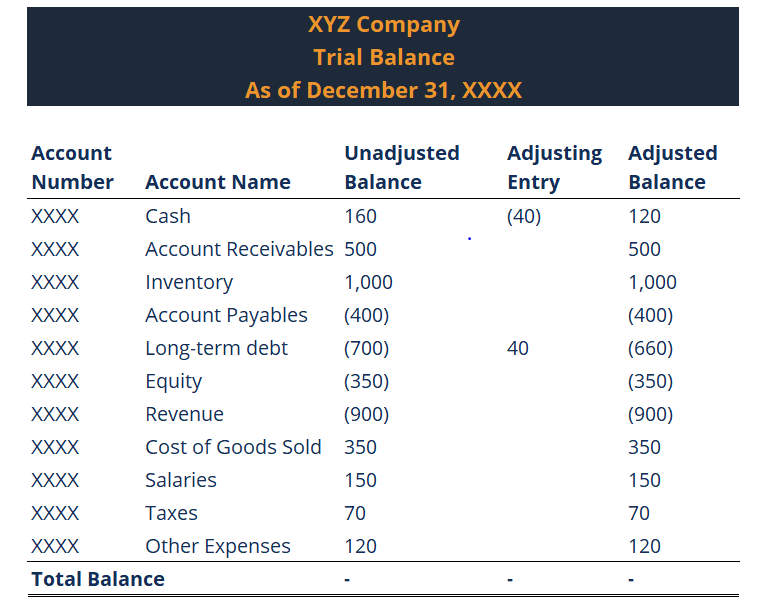
At its heart, a trial balance is a list of all the general ledger accounts of a business, compiled at a specific point in time, showing the balance of each account. Its primary purpose is twofold: to verify the arithmetical accuracy of the double-entry accounting system and to provide a consolidated summary of account balances needed for preparing the definitive financial statements.
The Double-Entry System Foundation
The very existence of a trial balance is predicated on the double-entry bookkeeping system, an accounting method where every financial transaction or event is recorded in at least two different accounts. For every debit entry made in one account, there must be a corresponding credit entry in another account, and vice-versa, ensuring that the total debits always equal the total credits. This fundamental principle is the bedrock upon which the trial balance operates. It ensures that the accounting equation (Assets = Liabilities + Equity) remains in balance after every transaction.
Verifying Arithmetical Accuracy
The most immediate and critical function of a trial balance is to confirm that the sum of all debit balances equals the sum of all credit balances. If these two totals do not match, it signals that an error has occurred during the recording or posting of transactions, or in the calculation of account balances. While a balanced trial balance doesn’t guarantee the complete absence of errors (as discussed later), it does provide strong assurance that the arithmetic of the ledger accounts is correct and that the double-entry system has been consistently applied. This initial check prevents numerical imbalances from propagating into the final financial statements, saving considerable time and effort in error correction down the line.
A Stepping Stone to Financial Statements
Beyond merely checking arithmetic, the trial balance serves as the direct source data for preparing the three main financial statements: the Income Statement (Profit and Loss Statement), the Balance Sheet, and the Statement of Cash Flows. The revenue and expense accounts listed on the trial balance are used to construct the Income Statement, revealing the company’s profitability over a period. The asset, liability, and equity accounts feed directly into the Balance Sheet, presenting a snapshot of the company’s financial position at a specific date. By consolidating all account balances into a single report, the trial balance streamlines the complex process of financial reporting, making it an indispensable tool for accountants and financial managers alike.
The Fundamental Components: Debits and Credits
The entire structure of a trial balance revolves around the concepts of debits and credits. Every account listed on a trial balance will have either a debit balance or a credit balance, determined by the nature of the account and the transactions affecting it. Understanding which account types typically carry a debit or credit balance is paramount to correctly interpreting and preparing a trial balance.
The Debit Side
In accounting, a debit typically represents an entry on the left side of a T-account. Accounts that generally increase with a debit balance include:
- Assets: Resources owned by the business that have future economic value (e.g., Cash, Accounts Receivable, Inventory, Property, Plant, and Equipment). When a business acquires an asset, the asset account is debited.
- Expenses: Costs incurred in the process of generating revenue (e.g., Rent Expense, Salaries Expense, Utilities Expense, Cost of Goods Sold). When an expense is incurred, the expense account is debited.
- Drawings/Dividends: Funds or assets withdrawn by the owner(s) or paid out to shareholders. These reduce owner’s equity and are recorded as debits.
The Credit Side
Conversely, a credit typically represents an entry on the right side of a T-account. Accounts that generally increase with a credit balance include:
- Liabilities: Obligations or debts owed by the business to external parties (e.g., Accounts Payable, Notes Payable, Unearned Revenue). When a business incurs a liability, the liability account is credited.
- Equity: The owners’ residual claim on the assets of the business after deducting liabilities (e.g., Owner’s Capital, Retained Earnings, Common Stock). When owners invest in the business or the business earns profit, equity accounts are credited.
- Revenues/Income: Earnings from the sale of goods or services, or from other business activities (e.g., Sales Revenue, Service Revenue, Interest Income). When revenue is earned, the revenue account is credited.
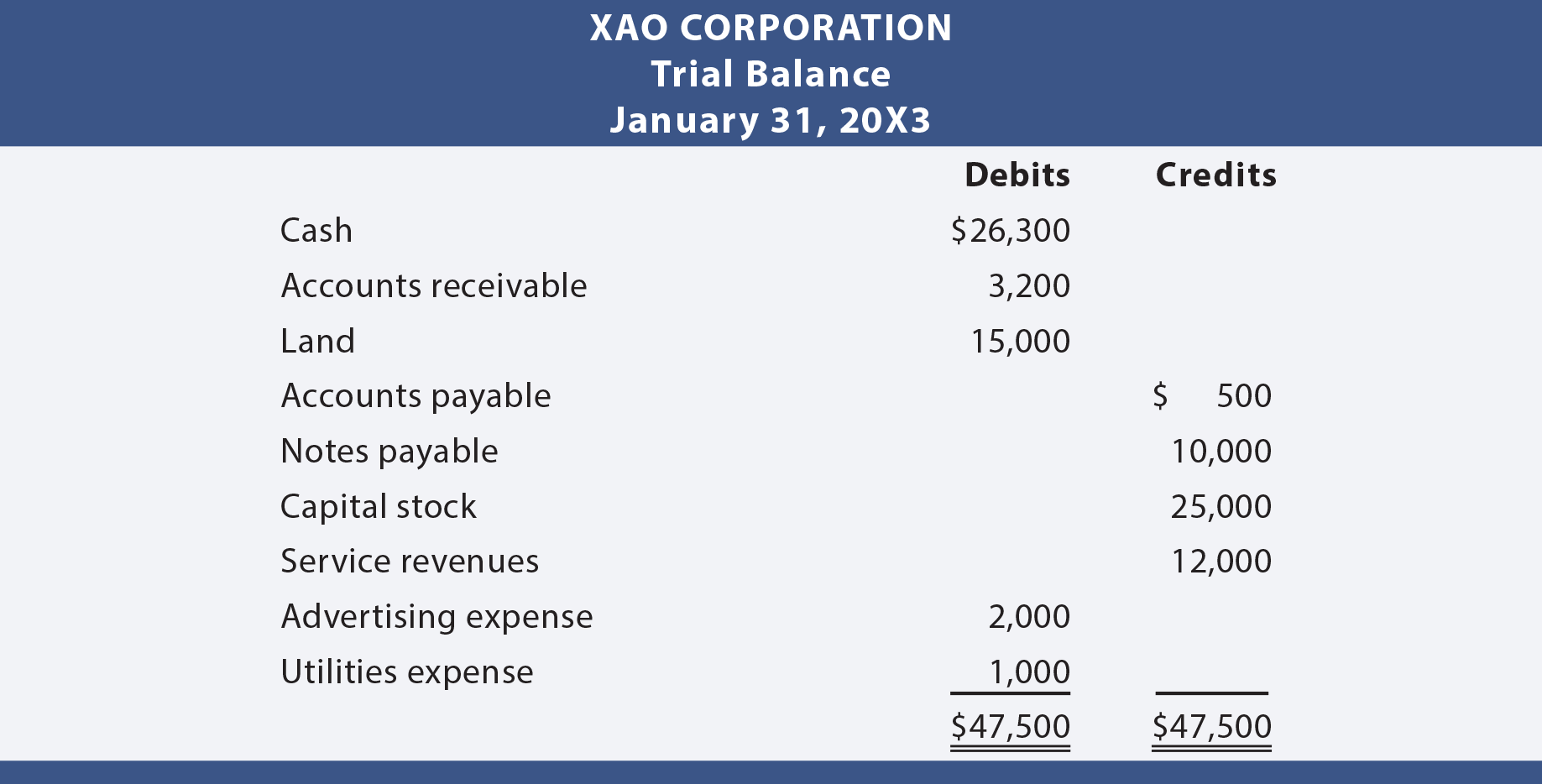
The trial balance lists these account balances in two columns: one for total debits and one for total credits. The ultimate goal is for these two columns to sum to an equal amount, upholding the principle of double-entry bookkeeping.
Key Account Types Found on a Trial Balance
A comprehensive trial balance will list every active account from the general ledger. These accounts are broadly categorized, providing a structured view of the company’s financial elements.
Assets
Assets represent economic resources owned by the company that are expected to provide future economic benefits.
- Current Assets: Assets expected to be converted into cash, used up, or sold within one year or one operating cycle, whichever is longer. Examples include:
- Cash: Physical currency, bank balances.
- Accounts Receivable: Money owed to the company by customers for goods or services delivered on credit.
- Inventory: Goods available for sale.
- Prepaid Expenses: Expenses paid in advance for services or goods to be received later (e.g., prepaid rent, prepaid insurance).
- Non-Current (Fixed) Assets: Assets with a useful life of more than one year that are not intended for immediate sale. Examples include:
- Property, Plant, and Equipment (PP&E): Land, buildings, machinery, vehicles, office furniture. These are typically shown at their book value (cost less accumulated depreciation).
- Intangible Assets: Non-physical assets like patents, copyrights, trademarks, goodwill.
Liabilities
Liabilities are financial obligations of the company to other entities.
- Current Liabilities: Obligations due within one year or one operating cycle. Examples include:
- Accounts Payable: Money owed by the company to suppliers for goods or services purchased on credit.
- Salaries Payable: Wages owed to employees but not yet paid.
- Unearned Revenue: Cash received from customers for goods or services yet to be delivered.
- Short-term Loans: Portions of loans due within a year.
- Non-Current (Long-term) Liabilities: Obligations due in more than one year. Examples include:
- Long-term Loans/Notes Payable: Mortgages, bonds payable, bank loans with repayment terms extending beyond one year.
Equity
Equity represents the owners’ residual interest in the assets after deducting liabilities.
- Owner’s Capital (for proprietorships/partnerships) / Common Stock & Retained Earnings (for corporations): Represents the initial investment by owners plus accumulated profits less dividends/drawings.
- Drawings (for proprietorships/partnerships) / Dividends (for corporations): Amounts withdrawn by owners or paid to shareholders. These reduce equity and typically have a debit balance on the trial balance before being closed out.
Revenues (or Income)
Revenues are increases in economic benefits during the accounting period in the form of inflows or enhancements of assets or decreases of liabilities that result in increases in equity, other than those relating to contributions from equity participants.
- Sales Revenue: Income from the sale of goods.
- Service Revenue: Income from providing services.
- Interest Income: Revenue earned from investments or lending.
- Rent Income: Revenue from leasing property.

Expenses
Expenses are decreases in economic benefits during the accounting period in the form of outflows or depletions of assets or incurrences of liabilities that result in decreases in equity, other than those relating to distributions to equity participants.
- Cost of Goods Sold (COGS): The direct costs attributable to the production of the goods sold by a company.
- Rent Expense: Cost incurred for using property or equipment.
- Salaries Expense/Wages Expense: Cost of employee compensation.
- Utilities Expense: Cost of electricity, water, gas, etc.
- Depreciation Expense: The systematic allocation of the cost of a tangible asset over its useful life.
- Interest Expense: Cost of borrowing money.
- Marketing Expense: Costs associated with promoting products or services.
Each of these accounts, with its corresponding debit or credit balance, is systematically listed on the trial balance, providing a complete financial picture from the ledger.
The Process of Preparing a Trial Balance
The preparation of a trial balance is a methodical process that follows the completion of journal entries and their posting to the general ledger.
Step 1: Post All Journal Entries to the Ledger
After financial transactions are initially recorded in the general journal, they are then “posted” to their respective general ledger accounts. Each account (e.g., Cash, Accounts Payable, Sales Revenue) maintains a running record of all debits and credits affecting it. This step ensures that every transaction is categorized and reflected in the appropriate account.
Step 2: Calculate Ending Balances for Each Account
Once all journal entries for a specific period have been posted, the next step involves determining the ending balance for every general ledger account. This is typically done by summing all debit entries in an account and all credit entries, then calculating the difference. If total debits exceed total credits, the account has a debit balance. If total credits exceed total debits, it has a credit balance. For example, if the Cash account has $10,000 in total debits and $4,000 in total credits, its ending balance is a $6,000 debit.
Step 3: List Accounts and Their Balances
With all ending balances determined, they are then transferred to the trial balance. A standard trial balance format includes two columns: one for debit balances and one for credit balances. Each general ledger account is listed, and its final balance is entered into the appropriate column. Accounts with a normal debit balance (Assets, Expenses, Drawings) go into the debit column, while those with a normal credit balance (Liabilities, Equity, Revenues) go into the credit column.
Step 4: Sum the Debit and Credit Columns
The crucial step in validating the trial balance is to sum all the balances in the debit column and all the balances in the credit column separately. If the accounting system has been accurately maintained according to the double-entry principle, these two sums must be equal. This equality is the primary indicator of arithmetical correctness within the ledger.
Step 5: Identify and Rectify Discrepancies
If the total debits do not equal total credits, it signifies an error. Common errors that a trial balance will detect include:
- Transposition Errors: Swapping the order of digits (e.g., writing $540 instead of $450).
- Single-Entry Errors: Posting only a debit or only a credit for a transaction.
- Incorrect Arithmetic: Mistakes in adding up the debits or credits in a ledger account, or in summing the trial balance columns themselves.
- Posting to the Wrong Side: Debiting an account that should have been credited, or vice-versa.
Locating and correcting these errors is critical before moving on to the preparation of financial statements. This often involves reviewing the general ledger, journal entries, and calculations to pinpoint the exact source of the imbalance.
Beyond Balancing: The Significance and Limitations
While a balanced trial balance is a reassuring sign, it’s crucial to understand its limitations. A balanced trial balance indicates only that the total debits equal the total credits; it does not guarantee the complete accuracy or completeness of the financial records.
Its Role in Financial Analysis
Despite its limitations, the trial balance remains an invaluable document. It provides a concise, organized list of all account balances, which is immediately useful for internal review and for preparing adjusting entries. Before financial statements are finalized, adjusting entries are often needed to ensure that revenues and expenses are recognized in the correct accounting period and that asset and liability balances are accurately reported. The trial balance serves as the starting point for these adjustments, making it a dynamic rather than static financial tool. For financial managers, it offers a quick overview of the company’s financial components before the more formal financial statements are compiled.
What It Doesn’t Detect
A balanced trial balance does not detect all types of accounting errors. This is a critical distinction that finance professionals must grasp:
- Omissions: If an entire transaction is completely missed and never recorded in the journal, neither a debit nor a credit will exist, and the trial balance will still balance.
- Errors of Original Entry: If an incorrect amount is recorded in the initial journal entry (e.g., $100 recorded as $1,000), and this incorrect amount is then debited and credited, the trial balance will still balance.
- Compensating Errors: If two separate errors cancel each other out (e.g., an account is understated by $500, and another account is overstated by $500), the trial balance will appear to be in balance.
- Errors of Principle: If a transaction is correctly debited and credited for the right amount, but to the wrong type of account (e.g., classifying the purchase of an asset as an expense), the trial balance will still balance.
- Reversal of Entries: If a debit is posted to an account that should have been credited, and a credit to an account that should have been debited, with the correct amounts, the trial balance will balance.
An Essential Internal Control
Despite these limitations, the trial balance remains an absolutely essential internal control mechanism. It represents the first significant checkpoint in the accounting cycle, ensuring that the fundamental mathematical integrity of the ledger is upheld. It forces accountants to systematically review all account balances and serves as a critical diagnostic tool for identifying a wide range of common errors before they lead to incorrect financial statements. For any business striving for financial transparency and accurate reporting, a well-prepared and balanced trial balance is not merely a formality but a cornerstone of sound financial management.
aViewFromTheCave is a participant in the Amazon Services LLC Associates Program, an affiliate advertising program designed to provide a means for sites to earn advertising fees by advertising and linking to Amazon.com. Amazon, the Amazon logo, AmazonSupply, and the AmazonSupply logo are trademarks of Amazon.com, Inc. or its affiliates. As an Amazon Associate we earn affiliate commissions from qualifying purchases.