
In the dynamic landscape of modern finance, few assets have captured the imagination and debate quite like Bitcoin. Since its inception in 2009, this pioneering digital currency has grown from an obscure experiment into a global phenomenon, frequently discussed in boardrooms, investment forums, and kitchen tables alike. Yet, for many, the fundamental question persists: what, precisely, gives Bitcoin value? Unlike traditional currencies backed by governments or commodities like gold, Bitcoin derives its worth from a complex interplay of technological innovation, economic principles, market dynamics, and collective human perception. Understanding these pillars is crucial for anyone seeking to comprehend its role in personal finance, investment strategies, and the broader financial ecosystem.
The Foundational Pillars of Bitcoin’s Economic Value
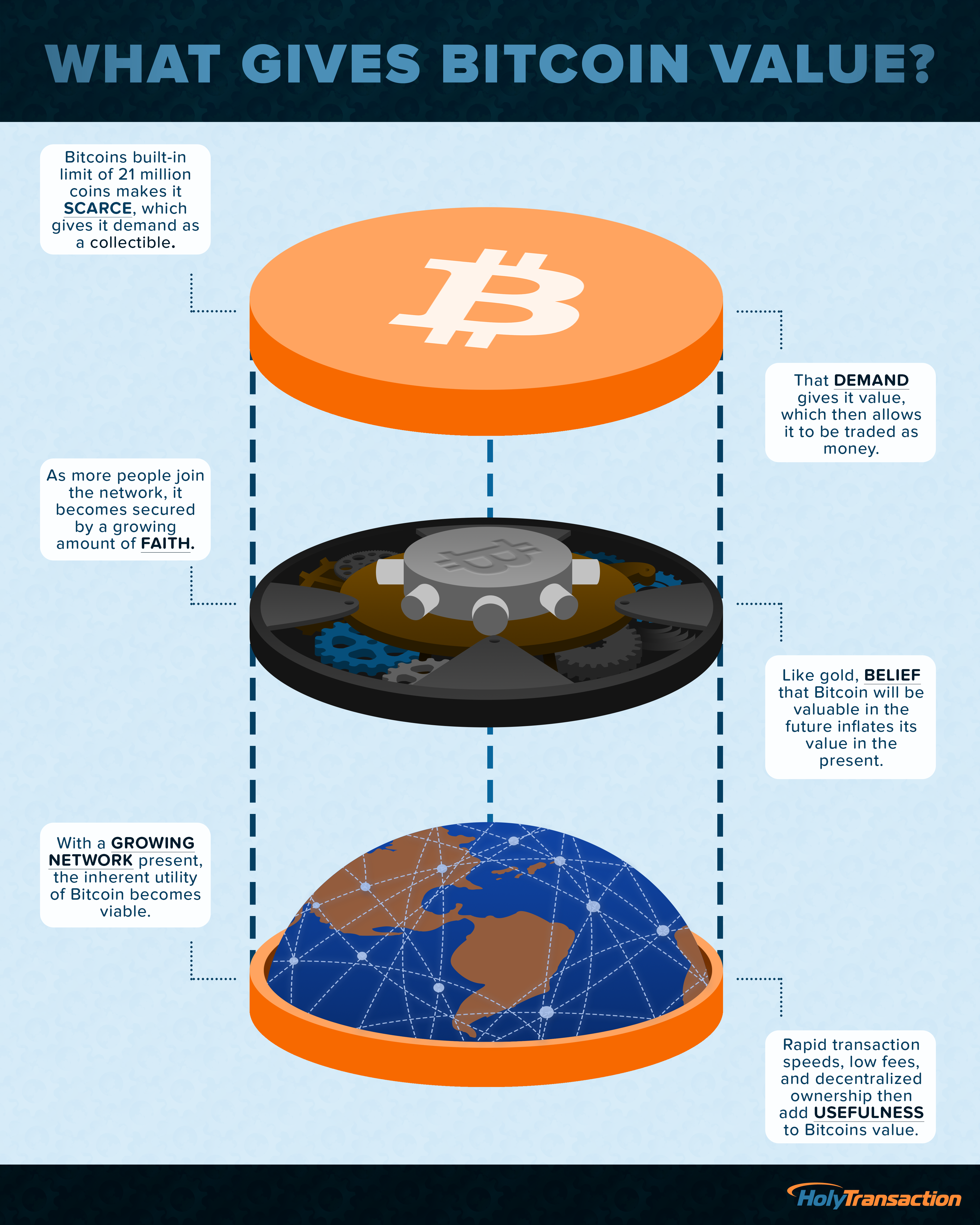
At its core, Bitcoin’s value proposition is built upon a set of revolutionary characteristics that directly address limitations inherent in traditional financial systems. These foundational pillars are not just technological marvels but profound economic attributes that shape its perceived and actual worth.
Scarcity and Deflationary Nature
One of the most significant drivers of Bitcoin’s value is its absolute scarcity. Capped at a finite supply of 21 million coins, a limit hardcoded into its protocol, Bitcoin stands in stark contrast to fiat currencies, which can be printed in unlimited quantities by central banks. This fixed supply creates a deflationary asset by design, meaning its purchasing power tends to increase over time as demand grows relative to its immutable supply. Every four years, the rate at which new bitcoins are introduced into circulation (via mining rewards) is halved, an event known as “the halving.” This predictable supply shock further reinforces its scarcity, making it increasingly difficult and expensive to acquire newly minted coins. In an era of unprecedented monetary expansion and inflation concerns, Bitcoin’s scarcity acts as a compelling hedge against the devaluation of traditional currencies, attracting investors seeking a dependable store of value.
Decentralization and Trustlessness
Bitcoin’s decentralized nature is a radical departure from conventional finance, where institutions like banks and governments act as central intermediaries. Powered by a global network of computers, the Bitcoin blockchain operates without any single point of control or failure. This decentralization ensures that no single entity can manipulate the supply, censor transactions, or arbitrarily change the rules of the network. This “trustless” system means users do not need to rely on or trust a third party to validate transactions or secure their assets; instead, trust is distributed across the entire network through cryptographic proof. For individuals and businesses operating in regions with unstable governments, hyperinflation, or restrictive financial controls, Bitcoin offers an unparalleled level of financial sovereignty and censorship resistance. This intrinsic property fosters a high degree of confidence in its long-term integrity, contributing significantly to its value as a truly independent asset.
Utility as a Medium of Exchange and Store of Value
While often viewed primarily as an investment asset, Bitcoin’s original design envisioned it as an electronic cash system – a peer-to-peer medium of exchange. Its utility stems from its ability to facilitate fast, secure, and borderless transactions with relatively low fees compared to international wire transfers. For remittances, cross-border commerce, or simply as an alternative payment method, Bitcoin offers a pragmatic solution. Beyond transactional utility, its robust security and verifiable scarcity have solidified its status as a “digital gold” – a robust store of value. Like gold, it is durable, divisible, recognizable, and scarce, but with the added advantages of digital portability and ease of transfer. This dual utility – as both a medium of exchange and a reliable store of wealth – underpins its demand and, consequently, its economic value.
Market Dynamics and Investor Sentiment
Beyond its intrinsic properties, Bitcoin’s value is heavily influenced by the forces of supply and demand, broader macroeconomic trends, and the ever-shifting tides of investor confidence. These external factors play a crucial role in shaping its price trajectory.
Supply and Demand Fundamentals
Like any asset, Bitcoin’s market price is a direct reflection of the interplay between supply and demand. The fixed supply of 21 million bitcoins represents the ultimate limit of its availability. On the demand side, several factors contribute: increasing retail adoption, growing institutional interest, its use as a payment rail, and its role as a speculative investment. When demand outpaces the rate at which new bitcoins enter circulation and existing holders are unwilling to sell, the price tends to rise. Conversely, periods of high selling pressure or decreased interest can lead to price corrections. Understanding these fundamental market forces is essential for investors looking to gauge Bitcoin’s short-to-medium term price movements.
Macroeconomic Factors and Geopolitical Events
Bitcoin’s value is increasingly intertwined with global macroeconomic conditions. In times of economic uncertainty, such as high inflation, currency devaluation, or geopolitical instability, investors often seek safe-haven assets. Bitcoin, with its decentralized nature and fixed supply, is increasingly being considered alongside gold as a hedge against traditional financial risks. For instance, quantitative easing policies by central banks, which increase the money supply, can make scarce assets like Bitcoin more attractive. Similarly, political unrest in certain regions can drive demand for Bitcoin as a means to circumvent capital controls or preserve wealth. These macro narratives significantly influence institutional allocations and broader investor sentiment, directly impacting Bitcoin’s valuation.
Institutional Adoption and Retail Interest
The evolution of Bitcoin’s value is dramatically shaped by who holds and uses it. Initially a niche asset popular among tech enthusiasts, it has progressively gained acceptance within mainstream financial institutions. Publicly traded companies adding Bitcoin to their balance sheets, the launch of Bitcoin ETFs, investment funds offering exposure to digital assets, and banks providing crypto services all signal a growing institutional embrace. This institutional adoption lends legitimacy, brings significant capital into the market, and expands accessibility for a wider range of investors. Concurrently, sustained retail interest, fueled by increased awareness and ease of access through user-friendly platforms, continues to provide a broad base of demand. The convergence of these two forces — sophisticated institutional capital and widespread retail participation — creates a robust market and reinforces its long-term value proposition.
Technological Underpinnings and Network Effects
While categorized under “Money,” it’s impossible to discuss Bitcoin’s value without acknowledging the critical role of its underlying technology. These technological advantages translate directly into financial utility and security, which in turn drive its economic worth.
Security and Immutability of Transactions

The cryptographic security of the Bitcoin network is paramount to its value. Transactions are secured using advanced encryption, and once confirmed and added to the blockchain, they are virtually immutable. This means transactions cannot be reversed or altered, preventing fraud and double-spending. The decentralized network of miners validates these transactions, making it computationally infeasible to compromise the entire system. This unparalleled level of security provides immense confidence to users and investors, ensuring the integrity of their digital assets. The robustness of this security model is a non-negotiable component of its financial trustworthiness.
Global Accessibility and Borderless Transactions
Bitcoin operates on an open, permissionless network accessible to anyone with an internet connection, anywhere in the world. This global reach means that individuals and businesses can send and receive value across borders without relying on traditional banking infrastructure, which can be slow, expensive, and subject to geographic restrictions. For international trade, remittances, or simply transferring funds between different jurisdictions, Bitcoin offers a frictionless and efficient alternative. This borderless nature significantly enhances its utility and, consequently, its value as a truly global digital currency.
Network Effect and Lindy Effect
The “network effect” dictates that the value of a network increases disproportionately with the number of its users. For Bitcoin, this means that as more individuals, businesses, and developers use, hold, and build upon the network, its utility, liquidity, and security grow. This positive feedback loop strengthens its position as the dominant cryptocurrency. Complementing this is the “Lindy Effect,” which suggests that the future life expectancy of a non-perishable technology or idea is proportional to its current age. Having survived over a decade of challenges, hacks, and intense scrutiny, Bitcoin’s longevity itself is seen as an indicator of its resilience and increasing likelihood of long-term survival, further instilling confidence and contributing to its perceived value as a lasting financial innovation.
Bitcoin as a Strategic Asset in Modern Portfolios
For investors and financial planners, Bitcoin is no longer just a curiosity; it’s a legitimate consideration for portfolio diversification and wealth preservation, albeit one with unique characteristics.
Diversification and Inflation Hedge Potential
In traditional investment theory, diversification across different asset classes is key to managing risk. Bitcoin, often exhibiting a low correlation with traditional assets like stocks and bonds, offers a unique diversification opportunity. Its potential to act as an inflation hedge is another compelling argument. Given its fixed supply and programmatic issuance schedule, many investors view it as a superior alternative to gold in protecting purchasing power against currency debasement. While its volatility demands careful consideration, its potential to provide uncorrelated returns and protect against systemic financial risks makes it an attractive component for a modern, forward-thinking investment portfolio.
Risk vs. Reward Profile for Investors
Investing in Bitcoin carries a distinct risk-reward profile. Its historical volatility is significant, with rapid price swings that can lead to substantial gains or losses. This necessitates a careful assessment of risk tolerance and investment horizons. However, its innovative technology, growing adoption, and potential to disrupt traditional finance also present a compelling reward potential. For long-term investors willing to weather the short-term fluctuations, Bitcoin offers exposure to a nascent asset class with considerable upside, provided they understand the associated risks and allocate capital responsibly within their overall financial strategy.
The Future of Digital Assets and Financial Innovation
Bitcoin stands at the forefront of a revolutionary shift in how we perceive and manage money. It represents not just a new asset, but a paradigm shift towards a more transparent, efficient, and decentralized financial system. Its success has paved the way for an entire ecosystem of digital assets and blockchain applications, signaling a future where financial services are increasingly digitized and accessible. Understanding “what gives Bitcoin value” is therefore not just about analyzing an investment; it’s about recognizing a fundamental innovation that promises to reshape global finance, offering individuals and businesses new tools for wealth management, transactions, and economic empowerment.
Navigating the Volatility and Understanding Long-Term Value
Despite its compelling attributes, Bitcoin’s journey has been marked by significant price volatility. Understanding this volatility and discerning its long-term value requires perspective beyond daily market swings.
Short-Term Price Fluctuations vs. Intrinsic Value
The daily price of Bitcoin is a complex amalgamation of speculative trading, news cycles, market sentiment, and macroeconomic data. These factors often lead to dramatic short-term price fluctuations, which can be daunting for new investors. However, separating these transient movements from Bitcoin’s fundamental value drivers – its scarcity, decentralization, security, and network effects – is crucial. While short-term prices are influenced by supply and demand imbalances, Bitcoin’s intrinsic value proposition as a globally accessible, censorship-resistant, and finite digital asset continues to strengthen over time, irrespective of temporary market corrections. Patient investors often focus on these intrinsic qualities and the long-term adoption trends rather than getting swayed by short-term market noise.
Regulatory Landscape and its Impact
The regulatory environment remains a significant factor influencing Bitcoin’s value. As governments worldwide grapple with how to categorize and oversee digital assets, regulatory clarity (or lack thereof) can introduce both opportunities and challenges. Favorable regulations, such as those permitting spot Bitcoin ETFs or recognizing Bitcoin as legal tender, can unlock new avenues for adoption and investment, boosting its value. Conversely, restrictive regulations or outright bans in major economies can create uncertainty and dampen demand. The evolving regulatory landscape is a dynamic force that will continue to shape Bitcoin’s integration into the global financial system and, consequently, its valuation.

The Evolving Narrative: Digital Gold to Global Reserve Asset?
Bitcoin’s narrative has evolved considerably since its inception. Initially conceived as “peer-to-peer electronic cash,” it quickly gained traction as “digital gold,” a hedge against inflation and a safe haven. More recently, some proponents envision an even grander future: Bitcoin as a potential global reserve asset. While this remains a highly speculative long-term outlook, the underlying principle is that its properties – absolute scarcity, decentralization, and global accessibility – make it a compelling candidate for a foundational asset in a future digital economy. This evolving narrative, continuously reinforced by technological developments, increasing adoption, and economic shifts, underpins a significant portion of its perceived long-term value and fuels the ongoing interest from investors and policymakers alike.
In conclusion, Bitcoin’s value is not derived from a single source but from a robust combination of its inherent cryptographic properties, its profound economic design (particularly scarcity and decentralization), the ever-changing dynamics of market supply and demand, and its growing utility within the global financial landscape. As the world navigates an increasingly digital and interconnected future, understanding these multifaceted drivers of value is essential for anyone seeking to engage with, invest in, or simply comprehend the significance of this groundbreaking digital asset.
aViewFromTheCave is a participant in the Amazon Services LLC Associates Program, an affiliate advertising program designed to provide a means for sites to earn advertising fees by advertising and linking to Amazon.com. Amazon, the Amazon logo, AmazonSupply, and the AmazonSupply logo are trademarks of Amazon.com, Inc. or its affiliates. As an Amazon Associate we earn affiliate commissions from qualifying purchases.