
Arcane, the critically acclaimed animated series based on the League of Legends universe, has captivated audiences worldwide. While its narrative and characters are undoubtedly compelling, its success is intrinsically linked to a sophisticated fusion of technological innovation and artistic vision. Understanding “what genre is Arcane” extends beyond a simple categorization of animation style or storytelling tropes; it necessitates an exploration of the cutting-edge technologies that brought its visually stunning world to life, and how these technologies inform its unique aesthetic and immersive quality. This article delves into the technological underpinnings and artistic choices that define Arcane’s genre-bending appeal, focusing on its contributions to the animation and visual effects industry.

The Technological Canvas: Pushing the Boundaries of 3D Animation
The visual language of Arcane is arguably its most immediate and striking characteristic. Far from being a straightforward 3D animation project, the series employs a groundbreaking approach that blends 3D rendering with 2D-inspired techniques. This fusion is not merely an aesthetic choice; it’s a deliberate technological endeavor to achieve a level of detail, expressiveness, and painterly quality previously unseen in television animation.
Hybrid Rendering and the “2D-Look” in 3D
At its core, Arcane is rendered in 3D, utilizing industry-standard software like Maya for modeling and animation, and the OctaneRender engine for its powerful ray-tracing capabilities. However, the magic truly happens in the post-production and compositing stages. The animation studio, Fortiche Production, developed a proprietary pipeline that meticulously applies stylized textures, shaders, and lighting effects to the 3D models. This process is designed to emulate the look and feel of traditional 2D animation, specifically the expressive linework, subtle watercolor washes, and dynamic brushstrokes that define classic hand-drawn art.
This “2D-look” is achieved through several key technological advancements and artistic integrations:
- Stylized Shading and Texturing: Instead of aiming for photorealism, the shaders are engineered to interpret light and shadow in a way that mimics painted surfaces. This involves custom shader networks that apply texture maps and procedural noise to create the illusion of brushwork and varying material properties. The result is a tactile, almost tangible feel to the characters and environments.
- Hand-Painted Textures: While the underlying models are 3D, many of the textures are meticulously hand-painted by digital artists. These textures are then wrapped around the 3D geometry, further enhancing the painterly aesthetic. This approach allows for an incredible level of detail and expressiveness, capturing the nuances of emotion and the grit of the world.
- Non-Photorealistic Rendering (NPR) Techniques: Arcane leverages various NPR techniques to move away from standard 3D rendering. This includes sophisticated edge detection filters, cel-shading variations, and custom lighting models that avoid the harsh, often sterile look of purely photorealistic rendering. The goal is to imbue the animation with a sense of artistic intention and emotional resonance, mirroring the expressiveness found in 2D.
- Compositing for Depth and Atmosphere: The final layers of polish are applied in the compositing stage using software like Nuke. Here, artists integrate various render passes, add atmospheric effects like volumetric fog and dust particles, and fine-tune color grading to achieve a cohesive and immersive visual experience. This stage is crucial for layering the handcrafted elements onto the 3D foundation, creating a rich and complex visual tapestry.
The Role of AI and Procedural Generation (Emerging Applications)
While the primary focus of Arcane’s visual innovation lies in its hybrid rendering and artistic pipeline, it’s important to acknowledge the broader technological context of animation production. As the industry evolves, tools leveraging AI and procedural generation are becoming increasingly integral. While Fortiche Production has emphasized its handcrafted approach, it’s highly probable that elements of their pipeline incorporate advanced algorithms and potentially AI-driven tools for tasks like:
- Asset Generation and Variation: Procedural generation could be used to create diverse background elements, environmental details, and even variations of character costumes, saving significant manual labor while maintaining a consistent artistic style.
- Motion Capture Refinement: While motion capture provides a strong foundation for realistic character movement, AI can be employed to refine and stylize these performances, ensuring they align with the unique aesthetic of Arcane. This might involve adjusting secondary animation, exaggerating poses for emotional impact, or ensuring consistency in character weight and physicality.
- Texture and Material Synthesis: AI-powered tools are emerging that can assist artists in creating complex textures and materials. While Arcane’s hand-painted approach is paramount, such tools could potentially augment the process, providing starting points or assisting in generating subtle variations.
The commitment to this technologically advanced yet artistically driven workflow allows Arcane to occupy a unique space, bridging the gap between the expressiveness of 2D animation and the depth and detail of 3D. This sophisticated approach is not just about creating pretty pictures; it’s about using technology as a tool to amplify storytelling and emotional impact.
Crafting the World: Environmental Design and Prop Integration
The technological prowess demonstrated in Arcane’s character animation is equally evident in its meticulously crafted environments and the intricate detail of its props. The world of Piltover and Zaun is not merely a backdrop; it is a character in itself, rich with history, social strata, and a palpable sense of place. The technology employed here serves to translate this narrative depth into tangible visual elements.
Layered Environments and Procedural Texturing for Urban Decay
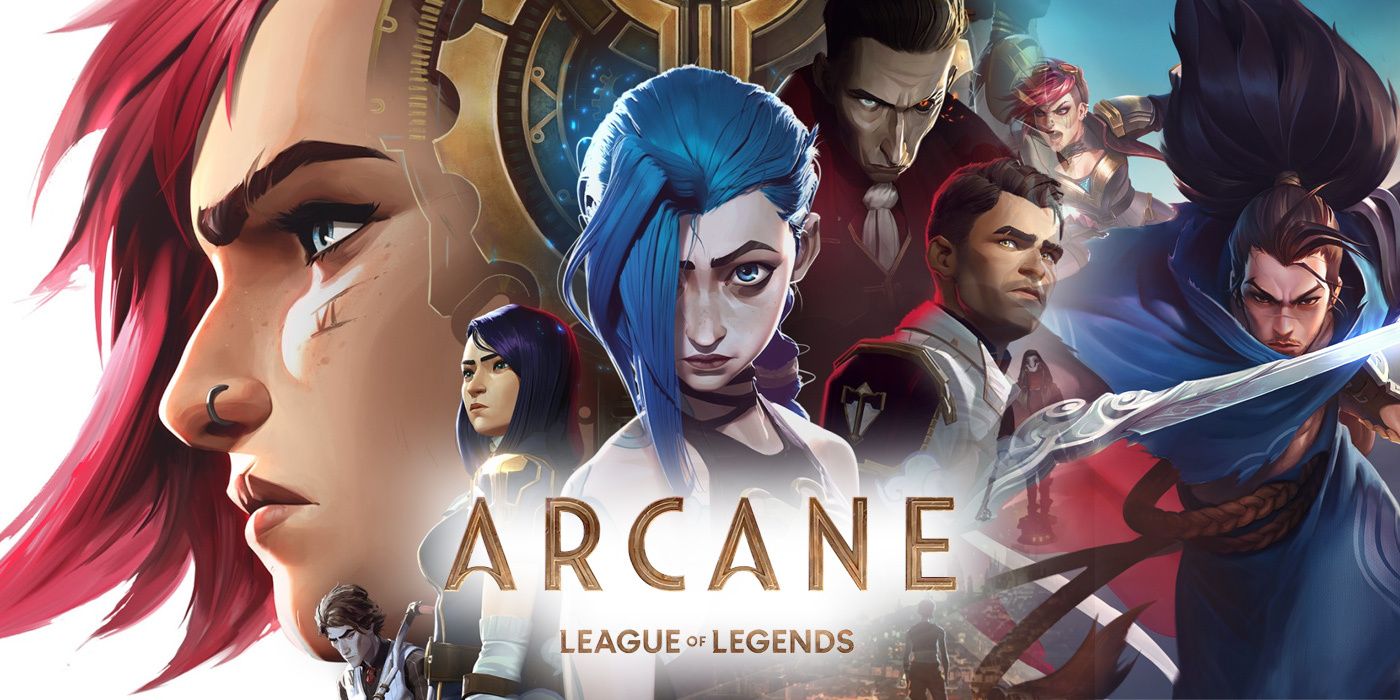
The distinct visual identities of Piltover, the gleaming city of progress, and Zaun, its undercity counterpart, are brought to life through sophisticated environmental design techniques. The technological approach involves creating environments that are not only visually appealing but also rich in detail and believable in their construction.
- Modular Asset Creation: To build the sprawling cities of Piltover and Zaun efficiently, Fortiche likely employed a modular asset creation pipeline. This involves designing individual building blocks, street sections, and environmental elements that can be reused and reconfigured to construct vast urban landscapes. This approach, facilitated by advanced 3D modeling software, allows for a high degree of complexity and variation without the prohibitive cost of creating every element from scratch.
- Procedural Texturing for Verisimilitude: The distinction between Piltover’s polished chrome and gleaming glass and Zaun’s grimy, industrial aesthetic is achieved through advanced texturing techniques. Procedural textures, which are generated by algorithms rather than painted directly, are invaluable here. These can simulate worn metal, rusted pipes, chipped paint, and other elements of urban decay, creating a sense of history and lived experience. This technology allows for a level of detail that would be incredibly time-consuming to achieve manually, while still offering artistic control over the outcome.
- Lighting as a Narrative Tool: The lighting design is a crucial technological and artistic element that differentiates the two cities. Piltover is bathed in a bright, often artificial light that emphasizes its technological advancement and perceived order. Zaun, conversely, is shrouded in darkness, illuminated by flickering gas lamps, neon signs, and the eerie glow of industrial processes. The sophisticated rendering engines and compositing techniques allow for complex volumetric lighting, god rays, and atmospheric scattering, creating a tangible sense of atmosphere and mood that directly reflects the narrative themes.
Intricate Prop Design and Integration for World-Building
The props in Arcane are not mere set dressing; they are integral to the storytelling, revealing character, and adding layers of lore to the world. The technology involved in their creation and integration is as meticulous as that used for the characters and environments.
- High-Detail Modeling and Texturing: Each gadget, weapon, piece of clothing, or street-level detritus is modeled with an extraordinary level of detail. This involves extensive use of polygonal modeling and sculpting software. The textures are then applied with the same care as character textures, ensuring that even the smallest objects feel tactile and lived-in. The technology facilitates the creation of complex materials, from the gleam of polished metal to the rough texture of weathered wood.
- Rigging and Animation of Props: Many props are not static objects but have mechanical components that are animated to enhance the narrative. Think of the intricate workings of Viktor’s mechanical arm, the steam vents in Zaun, or the elaborate machinery in Piltover’s labs. The technological pipeline allows for complex rigging of these props, enabling them to move and interact realistically within the animated scenes. This adds a layer of dynamism and believability to the world.
- Integration with Character Animation: The seamless integration of props with character animation is a testament to the sophisticated compositing and rendering pipeline. When a character interacts with an object, the lighting, shadows, and material properties of both the character and the prop must be consistent. This requires a high degree of technical coordination and artistic oversight, ensuring that every interaction feels grounded and authentic within the stylized world.
The technological choices in environmental and prop design are paramount to Arcane’s success in building a believable and captivating world. They demonstrate how advanced 3D tools, when guided by a strong artistic vision, can create environments that are not only visually stunning but also deeply immersive and narratively significant.
The Engine of Emotion: Character Performance and Technological Expression
Perhaps the most significant contribution of Arcane’s technological innovation lies in its ability to translate complex human emotions and nuanced performances onto animated characters. The series elevates character expression to an art form, leveraging cutting-edge techniques to create individuals who feel remarkably alive, flawed, and deeply relatable.
Advanced Rigging and Facial Animation for Expressive Depth
The core of compelling character performance in any medium is the ability to convey emotion. In Arcane, this is achieved through a sophisticated blend of advanced rigging technology and highly skilled animators.
- Intricate Bone and Muscle Systems: The 3D character models are equipped with highly detailed digital rigs. These rigs are not just simple skeletons; they often incorporate complex muscle systems and facial deformation controls that allow for a vast range of movement and subtle expressions. This level of detail ensures that characters can perform a wide spectrum of emotions, from subtle twitches of annoyance to profound expressions of grief or joy.
- Performance Capture and Animation Blending: While Fortiche Production emphasizes artistic control over pure motion capture, it’s highly probable that performance capture data serves as a foundational layer for character movement. This data is then heavily refined and stylized by animators. The technology allows for the blending of motion capture data with keyframe animation, enabling animators to capture the essence of a performance while injecting the unique stylistic qualities of Arcane. This hybrid approach ensures that characters move with a naturalistic weight and fluidity, while also possessing an exaggerated expressiveness that enhances their emotional impact.
- Subtle Facial Nuances: The true power of Arcane’s character animation lies in the subtle details of facial expression. The technology behind the facial rigs allows for the meticulous control of individual facial muscles, enabling animators to convey micro-expressions – fleeting shifts in emotion that make characters feel incredibly human. A slight furrow of the brow, a barely perceptible tightening of the jaw, or a subtle shift in eye gaze can communicate volumes without a single word of dialogue. This level of detail is a direct result of sophisticated rigging and animation software, combined with an artist’s understanding of human psychology.

The Synergy of Voice Acting and Animation: A Technological Harmony
The emotional resonance of Arcane’s characters is also amplified by the seamless integration of voice acting with animation. This synergy is a prime example of how technology can serve to enhance artistic collaboration.
- Lip-Sync Accuracy and Emotional Delivery: Achieving accurate and expressive lip-sync is a fundamental challenge in animation. Arcane’s technological pipeline excels in this area. The facial rigs are designed to facilitate precise mouth movements that correspond to the spoken dialogue. However, it’s not just about matching phonemes; the animation captures the emotional intent behind the words. A character’s mouth might move differently when delivering a threat compared to a confession, reflecting the underlying emotion.
- Animating Beyond Dialogue: The technology also allows animators to go beyond simple lip-sync, incorporating body language and subtle facial cues that complement the voice performance. A character’s posture, hand gestures, and even the slight tremors in their voice can be visually translated through animation, creating a richer and more multi-layered performance. This is where the artistic interpretation of the voice acting truly shines, enhanced by the technological tools available.
- Performance Director’s Role: It is worth noting that the success of this synergy often involves a “performance director” or a similar role who bridges the gap between voice actors and animators. This individual helps translate the nuances of the voice performance into actionable direction for the animation team, ensuring that the visual representation truly captures the intended emotion. The technology provides the means, but the human element guides its application.
The technological advancements in character rigging, facial animation, and the seamless integration with voice acting are what truly bring the characters of Arcane to life. They allow the series to explore complex themes of family, betrayal, ambition, and loss with an emotional depth that resonates deeply with viewers, solidifying its place as a groundbreaking achievement in animated storytelling.
aViewFromTheCave is a participant in the Amazon Services LLC Associates Program, an affiliate advertising program designed to provide a means for sites to earn advertising fees by advertising and linking to Amazon.com. Amazon, the Amazon logo, AmazonSupply, and the AmazonSupply logo are trademarks of Amazon.com, Inc. or its affiliates. As an Amazon Associate we earn affiliate commissions from qualifying purchases.