
When discussing the evolution of handheld gaming software, few titles hold as much technical significance as Pokémon Black. Released for the Nintendo DS, Pokémon Black represents the definitive start of the “Fifth Generation” of the Pokémon franchise. While casual players remember it for its new roster of creatures and its more mature narrative, from a technological standpoint, Pokémon Black was a masterclass in extracting every possible ounce of performance from aging hardware.
To understand what generation Pokémon Black belongs to is to understand a pivotal moment in software engineering where 2D artistry met early 3D environmental rendering. It was a period where the Nintendo DS was nearing the end of its lifecycle, yet Game Freak pushed the system’s ARM9 and ARM7 processors to their absolute limits.
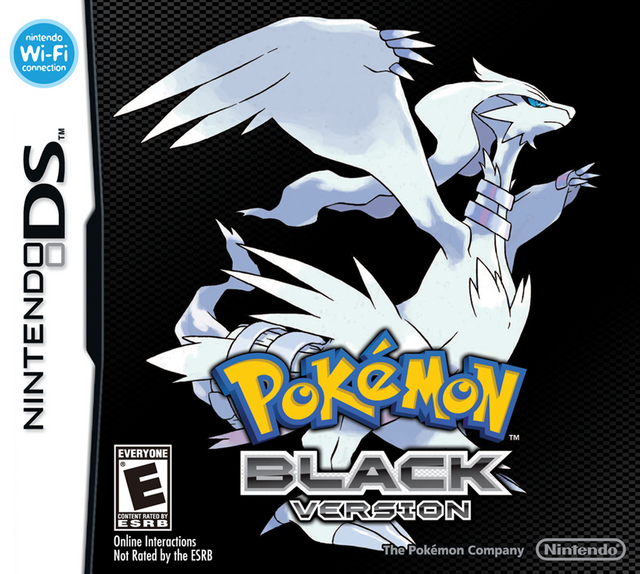
The Software Architecture of Generation 5: Maximizing the Nintendo DS
Pokémon Black arrived at a time when the industry was shifting toward the 3DS, yet it remained anchored to the original Nintendo DS hardware. This choice necessitated an incredible amount of optimization. As the flagship of the fifth generation, the game’s code had to be significantly more efficient than its predecessors, Pokémon Diamond, Pearl, and Platinum.
The Transition from Gen 4 to Gen 5 Codebases
The jump from the fourth generation to the fifth was not merely aesthetic; it was a fundamental overhaul of the game engine. Generation 4 was often criticized for its slow processing speeds—specifically in HP bar depletion and menu navigation. In Pokémon Black, the developers redesigned the core battle engine to prioritize frame rate and responsiveness. This was achieved through better memory management and a more streamlined handling of the DS’s dual-screen output.
Leveraging the ARM9 and ARM7 Processors
The Nintendo DS utilized a dual-processor architecture: the ARM9 for game logic and 3D rendering, and the ARM7 for sound and Wi-Fi management. Pokémon Black maximized this by offloading complex background tasks to the ARM7, allowing the ARM9 to focus on the game’s increasingly complex visual calculations. This technical synergy allowed for the introduction of dynamic weather effects and seasonal changes that were calculated in real-time without compromising the stability of the software.
The Engine Evolution: Moving Beyond Static Sprites
The most striking technical achievement of Pokémon Black is its visual engine. For the first time in the series, the developers moved away from static sprites in favor of fully animated, constantly moving assets. This was a massive undertaking for a system with limited VRAM.
Dynamic Camera Systems and Visual Fidelity
Generation 5 introduced a “pseudo-3D” or 2.5D environment. Unlike the static overhead cameras of previous generations, Pokémon Black featured a dynamic camera that zoomed in and out depending on the player’s location. In areas like Castelia City, the engine handled a high volume of moving NPCs and massive 3D structures. The software achieved this by using a combination of 3D models for buildings and clever sprite scaling for characters, creating an illusion of depth that was revolutionary for the hardware.
Animation Loops and Sprite Memory Management
In previous generations, a Pokémon sprite was a single, static image that might have a two-frame entry animation. In Pokémon Black, every single Pokémon remains in constant motion. To achieve this without crashing the system, Game Freak used a technique involving “segmented sprites.” Instead of loading one giant animated file, the engine broke the Pokémon into pieces (e.g., a tail, a wing, a head) and animated them along different axes. This modular approach saved significant amounts of memory while providing a fluidity that made the digital world feel alive.

Network Infrastructure: The Dawn of Global Link and Online Connectivity
Pokémon Black was not just a standalone piece of software; it was a pioneer in integrating handheld gaming with web-based services. The fifth generation introduced the Pokémon Global Link (PGL), a sophisticated suite of online tools that expanded the game’s functionality beyond the console itself.
Integrating Web-Based Services with Handheld Software
One of the most ambitious technical features of Pokémon Black was the “Game Sync” function. This allowed players to upload their save data to a web server, where they could interact with the “Pokémon Dream World” via a PC browser. This required a robust data-handshaking protocol between the Nintendo DS’s limited Wi-Fi capabilities and modern web servers. The synchronization of items, Pokémon, and berries between a browser-based Flash environment and the DS’s internal save file was a landmark achievement in cross-platform data management.
Infrared Communications and Local Data Transfer
Beyond the internet, Pokémon Black revolutionized local connectivity through the “C-Gear.” Unlike previous titles that required players to visit a specific “Union Room” in-game to trade, Pokémon Black utilized the infrared (IR) port built directly into the game cartridge. This hardware-level integration allowed for near-instantaneous communication between two DS systems. By embedding the IR tech in the cartridge rather than relying on the console’s slower internal wireless, the fifth generation provided a “plug-and-play” connectivity experience that was years ahead of its time.
Software Security and the Evolution of Anti-Piracy Measures
As software became more complex, so did the methods used to protect it. Pokémon Black is well-known in the tech community for its sophisticated anti-piracy (AP) measures. During its release, the fifth generation represented a high-water mark for digital rights management on a handheld system.
Advanced Anti-Piracy Triggers
Developers at Game Freak implemented creative “logic bombs” within the code to deter unauthorized copying. If the game’s internal check detected it was running on a flashcart or an emulator without the proper patches, it wouldn’t simply crash. Instead, it would disable the experience point (EXP) system. Players could progress through the game, but their Pokémon would never level up, effectively making the software unplayable after the first few minutes. This required a deep understanding of how unauthorized hardware intercepted game data.
The Technical Challenges of Modern Emulation
Even today, Pokémon Black poses unique challenges for software emulation. Because the game relies heavily on the specific timing of the DS’s ARM9/ARM7 sync and utilizes unique IR hardware in the cartridge, creating a perfect digital replica is difficult. Emulators must accurately simulate the “C-Gear” wireless pings, which occur constantly in the background. If the timing is off by even a few milliseconds, the game logic can desync, leading to “black screen” errors. This highlights just how tightly integrated the software was with its original hardware.

The Enduring Technical Legacy of Generation 5
Pokémon Black stands as a testament to what can be achieved when developers treat hardware limitations not as barriers, but as creative constraints. By the time the fifth generation concluded, it had laid the groundwork for many of the features we take for granted in modern gaming: seamless online connectivity, dynamic camera angles, and sophisticated data synchronization.
From a technological perspective, Pokémon Black was more than just a game; it was a high-performance engine that pushed 2D sprite work to its absolute peak while ushering in the 3D era. It remains a primary case study for software engineers interested in optimization and the art of “coding to the metal.” As we move further into an era of cloud gaming and ultra-high-definition graphics, looking back at the technical hurdles overcome by the fifth generation of Pokémon provides a valuable lesson in efficiency, security, and innovative design.
aViewFromTheCave is a participant in the Amazon Services LLC Associates Program, an affiliate advertising program designed to provide a means for sites to earn advertising fees by advertising and linking to Amazon.com. Amazon, the Amazon logo, AmazonSupply, and the AmazonSupply logo are trademarks of Amazon.com, Inc. or its affiliates. As an Amazon Associate we earn affiliate commissions from qualifying purchases.