
Since its debut in 2010, the iPad has transformed from a “large-screen iPhone” into a sophisticated computing powerhouse that often rivals high-end laptops. However, for the average consumer or tech enthusiast, the sheer number of models can be overwhelming. When someone asks, “What gen is iPad on?” the answer isn’t a single number. Instead, it is a matrix of four distinct product lines, each serving a different niche in the mobile computing market.
As of mid-2024, Apple has refreshed nearly its entire stack, introducing groundbreaking hardware like the M4 chip and Tandem OLED displays. To understand where the iPad stands today, we must break down the current generations across the Pro, Air, Standard, and Mini categories, while exploring the technical milestones that define this current era of tablet technology.

The State of the iPad in 2024: A Four-Tiered Ecosystem
Apple currently maintains four distinct iPad lines. Because these products are updated on different cycles, each “generation” number refers only to that specific model line rather than the iPad family as a whole.
The iPad Pro: The Seventh Generation (M4 Era)
The pinnacle of Apple’s tablet engineering is the 2024 iPad Pro. This model represents the 7th generation of the iPad Pro 12.9-inch (now transitioned to 13-inch) and the corresponding 11-inch version. This generation is a technical marvel, skipping the M3 chip entirely to debut the M4 processor. The move to a 3nm architecture makes this the most powerful tablet on the market, capable of handling professional video grading, 3D rendering, and complex AI workflows.
The iPad Air: The Sixth Generation (M2 Era)
The iPad Air is currently in its 6th generation. Traditionally a 10.9-inch device, the latest generation has expanded to include a 13-inch variant for the first time. By incorporating the M2 chip, the 6th-generation Air sits comfortably between the entry-level model and the Pro, offering “Pro-level” performance for users who don’t necessarily need the ultra-advanced display technology of the flagship model.
The Standard iPad: The Tenth Generation
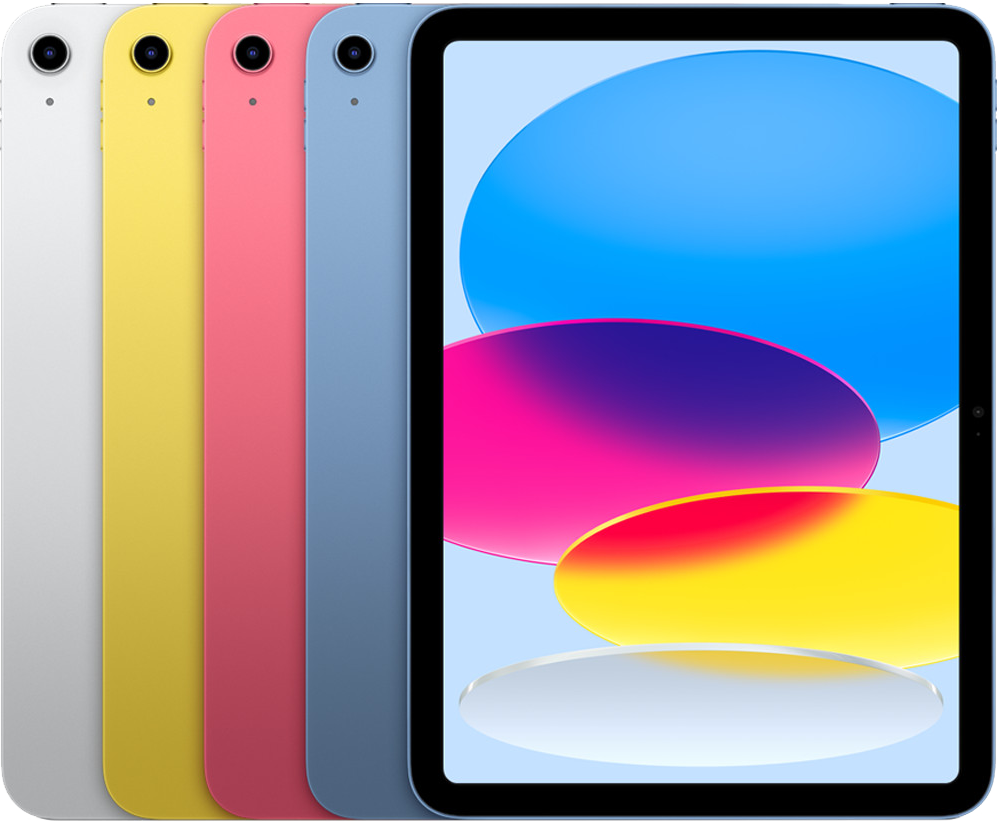
The “iPad”—often referred to as the “Classic” or “Standard” model—is currently in its 10th generation. This model was a significant milestone for the entry-level line, as it finally ditched the Lightning port for USB-C and adopted the modern, bezel-less design language of its more expensive siblings. While it still uses the A14 Bionic chip, it remains the most popular choice for education and general media consumption.
The iPad Mini: The Sixth Generation
The iPad Mini is currently in its 6th generation. Despite being one of the older models in the current lineup (released in late 2021), it remains a cult favorite due to its portability. It features the A15 Bionic chip and a design that mirrors the iPad Air, offering a compact 8.3-inch Liquid Retina display.
How to Identify Your iPad Generation: Hardware and Software Cues
Determining which generation you own is crucial for software compatibility, accessory purchases, and trade-in value. Apple does not print the generation name on the back of the device, which often leads to confusion.
Finding the Model Number in iPadOS
The most accurate way to identify your device is through the software. By navigating to Settings > General > About, you will see a field labeled “Model Name.” This will explicitly state, for example, “iPad Air (5th Generation)” or “iPad Pro 11-inch (4th Generation).”
If the device is disabled or won’t turn on, you can look for the model number (starting with ‘A’ followed by four digits) printed in small text on the back of the aluminum casing. Cross-referencing this ‘A’ number on Apple’s official support site will give you the exact generation.
Physical Indicators and Port Transitions
The “generation gap” is often visible through physical ports and button placements.
- The Home Button: If your iPad has a physical circular Home Button on the front, it is a 9th-generation Standard iPad or older.
- USB-C vs. Lightning: The transition to USB-C is a major generational marker. All current-generation iPads (Pro M4, Air M2, 10th Gen, and Mini 6) utilize USB-C. If your iPad uses a Lightning cable, it is an older generation.
- Camera Placement: In the latest 2024 updates (Pro M4 and Air M2) and the 10th Gen Standard iPad, the front-facing camera has been moved to the landscape edge. This is a clear indicator that you are using one of the most recent generations designed for laptop-style video conferencing.
Technical Milestones: What Sets the Current Generations Apart?
Apple has moved away from incremental updates, using new generations to introduce “category-defining” technology. Understanding these technical leaps explains why the current generation of iPads feels so different from those of five years ago.
The Silicon Revolution: A-Series to M-Series
The most significant shift in iPad history occurred when Apple moved the Pro and Air lines to “Apple Silicon” (the M1, M2, and now M4 chips). This brought desktop-class architecture to a mobile form factor. The current 7th Gen Pro with the M4 chip features a specialized Neural Engine designed specifically for AI tasks, signaling Apple’s pivot toward “Apple Intelligence.”
Tandem OLED and Display Engineering
With the 7th Gen iPad Pro, Apple introduced “Tandem OLED” technology. Unlike standard OLEDs, which can struggle with brightness, Tandem OLED layers two panels to achieve 1,000 nits of full-screen brightness and 1,600 nits of peak HDR brightness. This makes the current Pro generation a critical tool for HDR photographers and cinematographers, a far cry from the basic LCD panels of the early generations.
The Apple Pencil Evolution
Generational shifts also dictate accessory compatibility. We are currently seeing a transition to the Apple Pencil Pro, which is only compatible with the newest M4 Pro and M2 Air models. This stylus introduces haptic feedback and a “squeeze” gesture, features that older generations lack the internal hardware (magnetic charging and pairing logic) to support.
Why the Generation Matters: Longevity and Apple Intelligence
In the tech world, “what generation” you are on determines your device’s expiration date. This has become even more pertinent with the announcement of Apple Intelligence, Apple’s suite of AI features.
The AI Hardware Requirement
Apple Intelligence requires significant RAM and NPU (Neural Processing Unit) throughput. Currently, only iPads with an M1 chip or later can support these features. This means that while a 9th-generation iPad is still a functional device, it is technically “obsolete” in the context of the upcoming AI-driven iPadOS 18 features. Knowing your generation helps you understand if your device will receive the next five years of updates or just the next two.
App Ecosystem and Professional Software
For users in the creative tech space, generation determines software availability. Applications like Final Cut Pro for iPad and Logic Pro for iPad have specific chip requirements. The current generation of iPad Pro and Air are designed as “modular computers,” where the hardware is finally powerful enough to run desktop-grade code without thermal throttling.
The Future of the iPad: What’s Next?
While we are currently in the era of the M4 Pro and M2 Air, the tech cycle never stops. Rumors within the industry suggest that the next generational shifts will focus on the iPad Mini and the Standard iPad.
Anticipating the iPad Mini 7 and iPad 11
The iPad Mini 6 is nearly three years old, making it the oldest “current” generation in the fleet. Tech analysts expect a 7th-generation Mini to arrive shortly, likely featuring an A17 Pro or A18 chip to bring it into the Apple Intelligence fold. Similarly, an 11th-generation Standard iPad is expected to refine the entry-level experience, potentially offering more RAM to handle the increasing demands of modern iPadOS.
The Folding iPad and Beyond
Beyond simple generational numbering, the tech industry is buzzing about the possibility of a foldable iPad. This would represent a “Generation Zero” for a new category of Apple devices, potentially merging the portability of the Mini with the screen real estate of the 13-inch Pro.

Conclusion
To answer “what gen is iPad on,” one must look at the specific branch of the family tree. The iPad Pro is on its 7th Generation, the iPad Air on its 6th, the Standard iPad on its 10th, and the iPad Mini on its 6th.
Staying informed about these generations is more than just trivia; it is essential for navigating an ecosystem where hardware capabilities define your software experience. Whether it is the M4 chip’s unparalleled speed or the Tandem OLED’s visual brilliance, the current generation of iPads represents a peak in mobile engineering, blurring the lines between what is a tablet and what is a professional-grade computer.
aViewFromTheCave is a participant in the Amazon Services LLC Associates Program, an affiliate advertising program designed to provide a means for sites to earn advertising fees by advertising and linking to Amazon.com. Amazon, the Amazon logo, AmazonSupply, and the AmazonSupply logo are trademarks of Amazon.com, Inc. or its affiliates. As an Amazon Associate we earn affiliate commissions from qualifying purchases.