
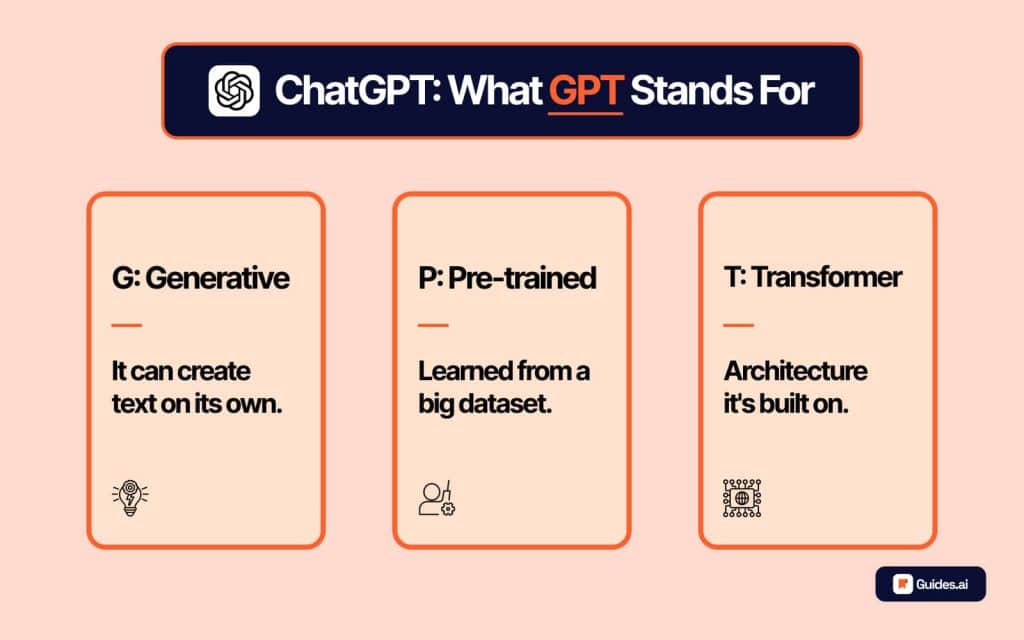
The acronym “GPT” has permeated conversations from boardrooms to dinner tables, signifying a seismic shift in how we interact with technology and information. Generative Pre-trained Transformers, or GPTs, represent a pinnacle in artificial intelligence, showcasing capabilities that were once confined to the realm of science fiction. These sophisticated models, powered by vast datasets and intricate neural network architectures, are not merely tools but collaborators, poised to redefine industries, creative processes, and our very relationship with digital content. This article delves into what GPT truly is, its underlying mechanics, its transformative applications, and the ethical considerations that accompany its rapid evolution.

The Genesis and Evolution of GPT Models
The journey of GPT models is a testament to the relentless pace of AI research, building on decades of foundational work in natural language processing (NLP) and machine learning. From rudimentary rule-based systems to the statistical models of the early 21st century, the field has continuously sought more nuanced and human-like ways to process and generate language. GPT represents a significant leap, moving beyond mere comprehension to creative synthesis.
From Transformers to Generative Powerhouses
The “Transformer” architecture, introduced by Google in 2017, was a pivotal breakthrough. Prior to this, recurrent neural networks (RNNs) and long short-term memory (LSTMs) were the dominant architectures for sequence data like language, but they struggled with long-range dependencies and were difficult to parallelize during training. Transformers, with their self-attention mechanism, revolutionized this by allowing the model to weigh the importance of different words in a sentence, regardless of their position, facilitating a more holistic understanding of context.
GPT models, pioneered by OpenAI, harnessed this Transformer architecture and scaled it to unprecedented levels. The “Pre-trained” aspect refers to the initial phase where models are trained on colossal amounts of text data from the internet – books, articles, websites, and more. This unsupervised pre-training allows the model to learn grammar, facts, reasoning abilities, and even stylistic nuances of language without explicit instruction. Subsequently, “Generative” describes their ability to produce new, original content, be it text, code, or even creative narratives, based on a given prompt or input.
Key Milestones in GPT Development
The evolution of GPT has been marked by a series of increasingly powerful iterations. GPT-1 showcased the potential of pre-training on a large corpus. GPT-2, initially controversial due to its impressive human-like text generation, raised early questions about misuse. GPT-3 solidified the “few-shot learning” paradigm, demonstrating remarkable performance on new tasks with minimal examples, without requiring extensive fine-tuning. Each subsequent version, including GPT-3.5 (the basis for many early chatbot applications like ChatGPT) and GPT-4, has shown exponential improvements in reasoning, factual accuracy, multimodal capabilities, and overall robustness, pushing the boundaries of what AI can achieve. These advancements are driven by larger model sizes, more diverse training data, and increasingly sophisticated training techniques.
How GPT Models Work: An Inside Look
At its core, a GPT model is a sophisticated statistical prediction engine for language. While it doesn’t “understand” in the human sense, it processes patterns and relationships within language with astonishing proficiency, enabling it to produce coherent and contextually relevant text.
The Mechanism of Token Prediction
When you give a GPT model a prompt, it breaks down your input into “tokens.” A token can be a word, part of a word, or even punctuation. The model then uses its pre-trained knowledge to predict the most probable next token in a sequence, based on the preceding tokens. It does this iteratively, generating one token at a time, until it forms a complete response or reaches a specified length. This process is often guided by a temperature parameter, which influences the randomness and creativity of the output – higher temperatures lead to more varied and less predictable text, while lower temperatures result in more focused and deterministic responses.
The self-attention mechanism within the Transformer architecture is crucial here. It allows the model to assess the relevance of every other token in the input sequence when predicting the next token. For instance, in the sentence “The bank decided to raise its interest rates,” when predicting the word “interest,” the model pays more attention to “bank” and “rates” than to “decided” or “its,” correctly inferring the financial context. This ability to capture complex dependencies across long sequences is what gives GPT its remarkable coherence.
Training Data and Model Parameters
The quality and quantity of training data are paramount to a GPT model’s capabilities. These models are typically trained on petabytes of text data, encompassing a vast array of topics, styles, and formats. This expansive exposure allows the model to learn general knowledge, common sense, grammar, and even stylistic nuances, making it versatile across diverse tasks. The sheer scale of parameters within these models—reaching into the hundreds of billions for advanced versions—allows them to store and apply an incredible amount of learned information, enabling them to generalize and perform tasks that they were not explicitly programmed for. This pre-training phase is incredibly computationally intensive, requiring immense processing power and energy.

Transformative Applications Across Industries
The versatile nature of GPT models has led to their adoption across an ever-widening spectrum of applications, fundamentally altering how businesses operate, how individuals create, and how we access information. From automating mundane tasks to sparking unprecedented creativity, GPT’s impact is profound and still unfolding.
Enhancing Productivity and Automation
One of the most immediate benefits of GPT is its ability to automate and streamline tasks that traditionally required human effort. In customer service, AI-powered chatbots can handle inquiries 24/7, providing instant support and freeing human agents for more complex issues. For content creators, GPT can generate draft articles, social media posts, email campaigns, and marketing copy, significantly reducing the time and effort required for content production. Developers use GPT for code generation, debugging, and explaining complex code snippets, accelerating software development cycles. Even in legal and medical fields, GPT can assist in drafting documents, summarizing research, and generating preliminary reports, acting as a powerful assistant.
Revolutionizing Content Creation and Creativity
GPT has emerged as a formidable tool for creative professionals, offering new avenues for exploration. Authors and screenwriters use it to brainstorm plot ideas, develop characters, and overcome writer’s block. Musicians experiment with AI-generated lyrics and even melodic suggestions. Designers leverage it to generate textual variations for user interfaces or marketing materials. The ability of GPT to generate diverse and contextually appropriate text on demand empowers individuals and organizations to scale their creative output, personalize content for niche audiences, and explore entirely new forms of storytelling and artistic expression. It shifts the creative process from sole authorship to a collaborative dance between human imagination and AI assistance.
Powering Intelligent Search and Information Retrieval
Beyond simple keyword matching, GPT models are enhancing search engines and information retrieval systems by understanding natural language queries and providing more direct, synthesized answers rather than just links. This semantic search capability allows users to ask complex questions in conversational language and receive concise, relevant information derived from various sources. In specialized fields, GPT can act as a knowledge assistant, sifting through vast databases of scientific papers, legal precedents, or medical records to extract critical information and insights, making specialized knowledge more accessible and actionable.
Navigating the Challenges and Ethical Landscape
While the potential of GPT is immense, its widespread adoption also brings forth a range of challenges and ethical considerations that demand careful attention and proactive solutions. These issues span from data privacy and algorithmic bias to job displacement and the very nature of truth and authenticity.
Addressing Bias and Misinformation
GPT models learn from the data they are trained on, and if that data contains biases (e.g., gender stereotypes, racial prejudices, or historical inaccuracies), the model will reflect and even amplify those biases in its outputs. Ensuring fairness and equity requires meticulous curation of training data and ongoing efforts to detect and mitigate bias in model behavior. Furthermore, the ability of GPT to generate highly convincing but entirely fabricated text raises concerns about the spread of misinformation, deepfakes, and propaganda. Developing robust methods for identifying AI-generated content and promoting critical information literacy are crucial countermeasures.
Data Privacy and Security Implications
The massive amounts of data processed by GPT models raise significant privacy concerns. While training data is typically anonymized and aggregated, there’s always a risk of sensitive information inadvertently being learned or reproduced by the model. Moreover, when users interact with GPT-powered applications, their inputs are often used to fine-tune or improve the models, necessitating clear policies on data handling, consent, and security. Protecting user data and ensuring transparency in how information is used are fundamental to building trust in AI technologies.
The Future of Work and Human Creativity
The automation capabilities of GPT raise questions about the future of work. While new jobs related to AI development, supervision, and prompt engineering are emerging, there’s a legitimate concern about job displacement in sectors reliant on repetitive or knowledge-based tasks. Societies must prepare for these shifts through education, retraining programs, and robust social safety nets. Equally important is the discussion around human creativity. As AI becomes more adept at generating creative content, it prompts introspection on the unique value of human originality, intention, and emotional depth in artistic expression. The goal should be to foster a collaborative future where AI augments human creativity rather than diminishing it.
The Path Forward: Responsible AI Development
The journey with GPT and other generative AI models is still in its early stages, yet its trajectory is clear: these technologies will continue to grow in capability and influence. The imperative now is to guide this evolution responsibly, ensuring that the benefits are maximized while risks are carefully managed.
This requires a multi-faceted approach involving researchers, policymakers, industry leaders, and the public. Investing in AI ethics research, developing clear regulatory frameworks, fostering international collaboration on AI governance, and promoting public education are all vital steps. Ultimately, the future of GPT, and indeed all advanced AI, hinges on our collective ability to harness its power for good, building a future where intelligence, both artificial and human, works in harmony to address the world’s most pressing challenges and enrich human experience. The conversation around “what gbt” is not just about a technological marvel; it’s about shaping the future of society itself.
aViewFromTheCave is a participant in the Amazon Services LLC Associates Program, an affiliate advertising program designed to provide a means for sites to earn advertising fees by advertising and linking to Amazon.com. Amazon, the Amazon logo, AmazonSupply, and the AmazonSupply logo are trademarks of Amazon.com, Inc. or its affiliates. As an Amazon Associate we earn affiliate commissions from qualifying purchases.