
In the world of body modification, the eyebrow piercing remains a classic expression of personal style. Whether you are aiming for a minimalist look or a bold aesthetic, understanding the technical specifications of your jewelry is paramount to maintaining the health of your piercing. When it comes to the question of “what gauge is an eyebrow ring,” the answer lies in a combination of anatomical safety, material quality, and long-term comfort.
The Standard Gauge: Understanding Jewelry Sizing
For the vast majority of eyebrow piercings, the industry standard is 16 gauge (1.6mm). While some piercers may occasionally work with 18 gauge (1.0mm) for a more delicate appearance, 16 gauge is widely considered the “sweet spot” for stability and healing.

Why 16 Gauge Is the Industry Benchmark
The gauge of a piercing refers to the thickness of the metal wire. A lower number indicates a thicker piece of jewelry. When a piercer selects 16 gauge for an eyebrow, they are accounting for the “migration” factor. Eyebrow piercings are surface piercings, meaning the skin is relatively thin and prone to movement. A 16 gauge post provides enough structural integrity to resist the natural tension of the skin, whereas a thinner 18 gauge post might be more likely to migrate or be rejected by the body over time.
The Impact of Gauge on Healing
Choosing the correct gauge at the time of the initial piercing is critical. If a piercing is performed with a gauge that is too thin, the skin may treat the jewelry like a foreign object, slowly pushing it toward the surface of the skin until it eventually grows out. Conversely, moving to a gauge that is too thick can cause unnecessary trauma to the tissue. Adhering to the standard 16 gauge ensures that the healing channel is stable and uniform.
Materials and Their Role in Piercing Success
While gauge defines the thickness of the jewelry, the material it is crafted from determines how your body reacts to the piercing. Because eyebrow piercings are near the eyes and subject to external environmental factors, material selection is as important as the size.
Implant-Grade Titanium (ASTM F-136)
If you are looking for the gold standard in body jewelry, look no further than implant-grade titanium. It is nickel-free, lightweight, and hypoallergenic, making it the top recommendation for initial piercings. Because it is highly biocompatible, it minimizes the risk of allergic reactions or irritation. For an individual who is unsure of their skin sensitivity, titanium is the safest possible choice.
Surgical Steel and Gold
While surgical steel is often used in body jewelry, it does contain trace amounts of nickel, which can lead to contact dermatitis in sensitive individuals. If you choose to wear steel, ensure it is ASTM F-138 compliant. Gold, specifically 14k or higher, is a luxurious alternative, but it must be solid gold. Gold-plated jewelry should strictly be avoided for initial piercings, as the plating can flake off into the healing wound, leading to infection or prolonged inflammation.
The Role of Bio-Flex and Acrylic
You may encounter plastic or acrylic retainers designed for eyebrow piercings. These are generally intended for short-term use—such as hiding a piercing during a job interview or a medical procedure. They are not recommended for long-term wear because the material can become porous over time, harboring bacteria that can lead to irritation or infection. Always default back to metal once the short-term need has passed.
Determining the Correct Length and Shape
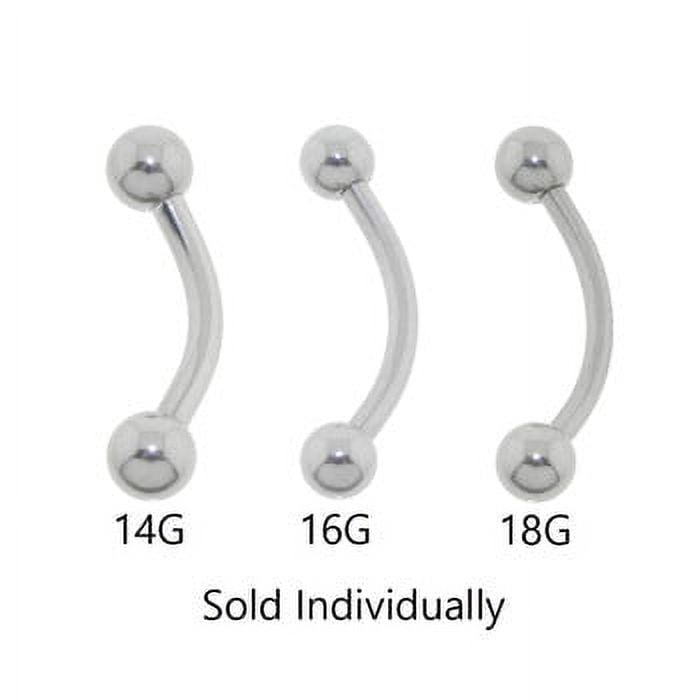
The gauge is only one half of the sizing equation. The length (or diameter) of your eyebrow ring is equally vital to the piercing’s health.
Measuring for the Right Fit
Eyebrow jewelry is usually measured from the inside of the bead to the inside of the bead for curved barbells. The standard length is typically between 5/16″ (8mm) and 3/8″ (10mm), depending on the anatomy of the wearer’s brow ridge. A piercer will typically start you with a slightly longer bar to accommodate the inevitable swelling that occurs during the first few weeks of healing.
The Curved Barbell vs. The Circular Barbell
The curved barbell is the most common jewelry type for eyebrow piercings because it mimics the natural curvature of the area. It is specifically designed to reduce pressure on the piercing channel.
- Curved Barbells: These provide the cleanest, most streamlined look and are often preferred for daily wear.
- Circular Barbells (Horseshoes): These offer a more industrial or edgy aesthetic. However, because they are wider and have more movement, they can snag on clothing or hair more easily. If you opt for a circular barbell, ensure the ends are securely fastened and that you are conscious of the jewelry’s wider footprint.
Professional Maintenance and Troubleshooting
Once your piercing has healed, you may be tempted to change your jewelry to suit a new style. Understanding how to manage your piercing over the long term is essential to keeping the site healthy and avoiding common complications.
Knowing When to Downsize
As mentioned, your piercer will likely provide a longer bar during the initial session to allow for swelling. Once the piercing has healed—usually after 6 to 8 weeks—you should return to your piercer for a “downsize.” This involves replacing the long post with a shorter, more form-fitting one. A bar that is too long once swelling has subsided can move excessively, leading to irritation bumps or “hypertrophic scarring.”
Recognizing Signs of Irritation
Even with the perfect 16 gauge titanium barbell, complications can occur. Watch for these warning signs:
- Redness and Swelling: While normal for the first week, prolonged swelling after the initial healing period indicates that the jewelry may be too tight or the material is causing an adverse reaction.
- Migration: If you notice that your jewelry seems to be getting closer to the surface of the skin, or that the entrance and exit holes are shifting, consult a professional piercer immediately.
- Infection: If you experience extreme heat, yellow or green discharge, or a fever, do not attempt to treat it with home remedies. Visit a medical professional, and avoid removing the jewelry unless instructed to do so, as this can trap bacteria inside the healing channel.
The Importance of Professional Piercers
The most significant mistake many individuals make is attempting to change their jewelry or perform their own piercings without professional guidance. A reputable piercer does more than just push a needle through skin; they act as a consultant for your long-term jewelry needs. They possess the tools to open jump rings properly, measure your anatomy accurately, and ensure that the gauge you choose is appropriate for your specific skin type and brow structure.

Style vs. Safety: Making Informed Decisions
The desire to experiment with jewelry colors, shapes, and thicknesses is a natural part of body modification. However, when you step outside the standard 16 gauge range, you introduce variables that can compromise the integrity of the piercing.
If you wish to stretch your eyebrow piercing—an uncommon practice compared to ear lobe stretching—you must do so under the supervision of an expert. Because eyebrow tissue is thin and limited, there is very little room for error. Stretching too quickly or using non-tapered methods can cause the tissue to tear or thin out, eventually leading to permanent loss of the piercing.
In summary, the question “what gauge is an eyebrow ring” is simple to answer, but the application of that knowledge requires diligence. By sticking to a 16 gauge implant-grade titanium barbell, maintaining proper hygiene, and seeking professional assistance for jewelry changes, you ensure that your piercing remains a safe and stylish component of your personal brand for years to come. Your body is a canvas, and the quality of the “tools”—in this case, your jewelry—is what keeps that canvas pristine.
aViewFromTheCave is a participant in the Amazon Services LLC Associates Program, an affiliate advertising program designed to provide a means for sites to earn advertising fees by advertising and linking to Amazon.com. Amazon, the Amazon logo, AmazonSupply, and the AmazonSupply logo are trademarks of Amazon.com, Inc. or its affiliates. As an Amazon Associate we earn affiliate commissions from qualifying purchases.