
Understanding the composition of our atmosphere is no longer a task confined to high school chemistry textbooks or abstract scientific research. In the modern era, the specific concentrations of nitrogen, oxygen, argon, and trace gases like carbon dioxide and methane have become critical data points for the global technology sector. From the deployment of hyperspectral satellites to the development of AI-driven climate models, technology is the primary lens through which we view and manage the invisible gases that sustain life. This article explores the intersection of atmospheric science and cutting-edge technology, detailing how we identify, measure, and respond to the molecular makeup of the air around us.
The Sensor Revolution: Measuring Chemical Compositions in Real-Time
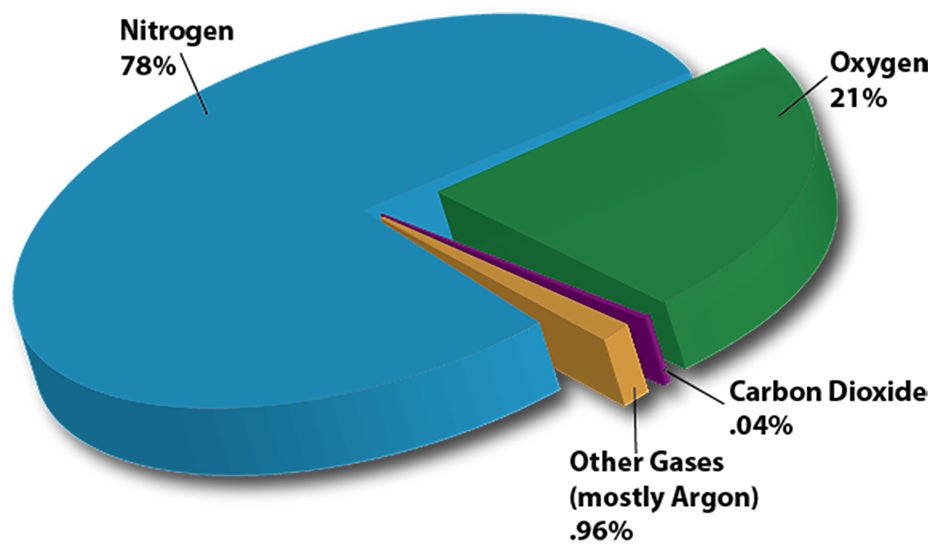
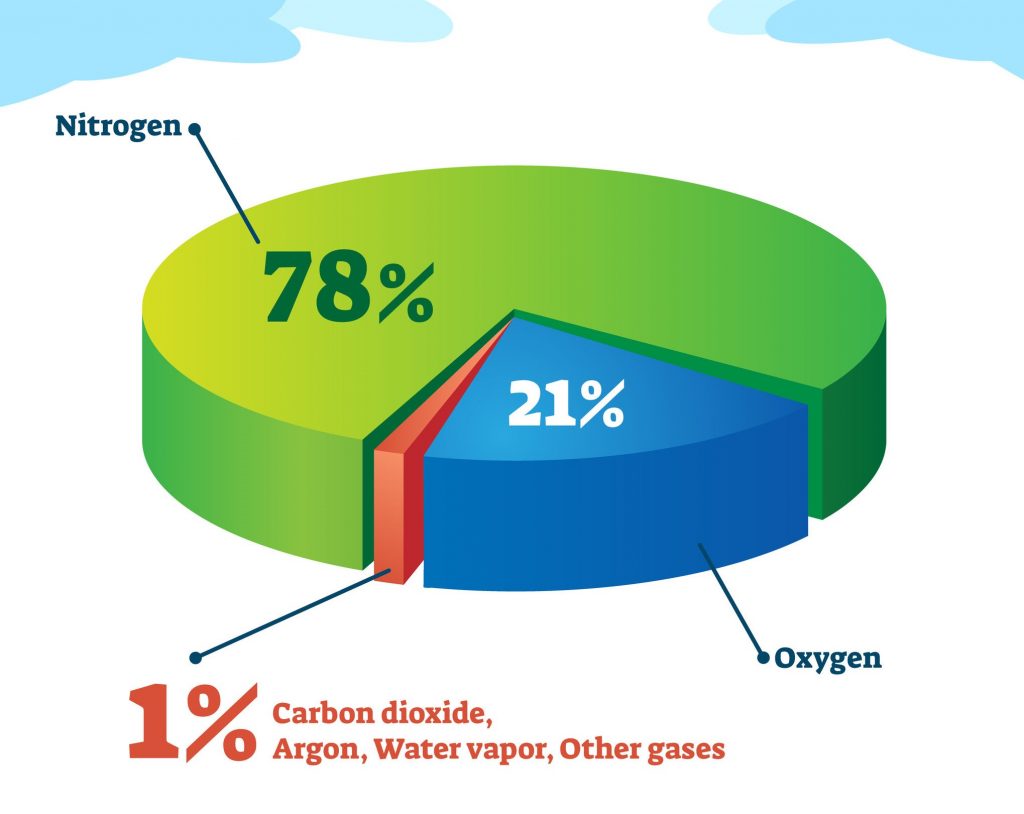
For decades, measuring the gases in our atmosphere required stationary laboratory equipment and manual sampling. Today, the tech industry has condensed these capabilities into high-precision sensors that provide real-time data at a granular level. The fundamental makeup of our atmosphere—roughly 78% nitrogen and 21% oxygen—remains relatively stable, but it is the monitoring of the final 1% (argon and trace gases) where technological innovation is most vibrant.
IoT and Ground-Based Air Quality Networks
The Internet of Things (IoT) has transformed atmospheric monitoring from a sparse network of government stations into a dense web of interconnected sensors. Low-cost, high-efficiency sensors now measure nitrogen dioxide (NO2), sulfur dioxide (SO2), and ozone (O3) in urban environments. These devices use electrochemical and optical sensing technologies to detect gas molecules at parts-per-billion (ppb) concentrations. By connecting these sensors to the cloud, city planners and tech companies can create “heat maps” of gas concentrations, allowing for smarter traffic management and localized health alerts.
Laser Spectroscopy and Gas Detection
At the high end of the tech spectrum, Tunable Laser Absorption Spectroscopy (TLAS) allows for the detection of specific gases with incredible accuracy. By firing a laser through a gas sample and measuring the light absorption at specific wavelengths, these devices can identify the “fingerprint” of different molecules. This technology is vital for detecting methane leaks in industrial infrastructure—a gas that, while present in small quantities, has a warming potential significantly higher than carbon dioxide. The miniaturization of these lasers into handheld devices represents a massive leap in hardware engineering.
Space-Based Surveillance: Satellites and Atmospheric Data
While ground sensors provide local detail, the “big picture” of what gases make up our atmosphere is painted from space. Satellite technology has entered a new golden age, where private companies and space agencies use orbital platforms to monitor the chemical composition of the troposphere and stratosphere on a global scale.
Remote Sensing and Hyperspectral Imaging
Modern satellites, such as the European Space Agency’s Sentinel-5P, carry instruments like the Tropospheric Monitoring Instrument (TROPOMI). These tools use hyperspectral imaging to break down sunlight reflected from Earth into a spectrum of colors. Because different gases absorb light at specific frequencies, scientists can analyze these spectral gaps to determine the exact concentration of gases like carbon monoxide, formaldehyde, and methane across the entire planet. This tech allows us to see “clouds” of invisible gases as they move across oceans and continents.
Mapping the “Invisible” Carbon and Methane
The tech sector’s focus has shifted heavily toward “Super-emitter” detection. High-resolution satellite constellations can now pinpoint the exact facility responsible for a methane leak or a carbon dioxide spike. This level of transparency is powered by advanced optics and onboard processing units that filter out “noise” from clouds and water vapor. By quantifying the trace gases that contribute to the greenhouse effect, satellite technology provides the empirical foundation for global environmental policies and corporate accountability.
AI and Predictive Modeling: Deciphering the Atmospheric Data

The sheer volume of data generated by millions of ground sensors and dozens of satellites is far beyond the capacity of human analysis. This is where Artificial Intelligence (AI) and Machine Learning (ML) become the bridge between raw data and actionable insight.
Machine Learning in Climate and Gas Forecasting
AI algorithms are now used to predict how atmospheric gases will behave under different conditions. By training models on historical data regarding gas concentrations, temperature, and wind patterns, ML can predict “smog events” or identify how a volcanic eruption’s sulfur dioxide plume will move through the atmosphere. These models help airlines route flights to avoid high-ozone areas or help agricultural tech companies predict how CO2 levels might impact crop yields in specific regions.
Digital Twins of the Earth’s Atmosphere
One of the most ambitious projects in the tech world today is the creation of “Digital Twins”—virtual replicas of the Earth’s physical systems. Using high-performance computing (HPC), tech giants and research institutions are building digital models of the atmosphere. These twins allow scientists to run “what-if” scenarios: for instance, what happens to the oxygen-nitrogen balance if a specific percentage of carbon is removed? These simulations require massive computational power and sophisticated software architectures, representing the pinnacle of atmospheric data science.
Mitigation Tech: Innovation in Atmospheric Management
As our understanding of the gases in our atmosphere grows, technology is increasingly being used not just to monitor, but to actively manage and mitigate imbalances. The rise of “Climate Tech” focuses on the engineering required to interact with the atmosphere’s chemical makeup.
Carbon Capture and Storage (CCS) Systems
Carbon Capture and Storage (CCS) and Direct Air Capture (DAC) are perhaps the most direct technological interventions in atmospheric composition. DAC plants use giant fans and chemical filters to “scrub” carbon dioxide directly from the ambient air. Once captured, the gas is either sequestered deep underground or converted into useful products like synthetic fuels or building materials. While the atmosphere contains only about 0.04% CO2, the tech required to isolate these molecules efficiently is incredibly complex, involving advanced thermodynamics and materials science.
Smart Filtration and Urban Air Purification
In densely populated tech hubs, the focus is often on the “micro-atmosphere.” Smart filtration systems in “green buildings” use AI to monitor indoor gas levels, adjusting ventilation to ensure optimal oxygen-to-CO2 ratios for cognitive performance. On a larger scale, cities are experimenting with “smog-eating” towers—massive outdoor air purifiers that use ion technology to remove particulate matter and harmful gases from the local environment. These gadgets represent the frontline of tech-driven public health.
The Future of Atmospheric Technology
The gases that make up our atmosphere—Nitrogen, Oxygen, Argon, and the critical trace gases—are the “operating system” of our planet. Just as a software developer must understand the underlying code of a program, the modern world must understand the molecular code of the air.
As we move forward, we can expect to see even more integration between biotechnology and digital tech. Researchers are looking into “bio-sensors”—genetically engineered plants or microbes that change color or emit a signal when they detect specific gas concentrations, which can then be read by drones or satellites. Furthermore, as we look toward space exploration, the technology we use to monitor Earth’s atmosphere will be the blueprint for creating breathable atmospheres on other planets or inside closed-loop space stations.
In conclusion, the question of “what gases make up our atmosphere” is the starting point for a vast technological ecosystem. From the silicon in the sensors to the neural networks in the cloud, technology is the essential tool that allows us to decode, monitor, and protect the air we breathe. As sensors become smaller, satellites more precise, and AI more intelligent, our ability to maintain the delicate balance of our atmosphere will define the next century of human innovation.
aViewFromTheCave is a participant in the Amazon Services LLC Associates Program, an affiliate advertising program designed to provide a means for sites to earn advertising fees by advertising and linking to Amazon.com. Amazon, the Amazon logo, AmazonSupply, and the AmazonSupply logo are trademarks of Amazon.com, Inc. or its affiliates. As an Amazon Associate we earn affiliate commissions from qualifying purchases.