
The question “What gas is used in the process?” is deceptively simple, yet it unlocks a vast and critical domain within the technological landscape. In the realm of technology, a multitude of processes, from the microscopic fabrication of semiconductors to the large-scale operation of data centers, rely on the precise application of specific gases. These gases are not mere inert fillers; they are active participants, catalysts, or essential mediums that enable complex transformations, ensure optimal performance, and safeguard delicate operations. Understanding these gases and their roles is fundamental to comprehending advancements in fields like microelectronics, industrial manufacturing, and even cutting-edge scientific research.
This article will delve into the vital gases employed across various technological processes, exploring their unique properties, the specific applications where they are indispensable, and the evolving landscape of their usage. We will focus on the technological implications, examining how these gases contribute to innovation, efficiency, and the very foundations of modern technology.
The Indispensable Gases in Semiconductor Manufacturing
The fabrication of microchips, the brains of every modern electronic device, is a marvel of precision engineering and chemical manipulation. At the heart of this intricate process lies the selective use of highly purified gases. These gases are instrumental in deposition, etching, and doping, enabling the creation of transistors and intricate circuitry on silicon wafers.
Deposition Processes: Building Layers Atom by Atom
Deposition is the process of adding thin films of material onto a substrate, typically silicon. These films can be conductive, insulating, or semiconducting, forming the essential components of integrated circuits. Various gases are employed to create these layers through techniques like Chemical Vapor Deposition (CVD) and Physical Vapor Deposition (PVD).
Chemical Vapor Deposition (CVD)
CVD involves the chemical reaction of gaseous precursors at or near the surface of a heated substrate, leading to the deposition of a solid film. The choice of gas depends entirely on the desired material.
- Silane (SiH₄): This is a fundamental gas for depositing silicon dioxide (SiO₂) and silicon nitride (Si₃N₄) films, which act as insulators and passivation layers in semiconductor devices. It’s also used in the deposition of amorphous silicon.
- Ammonia (NH₃): Reacting with silane, ammonia is crucial for the deposition of silicon nitride, a highly effective insulator with excellent barrier properties against moisture and contaminants.
- Dichlorosilane (SiH₂Cl₂): Used in more advanced CVD processes, dichlorosilane allows for more controlled deposition of silicon films and silicon dioxide.
- Tetraethyl orthosilicate (TEOS – (C₂H₅O)₄Si): A liquid precursor that is vaporized and used as a gas in CVD to deposit high-quality silicon dioxide layers, particularly for dielectric applications.
- Metal Precursors: For depositing metallic interconnects, gases like trimethylaluminum (TMAI – Al(CH₃)₃) for aluminum deposition, and tungsten hexafluoride (WF₆) for tungsten interconnects are vital. These are highly reactive gases requiring stringent handling protocols.
Plasma-Enhanced CVD (PECVD)
PECVD utilizes a plasma to facilitate the chemical reactions at lower temperatures, which is crucial for heat-sensitive substrates or to improve film properties. The same precursor gases as CVD are often used, but the plasma energizes them for more efficient deposition.
Etching Processes: Sculpting the Circuitry
Etching involves selectively removing material to create the intricate patterns of microelectronic circuits. This is a critical step where precision is paramount, and reactive gases are employed to achieve the desired nanoscale features.
Dry Etching (Plasma Etching)
Dry etching uses a plasma containing reactive ions to chemically or physically remove material. This offers greater control and anisotropy (directional etching) compared to wet etching.
- Fluorocarbons (e.g., CF₄, CHF₃, C₂F₆): These are ubiquitous for etching silicon and silicon dioxide. The fluorine radicals generated in the plasma react with the silicon or silicon dioxide to form volatile byproducts that are pumped away. The specific fluorocarbon used influences etch rate and selectivity.
- Chlorine (Cl₂): Primarily used for etching metals like aluminum. Chlorine radicals react with aluminum to form volatile aluminum chlorides.
- Boron Trichloride (BCl₃): Often used in conjunction with chlorine for etching aluminum alloys, providing enhanced etch rates and improved control.
- Sulfur Hexafluoride (SF₆): A highly reactive gas used for etching silicon and certain metals. Its aggressive nature requires careful control to prevent damage to underlying layers.
- Oxygen (O₂): Used as an additive gas in many etching processes. It can help to remove polymer residues and improve the etch profile by oxidizing certain byproducts.
Reactive Ion Etching (RIE)
RIE is a specific type of plasma etching that combines the chemical reaction of a plasma with the physical bombardment of ions. This results in highly directional etching, essential for creating the vertical walls of nanoscale structures. The gases used are similar to those in general plasma etching.
Doping Processes: Tailoring Electrical Properties
Doping involves introducing impurity atoms into a semiconductor material (like silicon) to alter its electrical conductivity. This is achieved through diffusion or ion implantation, both of which can involve gaseous species.
Diffusion Doping
In diffusion, wafers are heated in a furnace with a gas containing the dopant atoms.
- Phosphine (PH₃): Used to introduce phosphorus atoms, creating n-type silicon.
- Arsine (AsH₃): Used to introduce arsenic atoms, also creating n-type silicon, often for more precise control than phosphorus.
- Diborane (B₂H₆): Used to introduce boron atoms, creating p-type silicon.
Ion Implantation
While ion implantation is a physical process of accelerating ions into the wafer, the source of these ions is often derived from gaseous compounds. For example, ions of phosphorus, arsenic, or boron are generated from their respective gaseous hydrides or other suitable precursors.
Gases in Advanced Manufacturing and Industrial Processes
Beyond microelectronics, a diverse array of industrial processes rely on specialized gases for their operation, efficiency, and product quality. These applications span welding, cutting, food preservation, and even the production of essential materials.
Welding and Cutting: Powering Precision and Strength
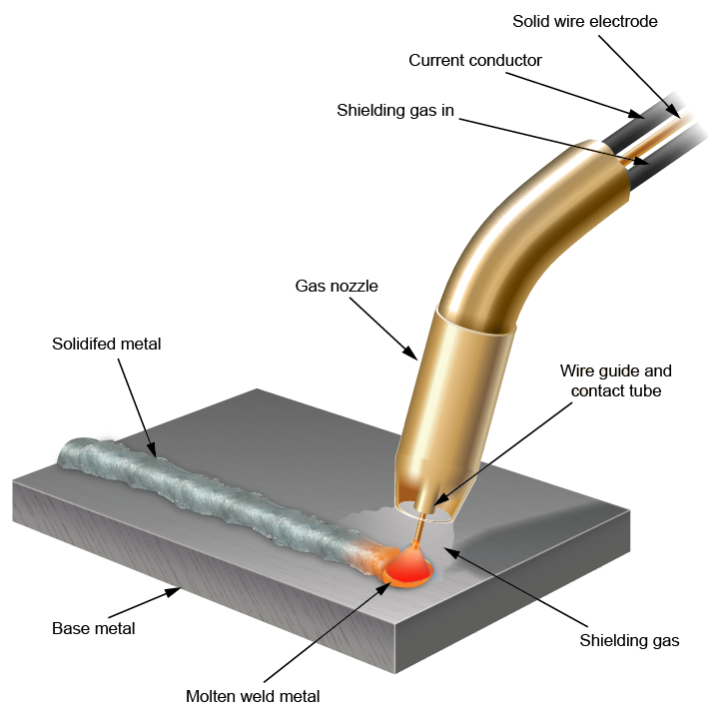
In metal fabrication, welding and cutting processes are often augmented or entirely enabled by shielding gases. These gases protect the molten metal from atmospheric contamination, ensure a clean and strong weld, and can even contribute to the cutting action.
- Argon (Ar): The most common shielding gas for TIG (Tungsten Inert Gas) welding and MIG (Metal Inert Gas) welding of aluminum, stainless steel, and other non-ferrous metals. Its inert nature prevents oxidation.
- Helium (He): Used in specialized TIG welding for its higher thermal conductivity, allowing for deeper penetration and faster welding speeds, particularly on thicker materials or when welding aluminum and copper alloys. It’s also used in high-speed plasma cutting.
- Carbon Dioxide (CO₂): A less expensive option for MIG welding of carbon steel. It provides good penetration but can lead to more spatter and a less aesthetically pleasing weld seam compared to argon.
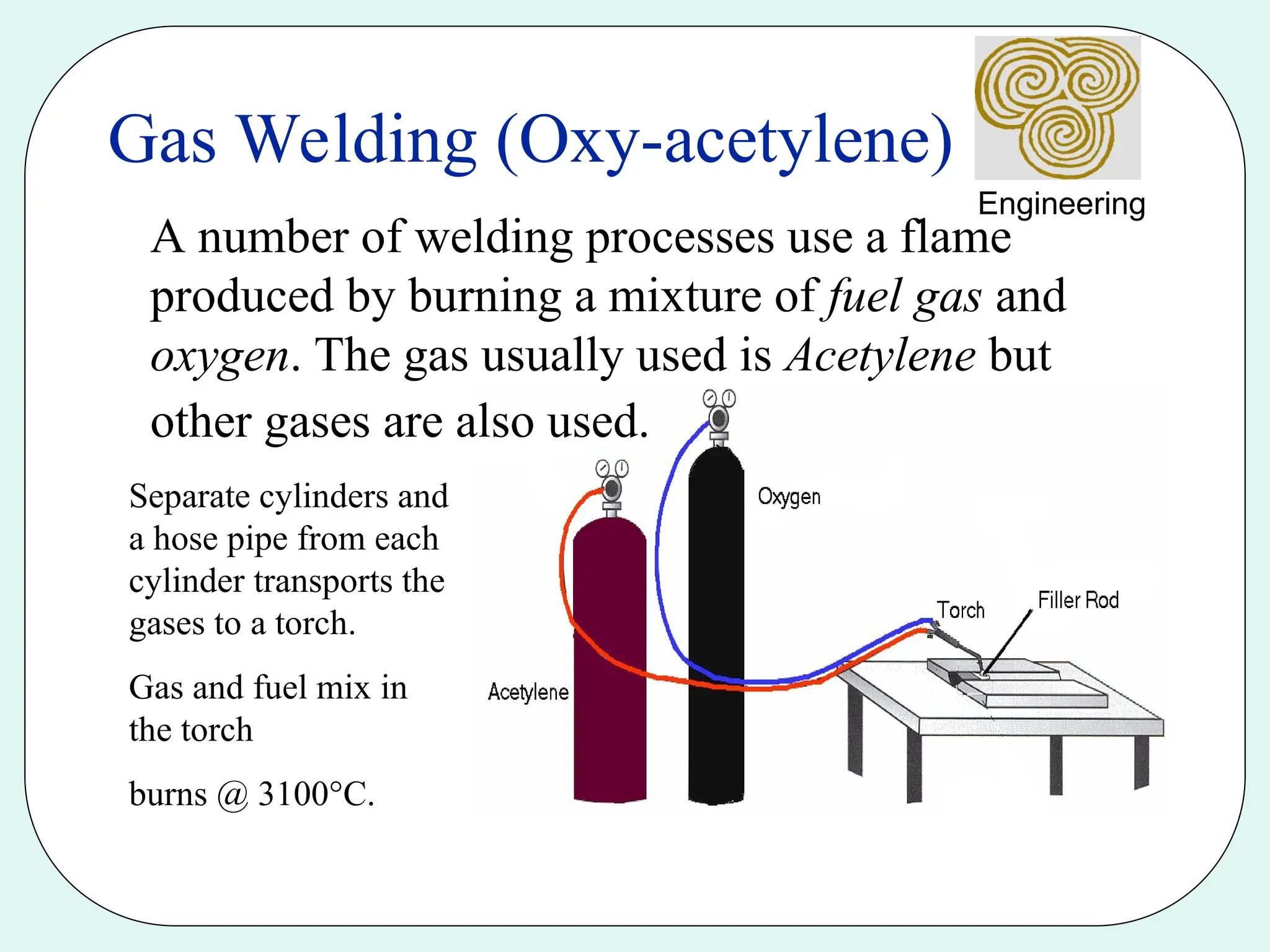
- Oxygen (O₂): Essential for oxy-fuel cutting (e.g., oxy-acetylene cutting) where it reacts with the heated metal to create an exothermic reaction, facilitating the removal of molten material. It’s also used as an assist gas in some laser cutting applications.
- Nitrogen (N₂): Used as a shielding gas in some laser cutting applications, particularly for stainless steel, to prevent oxidation and achieve a clean edge. It’s also used in some plasma cutting processes.
- Hydrogen (H₂): Can be used as a minor component in some welding gas mixtures to enhance arc stability and reduce surface oxidation.
Inerting and Blanketing: Protecting Against Reactivity
Many industrial processes involve materials that are sensitive to oxygen or moisture, or where flammable atmospheres pose a risk. Inert gases are used to displace these reactive elements, creating a safe and stable environment.
- Nitrogen (N₂): The workhorse of inerting. It is widely used in the chemical industry, food packaging, electronics manufacturing, and oil and gas exploration to prevent oxidation, fire, or explosion. It’s also used for purging pipelines and vessels.
- Argon (Ar): Also an inert gas, often chosen when nitrogen might react with certain materials or when higher purity is required. It’s used in the semiconductor industry for blanketing sensitive processes and in specialized packaging.
- Helium (He): While very expensive, its extreme inertness and low density make it suitable for highly specialized inerting applications where even nitrogen might be too reactive or where leak detection is critical due to its small atomic size.
Food and Beverage Industry: Preservation and Presentation
Gases play a crucial role in extending the shelf life of food products, preserving their quality, and improving their appearance.
- Nitrogen (N₂): Used for “nitrogen flushing” or blanketing in food packaging. It displaces oxygen, which is the primary cause of spoilage and rancidity, thereby extending shelf life. It’s also used to fill crisp packets to prevent crushing.
- Carbon Dioxide (CO₂): Used in “modified atmosphere packaging” (MAP) for beverages and some food items. In carbonated drinks, it provides effervescence. For some packaged foods, it can inhibit the growth of aerobic bacteria and extend shelf life.
- Argon (Ar): Less common than nitrogen or CO₂, but can be used in some high-end food preservation applications due to its complete inertness.
Specialized Gases in Scientific Research and Emerging Technologies
The frontiers of scientific discovery and the development of next-generation technologies often depend on the unique properties of highly specialized gases, some of which are rare or require sophisticated production and handling.
Analytical Instrumentation: Enabling Precise Measurement
Sophisticated analytical instruments rely on carrier gases and calibration gases to function accurately.
- Helium (He): The most common carrier gas in Gas Chromatography (GC), a technique used to separate and analyze compounds. Its inertness and low viscosity make it ideal for this purpose.
- Hydrogen (H₂): Used as a carrier gas in some GC applications for faster analysis times, though it is flammable. It’s also used as a fuel gas in detectors like Flame Ionization Detectors (FIDs).
- Nitrogen (N₂): Used as a carrier gas in some chromatographic applications and as a purge gas in various analytical instruments.
- Specialty Gases (e.g., Calibration Gases): Mixtures of various gases in precise concentrations are used to calibrate analytical instruments, ensuring their accuracy. These can include hydrocarbons, sulfur compounds, and other specific analytes.
Medical and Healthcare Applications: Life Support and Diagnostics
While not strictly “processing” in the industrial sense, medical gases are essential for patient care and diagnostic procedures.
- Oxygen (O₂): Crucial for life support and respiratory therapy.
- Nitrous Oxide (N₂O): Used as an anesthetic and analgesic.
- Medical Air: A precisely blended mixture of oxygen and nitrogen used for respiratory support and in ventilators.
Emerging Technologies: Pushing the Boundaries
As technology evolves, new applications for gases are constantly being discovered.
- Quantum Computing: Research into quantum computing often involves ultra-pure, cryogenic gases like liquid helium for cooling superconducting qubits to near absolute zero.
- Advanced Materials Synthesis: Novel materials with unique properties may require specific gaseous environments or precursors for their creation.
The role of gases in technology is often unseen, yet their impact is profound. From the microscopic world of semiconductors to the macroscopic operations of industry, these gaseous elements are the silent enablers of innovation, efficiency, and progress. As technologies continue to advance, the demand for highly specialized, ultra-pure gases, and the sophisticated processes to utilize them, will only continue to grow.
aViewFromTheCave is a participant in the Amazon Services LLC Associates Program, an affiliate advertising program designed to provide a means for sites to earn advertising fees by advertising and linking to Amazon.com. Amazon, the Amazon logo, AmazonSupply, and the AmazonSupply logo are trademarks of Amazon.com, Inc. or its affiliates. As an Amazon Associate we earn affiliate commissions from qualifying purchases.