
In the current landscape of high-fidelity virtual reality, haptic feedback suits, and cloud-integrated gaming ecosystems, it is easy to forget the primitive yet revolutionary hardware experiments that paved the way. One of the most curious and significant artifacts in the history of consumer technology is R.O.B.—the Robotic Operating Buddy. To answer the question of “what game is R.O.B. from” requires a deep dive into the technical architecture of the mid-1980s, an era where hardware was forced to innovate to save an entire industry.
R.O.B. was not just a character; it was a sophisticated (for its time) hardware peripheral designed to interact with the Nintendo Entertainment System (NES). While modern audiences might recognize him as a veteran fighter in the Super Smash Bros. series, his origins lie in a fascinating intersection of optical sensors, mechanical engineering, and the early attempts to bridge the gap between digital software and physical robotics.
The Engineering of an Icon: A Hardware Solution to a Software Crisis
The mid-1980s was a period of technological transition. Following the North American video game crash of 1983, the consumer market was skeptical of “video games.” To enter the American market, Nintendo of Japan realized they needed to present their hardware not as a console, but as a sophisticated electronic toy. Thus, R.O.B. was engineered as the flagship component of the “NES Deluxe Set.”
Engineering a “Toy” for the Post-Crash Era
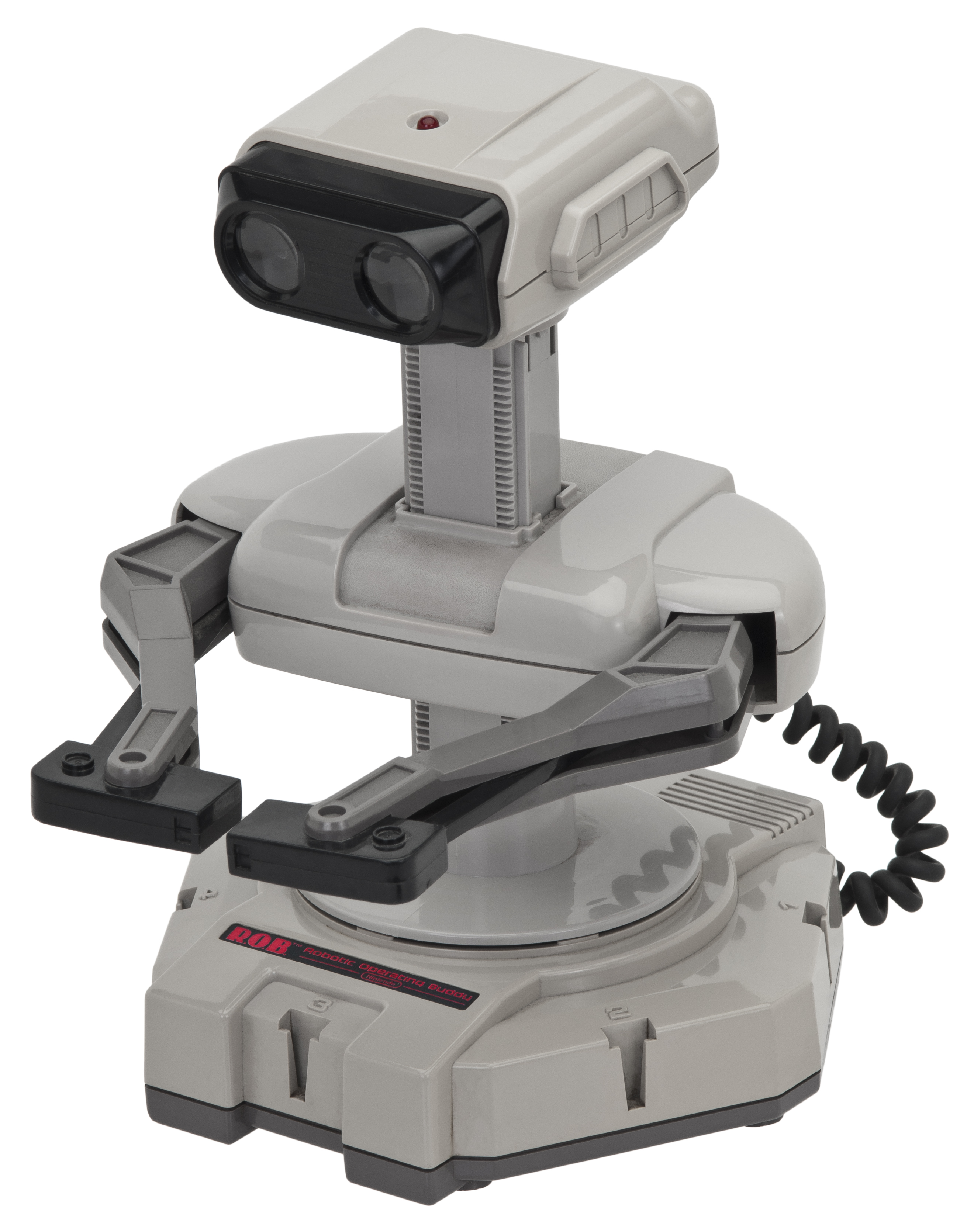
R.O.B., known in Japan as the Famicom Robot, was a masterpiece of 1980s consumer robotics. Standing at approximately 9.5 inches tall, the unit was built with a combination of high-grade plastic, six AA batteries, and a series of motors that allowed for specific articulated movements. Unlike modern peripherals that communicate via Bluetooth or USB-C, R.O.B. functioned through a complex interplay of physical gears and optical data transmission.
From a tech perspective, R.O.B. was an early example of a “peripheral-centric” hardware design. The NES console acted as the brain, while R.O.B. served as the physical output device. This was a reversal of the standard input-output model where a human provides input via a controller to affect digital output. With R.O.B., the digital software provided “instructions” that resulted in physical, robotic output.
The Robotic Operating Buddy’s Internal Mechanics
The internal structure of R.O.B. featured three main motors that controlled his vertical movement, his rotation (left and right), and the grasping mechanism of his claws. These motors were surprisingly precise for consumer-grade tech in 1985. The “arms” moved along a central pillar using a screw-drive mechanism, allowing him to lift and lower specialized accessories.
The most impressive aspect of R.O.B.’s engineering was his stability and calibration. Since he had to interact with physical objects—spinning gyros and stackable blocks—the tolerances for his movement had to be tight enough to prevent mechanical failure during gameplay. This necessitated a level of build quality that far exceeded the standard plastic toys of the era.
The Core Mechanics: How R.O.B. Interacted with the Screen
The most common technical question regarding R.O.B. is how he “knew” what was happening on the television. In an era before Wi-Fi or even basic serial communication between toys and consoles, Nintendo utilized optical light-sensing technology.
Light-Sensing Technology and Optical Communication
R.O.B.’s “eyes” were not just for show; they contained a sophisticated light sensor (photodiode) similar to the technology found in the NES Zapper. When a player pressed a button on the NES controller to command R.O.B., the television screen would momentarily flash with a specific sequence of light patterns.
These flashes were essentially a visual language. R.O.B.’s sensors would detect the frequency and timing of these flashes, converting the light signals into electrical pulses that triggered his internal motors. This was an early form of optical data transmission. It required players to ensure that R.O.B. was perfectly aligned with the screen and that the room’s ambient lighting wasn’t so bright that it interfered with the photodiode’s ability to read the CRT (Cathode Ray Tube) television.
The Software Duo: Gyromite and Stack-Up
R.O.B. was specifically designed for a series of software titles known as the “Robot Series.” While he appeared in two main games, his role was as a physical co-op partner.
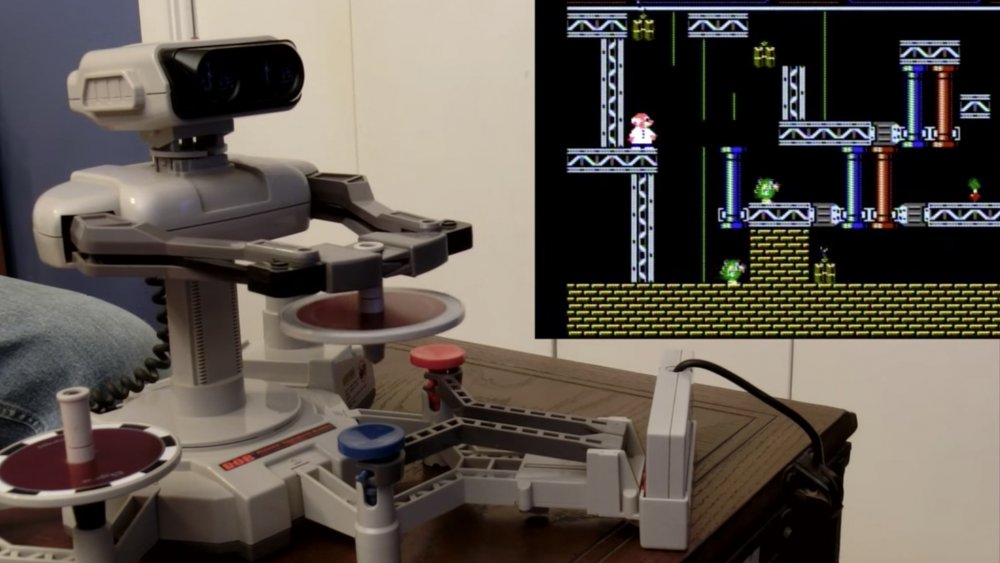
- Gyromite: In this game, R.O.B. was responsible for manipulating physical “gyros” (spinning tops). The player would send signals to R.O.B. to pick up a gyro, place it on a spinner, and then move it to a pedestal that would physically press the “A” or “B” button on a second controller. This created a mechanical loop where the software influenced the robot, which in turn influenced the hardware.
- Stack-Up: This title was more of a logic puzzle. R.O.B. would move colored blocks (called “bases”) around his platform according to the instructions on the screen. It was a test of the unit’s dexterity and the player’s ability to program movements in a specific sequence.
Technical Limitations and the Evolution of Peripheral Gadgets
While R.O.B. was a marvel of mid-80s tech, he was not without significant limitations. These limitations, however, provided valuable lessons for the future of interactive technology and gadget design.
Why R.O.B. Was a Brief Technological Phenomenon
The primary hurdle for R.O.B. was speed—or the lack thereof. Because R.O.B. relied on physical motors and gears, his movements were slow and deliberate. A single command to move a gyro from a spinner to a pedestal could take several seconds. In the fast-paced world of gaming, this latency was a major drawback.
Furthermore, the technology was highly dependent on the hardware of the time. R.O.B. was designed to read the refresh rates and light outputs of CRT televisions. As display technology evolved toward LCD and Plasma, the optical sensing method R.O.B. used became obsolete. Modern high-definition screens do not flash in the specific way required for R.O.B.’s sensors to register commands, rendering the original hardware non-functional on modern displays without specialized converters.
From R.O.B. to Modern Motion Control and VR
Despite his short commercial lifespan as a functional peripheral, R.O.B. set the stage for future “Smart” peripherals. The concept of a device that “sees” the screen or interacts with the physical environment evolved into the infrared sensors used by the Wii Remote and the advanced camera-based tracking of the Xbox Kinect.
R.O.B. was essentially an early prototype for the “Internet of Things” (IoT) in a gaming context—a device that receives data from a central hub to perform physical tasks. Today’s tech enthusiasts see R.O.B.’s DNA in modern educational robots and AI-driven toys that use cameras and sensors to interact with users.
The Lasting Impact on Gaming Hardware and Digital Integration
R.O.B. is often remembered as a marketing masterstroke, but his technical legacy is equally significant. He proved that gaming consoles could be more than just a box that plugged into a TV; they could be the center of a larger hardware ecosystem.
Paving the Way for Interactive Hardware Ecosystems
Before R.O.B., gaming was largely a solitary experience between a user and a joystick. R.O.B. introduced the idea of “tangible interfaces.” This concept has flourished in modern tech through “toys-to-life” products like Nintendo’s own Amiibo line. While Amiibos use Near Field Communication (NFC) rather than optical sensors and motors, the core philosophy is the same: bridging the gap between a physical object and a digital experience.
Furthermore, R.O.B. pushed the boundaries of what consumer electronics could do at a mass-market price point. Integrating robotics into a home entertainment system was a bold technical move that forced competitors to rethink the potential of peripheral hardware.
R.O.B. as a Case Study in Early Consumer Robotics
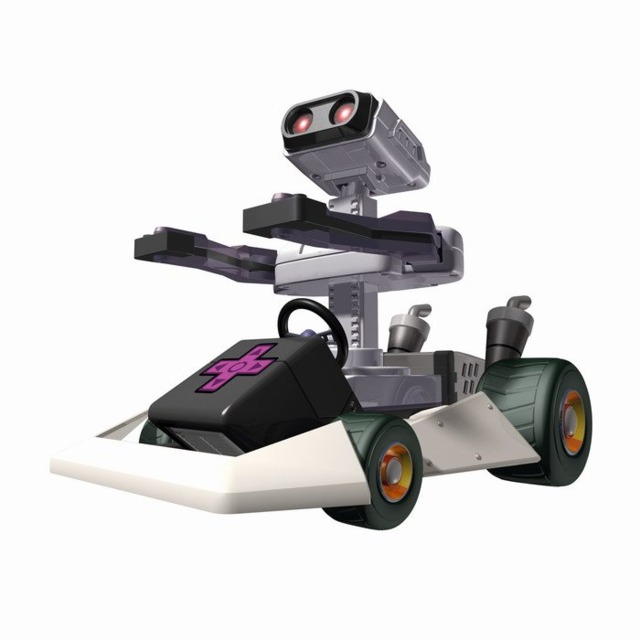
In the broader field of technology, R.O.B. serves as an excellent case study for “graceful degradation” and hardware longevity. While his mechanical function is now a relic of the past, his design was so iconic that it survived through digital representation. The transition of R.O.B. from a physical peripheral to a digital character in games like Mario Kart DS and Super Smash Bros. Ultimate illustrates a unique path in tech history: a hardware failure that became a brand icon.
Conclusion: The Mechanical Soul of the NES
So, what game is R.O.B. from? He is from Gyromite and Stack-Up, but more importantly, he is from an era of daring technical experimentation. R.O.B. was the Robotic Operating Buddy that used light to see, motors to move, and gears to interact with a world that was just beginning to understand the power of digital entertainment.
His technical specifications may seem quaint by today’s standards—powered by AA batteries and controlled by flashes of light—but his influence is woven into the fabric of modern gadgetry. Every time we use a motion controller, an augmented reality app, or a smart device that responds to visual cues, we are seeing the evolved spirit of the little robot that saved the video game industry. R.O.B. wasn’t just a toy; he was a precursor to the integrated, interactive technological world we inhabit today.
aViewFromTheCave is a participant in the Amazon Services LLC Associates Program, an affiliate advertising program designed to provide a means for sites to earn advertising fees by advertising and linking to Amazon.com. Amazon, the Amazon logo, AmazonSupply, and the AmazonSupply logo are trademarks of Amazon.com, Inc. or its affiliates. As an Amazon Associate we earn affiliate commissions from qualifying purchases.