
In the rapidly evolving landscape of bioinformatics and computational biology, protein structure prediction has become a cornerstone of drug discovery, enzyme engineering, and molecular research. At the heart of this digital revolution is SWISS-MODEL, one of the most widely used automated homology-modeling servers in the world. For researchers and software engineers entering the bio-tech space, understanding the technical requirements for this tool is the first step toward generating accurate 3D models of proteins.
To use SWISS-MODEL effectively, the quality of your output is entirely dependent on the quality and format of your input data. This guide provides a deep dive into the specific files and data formats required to navigate the SWISS-MODEL workspace, ensuring your computational research is built on a solid foundation.
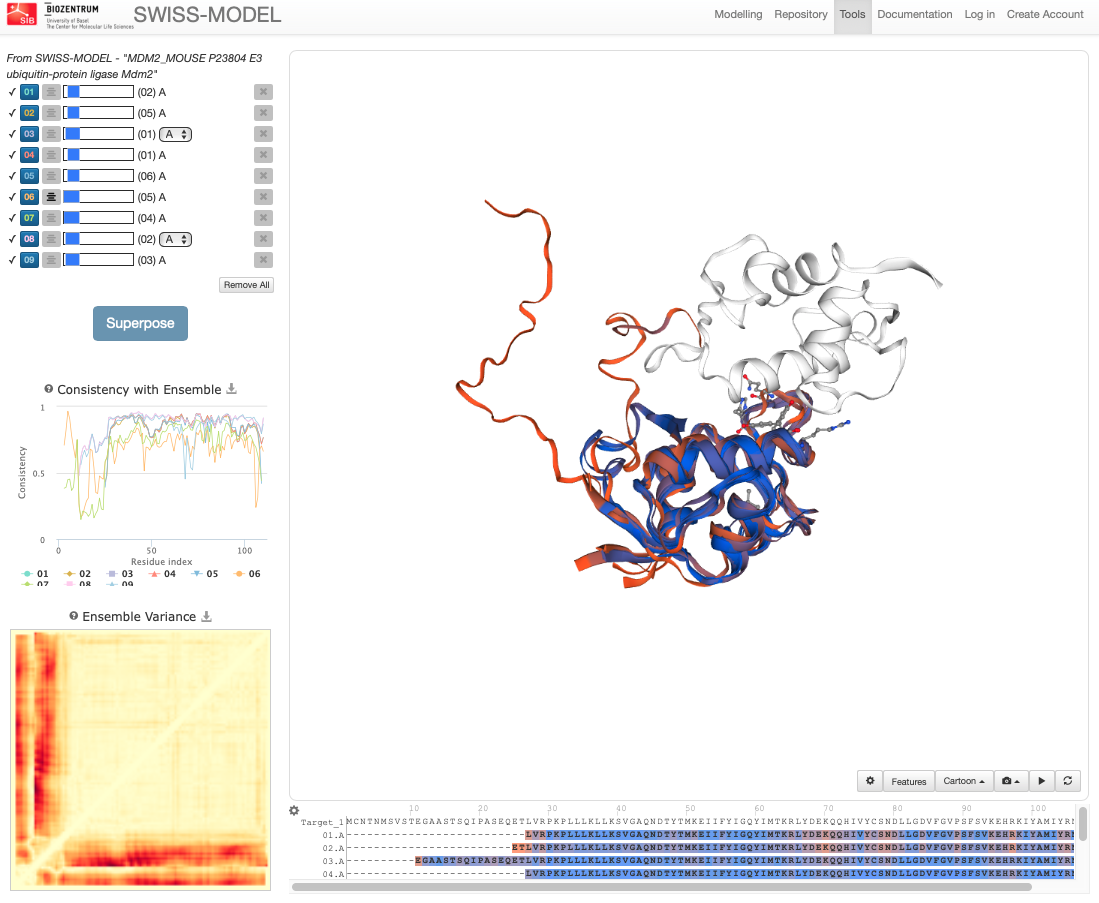
1. The Foundation: Sequence Input Files
The primary requirement for any SWISS-MODEL project is the amino acid sequence of the protein you wish to model, often referred to as the “target” sequence. The software needs to know the exact order of amino acids to search for evolutionary related structures (templates) in its database.
The FASTA Format: The Industry Standard
The most common file format used in SWISS-MODEL is the FASTA file. Technically, a FASTA file is a text-based format for representing either nucleotide sequences or peptide sequences, in which amino acids or nucleotides are represented using single-letter codes.
A properly formatted FASTA file for SWISS-MODEL should begin with a single-line description, followed by lines of sequence data. The description line is distinguished from the sequence data by a greater-than (“>”) symbol at the beginning. In the context of tech-driven biology, maintaining the integrity of this file is crucial; extra spaces, hidden characters, or incorrect line breaks can lead to parsing errors within the SWISS-MODEL algorithm.
Utilizing UniProt Accession Numbers
For those who do not have a local FASTA file, SWISS-MODEL allows for the direct input of UniProt Accession Numbers (AC) or Identifiers (ID). This is a more automated “tech-first” approach. By providing an ID like “P01308” (the human insulin sequence), the SWISS-MODEL server uses API calls to fetch the latest sequence data from the UniProt Knowledgebase. This reduces human error in manual copying and pasting and ensures that the metadata associated with the sequence—such as post-translational modifications—is acknowledged by the modeling pipeline.
Handling Multiple Sequences
In advanced software applications, you might be working with protein complexes (hetero-oligomers). SWISS-MODEL supports the input of multiple sequences simultaneously. In this scenario, your file should contain multiple FASTA entries within a single document. The server’s back-end logic is designed to parse these separate headers and treat them as individual chains of a complex, which is vital for modeling interactions between different protein subunits.
2. Advanced Customization: User-Defined Template Files
While SWISS-MODEL can automatically search the Protein Data Bank (PDB) for the best structural templates, experienced users often want to provide their own template files. This is particularly relevant when using proprietary structural data or recently solved structures not yet indexed in public databases.
PDB and mmCIF File Formats
The two primary file types for structural templates are .pdb and .cif (mmCIF). Historically, the PDB format was the standard; however, due to its technical limitations in handling extremely large macromolecular structures, the scientific community has pivoted toward the Macromolecular Crystallographic Information File (mmCIF).
SWISS-MODEL is fully compatible with both. When you upload a .pdb or .cif file, you are providing the software with the precise 3D coordinates (X, Y, Z) of every atom in the template protein. The SWISS-MODEL engine then uses these coordinates as a geometric blueprint to thread your target sequence onto the template’s backbone.
The Importance of Chain Identifiers
When uploading a custom template file, the technical metadata within the file must be accurate. Specifically, “Chain IDs” are critical. If a template file contains multiple chains (e.g., Chain A, B, and C), you must specify which chain the software should use for the alignment. Failure to define this in the software’s interface can lead to “Target-Template Alignment” mismatches, resulting in a physically impossible protein model.
Dealing with Ligands and Cofactors
In high-tech molecular modeling, the protein rarely acts alone. It often functions in the presence of ligands, ions, or cofactors. If your project requires these elements, your template file must include the “HETATM” (hetero-atom) records. SWISS-MODEL has a “Ligand Pipeline” that can potentially include these molecules in the final model, provided the input file is formatted to recognize these non-polymer entities correctly.

3. The Bridge: Target-Template Alignment Files
The most critical step in homology modeling is the alignment. This is the process of mapping the amino acids of your target sequence to the amino acids of the template structure. While SWISS-MODEL provides an automated alignment tool, complex cases often require the upload of a manual alignment file.
Standard Alignment Formats: Clustal and Stockholme
If the automated alignment fails due to low sequence identity (the “twilight zone” of modeling), you may need to generate an alignment using external software like Clustal Omega or T-Coffee. These tools produce files in formats such as .aln, .clustal, or .fasta (multi-sequence).
Uploading a pre-defined alignment file gives the user total control over the modeling process. It allows you to manually adjust for insertions and deletions (indels), ensuring that conserved functional motifs are correctly positioned in the 3D space. From a technical standpoint, this file acts as the instruction set for the “ProMod3” modeling engine that powers SWISS-MODEL.
Deep Learning and Alignment Accuracy
With the rise of AI tools like AlphaFold, the tech world has seen a shift in how alignments are viewed. SWISS-MODEL now integrates deep learning-based quality estimation. However, these AI models still rely on the initial alignment file. A single-column shift in an alignment file can result in a model where the active site is completely disrupted. Therefore, verifying the alignment file in a sequence editor before uploading it to the SWISS-MODEL workspace is a mandatory step for high-precision tasks.
4. Output and Technical Evaluation Files
Once the computation is complete, SWISS-MODEL doesn’t just provide a pretty picture; it generates a suite of technical files that are essential for further analysis in molecular dynamics or docking software.
The Resulting PDB/mmCIF Model
The primary output is a coordinate file representing the predicted structure of your protein. This file is the digital twin of your biological sequence. It is optimized for use in visualization software like PyMOL, ChimeraX, or VMD. The file includes B-factor columns that, in the context of SWISS-MODEL, are repurposed to represent “Local Quality Estimates,” allowing you to see which parts of the model are highly reliable and which are speculative.
Understanding QMEAN and Global Quality Scores
Alongside the structural files, SWISS-MODEL provides a QMEAN (Qualitative Model Energy Analysis) report. This is a technical statistical file that compares your model against a library of high-resolution experimental structures.
The QMEAN Z-score is a critical metric: it indicates whether your model “looks like” a real protein. A score near zero suggests high reliability, while a score below -4.0 is a technical red flag, indicating that the model may have significant geometric distortions. For tech-focused researchers, these data points are essential for validating the software’s output before moving into expensive laboratory testing.
Project Files for Reproducibility
SWISS-MODEL allows users to save their entire workspace as a project file. In the era of Open Science and “Reproducible Tech,” keeping these project files is vital. They contain the logs of every parameter used, every template selected, and every alignment tweak made. This ensures that another researcher can upload the same project file and achieve identical results, maintaining the integrity of the scientific process.

The Future of Modeling: Integrating AI and High-Performance Computing
As we look toward the future of biotechnology, the “files” we need are becoming more complex. We are moving beyond simple text sequences into the realm of “Deep Learning weights” and “Multiple Sequence Alignments” (MSA) generated by massive cloud-computing clusters.
SWISS-MODEL continues to adapt by integrating with the AFDB (AlphaFold Protein Structure Database). This means that in addition to traditional PDB files, users can now leverage AI-predicted structures as templates. The technical workflow remains the same, but the underlying data is increasingly driven by neural networks.
In conclusion, successfully using SWISS-MODEL requires a disciplined approach to data management. Whether you are preparing a FASTA sequence, a custom mmCIF template, or a complex Clustal alignment, the accuracy of your digital protein model depends on the precision of these files. By mastering these technical requirements, researchers can harness the full power of computational biology to unlock the secrets of the molecular world.
aViewFromTheCave is a participant in the Amazon Services LLC Associates Program, an affiliate advertising program designed to provide a means for sites to earn advertising fees by advertising and linking to Amazon.com. Amazon, the Amazon logo, AmazonSupply, and the AmazonSupply logo are trademarks of Amazon.com, Inc. or its affiliates. As an Amazon Associate we earn affiliate commissions from qualifying purchases.