
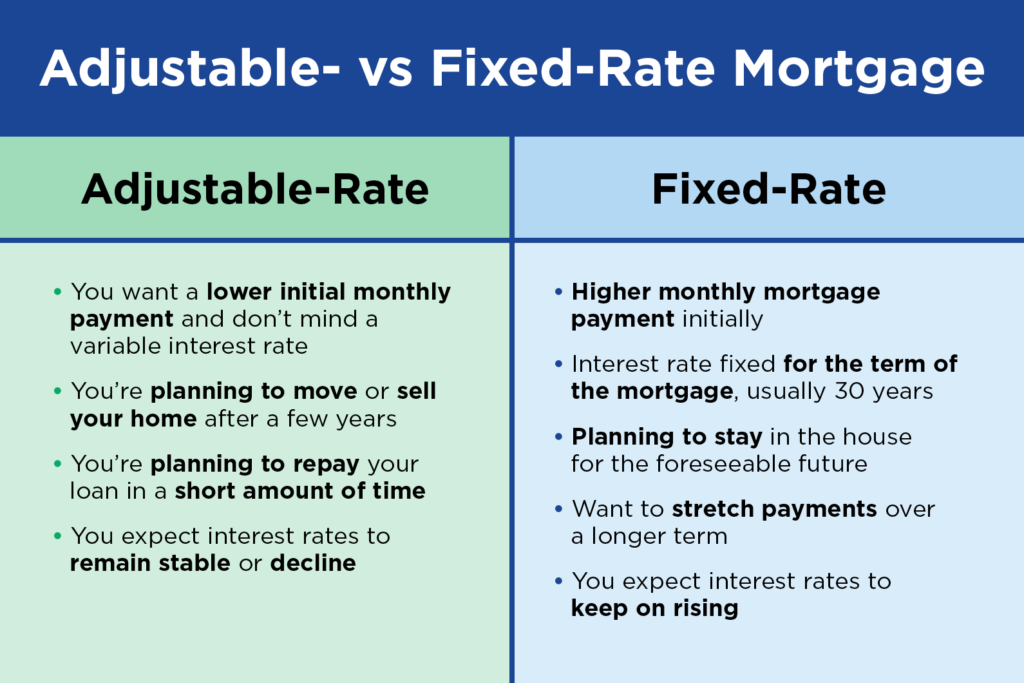
An adjustable-rate mortgage (ARM) is a complex financial instrument that offers homeowners a unique trade-off: lower initial interest rates in exchange for future volatility. While a fixed-rate mortgage provides the security of predictable payments for the life of the loan, an ARM is tethered to the shifting tides of the global economy. Understanding the mechanics of these loans is not merely academic; for many homeowners, it is a matter of long-term solvency. To effectively navigate an ARM, one must understand the interplay between market benchmarks, contractual caps, and the underlying economic indicators that dictate rate adjustments.

The Role of Financial Indexes in Rate Fluctuations
The most fundamental component of an ARM is the index. When you take out an adjustable-rate mortgage, your interest rate is not determined arbitrarily by the lender. Instead, it is composed of two parts: the index and the margin. While the margin is fixed for the life of your loan, the index is a variable financial benchmark that fluctuates based on broader market conditions.
Understanding Common Market Indexes
Lenders typically tie their ARM products to widely recognized financial indexes. Historically, the London Interbank Offered Rate (LIBOR) was the industry standard, but following regulatory shifts, the Secured Overnight Financing Rate (SOFR) has become the predominant benchmark. Other common indexes include the Constant Maturity Treasury (CMT) rates. When you review your loan agreement, identifying which index your lender uses is critical, as different indexes react differently to federal monetary policy and investor sentiment.
How the Index Impacts Monthly Obligations
Because the index is a “moving target,” its performance directly correlates to your monthly payment. If the index rises, your interest rate rises accordingly after your fixed-period “teaser” rate expires. If the index falls, your rate may follow suit, provided you are not constrained by other contractual factors. Because these indexes are tied to global financial health, they are influenced by everything from geopolitical stability to international trade balances, making them external factors largely outside the borrower’s control.
Contractual Constraints: Caps and Floors
If an ARM were tied solely to the market index, a sudden spike in interest rates could cause a borrower’s monthly payment to skyrocket overnight. To protect borrowers from extreme financial volatility, ARM agreements include specific contractual guardrails known as interest rate caps.
Initial and Periodic Adjustment Caps
Most ARMs feature an initial adjustment cap, which limits how much the interest rate can increase the first time it adjusts after the fixed-rate period ends. Following that, periodic adjustment caps limit how much the rate can change during each subsequent adjustment interval. These caps act as a buffer, ensuring that even if the underlying index experiences a violent shift, the borrower has time to adjust their financial planning to accommodate the new payment structure.
Lifetime Caps
The lifetime cap is perhaps the most vital safety feature in an ARM contract. This represents the maximum percentage the interest rate can increase over the entire life of the loan, regardless of how high the market index climbs. Before signing an ARM agreement, a borrower must rigorously stress-test their finances against this lifetime cap. If you cannot afford the payment at the maximum lifetime rate, the loan carries a significant risk of default. Understanding the interaction between the index and these caps is the primary defense against “payment shock.”
The Margin and the Initial Teaser Rate

While the index represents the market-driven portion of your interest rate, the margin represents the lender’s profit and risk premium. This is a critical distinction that many borrowers overlook until the first adjustment period begins.
The Fixed Margin Component
The margin is a percentage determined by the lender that remains constant throughout the life of the loan. It is added to the current value of the index to calculate your new interest rate. For example, if your index is 3% and your margin is 2.5%, your fully indexed interest rate is 5.5%. Because the margin is fixed, it provides a sense of continuity. However, lenders with higher overhead or stricter underwriting standards may charge a higher margin, making the initial “teaser” rate deceptively attractive compared to the long-term cost.
The Lure of the Introductory Rate
The teaser rate—or the initial fixed-period rate—is often significantly lower than the fully indexed rate. Lenders offer these rates as a marketing tool to entice borrowers. The danger lies in the “reset” date. Many borrowers fail to calculate the “fully indexed rate” during the application process. They see a low initial payment and assume it will remain consistent. Financial literacy in this context requires ignoring the teaser rate entirely when assessing affordability and instead performing calculations based on the index plus the margin to determine what the payment will actually look like during the adjustment period.
Economic Indicators and Federal Policy
The broader financial landscape exerts a powerful, albeit indirect, influence on every ARM. Specifically, the monetary policy enacted by the Federal Reserve sets the stage for interest rate volatility.
The Federal Funds Rate Influence
When the Federal Reserve raises the federal funds rate to combat inflation, it typically triggers a ripple effect across the entire credit market. Financial institutions adjust their prime rates, which in turn influences the indexes used for ARMs. An aggressive tightening cycle by the central bank often leads to higher index values, which necessitates higher periodic adjustments for ARM holders. Consequently, those holding ARMs must stay informed about macroeconomic indicators, such as the Consumer Price Index (CPI) and employment data, as these are the primary signals the Fed uses to decide on rate changes.
Economic Cycles and Refinancing Windows
The lifecycle of an ARM often involves a strategic window of opportunity. Borrowers who choose ARMs often do so with the intention of selling the property or refinancing into a fixed-rate loan before the initial fixed period expires. This strategy is highly dependent on both economic conditions and the borrower’s personal creditworthiness. If the economy enters a downturn and property values drop, or if a borrower’s credit score declines due to financial hardship, the ability to exit an ARM before the first adjustment is severely compromised. Therefore, the state of the housing market and individual credit health function as secondary, but equally important, factors that dictate the long-term success of an ARM agreement.
Strategic Financial Planning for ARM Holders
Managing an adjustable-rate mortgage requires a proactive approach to personal finance. Unlike a fixed mortgage, where the liability is static, an ARM is a dynamic debt that evolves with the market.
Budgeting for Potential Payment Increases
The most effective way to mitigate the risks associated with an ARM is to budget as if the interest rate is already at its potential cap. By setting aside the difference between the current low payment and the potential future high payment into a high-yield savings account or an investment vehicle, the borrower effectively builds an emergency fund specifically designed to neutralize future payment shocks.
The Importance of Credit Maintenance
Your credit score dictates the margin the lender assigns to your loan at the outset, but it also dictates your options when it comes time to refinance. A borrower who maintains an excellent credit score has the “exit strategy” advantage; if the ARM index begins to rise significantly, a strong credit profile allows the homeowner to pivot to a fixed-rate mortgage with favorable terms before the adjustment cycles become prohibitively expensive.
In summary, an adjustable-rate mortgage is not inherently dangerous, but it is an instrument of financial leverage that requires constant monitoring. By understanding the relationship between the index, the margin, the caps, and the broader macroeconomic climate, a homeowner can transform what is often viewed as a risky loan into a powerful financial tool. Success in managing an ARM relies on the recognition that market volatility is inevitable, and the best defense is a well-calculated, conservative financial strategy that anticipates change before it arrives.
aViewFromTheCave is a participant in the Amazon Services LLC Associates Program, an affiliate advertising program designed to provide a means for sites to earn advertising fees by advertising and linking to Amazon.com. Amazon, the Amazon logo, AmazonSupply, and the AmazonSupply logo are trademarks of Amazon.com, Inc. or its affiliates. As an Amazon Associate we earn affiliate commissions from qualifying purchases.