
For families aiming to secure their children’s educational future, 529 plans represent a cornerstone of tax-advantaged savings. These state-sponsored investment vehicles offer significant benefits, primarily the ability for earnings to grow tax-free and qualified withdrawals to also be tax-free. However, the true advantage of a 529 plan hinges entirely on understanding what constitutes an “eligible” or “qualified” education expense. Missteps in this area can lead to a reversal of tax benefits, including income tax on earnings and potential penalties, undermining years of diligent saving.
This comprehensive guide delves into the specifics of what expenses qualify for 529 plan distributions, clarifying the traditional definitions and shedding light on more recent expansions and important caveats. By mastering these guidelines, savers can confidently navigate their educational funding journey, maximizing the benefits of their 529 plan contributions for both current and future academic pursuits.
The Core Purpose of 529 Plans: Qualified Education Expenses
At its heart, a 529 plan is designed to cover the costs associated with post-secondary education at eligible educational institutions. The Internal Revenue Service (IRS) defines these institutions broadly, encompassing virtually all accredited public, nonprofit, and private postsecondary institutions in the United States, as well as many international schools. The core expenses that qualify align with the fundamental requirements of attending college or university.
Tuition and Fees
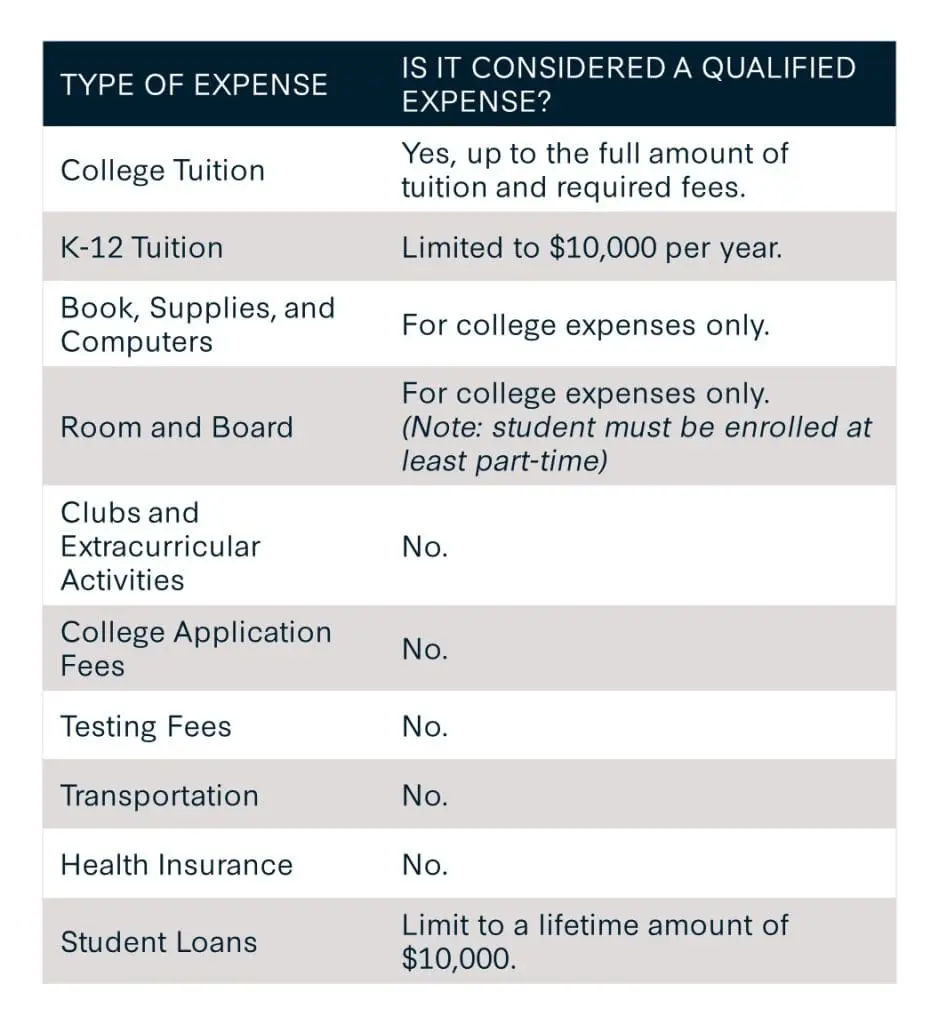
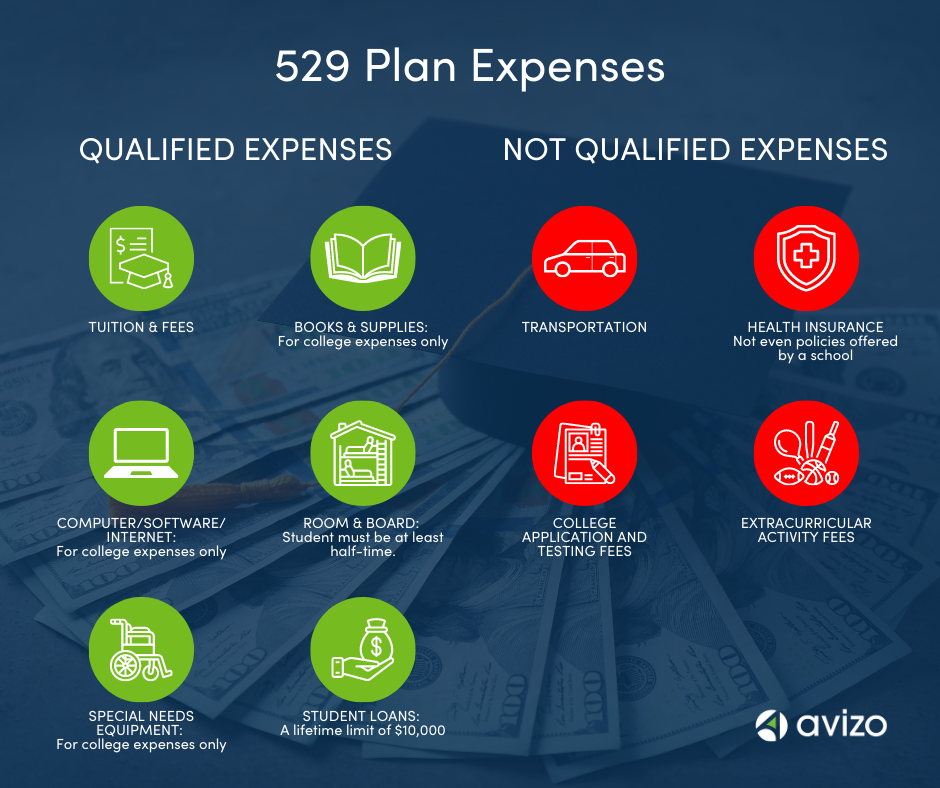
Unsurprisingly, tuition and mandatory fees constitute the most direct and common qualified expense. This includes the cost of enrollment and attendance at any eligible higher education institution. Whether it’s undergraduate courses at a state university, graduate-level studies at a private college, or even specific certificate programs, as long as the institution is accredited and eligible to participate in federal student aid programs, the tuition and associated fees paid directly to the institution or for the benefit of the student are covered. It’s important to distinguish between mandatory fees that all students pay and optional fees for things like student activities or certain club memberships, which may not always qualify unless they are inextricably linked to enrollment or attendance.
Room and Board
For students attending at least half-time, expenses related to room and board are also considered qualified education expenses. This category can be a common source of confusion, particularly regarding off-campus housing. The key rule here is that the room and board expense cannot exceed either: 1) the allowance for room and board determined by the eligible educational institution for purposes of calculating costs of attendance for federal financial aid, or 2) the actual amount charged by the institution for students residing in on-campus housing.
For students living off-campus, this means tracking rent payments, utilities, and even groceries. However, these costs are still capped by the institution’s official room and board allowance. It’s crucial to obtain this official figure from the college or university’s financial aid office to ensure that withdrawals for off-campus living expenses do not exceed the qualified limit. Maintaining meticulous records of rent payments, utility bills, and food costs is essential for substantiating these withdrawals.
Books, Supplies, and Equipment
Any books, supplies, or equipment required for enrollment or attendance at an eligible educational institution are qualified expenses. This category extends beyond textbooks to include items such as lab equipment, art supplies, specialized software necessary for coursework, and even a computer if it is deemed essential for the student’s enrollment or attendance. The IRS doesn’t specify a brand or price limit, but the item must be directly related to the student’s academic pursuits. For example, a laptop needed for classes would qualify, but a gaming console would not, even if purchased by a student. Receipts for these purchases should be kept carefully, linking them to specific courses or general educational needs.
Special Needs Services
For beneficiaries with special needs, any expenses for special needs services that are incurred in connection with enrollment or attendance at an eligible educational institution are also qualified. This broad category aims to support students who require additional resources to access and succeed in their education. It could include specialized tutoring, adaptive equipment, therapy, or other services tailored to the student’s unique requirements, provided these services are necessary due to the beneficiary’s special needs and are tied to their educational pursuits.
Expanding Eligibility: Beyond Traditional College Costs
While originally focused on post-secondary education, federal legislation has broadened the scope of 529 plan eligibility, recognizing evolving educational pathways and financial realities. These expansions offer greater flexibility and utility for families saving for diverse educational futures.
K-12 Tuition
One significant expansion introduced by the Tax Cuts and Jobs Act of 2017 allows 529 plan funds to be used for tuition expenses at public, private, or religious elementary or secondary schools. There’s a crucial limit: up to $10,000 per student per year can be withdrawn tax-free from a 529 plan for K-12 tuition. This provision has made 529 plans a viable option for families considering private primary or secondary education, not just higher education. It’s important to note that this $10,000 limit applies per beneficiary per year and specifically to tuition, not other K-12 expenses like books, uniforms, or transportation, which are not currently qualified.
Apprenticeship Program Costs
The SECURE Act of 2019 further expanded qualified expenses to include fees, books, supplies, and equipment required for participation in a registered apprenticeship program. These programs must be registered and certified with the Secretary of Labor under the National Apprenticeship Act. This update acknowledges the growing importance of skilled trades and vocational training, offering financial support for alternative educational pathways that lead directly to employment. It ensures that individuals pursuing these valuable career paths can also benefit from the tax advantages of 529 plans.
Student Loan Repayment
Perhaps one of the most impactful expansions from the SECURE Act is the allowance for 529 plan funds to be used for student loan repayment. A beneficiary can use up to $10,000 (lifetime limit) from their 529 plan to pay down qualified student loans. Additionally, an extra $10,000 (lifetime limit) can be used to pay down qualified student loans for each of the beneficiary’s siblings. This offers a powerful tool for reducing post-graduation debt, either for the primary beneficiary or for their siblings, adding another layer of flexibility and value to 529 plans. This particular provision can be especially appealing for beneficiaries who graduate with excess 529 funds or those who choose not to pursue higher education, allowing their funds to still serve an educational purpose by easing the burden of student debt.
Understanding What Doesn’t Qualify (and the Consequences)
While the list of eligible expenses is extensive, it’s equally important to understand what falls outside the qualified definition. Incorrect withdrawals can negate the tax benefits of a 529 plan, leading to unexpected financial penalties.
Non-Educational Living Expenses
Many general living expenses, while necessary for a student, are typically not considered qualified education expenses unless specifically covered under the room and board allowance. This includes transportation costs (e.g., plane tickets home, car payments, gas, public transit fares), health insurance premiums, general personal care items, entertainment expenses, and club memberships not directly tied to academic enrollment. The key is whether the expense is directly required for enrollment or attendance, or falls within the institution’s official room and board allowance. A general rule of thumb: if the college doesn’t include it in their “cost of attendance” for federal aid purposes (beyond the capped room and board), it’s likely not qualified.
Student Loan Interest Deductible Elsewhere
While student loan principal and interest repayment are now qualified expenses, it’s crucial to avoid “double-dipping” on tax benefits. If you claim the student loan interest deduction on your federal income tax return for interest paid on student loans, that same interest amount cannot also be paid with tax-free distributions from a 529 plan. It’s an either/or situation. Financial planning should involve weighing which tax benefit provides the greater advantage.
Penalties for Non-Qualified Withdrawals
If a withdrawal from a 529 plan is not used for a qualified education expense, the earnings portion of that withdrawal becomes subject to federal income tax at the account owner’s (or beneficiary’s, depending on the plan) ordinary income tax rate. In most cases, it will also be subject to a 10% federal penalty tax. This combination can significantly erode the financial gains accumulated over years of saving. Some states may also impose their own taxes and penalties on non-qualified distributions.
Exceptions to the Penalty
There are specific situations where the 10% federal penalty tax on non-qualified withdrawals may be waived, though the earnings portion still remains subject to income tax. These exceptions include:
-
The beneficiary’s death or disability.
-
The beneficiary receiving a tax-free scholarship or grant, which reduces their qualified education expenses. In such cases, funds up to the scholarship amount can be withdrawn without penalty.
-
The beneficiary attending a U.S. military academy, where educational costs are covered.
-
Withdrawals made in connection with employer-provided educational assistance.
-
New for 2024, funds that have been in a 529 plan for at least 15 years can be rolled over to a Roth IRA for the beneficiary, subject to annual Roth IRA contribution limits and a lifetime maximum of $35,000. This provides an excellent fallback for unused funds, allowing them to continue growing tax-free for retirement.
Maximizing Your 529 Plan Benefits
Successfully leveraging a 529 plan goes beyond merely making contributions; it involves strategic planning, meticulous record-keeping, and an awareness of how these plans interact with other financial aid and tax provisions.
Keep Meticulous Records
The IRS does not require you to submit receipts when you take a qualified distribution from a 529 plan. However, you are responsible for proving that the expenses were qualified in the event of an audit. Therefore, maintaining detailed records is paramount. Keep all tuition bills, receipts for books and supplies, housing contracts, rent payments, utility bills, and documentation of any special needs services. Digital copies are often easier to organize and store. This diligence protects you from potential penalties and helps substantiate tax-free withdrawals.
Coordinate with Other Education Benefits
Families often have access to multiple educational tax benefits, such as the American Opportunity Tax Credit (AOTC) or the Lifetime Learning Credit (LLC). It’s crucial to coordinate these. You cannot use 529 funds for expenses that are also used to claim a federal education tax credit in the same tax year. For example, if you pay $4,000 in tuition and use that to claim the AOTC, you cannot also use 529 funds to pay for that same $4,000 in tuition and have it count as a qualified 529 expense. Strategic planning involves using 529 funds for expenses not covered by credits, or vice versa, to maximize overall tax savings.
Understand State-Specific Benefits
Many states offer additional tax benefits for 529 plan contributions, such as state income tax deductions or credits. These benefits can vary significantly, with some states offering deductions only for contributions to their in-state plan, while others offer deductions for contributions to any state’s 529 plan. Understanding your state’s specific rules can further enhance the financial advantage of using a 529 plan.
Flexibility for Unused Funds
Life plans can change, and a child may not use all the funds in their 529 plan or may choose a different path entirely. 529 plans offer considerable flexibility for unused funds:
-
Change of Beneficiary: You can change the beneficiary to another eligible family member (e.g., a sibling, parent, or even the account owner) without penalty.
-
Rollover to ABLE Account: Funds can be rolled over to an ABLE account for a disabled beneficiary without penalty, provided the ABLE account beneficiary is the same as, or a member of the family of, the 529 beneficiary.
-
Roth IRA Rollover: As mentioned, unused funds can be rolled into a Roth IRA for the beneficiary under specific conditions, providing a valuable long-term retirement savings option.

Conclusion
529 plans stand as a powerful tool in the arsenal of educational savings, offering substantial tax advantages that can significantly reduce the cost of higher education and beyond. However, unlocking these benefits hinges entirely on a thorough understanding of what constitutes a “qualified education expense.” From traditional tuition and room and board to newer categories like K-12 tuition, apprenticeship costs, and student loan repayment, the landscape of eligible expenses has expanded, offering greater flexibility for families.
By meticulously tracking expenses, coordinating with other financial aid and tax credits, and staying informed about legislative changes, account owners can confidently navigate the rules and ensure their distributions remain tax-free. Proactive planning and diligent record-keeping are not just good practices; they are essential for maximizing the financial potential of your 529 plan and securing a brighter educational future for your loved ones.
aViewFromTheCave is a participant in the Amazon Services LLC Associates Program, an affiliate advertising program designed to provide a means for sites to earn advertising fees by advertising and linking to Amazon.com. Amazon, the Amazon logo, AmazonSupply, and the AmazonSupply logo are trademarks of Amazon.com, Inc. or its affiliates. As an Amazon Associate we earn affiliate commissions from qualifying purchases.