
The question of which specific event marked Russia’s liberation from Mongol rule is more than a historical inquiry; it delves into a pivotal moment in the formation and strategic branding of Russian national identity. For centuries, the Mongol Yoke imposed a severe external constraint on the developing self-perception and political “corporate identity” of the Rus’ principalities. The eventual emancipation was not merely a military or political shift, but a profound brand reset that fundamentally reshaped Russia’s narrative, internal consolidation, and external projection.
The Mongol Yoke: A Strategic Challenge to Early Rus’ Identity
Before the devastating Mongol invasions of the 13th century, the disparate principalities of Kievan Rus’ possessed a nascent, if fragmented, cultural and political identity. This “proto-brand” was characterized by shared Orthodox Christianity, a common language base, interconnected trade routes along major rivers, and dynastic ties stemming from the Rurikid lineage. Though politically disunited, there was a recognizable, if often contested, sense of collective belonging to the “Rus’ lands.” The Mongol conquest shattered this emerging identity, imposing a harsh new reality of external dominion and economic exploitation.
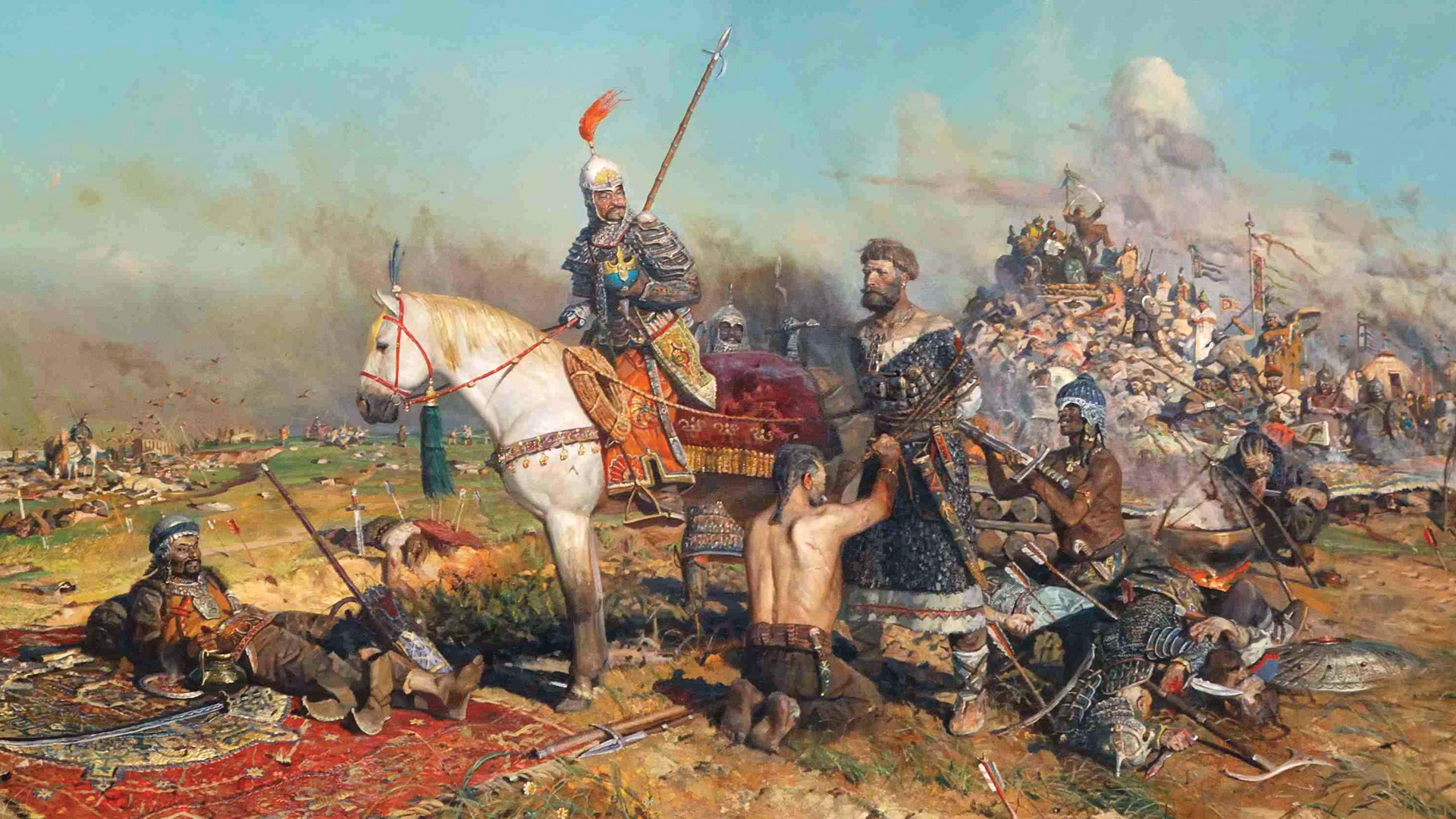
Disintegration of a Proto-National Brand
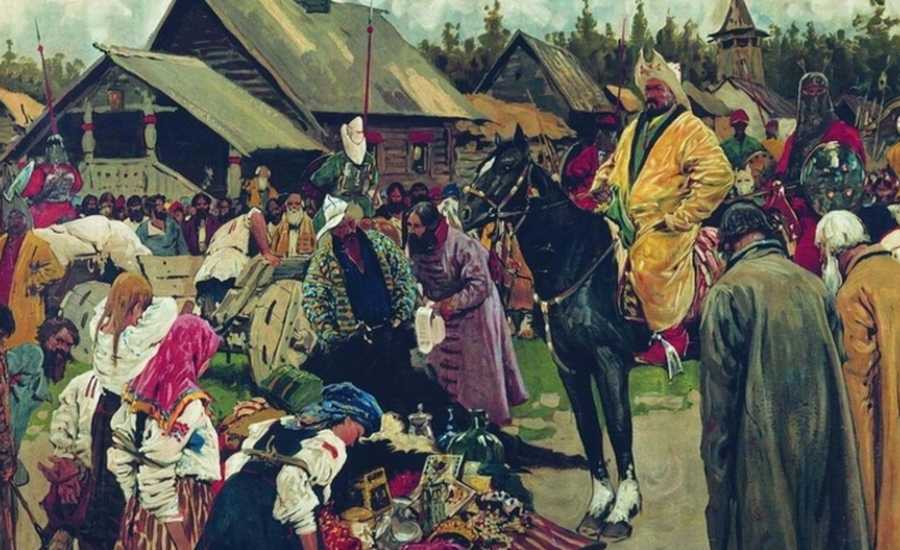
The arrival of Batu Khan’s forces in the 1230s and 1240s led to the wholesale destruction of cities, the decimation of populations, and the effective dismantling of the existing political structures. The imposition of the Mongol Yoke meant that Russian princes were required to travel to the Golden Horde’s capital to receive their yarliks (patents of authority), pay heavy tribute, and provide military contingents. This system stripped the Rus’ principalities of genuine sovereignty and fostered a deep sense of vulnerability and fragmentation. It was a catastrophic blow to the developing “corporate identity” of the Rus’ lands, replacing a nascent sense of self-governance with one of imposed subservience. The Mongol period arrested the natural evolution of a unified national narrative, compelling local leaders to focus on survival within the established tributary system rather than on broader “brand building” for a sovereign state.
The Golden Horde’s Imprint on Perceived Identity
For over two centuries, the Mongol Yoke profoundly redefined both the external and internal perception of the Rus’ principalities. From the perspective of Western Europe, the lands of Rus’ were seen primarily as a distant, eastern outpost under Asiatic rule – a peripheral entity defined by its subjugation. Internally, the continuous demand for tribute, the sporadic punitive raids, and the constant threat of Mongol intervention created a pervasive “brand association” of weakness, political subordination, and economic exploitation. The local princes, while retaining some administrative autonomy, were essentially “franchisees” of the Golden Horde, their power legitimized by their overlords. This era created a narrative of oppression and dependence, a negative “brand image” that future leaders would need to actively and strategically dismantle to forge a new, independent identity for a unified Russian state. The memory of this subjugation became a powerful, albeit painful, component of the collective historical consciousness, serving as a stark contrast to the aspirations for future sovereignty.
The Great Stand on the Ugra River (1480): A Strategic Brand Reset
By the late 15th century, the political landscape of Eastern Europe had significantly shifted. The Golden Horde itself was weakening, splintering into smaller, often warring, khanates. Concurrently, the Grand Duchy of Muscovy had strategically consolidated its power, steadily absorbing rival principalities and positioning itself as the undisputed leader among the Russian lands. This period, under the astute leadership of Ivan III, often called “the Great,” was marked by a careful “market positioning” and internal “brand building” that laid the groundwork for the ultimate confrontation with the Mongol successors.
The Consolidation of Muscovy’s Brand Power
Ivan III inherited a Grand Duchy that had already begun to assert its independence from Mongol suzerainty. He strategically utilized both military force and diplomatic maneuvers to expand Muscovy’s territorial control, integrating key rivals like Novgorod and Tver. His refusal to pay tribute to the Great Horde, a successor state to the Golden Horde, starting in 1476, was a direct challenge to the established “brand contract” of vassalage. This move was not made lightly; it was a calculated risk, a public declaration of an intent to redefine Muscovy’s status. Ivan’s reign was characterized by a systematic effort to centralize authority, codify laws (the Sudebnik of 1497), and build a powerful, resilient state apparatus. These actions were crucial internal “brand enhancements,” signaling to both internal and external stakeholders that Muscovy was preparing to launch a new, sovereign identity.
A Standoff of Symbols: The Ugra River as a Brand Confrontation
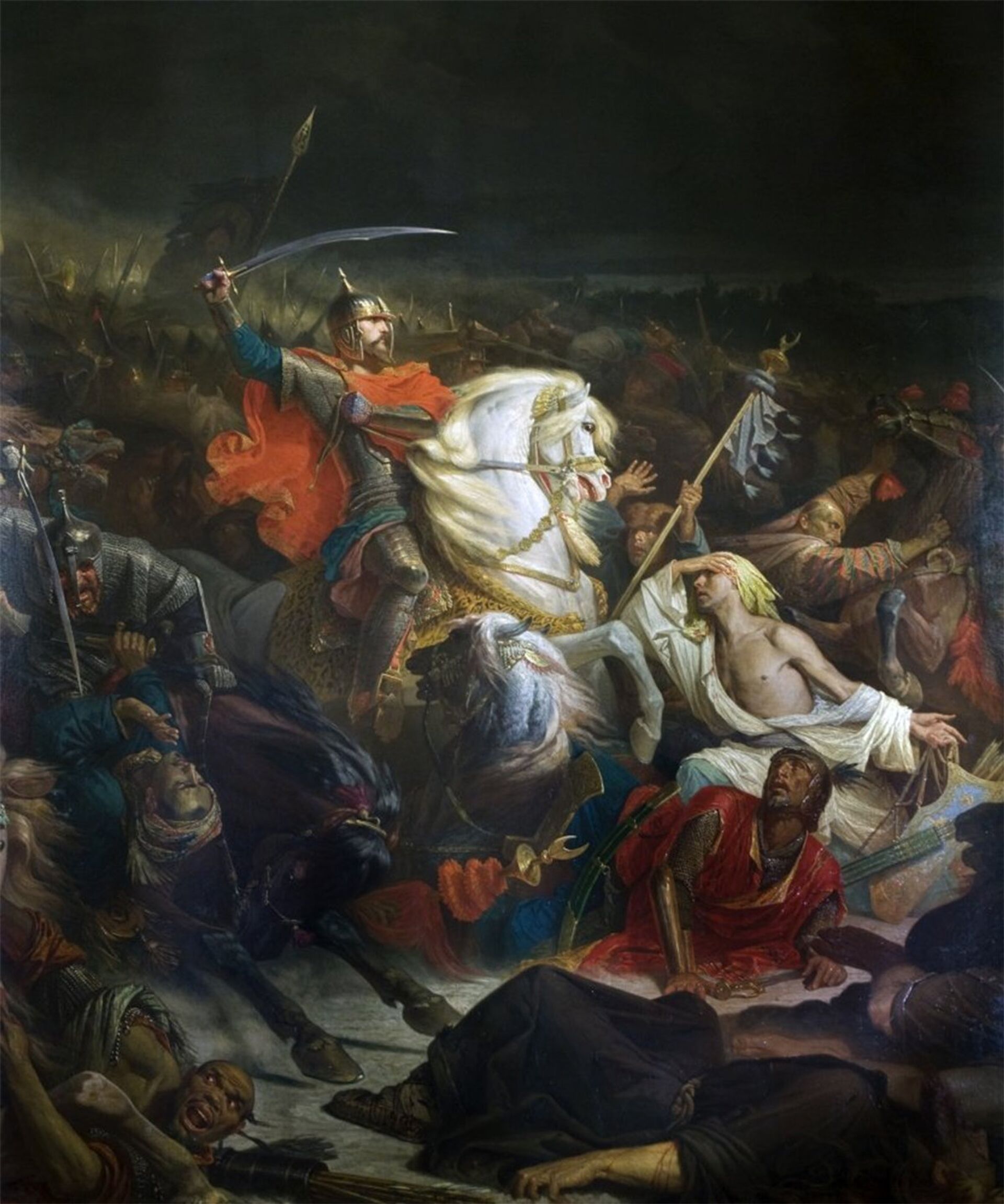
The “Great Stand on the Ugra River” in 1480 represents the definitive, albeit unusual, moment of Russia’s liberation. Khan Akhmat of the Great Horde marched his army north to enforce the tribute, meeting Ivan III’s forces on opposite banks of the Ugra River, a tributary of the Oka. For weeks, the two armies stood in a tense standoff, separated by the river. Crucially, Ivan III avoided a direct, open-field battle. His strategy was one of deterrence and attrition, leveraging defensive positions and the onset of winter. The lack of decisive engagement, coupled with Akhmat’s growing supply problems and fears of attacks on his rear, led the Khan to eventually withdraw his forces without a single major clash.
This seemingly anticlimactic event was, in fact, a profoundly symbolic “brand victory.” The Mongol army’s retreat, without securing tribute or a decisive military advantage, signaled a clear and undeniable break. It demonstrated that the Russian state, specifically Muscovy, no longer recognized the authority of the Horde and could successfully defy its demands. It was a declaration of independence not achieved through overwhelming force, but through a decisive assertion of sovereignty and the deliberate absence of submission. The withdrawal of the former oppressor, unable to enforce its will, marked the definitive end of the Mongol Yoke, dissolving the old “brand contract” of tribute and subservience. This moment served as the ultimate “brand reset,” symbolically severing the ties of two centuries.
Forging the New Russian Brand: From Liberation to Empire
With the strategic repositioning achieved at the Ugra, Ivan III was free to embark on an ambitious campaign of “nation-branding.” The liberation was not just an end but a beginning, paving the way for the assertion of Muscovy’s unique identity on the global stage and the internal consolidation of its power.
Ivan III as the Architect of the Post-Liberation Brand
Following Ugra, Ivan III meticulously crafted a new “corporate identity” for the burgeoning Russian state. He adopted the title “Sovereign of All Rus’,” a bold claim to encompass all East Slavic lands, not merely Muscovy. His marriage to Sophia Palaiologina, niece of the last Byzantine emperor, provided a crucial symbolic link to the fallen Eastern Roman Empire. Through this union, Muscovy strategically inherited Byzantine imperial symbols, most notably the double-headed eagle, which remains a core element of the Russian coat of arms today. These actions were deliberate “brand enhancements,” asserting Muscovy’s lineage as the successor to Byzantium and the defender of Orthodox Christianity. The “Third Rome” narrative—that Moscow was the spiritual and political heir to Rome and Constantinople—became a powerful “brand message,” positioning Russia as a unique spiritual and political entity with a divine mandate. This was a profound and intentional act of brand building, establishing a new foundation for legitimacy and prestige.
Internal Brand Consolidation and External Projection
The liberation from Mongol rule allowed for significant internal “brand consolidation.” No longer constrained by external overlords, Muscovy could now fully integrate newly acquired territories and diverse peoples under a unified legal, administrative, and cultural vision. The codified laws, the development of a centralized administration, and the increasing authority of the Grand Prince fostered a distinctly “Russian” identity that began to coalesce, consciously distinct from its fragmented, subjugated past. This period saw the strengthening of the Moscow Kremlin as the symbolic heart of Russian power, a “headquarters” for the newly defined national brand. Externally, Russia began to project an image of an emerging European power, no longer defined by its eastern subjugation but by its own burgeoning imperial ambitions and unique cultural-religious identity. This was a comprehensive “brand repositioning” on the global stage, transforming a tributary state into a formidable, self-determined player in international affairs.
Enduring Narrative: The Brand Legacy of Liberation
The story of Russia’s liberation from the Mongol Yoke, especially as encapsulated by the Great Stand on the Ugra River, transcends mere historical fact. It has been strategically woven into the fabric of Russian national identity, serving as a continuous, powerful narrative in its evolving brand strategy.
Commemoration and Myth-Making in National Brand Identity
The narrative of liberation became a cornerstone of Russian national identity and historical memory, serving as a powerful “origin story.” It reinforced themes of resilience, divine providence, and the ultimate triumph of Russian statehood against foreign domination. Through centuries, this event has been celebrated in literature, art, and historical accounts, shaping public perception and national self-image. It serves as a continuous “marketing campaign” for the Russian “brand,” emphasizing its capacity for self-determination and its unique historical path. This narrative often highlights the unity of Russian lands under Moscow’s leadership as a key factor in achieving freedom, thereby justifying centralization and strong leadership as essential components of the national character.
Strategic Reinterpretation in Modern State Branding
Even in contemporary Russia, the end of the Mongol Yoke remains a potent symbol. It is frequently invoked to underscore themes of national sovereignty, historical continuity, and the overcoming of foreign interference. This historical narrative is strategically reinterpreted and deployed in “state branding” efforts to foster national unity, legitimize political authority, and project an image of an independent and powerful nation on the world stage. The Ugra Stand, therefore, is not merely a past historical event but a continuously active element in Russia’s evolving brand strategy. It is a timeless testament to its perceived capacity for self-determination and assertion of power, a fundamental pillar in the ongoing construction and communication of the Russian national brand.
aViewFromTheCave is a participant in the Amazon Services LLC Associates Program, an affiliate advertising program designed to provide a means for sites to earn advertising fees by advertising and linking to Amazon.com. Amazon, the Amazon logo, AmazonSupply, and the AmazonSupply logo are trademarks of Amazon.com, Inc. or its affiliates. As an Amazon Associate we earn affiliate commissions from qualifying purchases.