
Snow White. The name itself evokes images of a pale complexion, rosy cheeks, and lips as red as blood. For generations, this quintessential fairy tale princess has graced our imaginations, a symbol of innocence, kindness, and, for many, a certain idealized beauty. But beneath the surface of this beloved character lies a complex tapestry of interpretation, one that has evolved significantly over time. While a literal, biological answer to “what ethnicity is Snow White?” is impossible given her fictional origins, exploring this question through the lens of Brand Strategy offers a fascinating insight into how cultural narratives are constructed, disseminated, and ultimately, how they impact our perceptions.

This article will not delve into speculative anthropological analyses of medieval European folklore. Instead, we will examine Snow White as a potent brand – a character whose perceived ethnicity has been shaped by artistic interpretation, cultural context, and the very commercialization of her story. We will explore how the original Grimm brothers’ tale, the Disney animation, and subsequent adaptations have contributed to and subtly altered the perception of Snow White’s ethnic identity, and what this tells us about the power of visual representation in shaping enduring brand archetypes.
The Genesis of an Icon: From Folklore to Folk Tale
The story of Snow White, as collected by the Brothers Grimm, emerged from a rich oral tradition within Germanic Europe. While the precise origins of specific folktales are often obscured by time, the cultural milieu in which these stories were forged is undeniably relevant. The Grimm brothers, as philologists and cultural historians, were deeply invested in preserving and articulating what they saw as the essence of German folklore.
The Grimm Brothers’ Narrative: A European Foundation
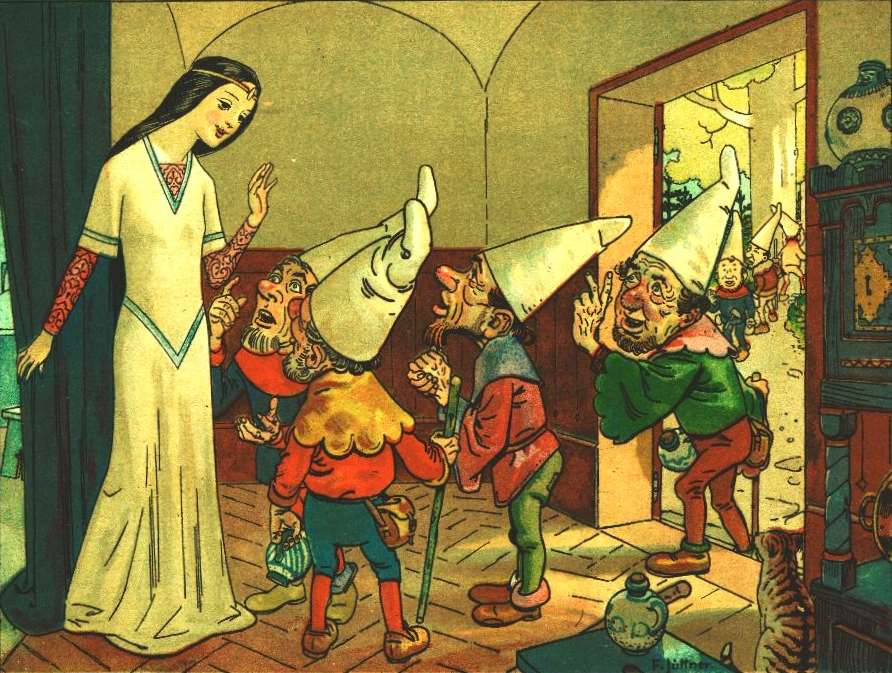
The original “Schneewittchen” tale, published in 1812, is steeped in the imagery and social structures of 19th-century Germany. The language, the social customs described, and the aristocratic settings all point towards a narrative deeply embedded within a European context. The descriptions of Snow White’s appearance – “skin as white as snow, lips as red as blood, and hair as black as ebony” – are presented as universally understood markers of beauty and fragility within that cultural framework. There is no explicit mention of a specific ethnicity beyond the implicit assumption of a European setting.
However, the absence of explicit ethnic markers in early folklore does not equate to a lack of implicit association. Within the context of the time and place, such descriptions were understood by the intended audience as belonging to their own world. The “other” was not typically a concept explored within the immediate, domestic sphere of these tales. Snow White’s beauty, therefore, was likely perceived as a reflection of the ideal beauty understood within that German cultural landscape.
The Power of Archetype: Innocence and Purity as Universal Traits
At its core, Snow White’s narrative is an archetype. She embodies purity, innocence, and a passive victimhood that ultimately triumphs through inherent goodness and external rescue. These are not traits exclusive to any single ethnicity. The universality of these themes allowed the story to transcend its specific origins and resonate across different cultures. When analyzing Snow White as a brand, these archetypal qualities are paramount. They are the foundational elements that allow for broad appeal and long-term brand recognition, irrespective of explicit ethnic identifiers. The initial “brand identity” was built on universally relatable human qualities.
The Disney Renaissance: Visualizing a Global Icon
The 1937 Walt Disney animated film, “Snow White and the Seven Dwarfs,” was a watershed moment in the character’s evolution. This adaptation transformed a beloved folktale into a global phenomenon, and in doing so, solidified a visual representation that would dominate popular consciousness for decades. This is where the concept of “ethnicity” becomes more pronounced, albeit through the implicit choices of the creators.
Walt Disney’s Artistic Choices: A Spectrum of Interpretation

Walt Disney’s studios were known for their meticulous attention to detail and their ability to imbue animated characters with distinct personalities and visual identities. For Snow White, the animation team faced the challenge of translating the vague, descriptive text into a tangible, visually appealing character. While the original story offered no definitive racial classification, the animators and artists made choices that, intentionally or unintentionally, leaned towards a specific aesthetic.
Snow White in the Disney film is depicted with fair skin, light brown or reddish-brown hair, and blue eyes. This visual representation, while broadly European, is not exclusively tied to any single nationality within Europe. It leans towards a common, idealized depiction of a European maiden, a visual shorthand for beauty and gentleness that would be widely understood and appreciated by a Western audience in the 1930s. The film’s massive success in the United States and beyond meant that this particular visual interpretation became the definitive Snow White for generations.
The Impact of Animation on Brand Recognition: Standardizing the Ideal
The power of animation in establishing a brand cannot be overstated. Disney’s Snow White became the benchmark against which all subsequent interpretations would be measured. The visual language of the film created an indelible image, a brand logo of sorts, that transcended linguistic barriers. The character’s perceived ethnicity, though not explicitly stated, became intrinsically linked to this animated depiction. This process of visual standardization is a crucial element of successful brand building. It creates a consistent and recognizable identity that fosters familiarity and loyalty. The subtle choices made in coloring, facial features, and styling contributed to a specific, albeit generalized, “brand look.”
Modern Reinterpretations: Challenging and Redefining the Brand
As cultural norms evolve and the landscape of media representation diversifies, so too have interpretations of classic characters like Snow White. The 21st century has seen attempts to broaden the character’s appeal and challenge the established visual norms, leading to discussions about ethnicity and identity.
Diversifying the Princess Line: Intentional Brand Evolution
More recent live-action adaptations and related media have consciously explored diversifying the cast and, by extension, the perceived ethnicity of Snow White. These reboots often aim to reflect a more inclusive contemporary society and to introduce the beloved character to new audiences with varied backgrounds. When a studio decides to cast a Snow White who is not fair-skinned with dark hair, it represents a deliberate brand strategy to evolve and adapt.
This approach, while sometimes met with controversy, highlights the fluidity of brand interpretation. It acknowledges that a brand, even one as deeply entrenched as Snow White, can be reimagined. The aim is to broaden the appeal by making the character more relatable to a wider demographic. This can involve casting actors of various ethnicities, which inherently shifts the audience’s perception of the character’s background. This is a strategic move to ensure the brand remains relevant and resonant in a multicultural world.
The “Disney Princess” Brand: A Case Study in Consistent Branding and Adaptability
The “Disney Princess” franchise itself is a masterclass in brand management. While each princess originates from a distinct story, Disney has managed to create a cohesive brand identity that unites them. This brand is built on a set of core values: courage, kindness, hope, and adventure. However, the visual execution of these values, and the perceived ethnicity associated with them, has been subject to evolution.
The fact that the “Disney Princess” brand has endured for decades is a testament to its ability to balance consistency with adaptation. While core elements of Snow White’s story and visual presentation remain recognizable, the willingness to explore different casting choices in live-action adaptations demonstrates an understanding that brand perception is not static. It can be influenced by external cultural shifts and intentional creative decisions. The question of Snow White’s ethnicity, therefore, becomes less about finding a definitive answer and more about understanding how the brand of Snow White has been strategically managed and interpreted across different eras and audiences.
In conclusion, the question of “what ethnicity is Snow White” is best answered not through a factual discovery, but through an analysis of her journey as a brand. From her roots in European folklore, where ethnicity was implicitly understood, to the iconic, idealized visual representation in Disney animation, and finally to the deliberate diversification of modern interpretations, Snow White’s perceived ethnicity has been a dynamic element shaped by cultural context, artistic choices, and strategic brand evolution. She remains a powerful archetype, her story continuing to be told and retold, each iteration offering a new layer to the enduring brand of the fairest princess of them all.
aViewFromTheCave is a participant in the Amazon Services LLC Associates Program, an affiliate advertising program designed to provide a means for sites to earn advertising fees by advertising and linking to Amazon.com. Amazon, the Amazon logo, AmazonSupply, and the AmazonSupply logo are trademarks of Amazon.com, Inc. or its affiliates. As an Amazon Associate we earn affiliate commissions from qualifying purchases.