
The Walking Dead has always been a show that isn’t afraid to pull the rug out from under its audience, and the demise of beloved, albeit morally ambiguous, characters is a hallmark of its narrative. Among the most memorable and impactful character deaths is that of Merle Dixon. His journey was a brutal, volatile ride, marked by a complex evolution from outright villainy to a grudging, yet ultimately fatal, sense of loyalty. For many fans, the question of precisely when this pivotal moment occurred in the sprawling narrative of the zombie apocalypse remains a key point of discussion and recollection. Understanding Merle’s final moments not only answers a direct fan query but also delves into the thematic core of The Walking Dead – survival, sacrifice, and the ghosts of past actions.

Merle Dixon’s Arc: From Scoundrel to Soldier
Merle Dixon’s story is one of the most fascinating character trajectories in The Walking Dead universe. Introduced in the early seasons, he was the epitome of a selfish, ruthless survivor, embodying the worst aspects of humanity in a world overrun by the undead. His volatile temper, racist tendencies, and complete disregard for anyone but himself and his younger brother, Daryl, made him an antagonist many loved to hate. His initial abandonment by the group in Atlanta, leaving him chained to a rooftop to fend for himself, was a brutal testament to the harsh decisions the living had to make. Yet, even in this dire situation, Merle displayed an astonishing will to survive, sawing off his own hand to escape.
This act of self-preservation, while gruesome, set the stage for his eventual, albeit brief, return. When he reappeared, he was hardened, more cunning, and driven by a primal need for revenge and a twisted sense of belonging. He found his way into The Governor’s ranks, the charismatic but equally deranged leader of Woodbury. Here, Merle became one of the Governor’s most loyal and feared enforcers, participating in brutal acts of violence and intimidation. This period showcased Merle at his most irredeemable, a stark reminder of the darkness that the apocalypse could foster.
However, the narrative skillfully began to weave in threads of complexity, particularly concerning his relationship with Daryl. Despite his general cruelty, there were glimpses of a protective instinct towards his brother. This underlying familial bond, however strained, would ultimately play a crucial role in his final stand. The Walking Dead excels at presenting characters who are not purely good or evil, but rather a messy amalgamation of both, shaped by their experiences and the constant struggle for survival. Merle Dixon was perhaps one of its most potent examples of this nuanced character development. His death, therefore, wasn’t just the elimination of a character, but a significant thematic statement about the cost of morality in an immoral world.
The Pivotal Episode: Season 3, Episode 15 – “This Sorrowful Life”
The dramatic and ultimately tragic end for Merle Dixon occurs in Season 3, Episode 15, titled “This Sorrowful Life.” This episode is a critical turning point in the season’s overarching conflict between Rick’s prison group and the Governor’s Woodbury forces. Merle, having been reinstated into the Governor’s inner circle, is tasked with a mission that will lead him directly to his fate.
The episode masterfully builds tension as Merle, on a solo mission to assassinate Rick Grimes, encounters his estranged brother, Daryl. This reunion is fraught with years of resentment, misunderstanding, and the harsh realities of their respective paths. Daryl, now a core member of Rick’s group, is trying to live by a more structured set of principles, even if they are brutal. Merle, on the other hand, is still largely driven by his ingrained savagery and a desperate need to prove his worth, not just to the Governor, but to himself.
The confrontation between the brothers is the emotional centerpiece of the episode. It’s a clash of their past selves and their present realities. Merle grapples with his ingrained loyalty to the Governor and his deeply buried affection for Daryl. This internal struggle, coupled with the external threat of the impending war, pushes Merle towards a decision that will define his legacy.

Merle’s Sacrifice: A Final Act of Redemption?
In “This Sorrowful Life,” Merle makes a deliberate choice that deviates from his usual self-serving nature. He is aware that his actions in Woodbury have made him a pariah to Rick’s group, and that his loyalty to the Governor is increasingly questioned. When he encounters Daryl, a desperate plea for reconciliation and understanding is met with Daryl’s own complex feelings. Daryl, while not fully forgiving Merle for his past transgressions, acknowledges the bond they share.
It is in the aftermath of this tense reunion that Merle orchestrates his final act. He decides to go rogue, not in his typical destructive manner, but with a specific, self-sacrificial objective. Knowing that the Governor plans to attack the prison, Merle sets out to stop him, or at least to cripple his forces and buy time for Rick’s group. He lures a contingent of the Governor’s men into a trap, engaging them in a brutal, one-man assault.
Merle’s fight is a testament to his formidable survival skills and his ferocity. He takes down multiple opponents, showcasing the ruthless effectiveness that made him both feared and respected. However, he is ultimately outnumbered and outgunned. The fight culminates in a brutal confrontation where Merle is mortally wounded by the Governor himself.
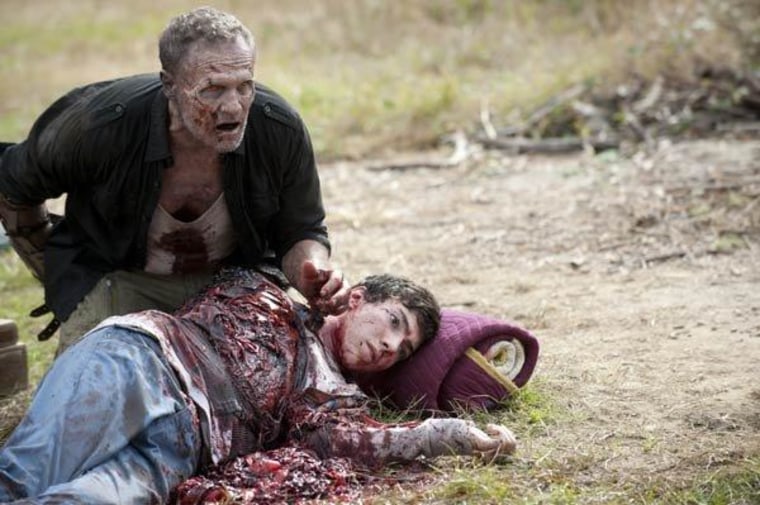
His death is not a quiet fade-out but a violent, agonizing end. He is found by Daryl, still clinging to life, and in his final moments, he exchanges a few words with his brother. The ambiguity of Merle’s final intentions is what makes his death so compelling. Was he seeking redemption? Was it a last-ditch effort to protect Daryl? Or was it simply a final, defiant act of a man who refused to go down without a fight, regardless of the consequences? The episode leaves these questions open, allowing viewers to interpret Merle’s sacrifice through the lens of his entire character arc. It’s a death that resonates because it suggests that even the most hardened individuals can, in their final moments, find a semblance of purpose or, at the very least, a profound connection.
The Aftermath and Impact on The Walking Dead
Merle Dixon’s death in Season 3, Episode 15, “This Sorrowful Life,” had significant repercussions for the narrative of The Walking Dead. It marked the end of one of the show’s most polarizing characters, a figure who embodied the brutal pragmatism and moral decay that the apocalypse fostered. His demise removed a major source of conflict and unpredictability, but it also paved the way for new character dynamics and plot developments.
For Daryl, Merle’s death was a profound loss and a catalyst for further growth. Having finally achieved a form of closure, or at least a shared experience of intense finality with his brother, Daryl’s arc began to solidify his role as a moral compass within the group. The memory of Merle, both the good and the bad, continued to influence Daryl’s decisions, reminding him of the darkness they had overcome and the importance of protecting the family they had built.
The confrontation with Merle and his subsequent death also significantly escalated the already volatile tensions between Rick’s group and the Governor. Merle’s actions, whether intended as a noble sacrifice or a final act of defiance, exposed the Governor’s ruthlessness and further solidified the perception of him as a clear antagonist. This event directly contributed to the escalating conflict that would culminate in the destructive battle for the prison.
Furthermore, Merle’s character death served as a powerful thematic statement for the show. It underscored the idea that survival in this world often comes at a terrible cost, and that even those who commit heinous acts can, in their final moments, exhibit traits of humanity or a desperate bid for meaning. Merle’s journey, from an irredeemable villain to a figure who made a choice that indirectly saved lives, highlighted the complex, often contradictory nature of human behavior under extreme duress. His death wasn’t just the end of a character; it was a brutal yet poignant reminder of the enduring struggle for morality and connection in a world that constantly threatened to strip it all away. The legacy of Merle Dixon, a character who was both a monster and a brother, continued to echo in the choices and actions of those left behind, leaving an indelible mark on the unfolding saga of The Walking Dead.
aViewFromTheCave is a participant in the Amazon Services LLC Associates Program, an affiliate advertising program designed to provide a means for sites to earn advertising fees by advertising and linking to Amazon.com. Amazon, the Amazon logo, AmazonSupply, and the AmazonSupply logo are trademarks of Amazon.com, Inc. or its affiliates. As an Amazon Associate we earn affiliate commissions from qualifying purchases.