
The digital realm has become our primary gateway to entertainment, and for fans of Japanese animation, or anime, this couldn’t be truer. Streaming platforms, online forums, and dedicated fan wikis have revolutionized how we discover, discuss, and consume our favorite series. Among the most eagerly anticipated and discussed anime of recent years is the continuation of the Naruto saga, specifically “Boruto: Naruto Next Generations.” Within this new generation of shinobi, a pivotal character named Kawaki has emerged, and for many viewers, the burning question is precisely when he makes his grand entrance. This article delves into the digital footprints and narrative arcs that lead to Kawaki’s introduction, providing a clear guide for fans seeking this crucial plot point.
Understanding the Narrative Context: Boruto’s Evolving Storyline
Before pinpointing Kawaki’s debut, it’s essential to understand the narrative landscape of “Boruto: Naruto Next Generations.” The series, which began airing in April 2017, is a sequel to the immensely popular “Naruto” and “Naruto Shippuden” franchises. It follows the adventures of Boruto Uzumaki, the son of the Seventh Hokage, Naruto Uzumaki, and his own generation of shinobi in the Hidden Leaf Village. The early arcs of the anime focus on Boruto’s life as a student at the Ninja Academy, his relationships with friends and family, and the emergence of new threats that challenge the peaceful era established after the Fourth Great Ninja War.
This period of relative peace, while a welcome change for many, also sets the stage for the introduction of characters and conflicts that will test the new generation. The narrative carefully builds suspense, introducing elements that hint at darker times ahead. The introduction of the Kara organization, a clandestine group with mysterious motives, serves as a significant harbinger of the larger conflicts to come. It is within this unfolding narrative, as the stakes begin to rise and the established order is subtly threatened, that Kawaki’s story begins to intersect with Boruto’s.
The Genesis of Kawaki’s Introduction: Setting the Stage for Impact
Kawaki’s arrival is not a casual cameo; it’s a carefully orchestrated event designed to fundamentally alter the trajectory of the “Boruto” narrative. His presence signifies a shift in the series’ focus, introducing a character burdened by a dark past and possessing immense, volatile power. The writers understood the importance of this introduction, ensuring that it would be memorable and impactful, setting the tone for his subsequent role in the story.
The anime, much like its manga counterpart, employs various narrative devices to build anticipation for Kawaki’s appearance. This includes foreshadowing through discussions of new technologies and threats, as well as the introduction of characters who are aware of his existence and the danger he represents. The early episodes, therefore, are not just about establishing Boruto’s world but also about creating the fertile ground from which Kawaki will eventually emerge. This patient storytelling approach ensures that when Kawaki finally appears, his presence feels earned and his implications are immediately understood by attentive viewers.
Pinpointing the Debut: Kawaki’s First Appearance in the Anime
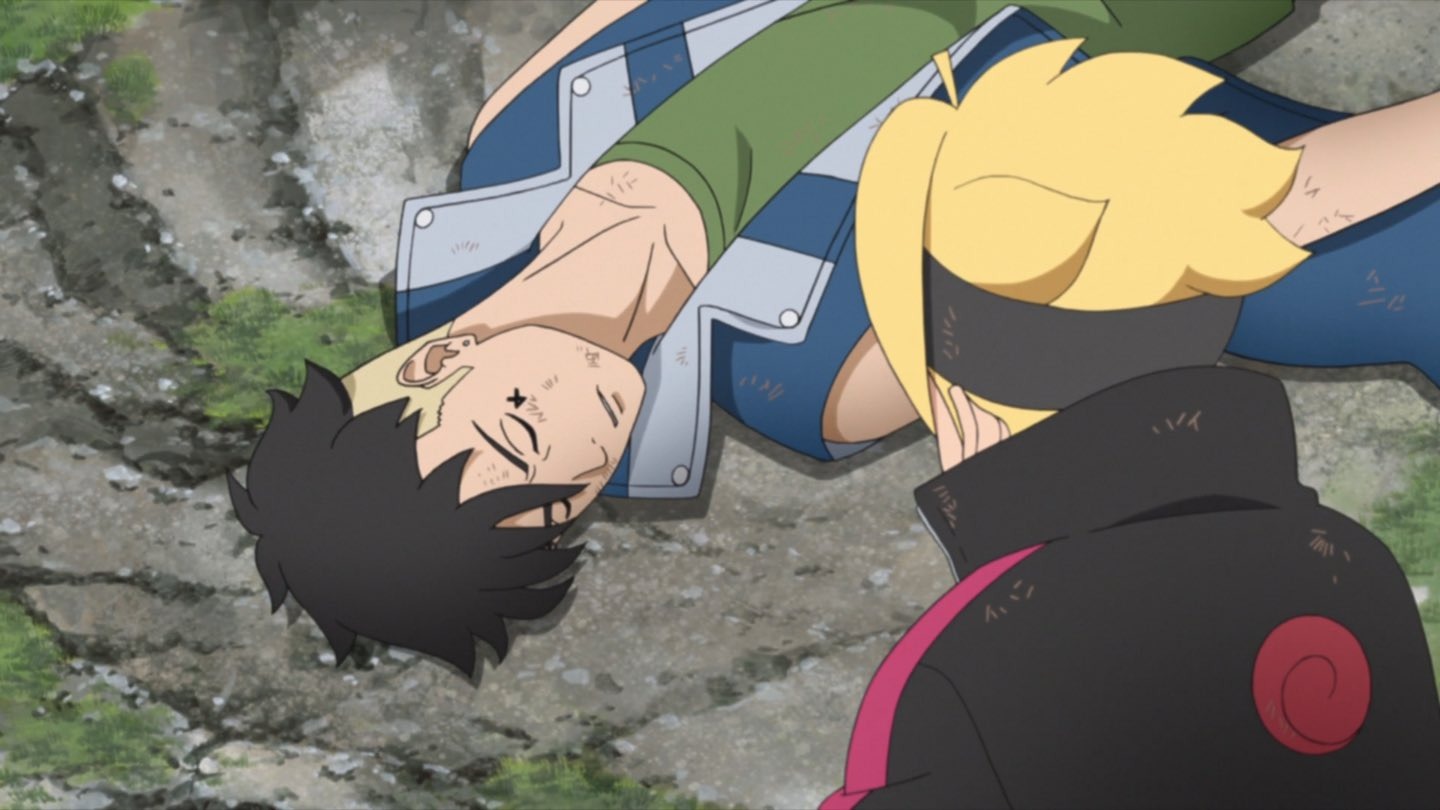
For fans eager to witness this pivotal moment, the answer lies within the “Mujina Bandits Arc”. Specifically, Kawaki makes his animated debut in episode 41 of “Boruto: Naruto Next Generations.” This episode, titled “The New Era,” marks a significant turning point in the series. While the “Mujina Bandits Arc” itself focuses on Boruto and his team investigating a group of thieves, the narrative strategically weaves in the events leading up to Kawaki’s crucial intervention.
The anime’s pacing in the lead-up to episode 41 is designed to build suspense. Viewers are given glimpses of a mysterious, heavily guarded facility and learn of a dangerous individual being held captive. The episode culminates in a dramatic rescue and the subsequent introduction of Kawaki into Boruto’s life, presenting him as a troubled but powerful ally. This initial appearance is not just about showing the character; it’s about showcasing his immediate impact and the complex circumstances that surround him.
The Impact of Episode 41: A Paradigm Shift in the Boruto Narrative
The introduction of Kawaki in episode 41 is far more than just another character joining the roster. It’s a narrative earthquake. Kawaki is not a typical aspiring ninja; he is a weapon, a vessel for a powerful ancient technology, and a survivor of brutal experimentation. His arrival immediately raises the stakes for the entire Hidden Leaf Village and its inhabitants. He brings with him the shadow of his past tormentor, Jigen, the leader of the Kara organization, and the ominous Ōtsutsuki clan.

His interaction with Boruto is central to the episode. Their initial encounters are fraught with tension and misunderstanding, reflecting their vastly different life experiences. Boruto, a privileged and relatively sheltered prodigy, finds himself confronting someone who has known only pain and exploitation. This dynamic immediately establishes a core theme of the series: the struggle to understand and connect with those who have suffered deeply. Furthermore, Kawaki’s possession of a Kāma mark, a physical manifestation of his connection to Ōtsutsuki power, instantly introduces a new layer of supernatural threat that extends beyond the village’s immediate concerns. This debut firmly establishes Kawaki not just as a character, but as a catalyst for the series’ most significant plot developments.
The Manga Connection: Aligning Anime Arcs with Source Material
For those who follow both the anime and the manga, understanding the relationship between the two is key to appreciating the narrative flow. The “Boruto” manga, penned by Ukyo Kodachi (initially) and Masashi Kishimoto, and illustrated by Mikio Ikemoto, began serialization in Weekly Shonen Jump in May 2016. The anime adaptation often takes creative liberties, expanding upon the manga’s storylines, introducing anime-original arcs, and delving deeper into the characters’ lives and motivations.
Kawaki’s introduction in the manga occurs in Chapter 1 of the “Kara Arc”. This chapter, released in May 2016, marks the very beginning of the manga’s focus on the Kara organization and its key players. The anime, while staying true to the spirit of the manga, takes its time in adapting this pivotal arc. This is a common practice in anime production, allowing for more character development, world-building, and sometimes, to avoid catching up too quickly to the ongoing manga serialization. Therefore, while manga readers encountered Kawaki much earlier in their reading journey, anime viewers had to wait for the adaptation to reach that specific point in the narrative.
Bridging the Gap: Anime’s Expansion and Early Hints
The anime’s approach to adapting the “Kara Arc” and introducing Kawaki is a prime example of how different media can complement each other. While the manga presents the information more directly and chronologically, the anime often builds anticipation through a series of interconnected events and subplots.
Before episode 41, the anime subtly introduced elements that hinted at Kawaki’s existence and the threat posed by Kara. These included discussions about advanced scientific ninja tools, the mysterious activities of the Kara organization, and even fleeting glimpses of characters associated with them. These narrative threads, woven throughout earlier episodes, served to prepare the audience for the seismic shift Kawaki’s arrival would bring. This careful layering ensures that when episode 41 airs, the introduction feels both surprising and inevitable, a culmination of the story’s underlying tensions. It allows for a more immersive experience, where the audience feels the weight of Kawaki’s past and the potential danger he represents, even before he fully enters the picture.
Navigating the Digital Landscape: Resources for Anime Viewers
In today’s digital age, finding information about anime, including specific episode details, is remarkably accessible. A wealth of resources is available online for dedicated fans seeking to track character appearances, plot points, and narrative arcs. For those specifically looking for Kawaki’s debut, several avenues can be explored.
Official anime streaming platforms, such as Crunchyroll and Funimation, often provide episode summaries and character information, which can be helpful in navigating through the series. Beyond official sources, fan-driven wikis are an invaluable asset. Websites like the Narutopedia (a comprehensive wiki dedicated to the Naruto and Boruto series) meticulously document every aspect of the anime and manga, including character introductions, episode synopses, and detailed plot breakdowns. These wikis are often curated by dedicated fans who have a deep understanding of the series and can provide precise information, such as the exact episode number and title for Kawaki’s first appearance.
Leveraging Online Communities and Databases
Online forums and discussion boards dedicated to anime, such as Reddit’s r/Boruto subreddit or dedicated fan forums, are also excellent places to find answers and engage with fellow fans. These communities are often abuzz with discussions about plot developments, character analyses, and specific trivia, including when new characters are introduced. A quick search within these communities can often yield direct answers and valuable context.
Furthermore, anime databases like MyAnimeList or AniList provide extensive information on individual anime series. These platforms allow users to track their viewing progress, rate episodes, and read reviews. Crucially for this query, they offer detailed episode lists with synopses, making it easy to identify specific plot points and character introductions. By utilizing these interconnected digital resources, fans can efficiently pinpoint Kawaki’s debut episode and gain a deeper understanding of his significance within the “Boruto: Naruto Next Generations” narrative. This digital exploration underscores how technology and fan engagement have made anime consumption and knowledge more accessible than ever before, allowing viewers to precisely track the journey of characters like Kawaki.
aViewFromTheCave is a participant in the Amazon Services LLC Associates Program, an affiliate advertising program designed to provide a means for sites to earn advertising fees by advertising and linking to Amazon.com. Amazon, the Amazon logo, AmazonSupply, and the AmazonSupply logo are trademarks of Amazon.com, Inc. or its affiliates. As an Amazon Associate we earn affiliate commissions from qualifying purchases.