
Stardew Valley. The name itself evokes images of serene pixelated landscapes, the comforting rhythm of daily chores, and the satisfying progression of building a thriving farm. This indie darling has captured the hearts of millions, not just for its charming gameplay and deep systems, but also for its remarkable technical execution. Often, when players and aspiring game developers delve into the “how” behind Stardew Valley’s success, a fundamental question arises: what technological engine powered its creation? This exploration will dissect the technical underpinnings of Stardew Valley, focusing on the software and tools that facilitated its development and contributed to its enduring appeal within the realm of digital entertainment.
The Core of Creation: Choosing the Right Development Framework
The decision of which game engine or framework to utilize is a pivotal one for any game developer. It dictates the programming languages, the available tools for asset integration, the performance characteristics of the final product, and the ease with which a solo developer or a small team can bring their vision to life. For Stardew Valley, this choice was not merely a technicality; it was a strategic decision that profoundly influenced the development process and the game’s accessibility.
XNA Framework: The Foundation of Stardew Valley’s Genesis
At its heart, Stardew Valley was built using Microsoft’s XNA Framework. For those unfamiliar, XNA (short for “Xbox Advanced Network Activity” or a playful acronym for “Exclusively Non-Adventure”) was a set of free tools and libraries developed by Microsoft. Its primary purpose was to simplify game development, particularly for Windows and the Xbox 360. XNA provided a unified platform for C# developers to create games, abstracting away much of the low-level hardware interaction that traditionally made game development a more daunting undertaking.
Why XNA Was a Synergistic Choice for ConcernedApe
The choice of XNA was far from arbitrary. For Eric “ConcernedApe” Barone, the sole developer of Stardew Valley, XNA presented several compelling advantages:
- Accessibility and Learning Curve: ConcernedApe, while skilled, was not an established AAA game developer with access to proprietary engines. XNA, with its C# foundation, was relatively approachable for developers familiar with the language. This allowed him to learn and implement complex game mechanics without being bogged down by the steep learning curves often associated with more feature-rich, but also more complex, engines.
- Cost-Effectiveness: XNA was a free framework provided by Microsoft. For an independent developer working on a passion project, minimizing upfront costs was crucial. This allowed resources to be channeled into development and asset creation rather than licensing fees.
- Community and Resources: While not as expansive as some modern engines, XNA had a dedicated community and a wealth of online resources, tutorials, and code examples. This was invaluable for a solo developer seeking solutions to specific problems or looking for inspiration.
- Focus on 2D Development: Stardew Valley is, at its core, a 2D game. XNA was well-suited for 2D game development, providing the necessary tools for sprite rendering, animation, and tile-based map manipulation without the overhead of 3D rendering pipelines.
The XNA Framework essentially provided a robust scaffolding upon which ConcernedApe could build his intricate world. It allowed him to focus on the game design, the intricate balance of mechanics, the charming pixel art, and the evocative soundtrack, rather than wrestling with fundamental rendering or input handling issues.
The Evolution of Stardew Valley: From XNA to Cross-Platform Success
While XNA was the genesis of Stardew Valley, the game’s journey to becoming a multi-platform phenomenon necessitated further technological considerations and, in some cases, significant refactoring or re-implementation. The initial success of Stardew Valley on PC, powered by XNA, paved the way for its expansion to other platforms, each with its own unique technical requirements and development environments.
Transitioning to MonoGame: Ensuring Cross-Platform Compatibility
A significant technological hurdle for games built on the XNA Framework was its proprietary nature and its tie to Microsoft platforms. To bring Stardew Valley to a wider audience, including consoles and mobile devices, a more cross-platform solution was needed. This is where MonoGame entered the picture.
What is MonoGame?
MonoGame is an open-source implementation of the XNA Framework. It allows developers to write their game code once and deploy it across a multitude of platforms, including Windows, macOS, Linux, Android, iOS, PlayStation, Xbox, and Nintendo Switch. Essentially, it acts as a bridge, translating the XNA API calls into platform-specific code.
The Strategic Importance of MonoGame for Stardew Valley’s Porting
The adoption and adaptation of MonoGame were instrumental in Stardew Valley’s remarkable porting success. This transition allowed:
- Wider Reach: ConcernedApe could leverage his existing codebase and knowledge of the XNA architecture to target a far broader player base without needing to rewrite the game from scratch for each platform.
- Continued Development: While the initial development was XNA-centric, the ongoing updates and expansions to Stardew Valley have likely benefited from the flexibility and robustness that MonoGame offers. It facilitates the maintenance and enhancement of the game across its diverse ecosystem.
- Community Support: As an open-source project, MonoGame benefits from active community contributions and ongoing development, ensuring its continued relevance and compatibility with new hardware and operating systems.
The move to MonoGame demonstrates a pragmatic approach to game development. It’s about building upon a solid foundation and adapting it to meet evolving market demands and player accessibility, a testament to the technical foresight that went into Stardew Valley’s long-term vision.
Beyond the Engine: Essential Tools and Technologies
While the core engine provides the framework, the creation of a game as rich and detailed as Stardew Valley involves a multitude of other software tools and technological considerations. These elements, though perhaps less discussed than the primary engine, are vital to the game’s polished presentation and functionality.
Pixel Art and Animation: Bringing the World to Life
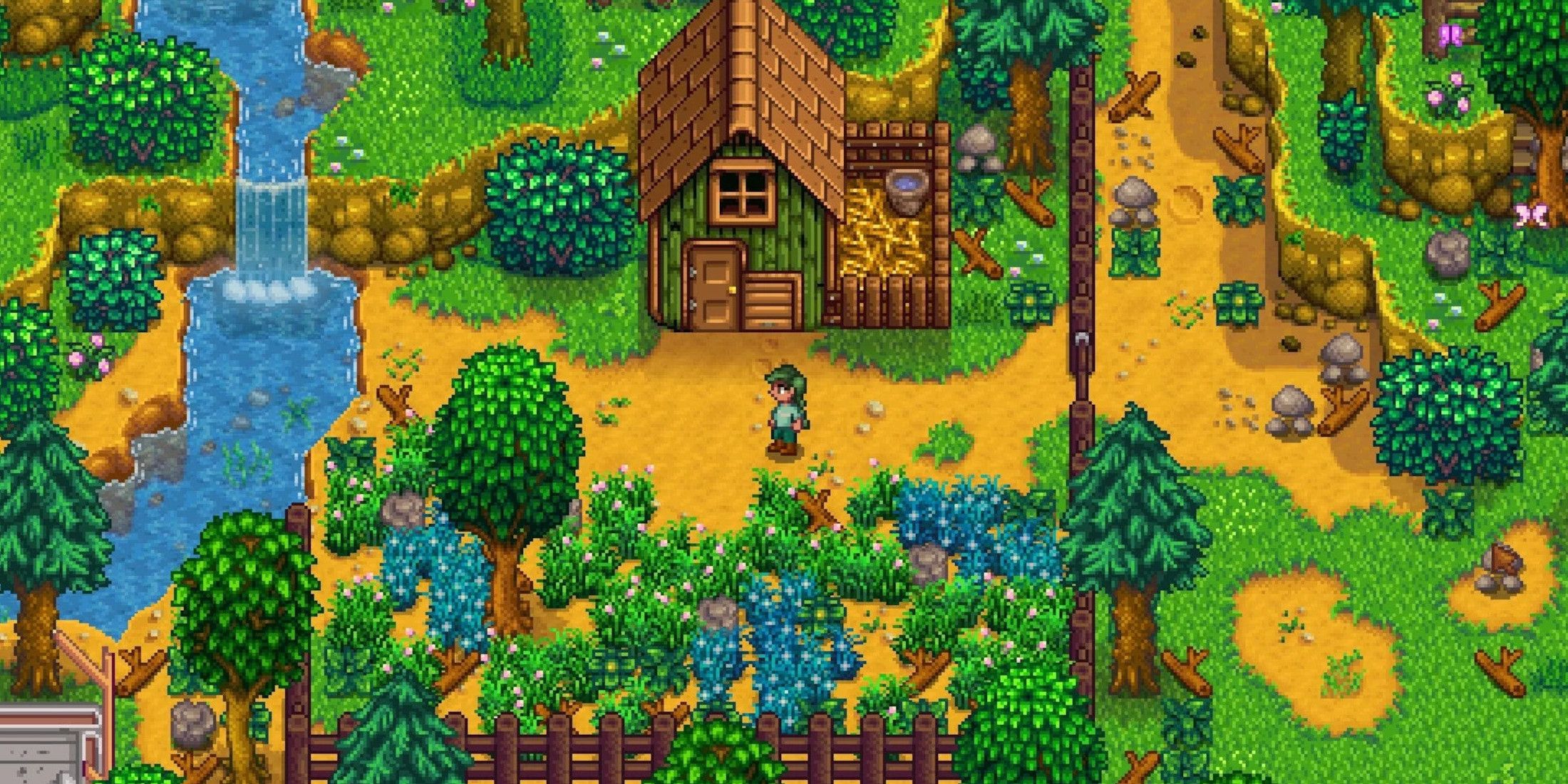
The distinctive visual style of Stardew Valley is a cornerstone of its appeal. Achieving this requires specialized tools for creating and animating pixel art.
Pixel Art Software
- Aseprite: While not definitively confirmed by ConcernedApe for every asset, Aseprite is a de facto standard in the indie pixel art community. It is a powerful and intuitive pixel art editor that excels in animation. Its features for onion-skinning, frame-by-frame animation, and palette management make it ideal for crafting Stardew Valley’s charming sprites and environmental assets.
- Photoshop/GIMP: For broader image manipulation and potentially some early asset creation, professional-grade image editing software like Adobe Photoshop or the open-source alternative GIMP would likely have been utilized. These tools offer extensive capabilities for brush work, color correction, and composition.
The pixel art pipeline for Stardew Valley involves not just the creation of static images but also the intricate process of animating characters, creatures, and environmental elements to convey movement and life. This requires a deep understanding of animation principles and the effective use of pixel art software.
Audio Production: Crafting the Immersive Soundscape
The music and sound effects of Stardew Valley are as integral to its atmosphere as its visuals. ConcernedApe’s talent extends to composition, and the tools used for audio production play a crucial role.
Digital Audio Workstations (DAWs) and Music Software
- A Variety of DAWs: For composing and producing music, developers typically use Digital Audio Workstations (DAWs). While ConcernedApe hasn’t explicitly detailed his specific DAW, common choices in independent music production include Ableton Live, FL Studio, Logic Pro (for Mac users), or Reaper. These platforms allow for recording, sequencing, editing, and mixing audio, as well as utilizing virtual instruments and effects.
- Synthesizers and Sound Libraries: The chiptune-inspired and often whimsical melodies of Stardew Valley would likely have been created using a combination of software synthesizers and sound libraries. These tools allow for the generation of a wide range of electronic sounds, emulating classic hardware or creating entirely new sonic textures.
- Sound Effect Creation: Sound effects, from the rustling of leaves to the clang of a pickaxe, are essential for immersion. These could have been created through field recordings, synthesized sounds, or using pre-made sound effect libraries, all manipulated and integrated within a DAW.
The technological integration of audio is a sophisticated process. It involves not only the creative act of composition and sound design but also the technical implementation of audio engines and middleware to ensure seamless playback, spatialization, and dynamic audio adjustments within the game.
Version Control and Collaboration (Even for Solo Devs)
Even for a game developed by a single individual, robust technical practices are essential for managing the project and ensuring its integrity.
Git and GitHub
- Version Control Systems (VCS): Tools like Git are fundamental for modern software development. They allow developers to track changes to their code and assets over time, revert to previous versions if necessary, and manage different branches of development. For a project as extensive as Stardew Valley, a VCS is indispensable for preventing data loss and maintaining a clear development history.
- GitHub/GitLab: Platforms like GitHub or GitLab provide remote repositories for Git projects. While ConcernedApe was the sole developer, using a service like GitHub for his Stardew Valley project would have provided a secure, cloud-based backup of his work and facilitated potential future collaboration or open-source contributions to the underlying framework.
The adoption of these sophisticated development tools underscores the professionalism and rigorous approach taken in creating Stardew Valley, even within the indie space. They are the invisible scaffolding that supports the creative output, ensuring a stable and manageable development process.
Conclusion: The Enduring Legacy of Stardew Valley’s Technological Choices
Stardew Valley stands as a powerful testament to the fact that groundbreaking games can be built with accessible, well-chosen technologies. The decision to leverage the XNA Framework, and subsequently MonoGame, allowed a solo developer to realize an incredibly ambitious vision. This choice facilitated learning, minimized costs, and ultimately enabled the game’s remarkable cross-platform success. Beyond the core engine, the skillful application of specialized tools for pixel art and audio production, coupled with robust version control practices, contributed to the game’s polished and immersive experience.
The technological journey of Stardew Valley is more than just a technical specification; it’s a narrative of smart decisions, adaptability, and the power of open-source and community-driven development. It serves as an inspiring example for aspiring game developers, demonstrating that with the right tools and a clear vision, even the most intricate and beloved digital worlds can be brought to life. The enduring appeal of Stardew Valley is a direct reflection of the solid, well-considered technological foundation upon which it was built, a foundation that continues to support its vibrant existence across countless platforms.
aViewFromTheCave is a participant in the Amazon Services LLC Associates Program, an affiliate advertising program designed to provide a means for sites to earn advertising fees by advertising and linking to Amazon.com. Amazon, the Amazon logo, AmazonSupply, and the AmazonSupply logo are trademarks of Amazon.com, Inc. or its affiliates. As an Amazon Associate we earn affiliate commissions from qualifying purchases.