
In the world of mechanical engineering and automotive technology, few terms are as ubiquitous yet frequently misunderstood as “engine cc.” Whether you are browsing a spec sheet for a new motorcycle, a high-performance sports car, or even a heavy-duty generator, the “cc” rating is often the first metric mentioned.
At its most basic level, “cc” stands for cubic centimeters. It is a measurement of volume. However, in the context of technology and engineering, it represents the heart of the internal combustion engine’s capacity to do work. Understanding engine displacement is not merely about knowing the size of a machine; it is about understanding the relationship between volume, pressure, energy conversion, and the software-driven systems that manage these physical forces.
The Mechanics of Displacement: What CC Actually Measures
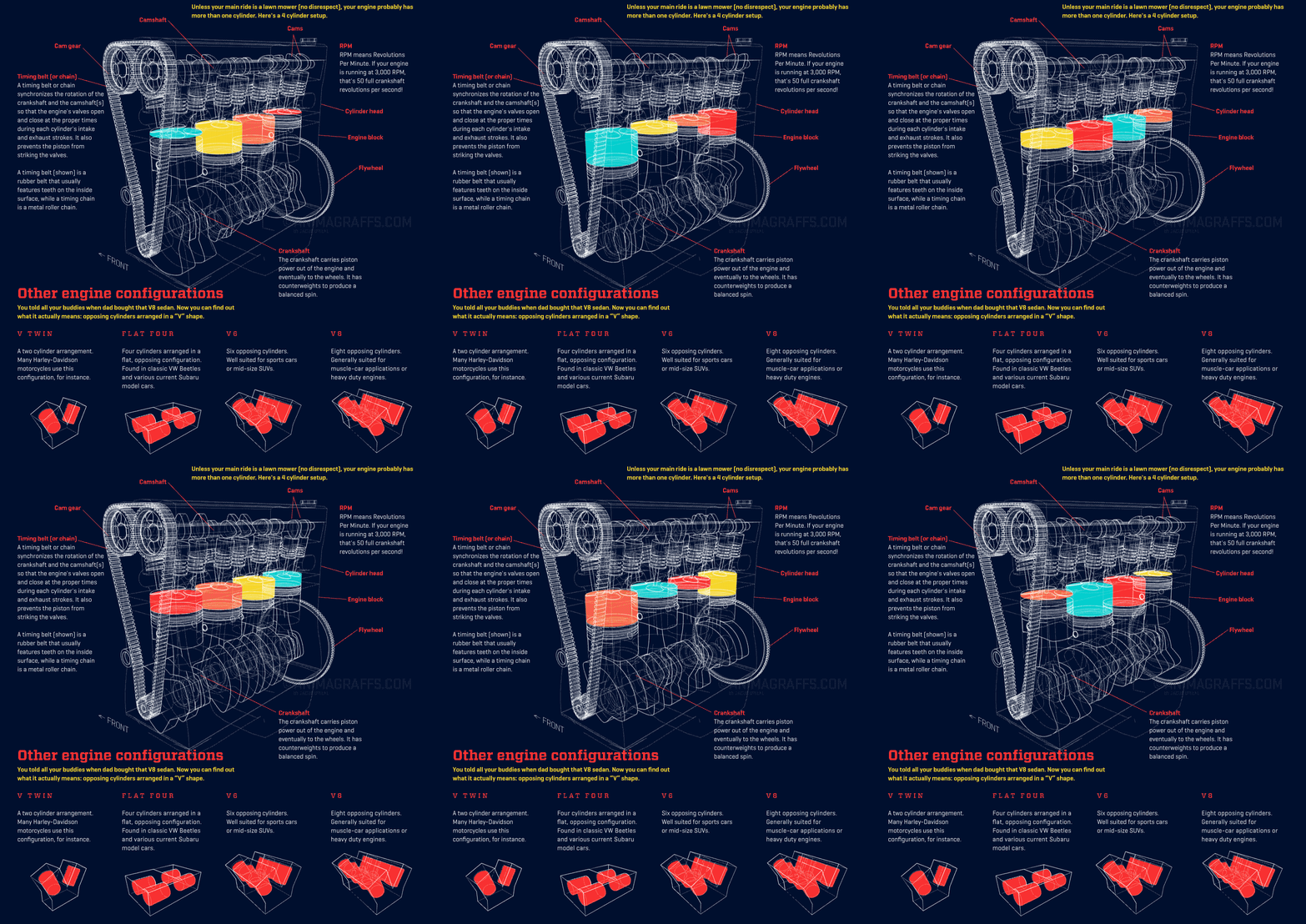
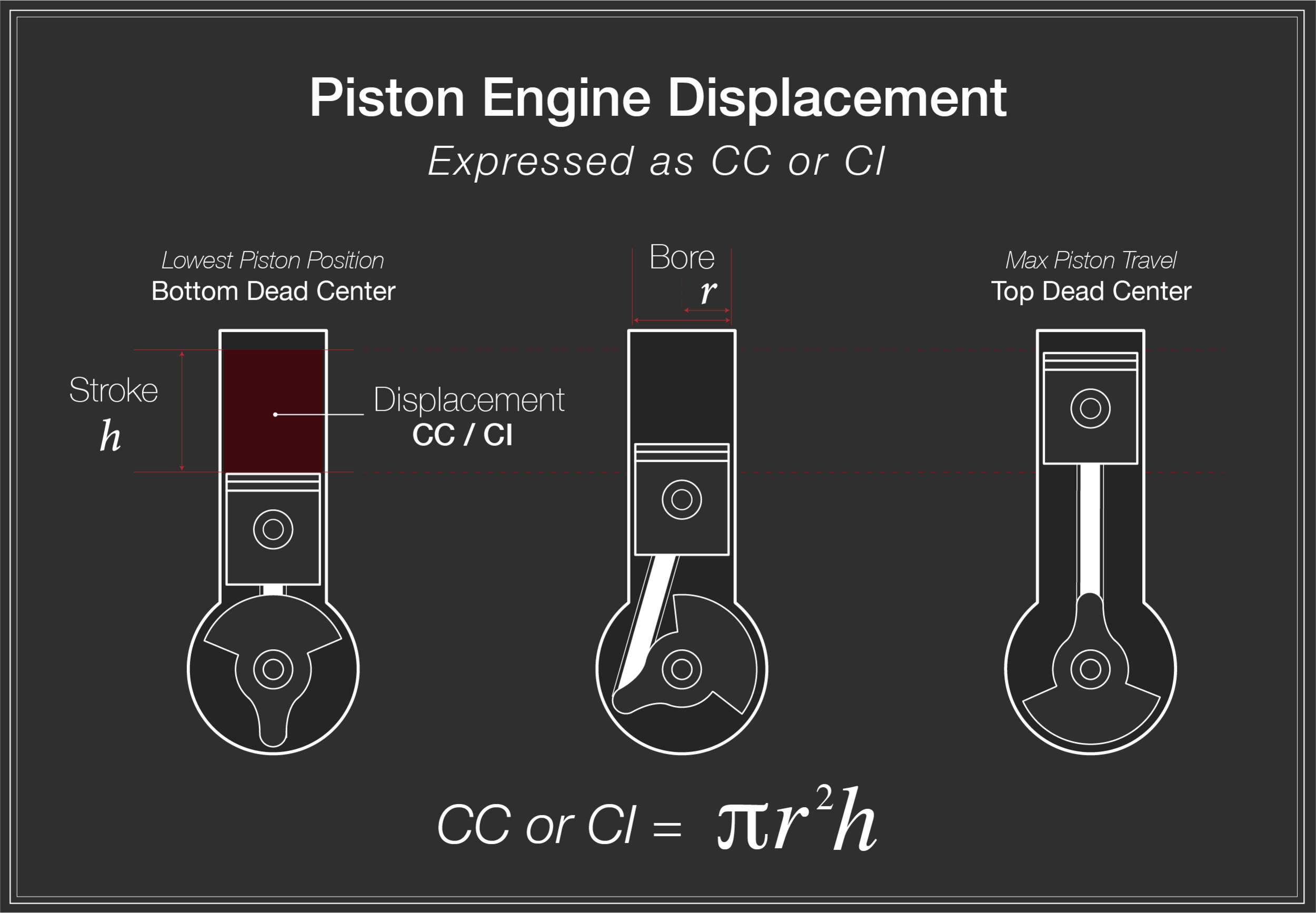
To understand engine cc, one must look inside the cylinders of an internal combustion engine. Displacement is the total volume of all the cylinders in an engine as the pistons move from their lowest point (Bottom Dead Center) to their highest point (Top Dead Center).
The Math Behind the Metal
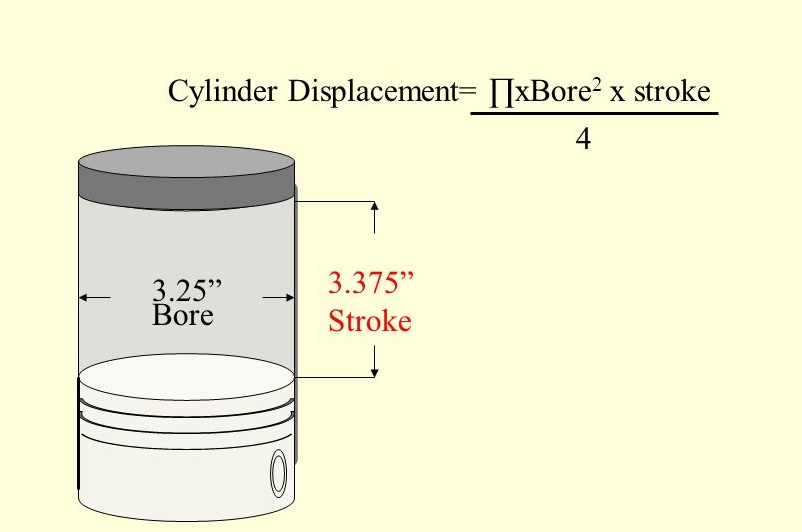
The displacement of a single cylinder is calculated using the formula for the volume of a cylinder: $V = pi times r^2 times h$. In automotive terms, $r$ represents the radius of the “bore” (the diameter of the cylinder), and $h$ represents the “stroke” (the distance the piston travels). When you multiply this volume by the total number of cylinders in the engine, you get the total displacement.
For example, a 1000cc engine (or 1.0 Liter) typically consists of multiple cylinders whose combined volume equals 1,000 cubic centimeters. In a four-cylinder engine, each cylinder would displace 250cc. This measurement is critical because it determines how much air and fuel can be drawn into the engine during a single combustion cycle.
Bore vs. Stroke: The Tech of Engine Character
The ratio between the bore and the stroke is a fundamental technological choice that defines an engine’s behavior.
- Oversquare (Short-Stroke) Engines: These have a larger bore than stroke. This configuration allows for higher RPMs (revolutions per minute) because the piston travels a shorter distance. High-tech racing engines and superbikes often utilize this design to achieve massive power at high speeds.
- Undersquare (Long-Stroke) Engines: These have a longer stroke than bore. These engines are designed for torque—the pulling power of the engine—at lower speeds. This is the technology of choice for heavy-duty trucks and industrial machinery where “grunt” is more important than top-end speed.
Performance Metrics: How Volume Translates to Power and Torque
The “cc” of an engine is often used as a shorthand for its power, but this is an oversimplification. In modern engineering, displacement is just one variable in a complex equation involving thermal efficiency, forced induction, and mechanical friction.
The Relationship Between CC and Horsepower
Broadly speaking, a higher cc rating allows for more fuel and air to be burned, which creates a larger explosion and pushes the piston down with more force. This results in higher horsepower. However, the efficiency with which an engine converts that chemical energy into mechanical energy is where “Tech” truly enters the conversation.
A modern 2000cc engine with advanced direct injection and variable valve timing can easily outperform a 5000cc engine from the 1970s. This is due to technological advancements in metallurgy, fluid dynamics, and combustion chamber design, which allow smaller volumes to produce greater output.
Forced Induction: The “CC” Cheat Code
One of the most significant technological leaps in the last two decades is the widespread adoption of turbochargers and superchargers. These devices use turbines to compress the air entering the cylinders.
By forcing more air into a 1500cc engine than it could naturally breathe, engineers can make it perform like a 3000cc engine. This “downsizing” trend is a hallmark of modern tech, allowing manufacturers to maintain high performance while reducing the physical footprint and weight of the engine, leading to better power-to-weight ratios.
The Digital Brain: Engine Management Systems (EMS) and Software
In the 21st century, an engine is only as good as the software that controls it. The “cc” provides the physical capacity, but the Engine Control Unit (ECU) provides the intelligence.
Precision Fuel Injection and AI
In older mechanical systems, fuel was delivered via carburetors—a somewhat imprecise method. Today, high-speed processors and sensors monitor everything from oxygen levels in the exhaust to the temperature of the intake air.
Software algorithms determine exactly when to fire the fuel injectors and spark plugs, down to the millisecond. This level of digital precision ensures that every cubic centimeter of displacement is utilized with maximum efficiency. Modern “tuners” can even rewrite this software—a process known as remapping—to change how the engine utilizes its displacement, prioritizing either fuel economy or aggressive power delivery.
Sensor Integration and Real-Time Telematics
Modern engines are essentially mobile data centers. Dozens of sensors communicate with the ECU to prevent “knock” (premature ignition) and to protect the mechanical integrity of the engine. This integration of hardware (the engine cc) and software (the ECU) is what allows modern vehicles to achieve 100,000 miles or more without major maintenance, a feat that was technologically impossible in the era of purely mechanical displacement.
From Cubic Centimeters to Kilowatts: The Digital Shift to Electric Propulsion
As we move deeper into the “Tech” era, the very concept of “cc” is being challenged by the rise of Electric Vehicles (EVs). In the world of EVs, the measurement of displacement is irrelevant because there are no cylinders, no pistons, and no combustion.
Kilowatts vs. CC
In the electric transition, we trade “cc” for “kW” (kilowatts) of power and “kWh” (kilowatt-hours) of battery capacity. While a 1000cc internal combustion engine relies on the physical volume of a gas, an electric motor relies on electromagnetic flux. The technology is entirely different, yet the goal remains the same: efficient energy conversion.
The shift from displacement-based metrics to energy-density metrics represents one of the largest technological pivots in human history. We are moving from a world defined by the “size” of a vacuum (displacement) to a world defined by the “flow” of electrons. However, the lessons learned in optimizing engine cc—such as cooling technology, friction reduction, and software optimization—are being applied directly to the development of high-performance electric drivetrains.
The Hybrid Link
Hybrid technology serves as the bridge between these two worlds. A hybrid vehicle might have a small, high-efficiency 1500cc engine paired with a 50kW electric motor. The software determines in real-time which power source is more efficient for the current task. This “Software-Defined Vehicle” approach means that the importance of the “cc” is shrinking, while the importance of the “code” is growing.
The Future of Mechanical Tech: Sustainability and Modular Design
Is the era of the high-cc engine over? Not necessarily. The future of displacement lies in specialization and the integration of sustainable technologies.
Carbon-Neutral Fuels and High-Efficiency Displacement
As global tech trends lean toward sustainability, engineers are experimenting with synthetic fuels (e-fuels) and hydrogen combustion. These technologies aim to keep the high-performance and emotional appeal of the internal combustion engine alive while eliminating the carbon footprint. In these scenarios, the “cc” of the engine remains a vital spec, but it is optimized for different chemical properties than traditional gasoline.
Modular Architecture and Rapid Prototyping
The way engines are designed is also changing. With the advent of 3D printing (additive manufacturing) and AI-driven generative design, engineers can create engine blocks that are lighter and stronger than ever before. We are seeing a move toward modular engine families where different “cc” ratings can be produced on the same assembly line by simply changing the “bore and stroke” modules, significantly reducing the cost of technological innovation.
Conclusion: The Enduring Legacy of the Cubic Centimeter
Understanding what engine cc means is a journey through the history of mechanical technology. It is a story of how humanity learned to harness the power of controlled explosions and how we continue to refine that process through digital intervention.
While the world of technology is rapidly moving toward electrification and software-defined systems, the fundamental principles of displacement—volume, pressure, and energy—remain at the core of how we move. Whether it is a tiny 50cc scooter or a massive 6000cc V12, those cubic centimeters represent the physical potential of a machine. As we look forward, the “cc” may eventually become a legacy metric, but the engineering spirit of maximizing every milliliter of potential will continue to drive the next generation of technological breakthroughs.
aViewFromTheCave is a participant in the Amazon Services LLC Associates Program, an affiliate advertising program designed to provide a means for sites to earn advertising fees by advertising and linking to Amazon.com. Amazon, the Amazon logo, AmazonSupply, and the AmazonSupply logo are trademarks of Amazon.com, Inc. or its affiliates. As an Amazon Associate we earn affiliate commissions from qualifying purchases.