
Radar systems, the eyes and ears of many technological applications, from aviation and weather forecasting to defense and autonomous vehicles, derive a significant portion of their operational capability from their ability to transmit and receive signals across specific frequency bands. The distinction between a wideband and a narrowband radar is not merely a technical detail; it fundamentally dictates the system’s performance characteristics, its susceptibility to interference, and its suitability for diverse operational environments. Understanding what enables these bandwidth differences is crucial for appreciating the engineering prowess behind modern radar. This article delves into the core technological factors that shape a radar’s spectral footprint, distinguishing between the advantages and limitations of wideband and narrowband designs.

The Fundamental Role of the Transmit and Receive Chain
At the heart of any radar system lies the transmit and receive (T/R) chain. This sophisticated assembly of electronic components is responsible for generating, modulating, amplifying, and processing the electromagnetic waves that constitute the radar signal. The characteristics of the signal—its frequency, bandwidth, pulse duration, and modulation scheme—are all determined within this critical subsystem, and it is here that the seeds of wideband or narrowband operation are sown.
Signal Generation and Oscillator Design
The initial generation of the radar signal is paramount in defining its bandwidth. For narrowband radars, the signal is typically generated by a highly stable, fixed-frequency oscillator. These oscillators, often based on crystal oscillators or Phase-Locked Loops (PLLs), are designed to produce a very precise and narrow range of frequencies. The inherent spectral purity of these sources directly translates to a narrowband output.
In contrast, wideband radar systems require signal generation techniques that can produce a signal spanning a much broader spectrum. This often involves the use of more complex waveform generators. Techniques such as linear frequency modulation (LFM), often referred to as “chirp” signals, are fundamental to wideband radar. In LFM, the instantaneous frequency of the transmitted pulse sweeps linearly over a defined period. This sweep, or bandwidth, is a key characteristic of wideband operation. The design of voltage-controlled oscillators (VCOs) or direct digital synthesis (DDS) systems capable of producing these sweeping frequencies with high linearity and predictability is essential for wideband signal generation. The rate of frequency change (sweep rate) and the total frequency span directly contribute to the achievable bandwidth.
Pulse Compression and Waveform Design
While signal generation lays the groundwork, the actual transmitted waveform plays a pivotal role in achieving desired bandwidth characteristics and performance. For narrowband systems, simple, short pulses are often employed. These pulses, when transmitted, naturally occupy a relatively narrow frequency band, inversely proportional to their duration according to the principles of Fourier analysis (a shorter pulse has a wider spectrum). However, the signal processing is often straightforward, with simple pulse-Doppler processing being common.
Wideband radars heavily rely on sophisticated waveform design, particularly pulse compression techniques. The use of long, modulated pulses, such as chirps (LFM) or phase-coded pulses, allows for a significant increase in the transmitted energy without proportionally increasing the peak power. The wider bandwidth of these modulated pulses is then exploited during reception through matched filtering. This process effectively compresses the received long pulse back into a much shorter, high-amplitude pulse, achieving the range resolution benefits of a short pulse while transmitting the energy of a long pulse. The bandwidth of the chirp, or the complexity of the phase coding, directly dictates the achievable range resolution of the radar. For instance, a chirp radar with a bandwidth of $B$ Hertz can theoretically achieve a range resolution of $c/(2B)$, where $c$ is the speed of light. This ability to resolve closely spaced targets is a hallmark of wideband operation.
Amplifier and Transmission Line Characteristics
The components within the transmit and receive chain, particularly amplifiers and transmission lines, must be designed to accommodate the intended bandwidth of the radar. For narrowband radars, standard amplifiers with relatively narrow operational bandwidths are sufficient. These amplifiers are optimized for efficiency and gain at a specific frequency.
Wideband radars, however, present a significant challenge for amplifier and transmission line design. The amplifiers used in wideband systems must exhibit a consistent gain and phase response across the entire frequency range of the transmitted signal. This requires sophisticated amplifier designs, often employing techniques like distributed amplifiers or multi-stage amplifiers with carefully controlled impedance matching across the band. Similarly, transmission lines and other passive components must also maintain their performance characteristics over the wide operational bandwidth to avoid introducing distortions or signal loss that could degrade the radar’s performance. Any non-linearity or frequency-dependent loss in these components can effectively limit the achievable bandwidth or introduce spurious signals.
Receiver Filtering and Signal Processing
The receive chain is equally critical in defining whether a radar operates in a wide or narrow band. For narrowband systems, the receiver typically employs a narrow, highly selective bandpass filter tuned to the radar’s operating frequency. This filter is designed to reject out-of-band interference and noise, enhancing the signal-to-noise ratio (SNR) of desired targets. The subsequent signal processing, such as Doppler filtering, is then performed on this narrowband signal.
Wideband radar receivers, conversely, must be designed to capture and process signals across a broad frequency spectrum. The initial filtering in a wideband receiver is often less restrictive, designed to pass the entire transmitted bandwidth while still providing some level of out-of-band rejection. The true discrimination and bandwidth definition occur in the digital signal processing stages. Pulse compression, as mentioned earlier, is a fundamental processing technique that leverages the wideband nature of the transmitted waveform. Further processing, such as Doppler processing, must also be capable of operating on signals that may have undergone significant frequency shifts due to target motion across the wide bandwidth. The computational power and algorithmic sophistication required for wideband signal processing are considerably higher than for narrowband systems.
Bandwidth Implications: Resolution, Interference, and Complexity
The choice between a wideband and narrowband approach is not arbitrary; it is driven by a complex interplay of desired performance characteristics, environmental considerations, and engineering constraints. The bandwidth directly impacts a radar’s ability to resolve targets, its susceptibility to jamming and interference, and the overall complexity and cost of the system.
Range Resolution and Target Discrimination
Perhaps the most significant advantage of wideband radar is its superior range resolution. As discussed, the bandwidth of the transmitted signal is inversely related to the achievable range resolution. A wider bandwidth allows a radar to distinguish between two targets that are very close to each other in range. For example, a narrowband radar with a pulse width of 1 microsecond might have a range resolution of approximately 150 meters. A wideband radar using a chirp with a 100 MHz bandwidth could achieve a range resolution of about 1.5 meters. This capability is invaluable in scenarios such as identifying individual vehicles in a traffic jam, distinguishing between closely spaced aircraft, or precisely mapping terrain features. Narrowband radars, while simpler, inherently have poorer range resolution.
Susceptibility to Interference and Jamming
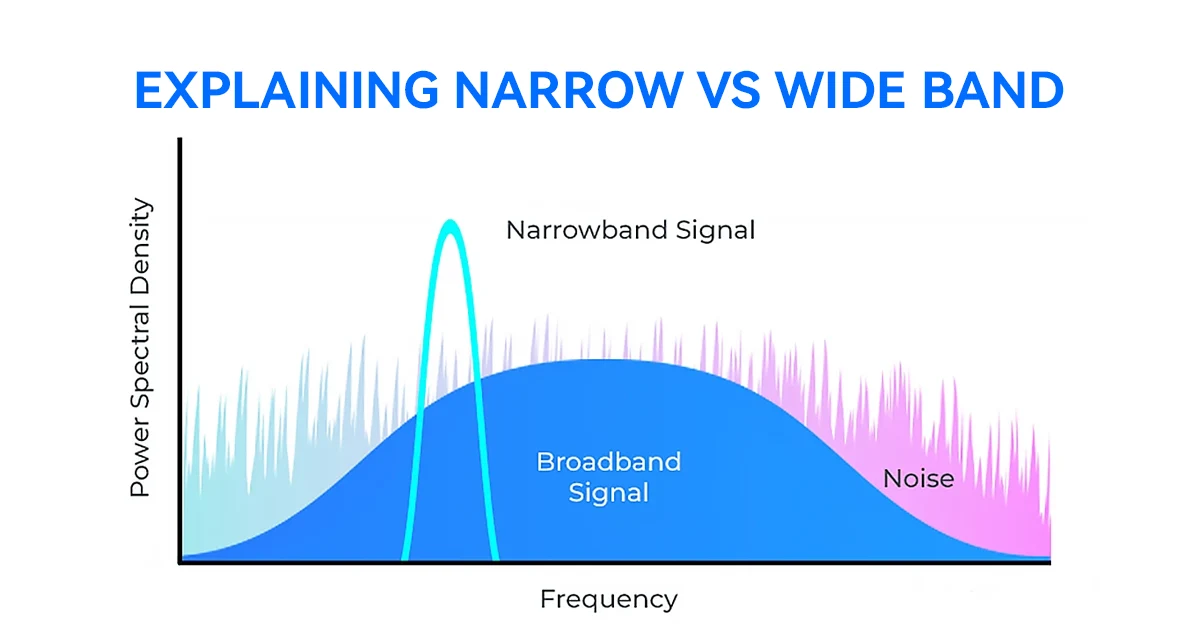
The bandwidth of a radar system has a profound impact on its vulnerability to interference and jamming. Narrowband radars, operating within a tight frequency allocation, are highly susceptible to narrowband jamming. A jammer operating at or near the radar’s specific frequency can effectively overwhelm the receiver. Even unintentional interference from other electronic systems operating in the same frequency band can degrade performance.
Wideband radars, by their very nature, spread their energy across a much larger portion of the electromagnetic spectrum. This makes them inherently more resistant to narrowband jamming. A jammer would need to expend significant power to cover the entire bandwidth of the wideband radar. Furthermore, wideband systems can employ techniques like frequency hopping, where the transmitted signal rapidly changes frequency across its designated band, further confounding jammers. While wideband radars can still be susceptible to broadband jamming, the overall resilience is generally superior.
System Complexity and Cost
The engineering demands of wideband radar systems translate directly into increased complexity and cost. The sophisticated signal generation and processing hardware, the wideband amplifiers, and the precise impedance matching required for optimal performance all contribute to a higher bill of materials and development costs. The computational requirements for processing wideband signals are also substantially higher, necessitating more powerful and expensive digital signal processors.
Narrowband radars, in comparison, are typically simpler to design and manufacture. The components are less demanding, the signal processing is less computationally intensive, and the overall system integration is often more straightforward. This makes narrowband radars a more cost-effective solution for applications where high range resolution and superior jamming resistance are not primary requirements.
Advanced Techniques Shaping Bandwidth Capabilities
Beyond the fundamental components of the T/R chain and waveform design, several advanced techniques have emerged that further enable and enhance the wideband and narrowband capabilities of modern radar systems. These techniques often involve sophisticated signal processing, antenna design, or novel transmission strategies.
Frequency Agility and Stepped Frequency Systems
Frequency agility, the ability of a radar to change its operating frequency rapidly, can be employed by both wideband and narrowband systems, but it has different implications. For narrowband radars, frequency agility can be used to overcome narrowband interference by hopping to a clear frequency. For wideband radars, it can be a means to achieve a wider instantaneous bandwidth by transmitting a series of narrowband pulses at different frequencies, effectively creating a wideband signal over time.
Stepped frequency systems are a specific implementation where the radar transmits a series of pulses, each at a slightly different frequency. By coherently processing these pulses, a radar can synthesize a much larger effective bandwidth than any single pulse’s bandwidth would allow. This technique allows for achieving the range resolution benefits of wideband radar while using simpler, narrowband transmission and reception components. The processing required to reconstruct the wideband signal from these individual narrowband transmissions is complex, involving Fourier transforms and phase corrections.
Ultra-Wideband (UWB) Radar and Impulse Radar
Ultra-Wideband (UWB) radar represents an extreme end of the wideband spectrum, utilizing extremely short pulses with bandwidths that can span several gigahertz. These systems often operate in a similar fashion to impulse radar, transmitting very brief, high-power impulses. The extremely short pulse durations inherently lead to very wide bandwidths and, consequently, exceptionally fine range resolution. UWB radar is particularly useful for applications requiring high-resolution imaging, such as ground-penetrating radar, through-wall imaging, and precise short-range measurements. The challenge with UWB systems lies in generating and detecting these incredibly short pulses efficiently and in managing the associated regulatory aspects due to their broad spectrum occupancy.

Software-Defined Radar (SDR) Approaches
The advent of Software-Defined Radar (SDR) has revolutionized the flexibility and adaptability of radar systems, directly impacting their bandwidth capabilities. In an SDR architecture, many of the traditional hardware-defined functions of the radar—such as waveform generation, modulation, filtering, and signal processing—are implemented in software running on powerful digital processors. This allows for unprecedented reconfigurability.
A software-defined radar can be programmed to operate as either a wideband or narrowband system by simply changing the software parameters. It can dynamically adjust its bandwidth, waveform type, and processing algorithms in response to the operational environment or the specific mission requirements. This adaptability is a significant advantage, allowing a single radar platform to perform diverse roles that might have previously required multiple specialized systems. The ability to dynamically adjust bandwidth offers benefits in terms of power efficiency, spectrum management, and performance optimization.
In conclusion, the ability of a radar system to be wide or narrow band is a direct consequence of the design and implementation of its transmit and receive chain, the sophistication of its waveform design, and the characteristics of its underlying electronic components. From the stability of oscillators in narrowband systems to the complex chirp generation and pulse compression in wideband counterparts, each element plays a crucial role. Advanced techniques like frequency agility, stepped frequency, and the transformative power of software-defined radar continue to push the boundaries of what is possible, offering engineers the tools to tailor radar performance precisely to the demands of an ever-evolving technological landscape. The ongoing innovation in this field ensures that radar will remain a vital technology for the foreseeable future, enabling new capabilities and enhancing existing ones through its mastery of the electromagnetic spectrum.
aViewFromTheCave is a participant in the Amazon Services LLC Associates Program, an affiliate advertising program designed to provide a means for sites to earn advertising fees by advertising and linking to Amazon.com. Amazon, the Amazon logo, AmazonSupply, and the AmazonSupply logo are trademarks of Amazon.com, Inc. or its affiliates. As an Amazon Associate we earn affiliate commissions from qualifying purchases.