
Urine drug tests are ubiquitous in various sectors, from pre-employment screening and probation monitoring to clinical diagnostics and sports anti-doping. While the primary question often revolves around which substances these tests detect, a deeper understanding reveals the sophisticated technological foundations that make such detection possible. Far from being simple chemical reactions, modern urine drug testing relies on a suite of advanced analytical tools and methodologies that offer varying degrees of sensitivity, specificity, and insight. This article delves into the technological backbone of urine drug testing, exploring the mechanisms by which these tests identify a spectrum of illicit and prescription substances, the advancements shaping their capabilities, and the digital considerations inherent in their implementation.

The Analytical Arsenal: How Urine Tests Uncover Substances
At its core, a urine drug test is a diagnostic tool designed to identify the presence of specific compounds—either the parent drug itself or its metabolites—within a biological sample. The technology employed falls broadly into two main categories: initial screening tests and confirmatory tests, each leveraging distinct scientific principles to achieve its objective.
Immunoassay Screening: The First Line of Defense
Immunoassay tests represent the most common and often the first step in urine drug screening. These tests operate on the principle of antigen-antibody reactions, similar to how the body’s immune system identifies foreign invaders. Test strips or devices are coated with antibodies specifically engineered to bind to certain drug molecules or their metabolites.
When a urine sample is introduced, any target drug present will compete with a drug conjugate (a drug molecule linked to a detectable marker) for binding sites on the antibodies. A color change or a line appearing (or not appearing) on the test strip indicates the presence or absence of the drug above a predetermined cutoff concentration.
- Mechanism: Competitive binding between drug molecules in the sample and drug conjugates for antibody binding sites.
- Technology: Lateral flow immunoassays (LFIA) are common for point-of-care testing, using capillary action to move the sample across reaction pads. Enzyme-multiplied immunoassay technique (EMIT) and cloned enzyme donor immunoassay (CEDIA) are laboratory-based variations offering automation.
- Advantages: Rapid results (minutes), cost-effective, high throughput for screening large numbers of samples.
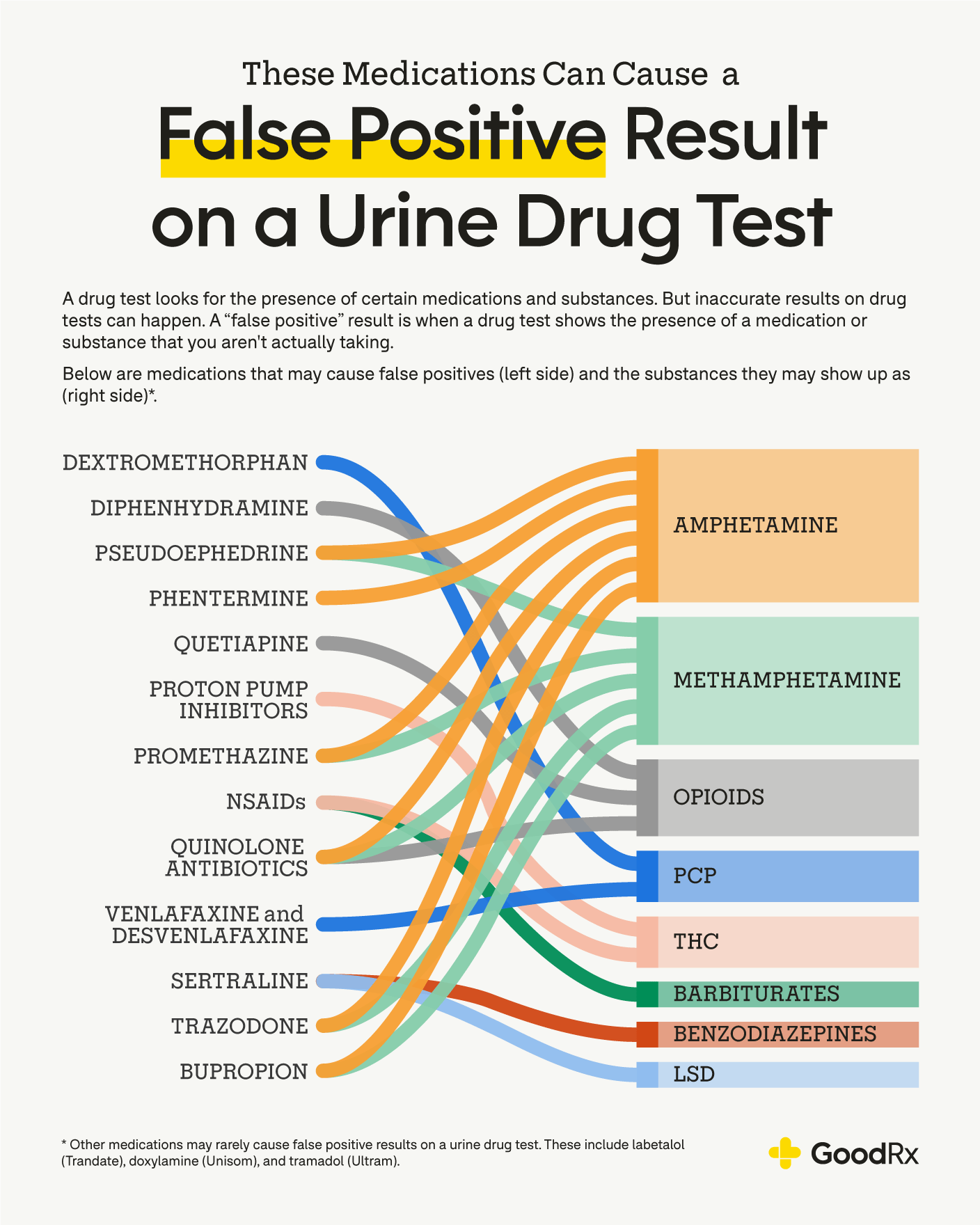
- Limitations: Prone to false positives due to cross-reactivity with structurally similar compounds (e.g., certain cold medicines or foods reacting with amphetamine tests). They are primarily qualitative, indicating presence/absence above a threshold, rather than precise quantification.
Confirmatory Technologies: Precision and Specificity
When an immunoassay screen yields a positive result, or when absolute certainty is required, a confirmatory test is performed. These laboratory-based technologies are significantly more sophisticated, offering unparalleled specificity and often quantitative results.
- Gas Chromatography-Mass Spectrometry (GC-MS): This is historically the gold standard for drug confirmation. GC-MS separates individual chemical components within a sample and then identifies them based on their unique mass-to-charge ratios.
- Mechanism: Urine samples are first derivatized to make target drugs volatile. The sample is then vaporized and carried through a chromatographic column by an inert gas (e.g., helium), separating compounds by their boiling points and affinity for the column’s stationary phase. As compounds exit the column, they enter a mass spectrometer, which ionizes them and measures the mass and abundance of the resulting fragments.
- Technology: Integrates a gas chromatograph with a mass spectrometer. Software analyzes the fragmentation patterns to match them against a library of known drug spectra.
- Advantages: Extremely high specificity, capable of identifying specific drug isomers (e.g., methamphetamine vs. pseudoephedrine), quantitative results, and robust against many interferences.
- Liquid Chromatography-Mass Spectrometry/Mass Spectrometry (LC-MS/MS): Increasingly replacing or complementing GC-MS, LC-MS/MS offers superior sensitivity and can analyze a broader range of compounds without requiring derivatization, including larger, less volatile molecules.
- Mechanism: A liquid chromatograph separates components based on their chemical properties and interactions with the stationary phase and mobile phase. The separated compounds then enter a tandem mass spectrometer (MS/MS), which performs two stages of mass analysis. The first stage isolates specific ions, and the second fragments them further, creating highly specific daughter ion patterns for definitive identification.
- Technology: Combines a liquid chromatograph with a tandem mass spectrometer. Advanced software provides spectral analysis and quantification.
- Advantages: Higher sensitivity than GC-MS, faster sample preparation, ability to analyze a wider range of polar and non-polar compounds, and superior multiplexing capabilities (detecting many drugs simultaneously).
Common Drug Panels and Their Technological Basis
The specific drugs a urine test shows depend heavily on the panel being used, which is essentially a set list of substances the test is designed to detect. These panels are curated based on epidemiological data, regulatory requirements, and specific client needs.
Standard 5-Panel vs. Expanded Panels
The “standard 5-panel” drug test is a common starting point, often required by federal agencies and many employers. It typically screens for the following classes, with technology tailored for their detection:
- Amphetamines (AMP): Including amphetamine, methamphetamine, MDMA (ecstasy), and MDEA. Immunoassays target the basic amphetamine structure, while GC-MS/LC-MS/MS differentiates between isomers and specific derivatives.
- Cocaine (COC): Specifically detects benzoylecgonine, cocaine’s primary metabolite. Immunoassays are sensitive to this metabolite, confirmed by GC-MS/LC-MS/MS.
- Marijuana/Cannabinoids (THC): Screens for delta-9-tetrahydrocannabinol-9-carboxylic acid (THC-COOH), the main inactive metabolite of cannabis. Immunoassays are highly tuned for this metabolite, with confirmatory tests providing definitive identification and quantification.
- Opiates (OPI): Detects morphine and codeine, and often screens for heroin’s metabolite, 6-acetylmorphine (6-AM). Modern immunoassays and LC-MS/MS panels often include synthetic opioids like oxycodone, hydrocodone, and fentanyl due to their prevalence.
- Phencyclidine (PCP): Identified by its unique chemical structure. Immunoassays are effective, with GC-MS/LC-MS/MS for confirmation.
Expanded panels leverage the power of LC-MS/MS to cast a wider net, often including:
- Barbiturates: Amobarbital, pentobarbital, secobarbital, phenobarbital.
- Benzodiazepines: Alprazolam, diazepam, lorazepam, oxazepam, temazepam.
- Synthetic Cannabinoids (“Spice”): A rapidly evolving class requiring sophisticated LC-MS/MS methods to identify new analogues.
- Synthetic Opioids: Fentanyl, tramadol, buprenorphine, methadone.
- Steroids: Anabolic androgenic steroids.
Detection Windows and Metabolite Identification
The “detection window”—the period during which a drug or its metabolite can be found in urine—is a critical technological consideration. This window varies significantly based on the drug’s half-life, the frequency and amount of use, and individual metabolism. For example, THC metabolites can be detected for days to weeks in chronic users, while cocaine metabolites are typically detectable for 2-3 days.
Technologies like GC-MS and LC-MS/MS are instrumental in metabolite identification. They can distinguish between the parent drug and its unique metabolic byproducts, providing evidence of actual drug use rather than mere environmental exposure or passive inhalation. For instance, the detection of 6-AM confirms heroin use, as it is a specific metabolite.
Advancements in Urine Drug Testing Technology
The field of urine drug testing is dynamic, continually evolving to address new substances, improve accuracy, and streamline processes. Technological innovation drives these advancements.
Point-of-Care Devices and Digital Integration
The demand for rapid results has spurred significant advancements in point-of-care (POC) urine drug testing devices. These compact, often handheld, units integrate immunoassay technology with digital readers.
- Technology: Modern POC devices incorporate digital image processing and connectivity (e.g., Bluetooth, Wi-Fi) to interpret results automatically, reduce human error, and instantly transmit data to electronic health records (EHR) or laboratory information management systems (LIMS). This digital integration enhances efficiency and data integrity.
- Advantages: Immediate results, portability, reduced need for specialized lab personnel at the collection site, and seamless data management.
- Digital Security Implications: As results are digitized and transmitted, robust cybersecurity protocols become paramount to protect sensitive health information (PHI) from breaches and unauthorized access. Encryption, secure networks, and access controls are essential.
Overcoming Adulteration: Tamper Detection Tech
A significant challenge in urine drug testing is the potential for sample adulteration or substitution by individuals attempting to mask drug use. Technology has responded with methods to detect tampering.
- Technology: Adulterant test strips or panels often accompany drug tests. These strips measure parameters such as pH, specific gravity (SG), creatinine levels, and the presence of oxidizing agents (e.g., nitrites, glutaraldehyde).
- pH: Extreme pH levels (very acidic or very alkaline) can indicate tampering.
- Specific Gravity: Measures urine concentration; unusually low SG suggests dilution.
- Creatinine: A muscle waste product; abnormally low levels indicate dilution or substitution with water.
- Oxidizing Agents: Common chemicals used as adulterants to break down drug metabolites.
- Mechanism: These tests use colorimetric reactions or refractometry (for SG) to quickly assess sample integrity before or during drug analysis, ensuring the validity of the drug test results.
The Future of Drug Screening: AI and Enhanced Diagnostics
The horizon for urine drug testing involves even greater technological sophistication, with artificial intelligence (AI) and advanced data analytics poised to play a transformative role.
Predictive Analytics in Substance Abuse Monitoring
AI algorithms can process vast amounts of data from drug tests, patient demographics, and treatment outcomes to identify patterns and predict risks.
- Technology: Machine learning models can analyze longitudinal drug test results to identify trends in relapse, assess treatment adherence more effectively, and personalize intervention strategies. For instance, an AI might flag subtle shifts in drug metabolite levels that indicate impending relapse, allowing for proactive clinical intervention.
- Advantages: Enhanced risk assessment, data-driven treatment planning, and more efficient resource allocation in substance abuse programs.
Ethical Considerations in Data Management and Digital Security
As drug testing technology becomes more integrated with digital health platforms and AI, the ethical implications surrounding data privacy, consent, and potential biases in algorithms become increasingly important.
- Digital Security: The storage and transmission of highly sensitive drug test results, especially when linked to individual identities, demand the highest levels of digital security. This includes end-to-end encryption, multi-factor authentication, regular security audits, and compliance with data protection regulations (e.g., HIPAA, GDPR). Ensuring data integrity and preventing unauthorized access or data breaches is paramount to maintaining public trust and protecting individual privacy.
- Bias in AI: AI models trained on historical data might inadvertently perpetuate existing biases in screening or treatment access, requiring careful oversight and ethical guidelines in their development and deployment.
In conclusion, urine drug tests are far more than simple indicators; they are sophisticated technological instruments backed by decades of scientific innovation. From the rapid screening power of immunoassays to the definitive precision of GC-MS and LC-MS/MS, these tools provide critical insights into substance use. As technology continues to advance, integrating digital solutions, AI, and enhanced tamper detection, the capabilities of urine drug testing will only grow, demanding a continued focus on both scientific rigor and robust digital security to ensure accurate, ethical, and effective diagnostic outcomes.
aViewFromTheCave is a participant in the Amazon Services LLC Associates Program, an affiliate advertising program designed to provide a means for sites to earn advertising fees by advertising and linking to Amazon.com. Amazon, the Amazon logo, AmazonSupply, and the AmazonSupply logo are trademarks of Amazon.com, Inc. or its affiliates. As an Amazon Associate we earn affiliate commissions from qualifying purchases.