
The term “wireless” has become so ubiquitous in our modern lives that we often use it without fully grasping its profound implications. From the smartphones in our pockets to the smart devices adorning our homes, wireless technology has fundamentally reshaped how we communicate, access information, and interact with the world around us. At its core, wireless simply means the absence of physical wires or cables for transmitting data or power. However, this seemingly straightforward definition opens up a vast and intricate landscape of technologies, protocols, and applications that deserve a deeper exploration. This article delves into the multifaceted meaning of “wireless” within the realm of technology, tracing its evolution, dissecting its core principles, and highlighting its transformative impact on our digital existence.
The Genesis and Evolution of Wireless Technology
The concept of transmitting information without wires is not a recent invention. Its roots can be traced back to the pioneering work of scientists and inventors who envisioned a world untethered by physical connections. Understanding this historical trajectory provides crucial context for appreciating the sophistication of today’s wireless systems.
Early Visions and Foundational Discoveries
Long before the advent of the internet or mobile phones, visionaries dreamt of communicating across distances without the need for cumbersome wires. The theoretical groundwork for wireless communication was laid by James Clerk Maxwell in the 1860s, who formulated the theory of electromagnetism and predicted the existence of electromagnetic waves. This groundbreaking work was later experimentally confirmed by Heinrich Hertz in the 1880s, who successfully generated and detected radio waves. These discoveries were pivotal, proving that energy could travel through space in the form of waves, forming the very foundation of all wireless communication.
The Dawn of Practical Wireless Communication
The theoretical breakthroughs quickly transitioned into practical applications. Guglielmo Marconi is widely credited with developing the first practical radio telegraph system in the late 19th and early 20th centuries. His experiments demonstrated the feasibility of transmitting Morse code wirelessly over significant distances, revolutionizing maritime communication and laying the groundwork for broadcast radio. This era marked the initial understanding of “wireless” as a means to overcome geographical barriers and enable communication where wired infrastructure was impossible or impractical.
The Proliferation of Wireless Standards and Devices
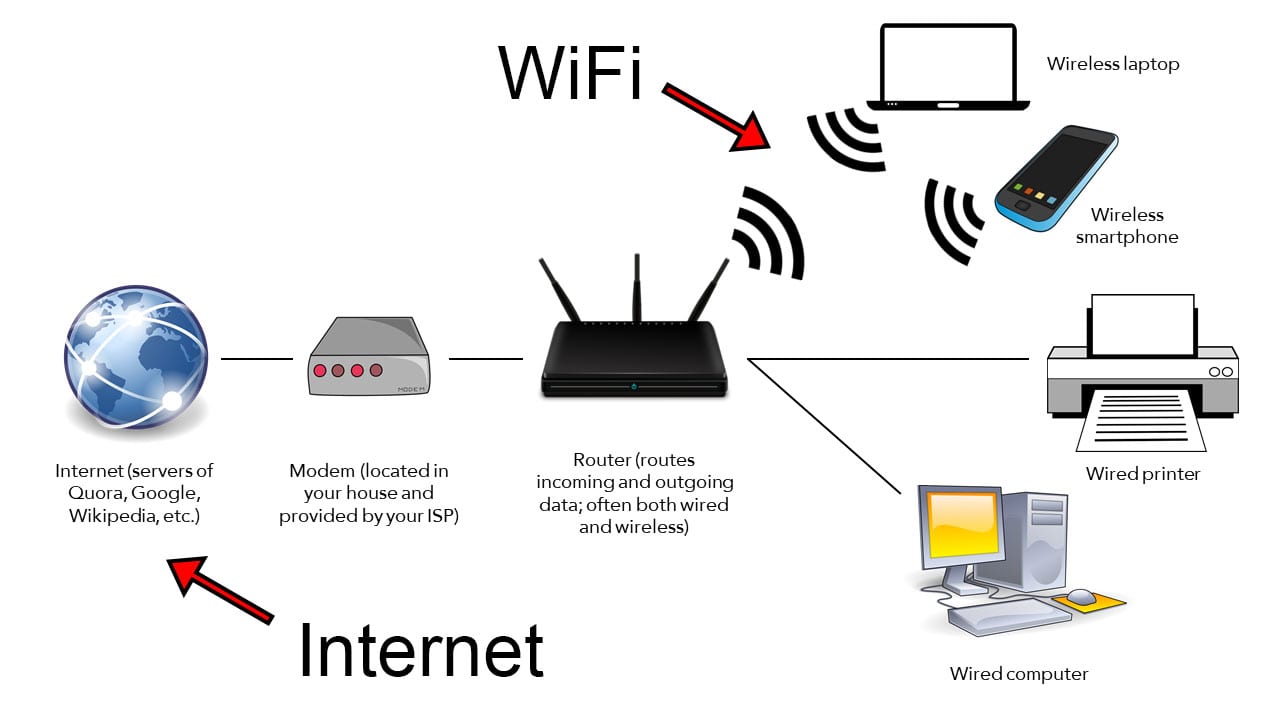
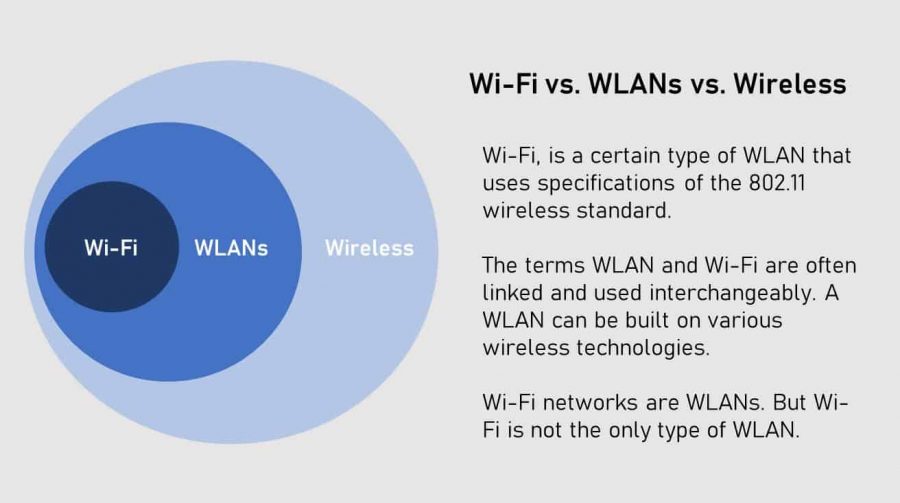
The 20th century witnessed an explosion of innovation in wireless technology. The development of analog and later digital radio systems paved the way for commercial radio and television broadcasting. The advent of cellular technology in the latter half of the century brought voice communication to mobile devices, truly untethering individuals from fixed locations. This period saw the emergence of various wireless standards, each designed for specific purposes and frequencies. The exponential growth in mobile device adoption underscored the immense potential and demand for wireless connectivity. Today, “wireless” encompasses a diverse ecosystem of technologies, including Wi-Fi, Bluetooth, NFC, cellular networks (2G, 3G, 4G, 5G), satellite communication, and many more specialized applications. Each of these technologies operates on distinct principles and serves different needs, but all share the fundamental characteristic of transmitting information without physical cables.
The Core Principles of Wireless Transmission
Understanding what makes wireless possible requires a look at the fundamental scientific principles and the technical architecture that underpins these systems. It’s a fascinating interplay of physics, engineering, and sophisticated signal processing.
Electromagnetic Waves: The Invisible Carriers of Information
At the heart of all wireless communication lies the concept of electromagnetic waves. These are disturbances that propagate through space at the speed of light, carrying energy and information. Different types of wireless technologies utilize different parts of the electromagnetic spectrum, which ranges from very low-frequency radio waves to high-frequency gamma rays.
- Radio Waves: These are the most commonly used electromagnetic waves for wireless communication. Their relatively long wavelengths allow them to travel long distances and penetrate obstacles, making them ideal for broadcasting, mobile communication, and Wi-Fi. Different frequency bands within the radio spectrum are allocated for specific purposes to avoid interference.
- Microwaves: These have shorter wavelengths than radio waves and are often used for point-to-point communication, satellite links, and radar. They are also crucial for Wi-Fi and Bluetooth technologies.
- Infrared (IR): Used for short-range communication, such as TV remote controls and some device-to-device connections, infrared waves are a part of the electromagnetic spectrum but are not visible to the human eye.
- Visible Light: While not typically considered “wireless” in the conventional sense, technologies like Li-Fi (Light Fidelity) are emerging, using visible light to transmit data.
The ability to encode information onto these electromagnetic waves, transmit them through the air, and then decode them at the receiving end is the fundamental magic of wireless technology. This encoding and decoding process involves modulation techniques, where the information is superimposed onto a carrier wave.
Modulation and Demodulation: Encoding and Decoding the Signal
The process of transforming raw data into a format that can be transmitted wirelessly and then reconstructing the original data at the receiving end is achieved through modulation and demodulation.
- Modulation: This is the process of varying one or more properties of a periodic waveform, called the carrier signal, with a signal that contains information. Common modulation techniques include Amplitude Modulation (AM), Frequency Modulation (FM), and Phase Modulation (PM). Digital signals are also modulated using techniques like Quadrature Amplitude Modulation (QAM). The choice of modulation scheme impacts the data rate, reliability, and spectral efficiency of the wireless link.
- Demodulation: This is the reverse process, where the original information is extracted from the modulated carrier wave at the receiver. The demodulator filters out the carrier signal and decodes the information that was encoded onto it.
Antennas: The Transmitters and Receivers of Wireless Signals
Crucial to the entire process are antennas. These are devices designed to efficiently radiate electromagnetic energy into space (in the case of a transmitter) or capture electromagnetic energy from space (in the case of a receiver). The design and type of antenna play a significant role in the range, directionality, and efficiency of wireless communication. From the tiny integrated antennas in smartphones to the large parabolic dishes used for satellite communication, antennas are the physical interface between the electronic circuitry and the wireless medium.
The Ubiquitous Applications of Wireless Technology
The impact of wireless technology is so pervasive that it’s challenging to list every application. However, understanding some of the most prominent examples highlights its transformative power across various sectors.
Mobile Communication: The Untethered World
Perhaps the most visible manifestation of wireless technology is mobile communication. The evolution from analog car phones to the sophisticated 5G networks powering our smartphones has revolutionized personal and professional connectivity.
- Cellular Networks: These networks divide geographic areas into cells, each served by a base station. Mobile devices connect to the nearest base station, allowing for seamless communication as users move between cells. This technology supports voice calls, text messaging, and high-speed internet access, enabling a connected lifestyle on the go.
- Smartphones: These pocket-sized computers are essentially powerful wireless communication devices, integrating cellular, Wi-Fi, and Bluetooth capabilities. They have become indispensable tools for communication, information access, entertainment, and productivity.
Wireless Local Area Networks (WLANs): Connecting Our Homes and Offices
Wi-Fi has become synonymous with wireless internet access in homes, offices, and public spaces. It allows multiple devices to connect to a network and the internet simultaneously without physical cables.
- Wi-Fi Standards: The Wi-Fi Alliance defines various standards (e.g., 802.11a/b/g/n/ac/ax) that dictate the performance characteristics, speed, and range of Wi-Fi networks. Newer standards offer faster speeds, improved reliability, and better performance in crowded wireless environments.
- Mesh Wi-Fi Systems: For larger homes or buildings, mesh Wi-Fi systems use multiple nodes to create a single, unified wireless network, ensuring strong signal coverage throughout the property.
Personal Area Networks (PANs): Connecting Devices in Close Proximity
Bluetooth is another widely adopted wireless technology that enables short-range communication between devices.
- Device Pairing: Bluetooth allows for easy pairing of devices such as headphones, speakers, keyboards, mice, and smartwatches with smartphones, laptops, and other electronic gadgets.
- Internet of Things (IoT): Bluetooth is a key enabler of the burgeoning Internet of Things, allowing smart home devices, wearables, and other connected gadgets to communicate with each other and with central hubs.
Beyond the Obvious: Emerging and Specialized Wireless Applications
The definition of “wireless” extends far beyond personal communication devices and home networks.
- Wireless Power Transfer: Technologies like inductive charging are increasingly being used to power devices without physical cables, simplifying charging and reducing clutter.
- Wireless Sensors: These devices collect and transmit data from remote or hard-to-reach locations, finding applications in environmental monitoring, industrial automation, and healthcare.
- Satellite Communication: For global connectivity and remote areas, satellite technology provides wireless links that span vast distances.
- Radio-Frequency Identification (RFID): This technology uses radio waves to identify and track objects, commonly found in inventory management, access control, and contactless payment systems.
The continuous innovation in wireless technology promises even more advanced applications in the future, further blurring the lines between the physical and digital worlds and solidifying the indispensable role of wireless connectivity in our technological landscape.
aViewFromTheCave is a participant in the Amazon Services LLC Associates Program, an affiliate advertising program designed to provide a means for sites to earn advertising fees by advertising and linking to Amazon.com. Amazon, the Amazon logo, AmazonSupply, and the AmazonSupply logo are trademarks of Amazon.com, Inc. or its affiliates. As an Amazon Associate we earn affiliate commissions from qualifying purchases.