
In the intricate world of finance, certain terms carry a weight far beyond their dictionary definition, encapsulating critical concepts that drive personal wealth, business success, and economic stability. “Wherewithal” is precisely one such term. While it might sound old-fashioned or somewhat academic, its meaning is profoundly relevant to anyone navigating their financial journey, whether they’re planning for retirement, launching a startup, or simply managing daily expenses. Far more than just liquid cash, wherewithal represents the comprehensive suite of resources—both tangible and intangible—required to achieve a particular purpose or goal. It is the bedrock upon which aspirations are built, the fuel that powers progress, and the safety net that offers resilience in the face of uncertainty.
In this deep dive, we will unravel the multifaceted meaning of wherewithal within the context of personal finance, investing, entrepreneurship, and financial stability. We’ll explore its various components, understand its indispensable role, and outline actionable strategies for cultivating and optimizing your own financial wherewithal to empower your ambitions and secure your future.
Deconstructing “Wherewithal”: More Than Just Money
To truly grasp the significance of wherewithal, we must look beyond its most obvious interpretation as mere money. While financial capital is undoubtedly a central component, wherewithal encompasses a broader spectrum of assets and capabilities that, collectively, enable individuals and organizations to pursue and achieve their objectives.
The Core Definition: Resources for a Purpose
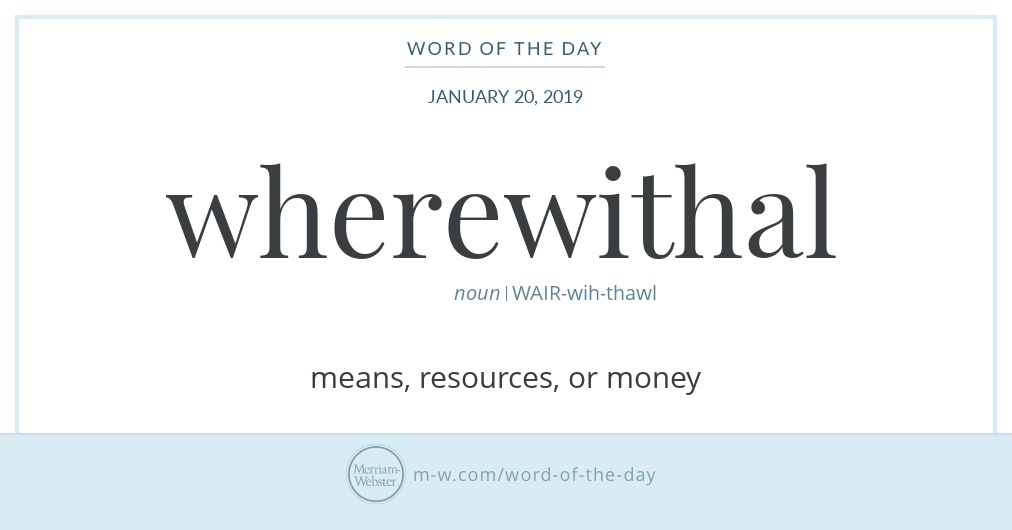
At its heart, “wherewithal” signifies the necessary means, resources, or supplies to accomplish something. In a financial context, this translates to having the adequate monetary, material, or even intellectual capital to perform an action, overcome a challenge, or realize a specific goal. Think of it as the ‘what it takes’ to get things done financially.
For instance, if you aim to purchase a house, your wherewithal isn’t just the down payment; it also includes your credit score, your stable income for mortgage payments, and perhaps even your knowledge of the real estate market. If a business intends to expand, its wherewithal isn’t limited to its cash reserves, but also its access to credit, its existing assets, its operational efficiency, and the expertise of its team. This holistic perspective is crucial because it highlights that financial success rarely hinges on a single factor but rather on a well-rounded set of supportive elements.
Tangible vs. Intangible Wherewithal
The resources that constitute wherewithal can be broadly categorized into tangible and intangible forms, both of which are equally vital for comprehensive financial strength.
-
Tangible Wherewithal: This refers to the concrete, measurable assets you possess.
-
Cash and Liquid Assets: Savings accounts, checking accounts, money market funds, and other easily accessible funds. This is the most direct form of financial wherewithal, providing immediate liquidity for needs and opportunities.
-
Investments: Stocks, bonds, mutual funds, real estate, retirement accounts (401k, IRA), and other assets held for capital appreciation or income generation. These provide long-term growth and security.
-
Physical Assets: Owned properties, valuable equipment, inventory for a business, or other assets that can be converted to cash or utilized directly.
-
Credit Access: The ability to borrow money when needed, through credit cards, lines of credit, or loans, contingent on a good credit score and financial history. This acts as a powerful lever for larger expenditures or strategic investments.
-
-
Intangible Wherewithal: These are the less quantifiable but equally powerful resources that contribute to financial success.
-
Financial Literacy and Knowledge: Understanding budgeting, investing principles, tax laws, debt management, and market trends. This intellectual capital allows for informed decision-making and strategic planning.
-
Skills and Expertise: A specialized skill set that commands a higher salary or enables entrepreneurial ventures. This is the human capital that drives earning potential.
-
Network and Relationships: Access to mentors, potential investors, business partners, or valuable information through professional and personal connections. A strong network can open doors to opportunities that might otherwise be inaccessible.
-
Creditworthiness: Not just access to credit, but the reputation of being a reliable borrower, which affects interest rates and loan approvals.
-
Resilience and Adaptability: The mental fortitude to navigate financial setbacks, learn from mistakes, and pivot strategies when necessary.
-
Recognizing both types of wherewithal allows for a more robust approach to financial planning, emphasizing that cultivating knowledge and relationships can be just as impactful as accumulating cash.
The Indispensable Role of Financial Wherewithal
Understanding the components of wherewithal is one thing; appreciating its profound impact on various facets of financial life is another. Financial wherewithal isn’t merely a desirable state; it’s a fundamental prerequisite for achieving virtually any significant financial goal, providing the necessary leverage and stability.
Fueling Personal Finance Goals
For individuals, wherewithal is the engine that drives personal financial independence and security. Without it, even the most meticulously planned goals remain out of reach.
-
Saving for Retirement: Amassing sufficient wherewithal—through consistent savings, smart investments, and tax-advantaged accounts—is paramount for a comfortable retirement. It dictates whether one can live off passive income or must rely on social security and continued work.
-
Major Life Purchases: Buying a home, funding higher education, or acquiring a vehicle all require substantial financial wherewithal in the form of down payments, loan eligibility, and ongoing payment capacity.
-
Emergency Preparedness: A robust emergency fund, a critical component of wherewithal, acts as a financial buffer against unforeseen events like job loss, medical emergencies, or unexpected repairs. Without it, such events can quickly spiral into financial crises.
-
Debt Management and Reduction: Having the wherewithal to make extra payments, consolidate high-interest debt, or invest in debt-reduction strategies can liberate individuals from the burden of perpetual interest payments, freeing up resources for other goals.
Empowering Business Ventures and Growth
In the corporate and entrepreneurial world, wherewithal is the lifeblood of operations, expansion, and innovation. Businesses, much like individuals, rely on a comprehensive set of resources to thrive.
-
Startup Capital: Every new venture requires initial wherewithal—seed money from founders, angel investors, or venture capitalists—to cover legal fees, product development, marketing, and initial operational expenses.
-
Operational Sustainability: Ongoing wherewithal in the form of revenue streams, access to working capital, and efficient cost management ensures a business can pay its employees, suppliers, and rent, keeping the lights on and operations running smoothly.
-
Expansion and Innovation: To grow, a business needs the wherewithal to invest in new technologies, market research, talent acquisition, and facility expansion. This often involves securing loans, attracting new investors, or leveraging retained earnings.
-
Market Competitiveness: Companies with greater wherewithal can invest more in R&D, marketing, and customer service, allowing them to innovate faster, reach wider audiences, and maintain a competitive edge.
Navigating Economic Uncertainty
The global economy is characterized by cycles of boom and bust, unexpected crises, and rapid changes. Possessing ample wherewithal is crucial for individuals and businesses to not just survive but potentially thrive during challenging times.

-
Resilience During Downturns: Individuals with diversified investments, multiple income streams, and a healthy emergency fund (their wherewithal) are better positioned to weather recessions, market corrections, or personal financial shocks. Businesses with strong cash reserves and adaptable business models can pivot, absorb losses, and even capitalize on opportunities that emerge during difficult periods.
-
Adaptability to Change: Wherewithal includes the flexibility to adapt to new technologies, shifting market demands, or regulatory changes. This could mean retraining skills, retooling production lines, or investing in new digital infrastructure.
-
Seizing Opportunities: Often, the greatest financial opportunities arise during periods of dislocation or change. Those with the wherewithal—whether it’s capital to invest at discounted prices, or the knowledge to spot emerging trends—are uniquely positioned to capitalize on these moments.
Strategies for Cultivating Your Financial Wherewithal
Building substantial financial wherewithal is not an overnight task; it is a continuous journey requiring discipline, foresight, and strategic action. Fortunately, there are well-established pathways and practices that can significantly bolster your resources.
Building a Strong Financial Foundation
The first step in accumulating wherewithal is to establish sound fundamental financial habits.
-
Budgeting and Tracking Expenses: Understanding where your money goes is the cornerstone of financial control. A detailed budget helps identify areas for saving and ensures that income covers expenses, with surplus allocated for wealth building.
-
Consistent Saving and Investing: Automate savings into high-yield accounts and investment vehicles. Even small, consistent contributions compound significantly over time, becoming a powerful source of future wherewithal. Prioritize building an emergency fund of 3-6 months’ living expenses.
-
Debt Management and Reduction: High-interest debt (e.g., credit card debt) erodes your wherewithal by diverting funds that could otherwise be saved or invested. Prioritize paying down expensive debt efficiently, using strategies like the snowball or avalanche method.
-
Understanding and Improving Credit: A good credit score is an invaluable part of your intangible wherewithal, providing access to better interest rates on loans and lines of credit, which can be crucial for major purchases or business needs. Regularly check your credit report for errors and maintain responsible credit habits.
Expanding Income Streams and Assets
To truly increase your wherewithal, you need to focus not only on managing existing resources but also on actively generating more.
-
Investing Wisely: Diversify your investment portfolio across various asset classes (stocks, bonds, real estate, commodities) to mitigate risk and maximize returns. Consider long-term growth strategies and align investments with your financial goals and risk tolerance.
-
Developing Side Hustles or Passive Income: Explore opportunities to earn additional income outside your primary employment. This could include freelancing, consulting, starting a small online business, or investing in assets that generate passive income (e.g., rental properties, dividend stocks).
-
Skill Development and Education: Invest in yourself. Acquiring new skills, pursuing further education, or gaining certifications can significantly increase your earning potential and marketability, enhancing your human capital wherewithal.
-
Entrepreneurship: For those with an entrepreneurial spirit, starting and growing a business can be a powerful way to build substantial wherewithal, creating both direct income and valuable assets.
Enhancing Financial Literacy and Network
Beyond tangible assets, continuously strengthening your knowledge base and professional connections will profoundly impact your financial trajectory.
-
Continuous Financial Education: Stay informed about personal finance best practices, market trends, tax law changes, and investment strategies. Read reputable financial publications, take online courses, or attend workshops. The more you know, the better decisions you can make.
-
Seek Professional Guidance: Don’t hesitate to consult with financial advisors, tax professionals, or business consultants. Their expertise can help you create robust financial plans, optimize investments, and navigate complex financial situations.
-
Cultivate a Strong Professional Network: Connect with peers, mentors, and industry leaders. A strong network can provide valuable insights, open doors to new opportunities, and even lead to collaborations or funding for ventures.
Wherewithal in Action: Case Studies and Real-World Applications
To solidify our understanding, let’s explore how wherewithal manifests in real-world scenarios, demonstrating its power in different financial contexts.
Personal Financial Independence
Consider the journey of someone aiming for early retirement. This ambitious goal requires immense financial wherewithal. It starts with a high-income career (earning wherewithal), coupled with aggressive saving (liquid wherewithal) and strategic investment in a diversified portfolio (asset wherewithal). Crucially, it also demands financial literacy to understand optimal investment vehicles, tax implications, and withdrawal strategies. The discipline to live below their means, the foresight to plan decades ahead, and the resilience to stick to the plan through market fluctuations are all forms of intangible wherewithal that make early retirement a reality. Without this comprehensive wherewithal, the dream would likely remain just that—a dream.
Successful Entrepreneurship
Imagine a tech startup with an innovative idea but no initial funding. Its founders’ primary wherewithal might initially be intangible: their unique technical skills, their passion, their understanding of a market gap, and their network within the tech community. They leverage this to build a minimal viable product, secure initial angel investment (a critical injection of financial wherewithal), and attract a talented team. As the company grows, it needs further wherewithal—more capital from venture capitalists for expansion, robust accounting systems for financial transparency, legal expertise for intellectual property protection, and marketing savvy to reach customers. The company’s tangible assets (patents, customer base, revenue) and intangible assets (brand reputation, team culture) become its collective wherewithal, enabling it to scale and eventually achieve a successful exit or sustained profitability.
Overcoming Financial Adversity
Picture an individual who suddenly loses their job due to an unexpected company downsizing. If this individual has cultivated financial wherewithal, the immediate impact is significantly mitigated. Their emergency fund (liquid wherewithal) provides a buffer for several months of living expenses, preventing a scramble for immediate income. Their strong credit score allows them to access a low-interest line of credit if absolutely necessary. Their network of professional contacts (intangible wherewithal) might lead to new job leads or freelance opportunities. Furthermore, their financial literacy allows them to quickly adjust their budget, explore unemployment benefits, and strategically manage their remaining resources. Without this wherewithal, job loss could quickly lead to spiraling debt, missed payments, and severe financial distress.

Conclusion: The Journey to Abundant Wherewithal
The concept of “wherewithal” transcends a simple definition of money, encompassing a holistic array of financial, intellectual, and relational resources essential for achieving one’s aspirations. It is the comprehensive readiness—the means, knowledge, and support—that empowers individuals and businesses to pursue goals, seize opportunities, and navigate life’s inevitable challenges with confidence.
Cultivating substantial financial wherewithal is not a destination but an ongoing journey. It requires a commitment to sound financial principles, continuous learning, strategic investment, and a proactive approach to personal and professional development. By understanding its multifaceted nature and diligently building both tangible and intangible resources, you equip yourself with the ultimate financial fuel. This empowers you not just to survive in an ever-changing economic landscape, but to truly thrive, securing your financial future and realizing your most ambitious dreams. The question is not just “what does wherewithal mean,” but rather, “how will you proactively build yours?”
aViewFromTheCave is a participant in the Amazon Services LLC Associates Program, an affiliate advertising program designed to provide a means for sites to earn advertising fees by advertising and linking to Amazon.com. Amazon, the Amazon logo, AmazonSupply, and the AmazonSupply logo are trademarks of Amazon.com, Inc. or its affiliates. As an Amazon Associate we earn affiliate commissions from qualifying purchases.