
In the pursuit of improved traction and the desire for aggressive vehicle handling, automotive enthusiasts often explore various mechanical modifications. Among the most discussed, and frequently misunderstood, is the process of “welding the diff.” This modification, which involves permanently fusing the internal gears of a differential, transforms an open or limited-slip differential into a “locked” unit. While common in amateur drifting and off-road circles, it represents a significant mechanical commitment that alters the fundamental way a vehicle interacts with the road.
The Mechanics of a Differential
To understand why someone would choose to weld a differential, one must first grasp the purpose of the standard differential found in almost every production vehicle. The differential is a planetary gear set located between the drive wheels. Its primary function is to allow the drive wheels to rotate at different speeds.
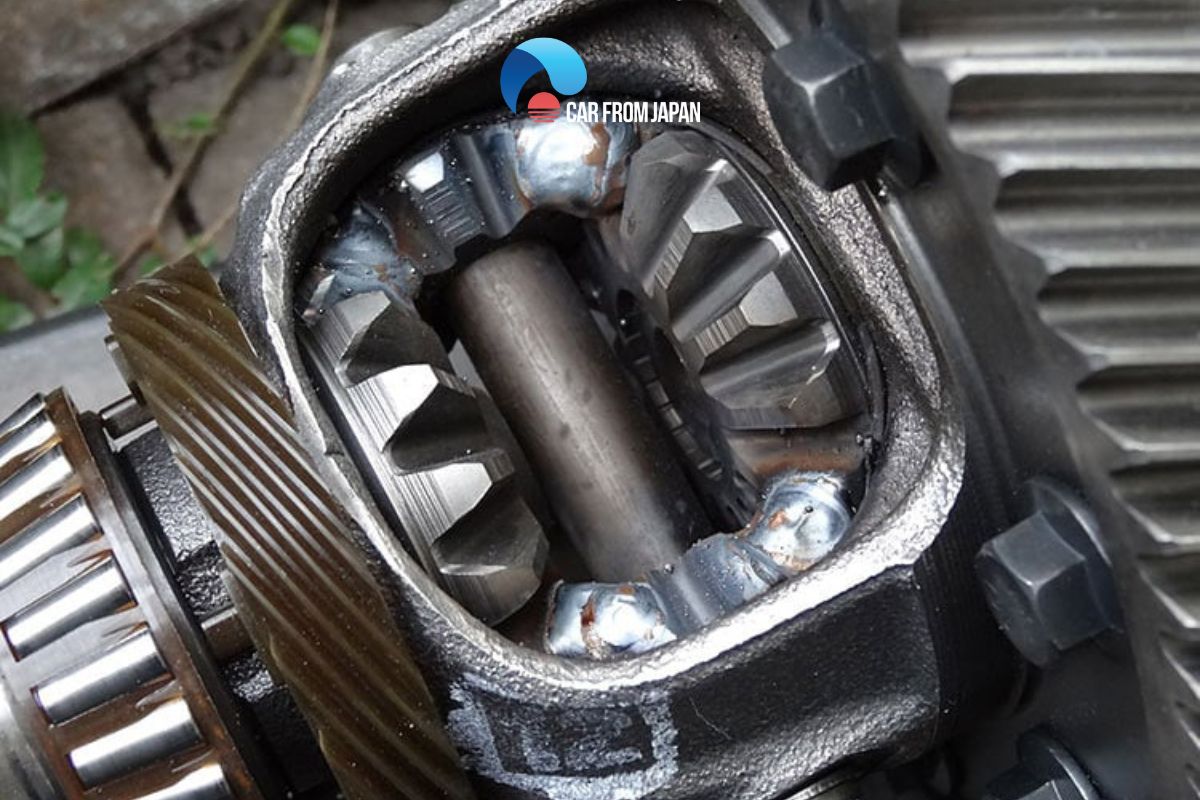
When a car turns a corner, the outside wheel travels a longer arc than the inside wheel. Without a differential, both wheels would be forced to rotate at the exact same speed, causing the tires to scrub, hop, or lose traction as they fight the geometry of the turn. An “open” differential facilitates this speed discrepancy, ensuring smooth, predictable handling during everyday driving.
The Problem with Open Differentials
While open differentials are excellent for daily commuting, they have a major limitation in high-performance or specialized environments: they send power to the path of least resistance. If one tire loses traction on ice, mud, or during an aggressive launch, the engine power is diverted entirely to the slipping wheel. The wheel with grip remains stationary, leaving the driver stuck or unable to put power to the pavement. This is why off-roaders and drifters seek a way to ensure both wheels spin in unison regardless of surface friction.
The Process and Function of a Welded Differential
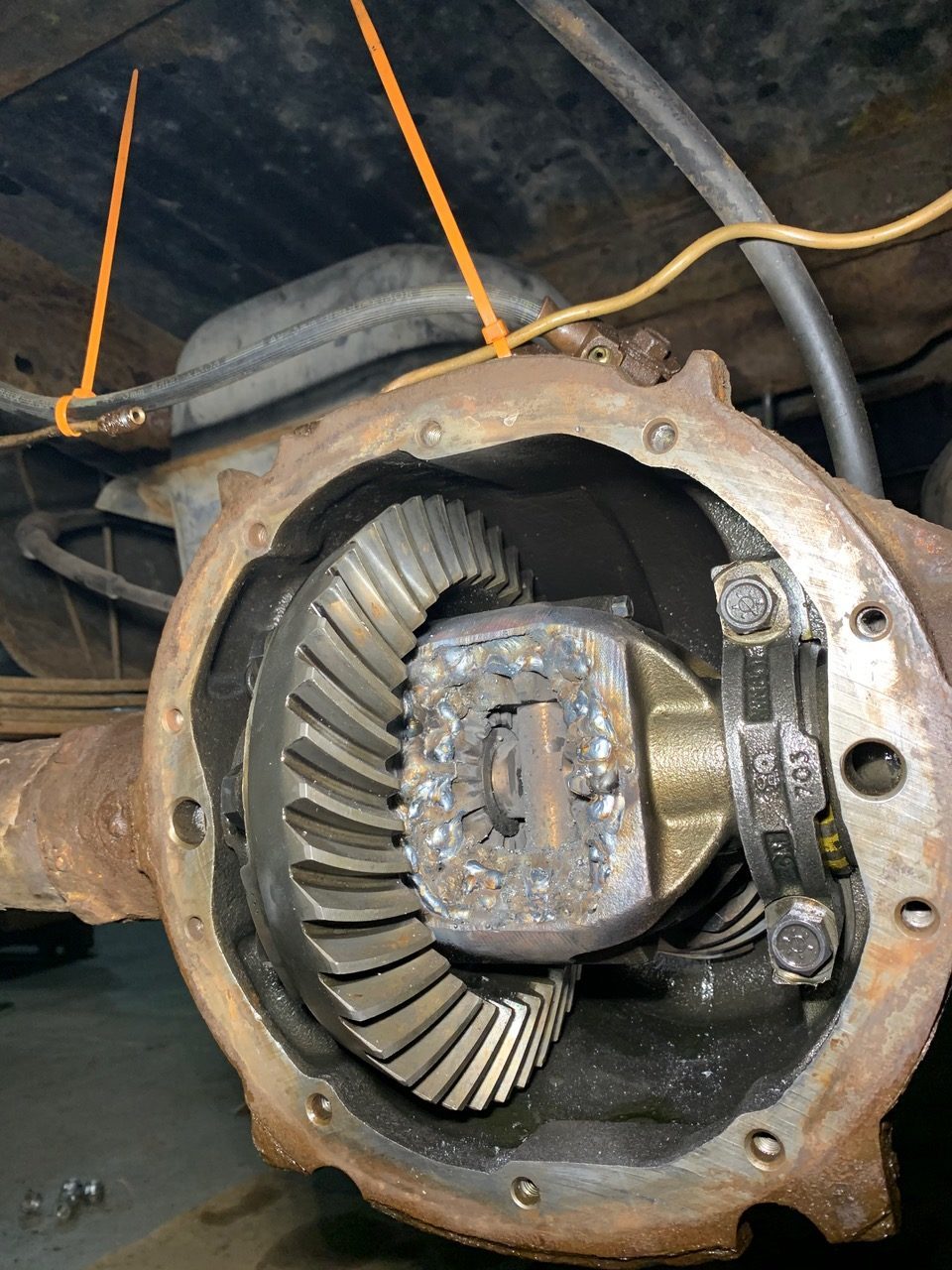
Welding a differential is the most rudimentary method of creating a “spool,” or a permanently locked axle. By removing the differential carrier and MIG or TIG welding the spider gears to the side gears, the internal rotational freedom is eliminated. Once reinstalled, the axles are physically locked together. Whenever the driveshaft rotates, both wheels rotate at an identical speed, 100% of the time.
Immediate Traction Gains
The primary benefit of a welded differential is consistent torque delivery. In drifting, this is essential for initiating and maintaining a slide; as long as the engine is providing power, both rear wheels will spin, creating the predictable platform needed to balance the car through a corner. Similarly, in off-roading, a welded differential ensures that even if one tire is suspended in the air, the other tire—firmly planted on the ground—will receive the full force of the engine’s torque, pushing the vehicle over obstacles that would otherwise leave it stranded.
Cost-Efficiency vs. Sophistication
Compared to aftermarket limited-slip differentials (LSDs) or selectable lockers, which can cost thousands of dollars, welding a differential is incredibly inexpensive. It requires only the labor to remove the unit, the cost of welding supplies, and the fluid for the refill. For budget-constrained builders, this modification offers a high-utility solution to a specific traction problem.
The Trade-offs: Handling and Longevity
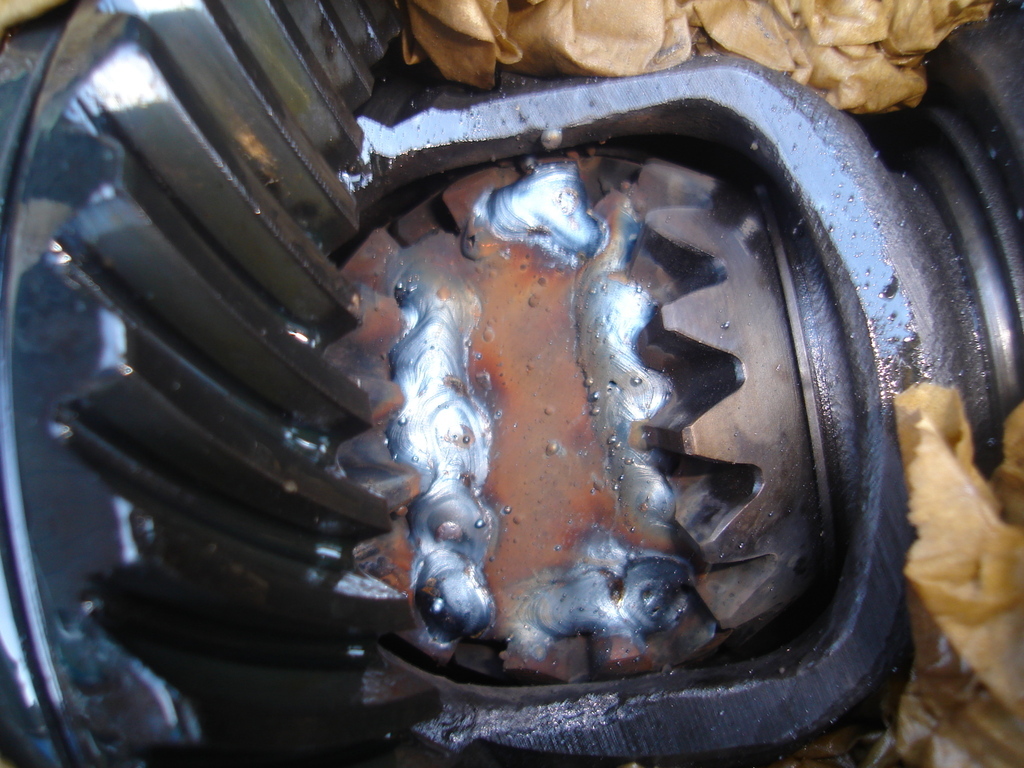
While the performance gains are undeniable in specific niche applications, the impact on street drivability is severe. A welded differential does not “know” when a car is turning. It forces both wheels to rotate at the same speed even when cornering, which creates immediate mechanical tension in the drivetrain.
Drivability and Tire Wear
Driving a vehicle with a welded differential on public roads is a stark departure from the factory experience. During low-speed maneuvers, such as pulling into a parking space or navigating a roundabout, the inside tire will physically skip and chirp as it fights for traction. This leads to significantly accelerated tire wear. The scrub caused by the locked axles can reduce the lifespan of rear tires by more than 50% depending on the vehicle’s wheelbase and the driver’s habits.
Furthermore, the car will exhibit pronounced understeer. Because the locked rear end wants to continue traveling in a straight line, the front tires have to work significantly harder to pull the nose of the car into a turn. This makes the vehicle feel “heavy” and sluggish in city traffic and potentially dangerous in emergency avoidance maneuvers.
Drivetrain Stress
The most critical concern for long-term ownership is the strain placed on the surrounding components. Axles, CV joints, and the transmission output shafts were never designed to handle the shock loads created by a locked differential. Because the tires can no longer release energy through a slip differential, that kinetic energy is transferred directly into the drivetrain. Over time, this leads to premature fatigue of the axle splines and can even cause the differential housing itself to crack under the repetitive stress of high-torque, low-traction spikes.
Considerations for Maintenance and Safety
Deciding to weld a differential is not a decision to be taken lightly, especially if the vehicle retains its road-legal status. It is a modification that fundamentally changes the vehicle’s personality. If one chooses to proceed, there are several mechanical realities to integrate into the build.
The Importance of Execution
If a differential is to be welded, the quality of the weld is the difference between a functional modification and a catastrophic failure. The internal gears are made of hardened steel, which is notoriously difficult to weld correctly. If the penetration is insufficient, the weld will crack under the pressure of the first hard launch. If this happens, loose shards of metal will circulate through the differential housing, instantly destroying the ring and pinion gears. Consequently, the procedure should only be performed by a skilled welder who understands how to preheat the metal and ensure a deep, structural bond that can withstand massive torque loads.
Is It Right for You?
Before committing to the welder, consider the intended use of the vehicle:
- Dedicated Drift Cars: A welded differential is an industry standard here. The predictability is worth the tire wear, and these vehicles rarely see high-speed highway miles.
- Dedicated Rock Crawlers: In low-speed, high-articulation environments, a welded diff is a budget-friendly hero. The lack of cornering agility is irrelevant when the goal is to climb over rocks at three miles per hour.
- Daily Drivers: A welded differential is generally ill-advised for a daily driver. The lack of cornering grace, the accelerated wear on tires, and the noise caused by axle hopping make the driving experience fatiguing and potentially unsafe in wet or icy conditions.
The Alternative Path
For those who want improved traction but need to maintain street manners, modern aftermarket options provide a middle ground. A clutch-type limited-slip differential provides the lock needed for spirited driving but allows for enough slip to prevent the “chirping” and scrubbing associated with a welded unit. Alternatively, an “auto-locking” or “lunchbox” locker provides a selectable or automatic engagement that manages torque while remaining more forgiving than a solid weld.
In summary, welding a differential is a specialized tool for a specific problem. It is the ultimate expression of function over form, trading the comfort and longevity of a factory-engineered system for the raw, unadulterated delivery of power to the ground. While it effectively transforms the vehicle’s performance characteristics, it requires the owner to accept significant compromises in maintenance costs and handling predictability. For the enthusiast who understands these limitations, it remains one of the most effective—and permanent—modifications in the automotive world.
aViewFromTheCave is a participant in the Amazon Services LLC Associates Program, an affiliate advertising program designed to provide a means for sites to earn advertising fees by advertising and linking to Amazon.com. Amazon, the Amazon logo, AmazonSupply, and the AmazonSupply logo are trademarks of Amazon.com, Inc. or its affiliates. As an Amazon Associate we earn affiliate commissions from qualifying purchases.