
Wealth management is often perceived as a service reserved exclusively for the ultra-rich, a mysterious realm of high finance that operates behind closed doors. In reality, while it certainly caters to high-net-worth individuals, its core function is far more accessible and essential than many realize. At its heart, wealth management is a sophisticated, comprehensive, and personalized financial service designed to help individuals and families grow, preserve, and strategically transfer their wealth across generations. It’s not merely about picking stocks; it’s about crafting a bespoke financial ecosystem that addresses every facet of a client’s monetary life, aligning financial strategies with their deepest values and life aspirations.

The journey of accumulating wealth is complex, fraught with market fluctuations, evolving tax laws, and the myriad of personal decisions that impact one’s financial future. This is where wealth management steps in, acting as a dedicated guide and strategist. It brings together a diverse array of financial disciplines—from investment management and retirement planning to tax optimization, estate planning, and philanthropic advising—into a cohesive, integrated strategy. The goal is to provide a holistic framework that ensures financial decisions today contribute positively to long-term objectives, offering peace of mind and the freedom to pursue a desired lifestyle.
The Comprehensive Scope of Wealth Management
Unlike a traditional financial advisor who might focus primarily on investments or retirement accounts, a wealth manager takes a panoramic view of a client’s entire financial landscape. They delve deep into individual circumstances, aspirations, and challenges to construct a multi-faceted strategy that evolves as life unfolds.
Beyond Simple Investment Advice
While investment management is a critical component, it is merely one piece of a much larger puzzle. Wealth management extends far beyond selecting assets. It involves crafting sophisticated investment portfolios tailored to specific risk tolerances, time horizons, and return objectives, but always within the context of the client’s broader financial picture. This includes strategic asset allocation, diversification across various asset classes, and continuous monitoring and rebalancing to adapt to market conditions and personal changes. A wealth manager considers not just how to invest, but why and what for, integrating investment decisions with cash flow needs, tax implications, and future liabilities.
A Holistic Approach to Financial Well-being
The true differentiator of wealth management is its holistic nature. It recognizes that financial health is intrinsically linked to life goals, whether that’s funding a child’s education, purchasing a dream home, starting a business, navigating a divorce, or planning for a comfortable retirement. A wealth manager acts as a central coordinator, often working in conjunction with other professionals like attorneys and accountants, to ensure all elements of a client’s financial life are synchronized. This includes analyzing income streams, managing debt, optimizing spending habits, and identifying opportunities for savings and growth, all while protecting against unforeseen risks. This comprehensive perspective ensures that no financial stone is left unturned and that every decision contributes to a client’s overall financial well-being.
Key Pillars of Wealth Management Services
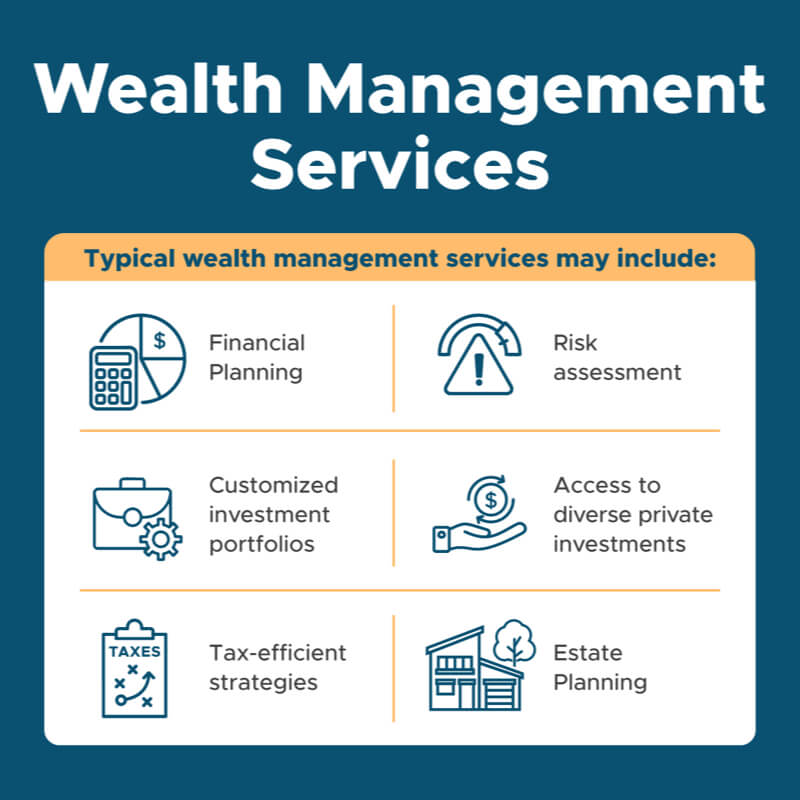
To achieve this holistic integration, wealth management services typically encompass several core areas, each designed to address specific financial needs and objectives.
Investment Planning and Portfolio Management
This is often the most visible aspect of wealth management. It involves developing an investment strategy aligned with a client’s financial goals, risk tolerance, and time horizon. This includes selecting appropriate investments (stocks, bonds, mutual funds, ETFs, alternative investments), constructing diversified portfolios, and continuously monitoring performance. Wealth managers also conduct regular reviews, making adjustments as market conditions change or as the client’s financial situation evolves, ensuring the portfolio remains optimized for long-term growth and capital preservation.
Financial Planning for Life’s Milestones
Life is a series of milestones, each with significant financial implications. Wealth managers help clients plan for major life events such as buying a home, funding higher education, career changes, marriage, and childbirth. They develop detailed financial models that project future cash flows, evaluate savings goals, and create strategies to meet these specific objectives. This proactive planning helps clients navigate significant life changes with confidence and financial security.
Tax Planning and Optimization
One of the most valuable services wealth managers provide is tax planning. They work to minimize a client’s tax liabilities across investments, income, and estate. This involves strategies like tax-loss harvesting, utilizing tax-advantaged accounts (e.g., 401(k)s, IRAs, HSAs), and structuring investments in a tax-efficient manner. By integrating tax considerations into every financial decision, wealth managers can significantly enhance after-tax returns and preserve more wealth for clients and their heirs.
Estate Planning and Legacy Building
Ensuring wealth is transferred according to a client’s wishes, efficiently and with minimal tax implications, is a cornerstone of wealth management. This involves working with estate attorneys to establish wills, trusts, and power of attorney documents. Wealth managers help clients understand the complexities of estate taxes, philanthropic giving, and beneficiary designations, ensuring a lasting legacy that reflects their values and provides for future generations.
Risk Management and Insurance
Protecting assets and income from unforeseen events is crucial. Wealth managers assess a client’s risk exposure and recommend appropriate insurance solutions, including life insurance, disability insurance, long-term care insurance, and umbrella liability policies. They help clients understand coverage needs, review existing policies, and ensure adequate protection against potential financial setbacks, safeguarding their carefully constructed wealth.
Who Needs Wealth Management and Why?
While often associated with significant wealth, the need for comprehensive financial guidance extends to various individuals and situations.
Individuals and Families with Complex Financial Needs
Anyone facing complex financial scenarios can benefit. This includes professionals with substantial incomes, entrepreneurs navigating business sales or succession, individuals inheriting significant assets, or families managing intergenerational wealth. The complexity might arise from diverse income streams, multiple properties, international assets, or intricate family structures requiring careful financial planning.
Business Owners and Executives
For business owners, personal and business finances are often deeply intertwined. Wealth managers can help integrate business financial planning (e.g., exit strategies, succession planning, executive compensation, employee benefits) with personal financial goals, ensuring a seamless transition and optimized outcomes. Similarly, executives often have complex compensation packages (stock options, restricted stock units) that require expert management for tax efficiency and long-term growth.
Preparing for Retirement or Major Life Transitions
Approaching retirement, or undergoing other significant life changes like divorce or the sale of a business, brings a host of financial decisions. Wealth managers provide invaluable guidance during these transitions, helping clients structure their assets for income in retirement, manage lump-sum proceeds, or re-evaluate financial goals post-event, ensuring a smooth and secure shift into the next phase of life.
The Value Proposition: Peace of Mind and Strategic Growth
Ultimately, the value of wealth management lies in the peace of mind it offers. By entrusting their financial future to a dedicated expert, clients gain clarity, confidence, and the freedom to focus on other aspects of their lives. A wealth manager provides objective advice, strategic foresight, and a disciplined approach to financial planning, leading to more efficient wealth accumulation, preservation, and transfer. This strategic partnership mitigates risks, capitalizes on opportunities, and provides a clear roadmap towards achieving long-term financial independence and legacy goals.
Choosing the Right Wealth Management Partner
Selecting a wealth manager is a significant decision that requires careful consideration. It’s a relationship built on trust, transparency, and shared understanding.
Understanding Different Advisor Models (e.g., Fiduciary vs. Suitability)
A critical distinction to understand is between a fiduciary advisor and one operating under a suitability standard. A fiduciary advisor is legally bound to act in your best interest at all times, putting your needs above their own. This is the highest standard of care. An advisor operating under a suitability standard, while still required to recommend products suitable for your profile, is not always legally obligated to choose the best option, potentially allowing for conflicts of interest. Always inquire about their fiduciary duty.
Key Questions to Ask Prospective Advisors
When interviewing potential wealth managers, ask about their experience, qualifications (e.g., CFP, CFA), fee structure (e.g., percentage of assets under management, hourly, flat fee), and investment philosophy. Inquire about their typical client profile, how they handle communication, and what services are included in their fees. Crucially, ask how they would address your specific financial situation and goals, looking for a personalized, thoughtful response rather than a generic sales pitch.
The Importance of Trust and Compatibility
Beyond technical expertise, the relationship with your wealth manager must be built on trust and personal compatibility. You will be sharing intimate financial details and making significant life decisions together. Seek an advisor who communicates clearly, actively listens, demonstrates empathy, and whose values align with yours. A strong rapport ensures open communication and a comfortable, productive long-term partnership essential for navigating your financial journey effectively.
The Evolving Landscape of Wealth Management
The field of wealth management is dynamic, constantly adapting to new technologies, changing client expectations, and global economic shifts.
Technology’s Role in Modern Wealth Management
Technology is revolutionizing how wealth management services are delivered and consumed. Robo-advisors offer automated, low-cost investment management, democratizing access to professional advice. However, traditional wealth managers are also leveraging technology—advanced analytics for portfolio optimization, AI-driven insights for risk assessment, client portals for seamless communication and data access, and sophisticated planning software—to enhance their human-centric services. This blend of high-tech and high-touch allows for greater efficiency, personalization, and transparency.
The Rise of Sustainable and Impact Investing
A growing trend is the integration of Environmental, Social, and Governance (ESG) factors into investment strategies. Clients are increasingly seeking to align their portfolios with their values, investing in companies that demonstrate strong sustainability practices, social responsibility, and ethical governance. Wealth managers are responding by offering specialized ESG portfolios and impact investing opportunities, allowing clients to generate financial returns while contributing positively to the world.

Personalized Strategies for a Dynamic Future
The future of wealth management is undoubtedly characterized by increasing personalization. As data analytics become more sophisticated, wealth managers can offer hyper-customized advice, anticipating client needs and proactively addressing potential challenges. The focus will remain on building resilient portfolios that can withstand market volatility and adapting financial plans to individuals’ evolving lives, ensuring that wealth management continues to be a vital service for strategic growth and enduring financial security in an ever-changing world.
In conclusion, wealth management is a sophisticated, integrated service that goes far beyond simple investment advice. It is a strategic partnership designed to navigate the complexities of personal finance, helping individuals and families build, protect, and transfer their wealth effectively. By offering holistic planning across investments, taxes, estates, and risk management, wealth managers provide not just financial guidance, but peace of mind, empowering clients to achieve their most ambitious life goals and secure their legacy for generations to come.
aViewFromTheCave is a participant in the Amazon Services LLC Associates Program, an affiliate advertising program designed to provide a means for sites to earn advertising fees by advertising and linking to Amazon.com. Amazon, the Amazon logo, AmazonSupply, and the AmazonSupply logo are trademarks of Amazon.com, Inc. or its affiliates. As an Amazon Associate we earn affiliate commissions from qualifying purchases.