
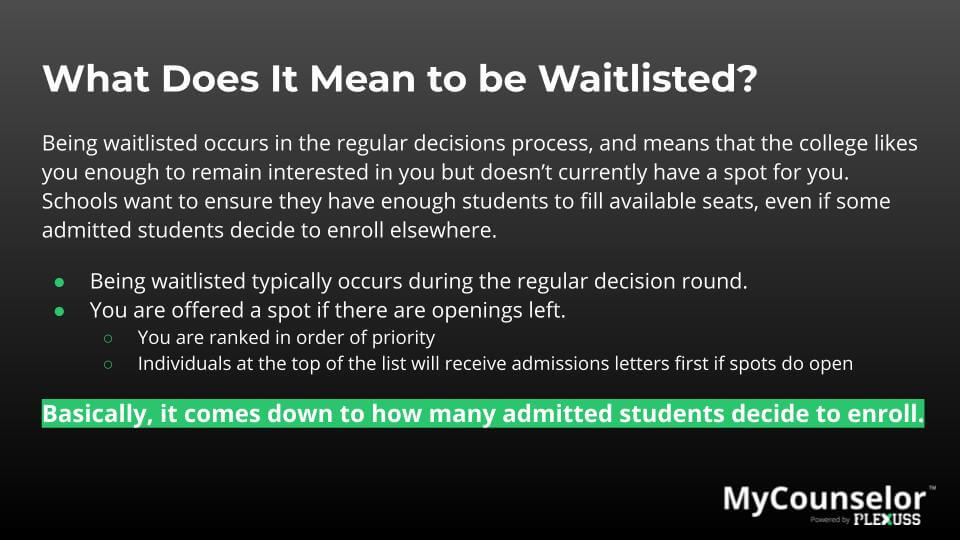
In the rapidly evolving landscape of modern technology, the term “waitlisted” has transitioned from a collegiate admissions concept to a defining characteristic of digital product launches. Whether you are attempting to gain access to the latest generative AI model, a revolutionary productivity app, or a high-performance hardware peripheral, encountering a digital queue is increasingly common. In a tech context, being waitlisted means that while you have expressed interest in a software or service, the developer is not yet ready—or willing—to grant you full access.
This mechanism serves several purposes, ranging from managing server loads to refining user experience through staged rollouts. Understanding the nuances of waitlists is essential for early adopters and tech enthusiasts who want to stay at the forefront of innovation while navigating the complexities of the modern software-as-a-service (SaaS) and AI industries.
The Engineering Logic Behind Software Waitlists
From a developer’s perspective, a waitlist is rarely just a marketing tool; it is often a critical technical safeguard. Building a piece of software that works for ten users is vastly different from building one that works for ten million. When a new app or tool goes viral, the sudden influx of traffic can lead to “the hug of death,” where server resources are overwhelmed, leading to crashes and data corruption.
Infrastructure and Server Capacity
Modern cloud computing is scalable, but it is not instantaneous or infinite in terms of cost-efficiency. By using a waitlist, tech companies can monitor how their infrastructure handles increased loads. They might let in 5,000 users, monitor the latency and database performance, optimize their code, and then open the gates for the next 10,000. This staged approach ensures that the “Day 1” experience is stable for those who do get in, protecting the product’s technical reputation.
Beta Testing and Rapid Feedback Loops
Waitlists are the gateway to “Closed Beta” or “Early Access” phases. Developers often prioritize specific types of users—such as those with specific hardware configurations or those in certain geographical regions—to ensure diverse testing environments. This allows engineering teams to identify edge-case bugs that didn’t appear in internal testing. Being waitlisted in this context means you are part of a pool of potential testers waiting for the software to reach a level of stability that can accommodate your specific user profile.
The Rise of Generative AI and the Return of the Queue
The recent explosion in Artificial Intelligence has brought the “waitlist” back into the mainstream tech conversation with a vengeance. When OpenAI first released DALL-E 2 and later ChatGPT, the waitlists were legendary. This was not merely about software stability; it was about the physical limits of hardware.
Prioritizing Compute Resources
Running large language models (LLMs) requires immense computational power, specifically GPUs (Graphics Processing Units) like NVIDIA’s H100s. These chips are expensive and in short supply. If a tech company were to open a powerful new AI tool to the entire world at once without a waitlist, they would likely run out of “compute.” Waitlisting allows AI labs to ration their processing power, ensuring that active users receive fast response times while the company works to secure more server space.
Safety and Ethical Guardrails
AI technologies carry unique risks, including the potential for generating misinformation or harmful content. Tech companies often use waitlists to conduct “Red Teaming”—a process where a limited group of users tries to break or subvert the AI’s safety protocols. By keeping the majority of the public on a waitlist, developers can patch vulnerabilities and update their “system prompts” before a full-scale public release. In this niche, being waitlisted is a sign that the technology is still in its formative, high-risk stage.
Growth Hacking: How Waitlists Influence Software Adoption
While the technical reasons for waitlists are foundational, the strategic implementation of these lists has become a hallmark of modern tech growth cycles. Software companies often use waitlists to build a “viral loop” before the product is even fully functional.

Creating Product Scarcity and Hype
In the tech world, scarcity creates perceived value. When a new app like Arc Browser or Superhuman launches with a “waitlist-only” model, it signals to the market that the product is premium and in high demand. This FOMO (Fear Of Missing Out) drives social media engagement, as users share their “place in line” or ask for invite codes. This strategy transforms a simple software launch into a cultural event within the tech community.
Gamifying the Signup Process
Many startups now gamify their waitlists to lower their Customer Acquisition Cost (CAC). You might sign up and find yourself at position #50,402. However, the app might offer you a “fast track”: if you refer three friends, you move up 10,000 spots. This turns the waitlist into a powerful distribution engine. From a technical standpoint, this helps the company build a massive database of verified emails and user data, which they can use to demonstrate “market fit” to venture capital investors even before the software is widely available.
User Perspective: Managing the Wait for New Digital Tools
For the end-user, being waitlisted can be a frustrating experience. However, understanding the lifecycle of a tech waitlist can help you manage your expectations and even improve your chances of gaining early access.
The Verification and Onboarding Process
When you join a waitlist, you are typically required to provide more than just an email address. Tech companies may ask about your profession, your intended use case, or your current tech stack. Being honest and detailed in these forms can actually help you. Developers often look for “power users” who will provide high-quality feedback. If a company is building a tool for developers, and you identify as a software engineer, you are likely to be moved to the front of the queue compared to a casual observer.
Moving from Waitlist to User
The transition from being waitlisted to being an active user usually involves an “invite-only” email containing a unique token or a link to a specific build of the app (like via Apple’s TestFlight). It is important to note that access is often revoked if the user does not engage with the product or follow the community guidelines. In the tech ecosystem, early access is a two-way street; the developer provides the tool, and the user provides the data and feedback necessary for the tool’s survival.
Security Considerations in the Era of “Early Access”
The high demand for new tech tools has unfortunately created a playground for cybercriminals. When a popular tool announces a waitlist, phishing campaigns and “fake access” scams often follow.
Phishing Risks in High-Demand Launches
Hackers frequently create “mirror” websites that look exactly like the official landing page for a trending AI tool or app. They promise “instant access” if you log in with your Google or Discord credentials. Users who are desperate to bypass a waitlist are often less cautious, leading to account takeovers. It is vital to only sign up for waitlists through official, verified domains and to be wary of any third-party service claiming they can “skip the line” for a fee.
Data Harvesting and Marketing Consent
When you join a waitlist, you are effectively entering into a data agreement. Many tech companies use waitlists primarily as a lead-generation tool. Even if the product never fully launches, they now possess a list of thousands of emails of people interested in that specific niche. Before joining a waitlist, it is prudent to check the privacy policy to see how your data will be used. A professional tech company will be transparent about whether your data is being used for beta testing purposes or if it will be sold to third-party advertisers.
Conclusion: The Strategic Value of the Digital Queue
In conclusion, being “waitlisted” in the technology sector is far more complex than a simple delay in service. It is a multi-faceted strategy that balances server architecture, AI safety, market psychology, and growth hacking. For developers, it is a tool for stability and controlled growth; for users, it is a gateway to the cutting edge of digital innovation.
As we move further into the era of resource-heavy AI and hyper-niche SaaS tools, the waitlist will remain a staple of the industry. By understanding the mechanics behind the queue, tech-savvy users can better navigate the landscape, protect their digital security, and ultimately gain a first-row seat to the future of software development. Whether you are referral-linking your way to the top or patiently waiting for a server expansion, the waitlist is a testament to the vibrant, high-demand nature of today’s tech economy.
aViewFromTheCave is a participant in the Amazon Services LLC Associates Program, an affiliate advertising program designed to provide a means for sites to earn advertising fees by advertising and linking to Amazon.com. Amazon, the Amazon logo, AmazonSupply, and the AmazonSupply logo are trademarks of Amazon.com, Inc. or its affiliates. As an Amazon Associate we earn affiliate commissions from qualifying purchases.