
In a world increasingly powered by technology, where every gadget, enterprise, and smart home relies on a robust electrical infrastructure, understanding the fundamental principles of electricity is more critical than ever. While terms like “volts” and “amps” are commonly tossed around, another crucial electrical unit often remains in the shadows, yet plays a pivotal role in the design, efficiency, and financial implications of power systems: the Volt-Ampere, or VA. Far from being a mere technicality, understanding VA is essential for anyone dealing with electrical systems, from sizing a home UPS to optimizing a data center’s power consumption, or even strategizing a brand’s energy-efficient product line.

At its core, VA represents “apparent power” – the total power flowing in an electrical circuit, encompassing both the power that does useful work and the power that is simply shuttled back and forth. While related to the more commonly understood “Watts” (which represent “real power”), VA provides a more comprehensive picture, especially in Alternating Current (AC) circuits, which power most of our modern infrastructure. This distinction is not just academic; it has profound practical and financial implications for everything from selecting the right transformer to managing utility bills and making informed investment decisions in technology.
This article delves deep into the meaning of VA, differentiating it from other power measurements, exploring its real-world applications across various technological landscapes, and highlighting its impact on financial planning and brand strategy. By the end, you’ll not only understand what VA means but also why it’s a cornerstone of electrical intelligence in our tech-driven economy.
Unpacking the Fundamentals: Volts, Amps, and the Birth of VA
To truly grasp the significance of VA, we must first revisit the foundational concepts of electricity: voltage and current. These two parameters are the building blocks upon which all electrical calculations are made, and their interaction gives rise to the concept of power, be it apparent or real.
The Basics: Voltage (V) and Current (A)
Imagine electricity flowing through wires much like water flowing through pipes. This analogy helps simplify these abstract concepts:
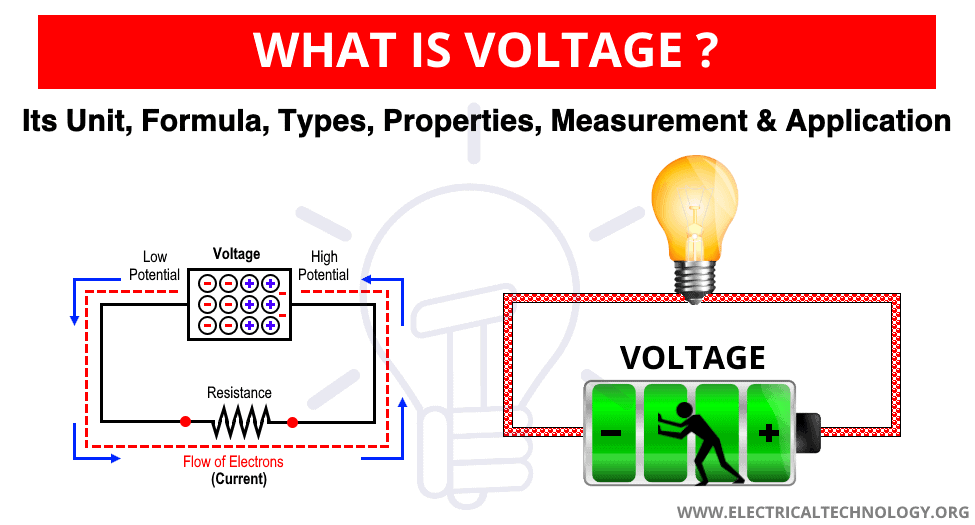
- Voltage (V): Often referred to as electrical potential difference, voltage is the “push” or “pressure” that drives electrons through a circuit. In our water analogy, voltage is akin to water pressure in a pipe. A higher voltage means a stronger push, capable of moving more electrons or pushing them harder. It’s the force that makes electrons want to move from one point to another.
- Current (A): Measured in Amperes (Amps), current is the actual flow rate of electrical charge (electrons) through a conductor. Following our analogy, current is the volume of water flowing through the pipe per unit of time. A higher current means more electrons are flowing per second.
These two fundamental quantities are inextricably linked. Without a voltage difference, there’s no “push” to make current flow, and without a path for current, voltage cannot create a circuit. Most electrical devices specify their operating voltage and draw a certain amount of current when in operation.
Introducing VA: Apparent Power
With voltage and current established, we can introduce VA. In its simplest form, Volt-Ampere (VA) is the product of the RMS (root mean square) voltage and the RMS current in an electrical circuit (V x A). It represents the total electrical power that appears to be flowing from the source to the load, irrespective of whether that power is actually consumed for useful work. This is why it’s called “apparent power.”
For Direct Current (DC) circuits (like those found in batteries or USB chargers), VA is typically equal to Watts (real power). This is because DC circuits have a constant flow, and all the power delivered is generally consumed as useful work. However, in Alternating Current (AC) circuits, which power homes, offices, and industries, the relationship between VA and Watts becomes more complex due to the nature of alternating current and the presence of inductive or capacitive loads.
The VA rating is particularly crucial for sizing electrical components that must handle the total electrical flow, regardless of how much of it performs useful work. This includes items like transformers, uninterruptible power supplies (UPS), and generators, which must be built to withstand the full voltage and current circulating in the system, not just the portion that generates heat or motion. A device rated for 1000 VA, for instance, can handle a product of 1000 when you multiply its operating voltage by the maximum current it can draw, even if only a fraction of that power is converted into actual work.
Beyond the Basics: Real Power (Watts), Reactive Power (VARs), and Power Factor
While VA gives us the total apparent power, it doesn’t tell the whole story in AC circuits. To fully understand power consumption and efficiency, we must differentiate VA from its two constituent components: Real Power (Watts) and Reactive Power (VARs), and then integrate them through the concept of Power Factor.
The Reality Check: Real Power (Watts)
Real Power, measured in Watts (W), is the actual power consumed by a load and converted into useful work. This is the energy that heats your toaster, lights your bulb, runs your computer’s processor, or spins the motor of your washing machine. It’s the power that your utility meter typically measures for billing purposes (as kilowatt-hours, kWh).
In AC circuits, especially those with inductive components like motors, transformers, or fluorescent lighting ballasts, the current and voltage waveforms can become out of phase. This phase difference means that not all the power supplied by the source is immediately converted into useful work. Some of it is stored and then returned to the source during each cycle. Watts represent only the portion of power that contributes to the net energy transfer to the load over a complete cycle.
The relationship between Watts and VA is crucial: Watts can never be more than VA, and often, they are less. This discrepancy is where the concept of efficiency, or rather, the Power Factor, comes into play.
The Unsung Hero: Reactive Power (VARs)
The difference between apparent power (VA) and real power (Watts) is accounted for by Reactive Power, measured in Volt-Ampere Reactive (VARs). Reactive power is the power that oscillates back and forth between the source and the load, creating and collapsing magnetic or electric fields. It does not perform any useful work itself, but it is essential for the operation of certain types of electrical equipment.
For example, inductive loads like motors, transformers, and solenoids require reactive power to establish the magnetic fields necessary for their operation. Without VARs, these devices simply wouldn’t function. Similarly, capacitive loads (like capacitors used in power factor correction) also draw and supply reactive power.
Think of our water analogy again. If Watts are the water actually used to spin a turbine, and VA is all the water that flows through the system, then VARs would be like the water that sloshes back and forth in the pipe, creating turbulence or pressure changes, but not actually flowing through the turbine. It’s necessary for the system to work, but it doesn’t directly contribute to the useful output. While VARs don’t register on a standard utility meter for residential consumers, they do place a burden on the electrical distribution system, as lines and transformers must be sized to carry this additional current.
The Efficiency Metric: Power Factor
The relationship between Real Power (Watts), Reactive Power (VARs), and Apparent Power (VA) is often described using a right triangle, where VA is the hypotenuse, Watts is the adjacent side, and VARs is the opposite side. This geometric relationship is mathematically represented by the formula: VA² = W² + VARs².

From this relationship, we derive the Power Factor (PF). Power Factor is a dimensionless number, typically between 0 and 1, that represents the ratio of real power (Watts) to apparent power (VA):
Power Factor (PF) = Watts (W) / Volt-Amperes (VA)
A power factor of 1 (or unity) means that all the apparent power is real power (W = VA), implying maximum efficiency and no reactive power. This is ideal but rarely achieved in practical AC systems. A power factor less than 1 indicates that some of the apparent power is reactive power, meaning more VA must be supplied to deliver a given amount of Watts.
A low power factor signifies inefficiency. It means that the electrical system (wires, transformers, generators) must carry more current (and thus more VA) than is strictly necessary to deliver the useful power (Watts) to the load. This leads to several undesirable consequences, which we will explore in the next section, particularly concerning financial costs and technological performance.
VA in the Real World: Applications and Implications
Understanding VA, Watts, VARs, and Power Factor isn’t just theoretical; it has profound practical implications across technology, finance, and even brand perception. It influences how we design systems, manage energy, and communicate product capabilities.
Sizing Electrical Equipment: Why VA Matters to Tech
In the realm of technology, VA is a critical specification, often more so than Watts for certain types of equipment. This is because components like transformers, cabling, and uninterruptible power supplies (UPS) must be designed to handle the total current and voltage flowing through them, which is represented by VA.
- Transformers: Transformers are almost universally rated in kVA (kilo-Volt-Amperes). A transformer rated at 100 kVA means it can safely handle 100,000 Volt-Amperes. If a transformer were only rated by Watts, it might be undersized for loads with a low power factor, leading to overheating and failure, even if the actual power consumed (Watts) is within its apparent rating. Tech application: In data centers, accurately sizing distribution transformers and panel boards based on aggregate VA demand is fundamental to preventing overloads and ensuring continuous operation.
- Uninterruptible Power Supplies (UPS): UPS systems, vital for protecting sensitive electronics from power interruptions, are typically rated in both VA and Watts. For example, a UPS might be rated at 1500 VA / 900 W. The VA rating indicates the maximum apparent power the UPS can deliver, which determines the maximum current it can safely supply. The Watt rating, on the other hand, tells you the actual amount of useful power it can provide to your devices. When selecting a UPS, you must ensure both your total VA load and your total Watt load are within the UPS’s ratings. Overloading on either count can lead to system shutdowns or damage. Tech application: IT managers use VA ratings to determine how many servers, network devices, and storage units a UPS can support, factoring in each device’s power factor. Modern power management software often aids in these calculations, sometimes using AI to predict load fluctuations.
- Generators: Similar to transformers and UPS units, emergency generators are primarily rated in kVA. This ensures they can supply the necessary current to all connected loads, regardless of their power factor, guaranteeing reliable backup power.
- Consumer Electronics: While most consumer devices list their power consumption in Watts, understanding VA helps in planning for power strips, surge protectors, or home UPS systems. For instance, if you have multiple devices connected to a single outlet or power strip, the cumulative VA load is what determines whether you’re pushing the circuit breaker limit, not just the cumulative Watts.
The Financial Impact: VA and Your Bottom Line (Connecting to Money)
The difference between VA and Watts, particularly as expressed by the Power Factor, carries significant financial weight, especially for businesses and industrial consumers.
- Utility Billing for Commercial/Industrial Users: While residential customers are typically billed based on kilowatt-hours (kWh, or real power consumption over time), many commercial and industrial users are also billed based on their “demand charges,” which can be tied to peak kVA demand or penalized for a low power factor. A low power factor means the utility has to generate and transmit more apparent power (kVA) to deliver the same amount of real power (kW). To compensate for this increased burden on their infrastructure, utilities impose penalties or charge higher rates for poor power factor.
- Energy Efficiency & Cost Savings: Improving the power factor (e.g., by installing capacitor banks to offset inductive loads) can significantly reduce a facility’s kVA demand for the same kW usage. This directly translates to lower utility bills by reducing demand charges and avoiding power factor penalties. It also reduces line losses (I²R losses, where I is current) in the facility’s internal wiring, further saving energy and money. Money application: Businesses investing in power factor correction equipment can see a rapid return on investment through reduced energy costs, a classic example of smart financial planning in facility management.
- Investment Decisions and Infrastructure Costs: When a company plans to expand its operations or install new machinery, considering the equipment’s VA rating and power factor is crucial. Equipment with a poor power factor will require larger, more expensive wiring, transformers, and switchgear to handle the increased current. Overlooking this can lead to significant unplanned capital expenditures. Money application: Financial models for new facility construction or upgrades must include detailed electrical load analysis, considering both Watts and VA, to accurately forecast infrastructure costs and total cost of ownership (TCO).
- Renewable Energy Systems: In renewable energy installations like solar PV, sizing inverters and other grid-tie components accurately depends on understanding the VA requirements. Inverters must handle the total apparent power flowing in and out of the system, not just the real power being generated.
The Brand Perspective: Communicating Power Effectively (Connecting to Brand)
For technology manufacturers and service providers, how they address and communicate power specifications, including VA, can significantly impact their brand perception, customer trust, and market success.
- Product Specifications and Transparency: Brands producing electrical equipment, from small UPS units to large industrial machinery, must clearly and accurately state their products’ VA and Watt ratings. Clear, honest specifications build trust. Ambiguous or misleading information can lead to customer frustration, equipment failure, and damage to brand reputation. Brand application: A reputable tech brand will provide comprehensive data sheets that clearly differentiate VA and Watts, empowering customers to make informed purchasing decisions based on their specific power needs.
- Marketing and Education: There’s a persistent challenge for brands to educate consumers and businesses about complex electrical concepts like VA vs. Watts. Brands that invest in clear, concise educational content – through tutorials, whitepapers, or interactive tools – not only differentiate themselves but also empower their customers to better utilize their products. Brand application: Companies selling energy management software or smart home devices (which leverage AI to optimize energy usage) can build stronger customer relationships by simplifying power metrics and demonstrating tangible benefits of understanding terms like VA.
- Reputation and Reliability: A brand’s reputation for reliability is directly tied to how well its products perform under various electrical conditions. If a UPS fails because a customer mistakenly overloaded it based on a misunderstanding of Watts vs. VA, the brand’s image suffers. By designing products that robustly handle varying power factors and by providing clear guidance, brands can reinforce their image as trustworthy and dependable. Brand application: Manufacturers of industrial motors or power conditioning equipment can enhance their brand by showcasing how their products improve power factor, leading to energy savings and operational stability for their clients.
- AI Tools and Predictive Maintenance: Brands offering AI-driven energy management platforms or predictive maintenance solutions often collect vast amounts of power data, including VA, Watts, and VARs. Their ability to analyze this data to optimize operations, prevent failures, and recommend efficiency improvements directly enhances their brand as innovative and value-adding.
Modern Challenges and Future Trends: VA in the Age of Smart Tech and AI
As technology continues to advance, the relevance of VA only grows, especially in the context of emerging trends and complex systems.
Data Centers and Edge Computing
The exponential growth of data centers and the rise of edge computing demand ever more sophisticated power management. Every rack, every server, and every cooling unit contributes to the overall power load. VA is absolutely critical for sizing power distribution units (PDUs), UPS systems, and cooling infrastructure. The push for higher power densities means meticulously managing every VA to maximize efficiency and reliability in these critical environments. AI-powered tools are now being deployed to analyze real-time VA, Watt, and VARs data to optimize load balancing, predict potential power issues, and even dynamically adjust cooling, minimizing energy waste.
Smart Grids and Energy Management
The global transition to smart grids, integrating diverse energy sources like solar and wind, relies heavily on granular data about power flow. Real-time monitoring of VA, Watts, and VARs across the grid is essential for maintaining stability, responding to demand fluctuations, and efficiently integrating renewable energy sources. AI algorithms play a pivotal role in predicting energy demand, optimizing power dispatch, and identifying areas for power factor correction to ensure grid resilience and efficiency.
Electric Vehicles (EVs) and Charging Infrastructure
The proliferation of electric vehicles necessitates a robust charging infrastructure. Understanding VA is key to designing efficient and scalable charging stations, from Level 2 home chargers to ultra-fast DC chargers. The electrical components, transformers, and grid connections for these stations must be sized based on VA to handle the high currents and voltages involved. With technologies like vehicle-to-grid (V2G) gaining traction, EVs become not just loads but potential power sources, further complicating power management and making accurate VA measurements indispensable for smart energy flow.
Conclusion
The Volt-Ampere (VA) is far more than an obscure electrical term; it’s a fundamental concept that underpins the design, efficiency, and financial viability of nearly every electrical system in our modern world. As apparent power, VA represents the total electrical “burden” on a circuit, encompassing both the useful power (Watts) and the necessary but non-working power (VARs).
Distinguishing VA from Watts and understanding the crucial role of Power Factor enables us to make informed decisions – from safely sizing the right electrical equipment like transformers and UPS systems, to optimizing energy consumption and reducing utility costs in commercial and industrial settings. This understanding is invaluable for technologists designing next-generation systems, financial planners evaluating capital investments, and brands striving to communicate transparently and build trust with their customers.
In our increasingly interconnected and electrified society, where technology trends, financial prudence, and brand reputation are inextricably linked, the seemingly simple question, “What does VA mean in electrical?” unlocks a deeper comprehension of how power truly works, empowering us to build a more efficient, reliable, and sustainable future. VA isn’t just an electrical quantity; it’s a key to unlocking smarter power management, wiser investments, and a more robust technological landscape.
aViewFromTheCave is a participant in the Amazon Services LLC Associates Program, an affiliate advertising program designed to provide a means for sites to earn advertising fees by advertising and linking to Amazon.com. Amazon, the Amazon logo, AmazonSupply, and the AmazonSupply logo are trademarks of Amazon.com, Inc. or its affiliates. As an Amazon Associate we earn affiliate commissions from qualifying purchases.