
In the discerning world of premium food products, a single acronym can hold immense weight, signifying not just a characteristic, but a promise of quality, authenticity, and a distinct market position. For connoisseurs and health-conscious consumers alike, Manuka honey has emerged as a beacon of natural wellness. However, navigating the diverse landscape of Manuka honey products can be perplexing, with varying price points and claims. At the heart of this distinction lies a crucial identifier: UMF. Understanding what UMF means in Manuka honey is paramount to discerning genuine, high-quality products from those that may fall short, thereby impacting brand perception and consumer trust.
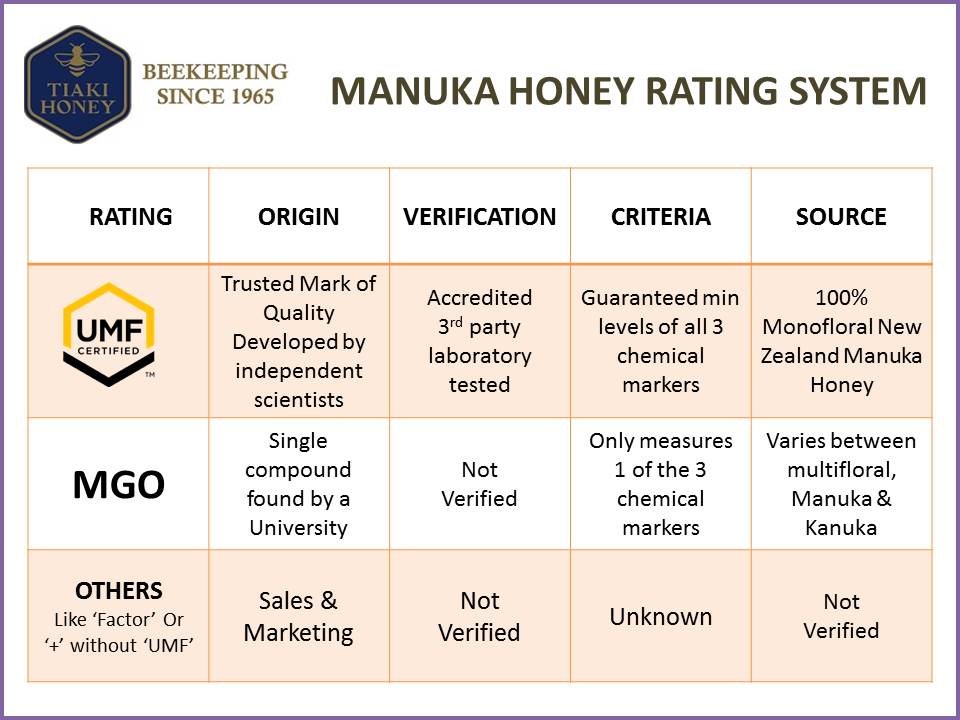
UMF, which stands for Unique Manuka Factor, is far more than just a technical specification; it is a robust certification and grading system developed in New Zealand. It serves as a powerful tool for branding, assuring consumers that they are purchasing authentic Manuka honey with specific, measurable beneficial properties. This article delves into the intricacies of the UMF grading system, exploring its origins, the scientific underpinnings that give it authority, and its profound implications for the branding and market positioning of Manuka honey producers.
The Genesis and Evolution of the UMF™ Grading System
The journey to establish a reliable standard for Manuka honey began with the recognition that not all Manuka honey is created equal. The unique properties attributed to this nectar, primarily derived from the Manuka bush (Leptospermum scoparium), necessitated a way to differentiate genuine products and protect both consumers and the integrity of the Manuka honey market.
Scientific Discovery and the Need for Standardization
The unique antibacterial properties of Manuka honey were first scientifically identified in the 1980s. Researchers discovered that unlike other honeys, which derive their antimicrobial activity from hydrogen peroxide, Manuka honey possesses a stable, non-peroxide antibacterial activity. This activity was later attributed to a compound called Methylglyoxal (MGO), alongside other key markers like Leptosperin and Dihydroxyacetone (DHA). However, early research and marketing often lacked a unified standard, leading to confusion and potential for misrepresentation.
The initial efforts to standardize Manuka honey quality were driven by the need to distinguish its unique properties from those of other honeys. This led to the development of the UMF™ grading system by the UMF™ Honey Association (UMFHA). The UMFHA is an independent, industry-led organization dedicated to ensuring the authenticity and quality of New Zealand Manuka honey. Their mandate is to protect the reputation of Manuka honey as a premium natural product and to provide consumers with confidence in their purchase.
The Role of the UMF™ Honey Association (UMFHA)
The UMFHA plays a pivotal role in maintaining the credibility and authority of the UMF™ trademark. This association comprises licensed Manuka honey producers, packers, exporters, and beekeepers who adhere to strict quality control measures. For a product to bear the UMF™ mark, it must meet a rigorous set of criteria and undergo independent laboratory testing. This rigorous process is fundamental to building and maintaining brand trust, assuring consumers that the UMF™ label is a reliable indicator of quality and authenticity.
The UMFHA actively works to protect the UMF™ trademark from misuse and to educate consumers about the importance of the grading system. This proactive approach is essential for safeguarding the brand equity of New Zealand Manuka honey on a global scale. By setting and enforcing these standards, the UMFHA ensures that the UMF™ mark represents a consistent and verifiable level of quality, which in turn reinforces the premium brand positioning of Manuka honey products worldwide.
Deconstructing the UMF™ Numbers: What the Grades Really Signify
The UMF™ grading system is characterized by numerical ratings, most commonly seen as UMF™ 5+, UMF™ 10+, UMF™ 15+, UMF™ 20+, and so on. These numbers are not arbitrary; they directly correlate to the concentration of key chemical markers found in the honey. Understanding these numbers is crucial for appreciating the product’s purported benefits and its premium branding.
Key Chemical Markers and Their Significance
The UMF™ grading system measures the presence of four key markers:
- Methylglyoxal (MGO): This is the primary compound responsible for the stable, non-peroxide antibacterial activity of Manuka honey. The higher the MGO level, the stronger the antimicrobial potency.
- Leptosperin: A unique compound found exclusively in Manuka nectar. Its presence and concentration are vital indicators of authenticity.
- Dihydroxyacetone (DHA): This is a precursor to MGO, found in the nectar of the Manuka flower. Its concentration indicates the potential for future MGO development.
- Hydroxymethylfurfural (HMF): While not a marker of beneficial activity, HMF is an indicator of honey freshness. High levels of HMF can suggest that the honey has been exposed to excessive heat or has been stored for a long time, which can degrade its quality and beneficial compounds. The UMF™ standard sets a maximum allowable limit for HMF to ensure product quality and freshness.
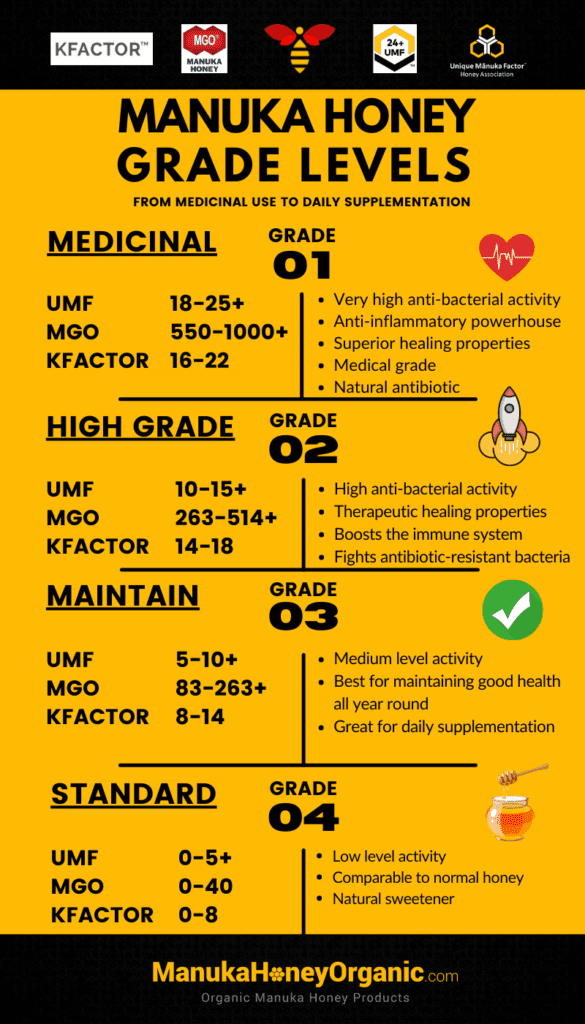
The UMF™ rating is determined by the combined measurement of these markers, with a particular emphasis on MGO and Leptosperin. The “+” symbol indicates that the honey meets or exceeds the minimum requirements for that particular grade. For example, UMF™ 10+ signifies that the honey contains at least 10mg/kg of MGO and meets the minimum requirements for Leptosperin and DHA, while staying within the acceptable HMF limit.
The Hierarchy of UMF™ Grades and Their Market Positioning
The different UMF™ grades create a clear hierarchy, directly influencing the perceived value and market positioning of Manuka honey.
- UMF™ 5+ & UMF™ 10+: These grades represent the entry-level UMF™ certified Manuka honeys. They offer a good balance of authentic Manuka properties and affordability, making them popular choices for daily consumption and as a general wellness product. Brands using these grades often position them as accessible premium honeys for everyday use.
- UMF™ 15+ & UMF™ 20+: As the numbers increase, so does the concentration of key beneficial compounds, particularly MGO. These grades are associated with higher levels of antibacterial activity and are often marketed for their enhanced therapeutic benefits. Brands featuring these grades tend to position themselves in the higher-end segment of the market, emphasizing their potent natural qualities and suitability for specific health-conscious consumers.
- UMF™ 25+ and higher: These are considered the highest grades of UMF™ certified Manuka honey, signifying exceptionally high concentrations of MGO and other beneficial compounds. They are often the most expensive and are marketed as premium, specialized products, appealing to consumers seeking the utmost in natural potency and efficacy. Brands at this level often highlight their exclusivity and rarity.
The UMF™ grading system effectively allows brands to communicate different levels of product quality and intended use to consumers. This tiered approach is a sophisticated branding strategy, enabling producers to cater to a wider range of consumer needs and price points while maintaining a clear benchmark for authenticity.
UMF™ as a Brand Trust and Marketing Differentiator
In a competitive global market, establishing trust and differentiating a product is paramount. The UMF™ grading system provides Manuka honey brands with a powerful tool to achieve both, underpinning their market strategies and consumer appeal.
Building Consumer Confidence Through Certification
The UMF™ trademark acts as a seal of approval, instilling confidence in consumers who might otherwise be overwhelmed by the variety of Manuka honey products available. For brands that invest in UMF™ certification, it signals a commitment to transparency and authenticity. This is particularly crucial in markets where concerns about adulteration or mislabeling of Manuka honey have surfaced in the past.
By displaying the UMF™ logo, a brand is essentially communicating:
- Authenticity: The honey originates from New Zealand and is true Manuka honey.
- Quality: The honey meets stringent standards for key beneficial compounds.
- Traceability: The UMFHA’s rigorous testing protocols ensure that the grading is accurate and verifiable.
- Purity: The honey is unadulterated and has been handled with care.
This reliance on a trusted third-party certification allows brands to build a narrative around trustworthiness, which is a cornerstone of successful brand building. Consumers are increasingly seeking products they can rely on, and UMF™ certification provides a tangible reason to trust a particular brand of Manuka honey.

Strategic Branding and Market Positioning
The UMF™ grading system is not merely a quality control measure; it is a sophisticated branding and marketing strategy. Brands can leverage different UMF™ grades to carve out specific market niches and appeal to distinct consumer segments.
- Premium Positioning: Brands focusing on higher UMF™ grades (e.g., UMF™ 15+ and above) position themselves as offering superior, potent, and potentially therapeutic Manuka honey. Their marketing often emphasizes the natural power of Manuka and the scientific backing of the UMF™ system. Packaging, messaging, and pricing all reflect this premium positioning, attracting consumers willing to pay more for perceived higher quality and benefits.
- Accessibility and Daily Wellness: Brands featuring lower UMF™ grades (e.g., UMF™ 5+ and 10+) can target a broader market. Their branding may focus on the daily wellness benefits of Manuka honey, its delicious taste, and its role as a natural sweetener and health booster. This allows them to capture a larger share of the market by offering a more accessible, yet still authentic, Manuka honey product.
- Educational Marketing: Many UMF™-certified brands engage in educational marketing efforts to explain the significance of the UMF™ mark to consumers. This involves explaining the science behind the grading, the importance of key markers like MGO, and how to choose the right UMF™ grade for their needs. This educates consumers, enhances brand authority, and reinforces the value proposition of UMF™-certified Manuka honey.
Ultimately, UMF™ serves as a powerful differentiator in the crowded honey market. It allows brands to move beyond generic claims and offer consumers a clear, quantifiable measure of quality and authenticity, thereby strengthening their brand identity and fostering lasting consumer loyalty. The “Unique Manuka Factor” is, in essence, the unique brand factor that sets authentic Manuka honey apart.
aViewFromTheCave is a participant in the Amazon Services LLC Associates Program, an affiliate advertising program designed to provide a means for sites to earn advertising fees by advertising and linking to Amazon.com. Amazon, the Amazon logo, AmazonSupply, and the AmazonSupply logo are trademarks of Amazon.com, Inc. or its affiliates. As an Amazon Associate we earn affiliate commissions from qualifying purchases.