
The landscape of human interaction underwent a seismic shift with the advent of the Short Message Service (SMS) and the subsequent rise of instant messaging (IM) platforms. Within this digital evolution, a new dialect emerged—one characterized by brevity, efficiency, and acronyms. Among the most enduring of these shorthand expressions is “TTYL.” While seemingly a simple arrangement of four letters, TTYL represents a significant milestone in the history of digital linguistics and the technical constraints that shaped how we interact through our devices.
In this guide, we will explore the technical origins of TTYL, its functional role in modern messaging ecosystems, and the etiquette of digital session management in an era of constant connectivity.

The Technical Origins and Mechanics of Digital Shorthand
To understand why “TTYL” (Talk To You Later) became a staple of the digital lexicon, one must look at the hardware and software constraints of the late 20th and early 21st centuries. Digital communication was not always the seamless, unlimited experience it is today.
The SMS Era: 160-Character Limits and Protocol Constraints
In the early days of mobile telephony, the Global System for Mobile Communications (GSM) standard established a strict limit on the size of text messages. Because messages were transmitted via the “signaling path” of the cellular network—the space usually reserved for maintenance data—they were capped at 140 bytes. This translated to exactly 160 characters of 7-bit Latin text.
Every character counted. Users were economically and technically incentivized to compress their thoughts. Writing out “I will talk to you later” consumed 25 characters, nearly 16% of a total message’s capacity. In contrast, “TTYL” used only four characters. This technical necessity birthed a generation of “leetspeak” and acronyms designed to maximize data efficiency within rigid protocol limits.
Decoding TTYL: The Function of the Digital Sign-off
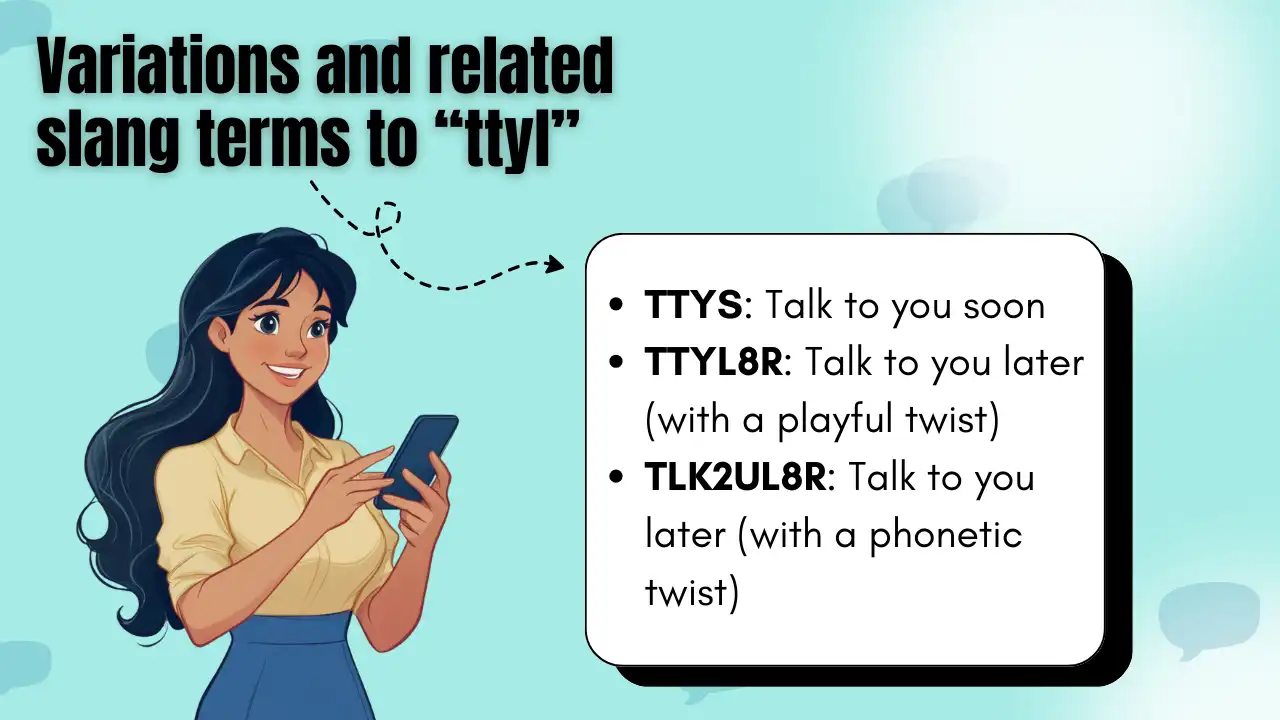
At its core, TTYL stands for “Talk To You Later.” Technically, it serves as a “FIN” (finish) packet in a human conversation. In networking protocols like TCP (Transmission Control Protocol), a connection is established, data is exchanged, and the connection is formally closed. TTYL functions as the manual closing of a communication socket.
It signals to the recipient that the sender is transitioning from a “synchronous” state (active participation) to an “asynchronous” state (unavailable for immediate response). This prevents the “hanging connection” phenomenon, where one party continues to send data (messages) without realizing the other party has moved offline.
TTYL in the Ecosystem of Modern Messaging Apps
As we transitioned from the 2G/3G SMS era to the 4G/5G era of Over-the-Top (OTT) messaging apps like WhatsApp, Telegram, and Signal, the 160-character limit vanished. However, the use of TTYL persisted, evolving from a technical necessity into a tool for managing digital presence and “notification fatigue.”
Beyond SMS: Managing State in WhatsApp, Slack, and Discord
Modern messaging platforms handle data differently than traditional SMS. They use internet protocols (IP) to send messages as data packets. While character counts are no longer a concern, the volume of communication has increased exponentially. In a professional tech environment—such as a developer team communicating via Slack—the “always-on” nature of the app can be overwhelming.
In this context, TTYL is used as a status management tool. When a software engineer says “TTYL” in a Slack channel, they are effectively setting their internal status to “Away.” It informs the team that they are entering a “Deep Work” state or “Focus Mode,” providing a clear boundary in an environment where the default expectation is immediate responsiveness.
Status Indicators vs. Manual Sign-offs
Interestingly, the rise of “presence features” (the green dots or “Online” labels) has changed the utility of TTYL. In many apps, the software automatically broadcasts your availability. However, these automated systems are often inaccurate—a phone might show a user as “Online” simply because the app is running in the background.
TTYL remains a superior technical communication tool because it conveys intent rather than just state. It tells the recipient that the departure is intentional and that a future “reconnection” is planned, providing a level of clarity that automated status indicators cannot match.
The Social Protocol of Ending a Digital Session
Digital communication is categorized into two types: Synchronous and Asynchronous. Understanding the technical distinction between these two helps clarify when and how to use TTYL effectively.

Synchronous vs. Asynchronous Communication
Synchronous communication happens in real-time, much like a phone call or a face-to-face meeting. Instant messaging often starts as synchronous; two people are actively typing and responding within seconds of each other.
Asynchronous communication, like email, carries no expectation of an immediate reply. TTYL serves as the bridge between these two states. By using the acronym, a user is formally shifting the conversation from a synchronous stream to an asynchronous queue. This manages the “latency” expectations of the recipient, ensuring they don’t expect a response for several minutes, hours, or even days.
TTYL in Professional Tech Environments: Best Practices
In a corporate or technical setting, the tone of communication must remain professional. While “TTYL” is widely understood, its usage varies depending on the platform’s hierarchy:
- Peer-to-Peer: Highly acceptable in direct messages between colleagues to signal the end of a quick sync.
- External/Client Facing: Generally avoided. In these scenarios, a full sentence (“I will follow up with you later this afternoon”) is preferred to maintain a formal brand voice.
- DevOps/Incident Response: During high-stakes technical troubleshooting, abbreviations are often discarded for absolute clarity. In a crisis, “TTYL” is too vague; “Leaving keyboard for 10 mins” is more actionable.
The Linguistic Evolution: From IRC to Modern UI/UX
TTYL did not emerge in a vacuum. It is a descendant of the early days of the internet, specifically the Internet Relay Chat (IRC) and Bulletin Board Systems (BBS) of the 1980s and 90s.
The Legacy of IRC and Early Chat Rooms
IRC was a text-based chat system that required users to type commands to perform actions. Because the interface was purely textual, speed was the ultimate currency. Acronyms like BRB (Be Right Back), LOL (Laugh Out Loud), and TTYL became standardized “macro” commands for human interaction. These weren’t just slang; they were part of the user interface of the early web.
As technology progressed, these text-based commands were integrated into the UI/UX of modern apps. For example, “TTYL” is often replaced today by the “Mute” or “Do Not Disturb” (DND) functions on a smartphone. We are moving from a world where we type our status to one where we toggle it.
Transitioning from Text to Visual Communication (Emojis and GIFs)
In the current tech landscape, TTYL is facing competition from visual shorthand. A “wave” emoji ( ) or a specific GIF can communicate the same “goodbye” intent as TTYL. From a technical standpoint, this represents the shift from ASCII-based communication to Unicode and rich media. While TTYL is efficient, emojis add a layer of “emotional metadata” that four letters sometimes lack, helping to prevent the misinterpretation of tone that often plagues text-based communication.
Security and Privacy in Quick Communication
As we use shorthand like TTYL to speed up our interactions, it is crucial to remain aware of the security implications of casual digital communication.
Avoiding Social Engineering via Familiar Slang
Cybersecurity professionals often warn against “Social Engineering”—the psychological manipulation of people into performing actions or divulging confidential information. Phishing attacks often use familiar, casual language (including acronyms like TTYL) to mimic the speaking style of a trusted colleague.
In a technical environment, if a high-level executive who usually communicates formally suddenly sends a message ending in “TTYL,” it can be a red flag for a compromised account. Technical literacy involves not only knowing what an acronym means but also recognizing when its use is out of character for the sender.
The Importance of Context in Encrypted Environments
When using end-to-end encrypted (E2EE) platforms like Signal, the content of your “TTYL” is private. However, metadata (who you are talking to and when) is often still visible to service providers or network observers. Using TTYL to quickly end a conversation before moving to a more secure channel or a “disappearing message” mode is a common tactic for privacy-conscious tech users. It allows for a polite exit without leaving a long, traceable trail of conversation.
Conclusion
“TTYL” is more than just a relic of the T9 texting era; it is a fundamental component of the digital communication protocol. It emerged from the hardware limitations of 160-character SMS and has survived as a vital tool for managing human “bandwidth” and digital presence.
By understanding the technical nuances of TTYL—from session management and synchronous/asynchronous shifts to its origins in IRC—users can communicate more effectively across the modern tech landscape. Whether you are a developer signaling a move to “Deep Work” or a casual user saving a few keystrokes, TTYL remains a powerful symbol of our ongoing effort to balance human connection with technological efficiency.
aViewFromTheCave is a participant in the Amazon Services LLC Associates Program, an affiliate advertising program designed to provide a means for sites to earn advertising fees by advertising and linking to Amazon.com. Amazon, the Amazon logo, AmazonSupply, and the AmazonSupply logo are trademarks of Amazon.com, Inc. or its affiliates. As an Amazon Associate we earn affiliate commissions from qualifying purchases.