
In the rapidly evolving landscape of digital communication, the brevity of text-based interaction has birthed an entire lexicon of shorthand, acronyms, and symbols. Among the most versatile and frequently encountered is “TM.” While it may seem like a simple two-letter combination, its meaning shifts significantly depending on the technical ecosystem, the platform being used, and the sociocultural context of the conversation.
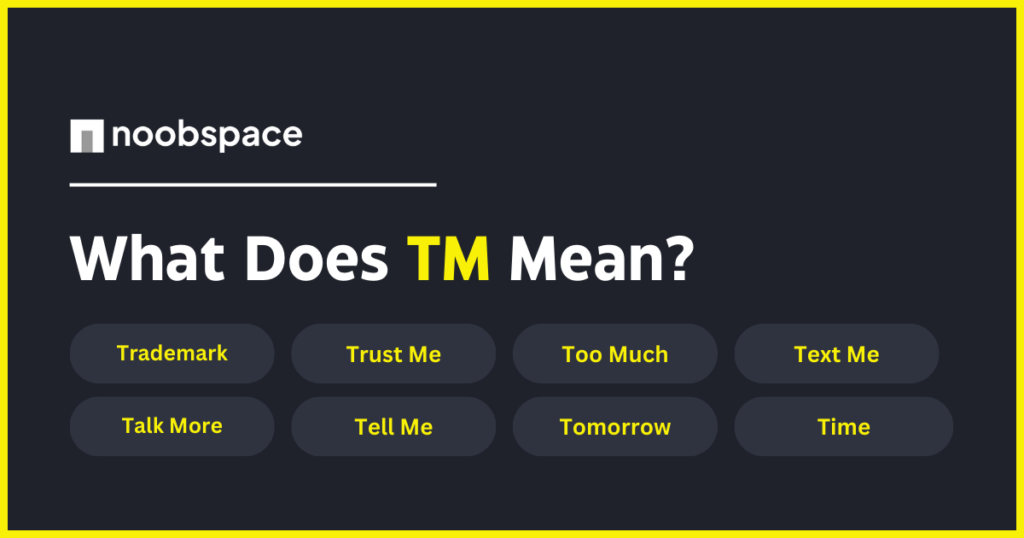
In the realm of technology and digital communication, “TM” primarily serves three distinct functions: an abbreviation for “text message,” a shorthand for “trust me,” and a technical representation of the trademark symbol (™). Understanding these nuances is essential for anyone navigating modern software interfaces, social media platforms, or professional messaging apps.

The Evolution of Digital Shorthand in the Mobile Era
To understand why “TM” exists in our digital vocabulary, we must look at the technical constraints of early mobile technology. The architecture of the first Global System for Mobile Communications (GSM) networks imposed strict limits on data transmission.
From SMS Character Limits to Modern Instant Messaging
In the early days of Short Message Service (SMS), users were restricted to 160 characters per message. This constraint was not arbitrary; it was based on the available space in the signaling protocols of the time. To save money and space, users began truncating words. “TM” emerged during this era as a quick way to refer to the “Text Message” itself. If someone said, “I’ll send you a TM later,” they were referring to the specific technical medium of the SMS.
As technology transitioned from 2G to 5G and from basic SMS to Rich Communication Services (RCS) and Instant Messaging (IM) apps like WhatsApp and Telegram, the character limit largely disappeared. However, the habit of brevity remained. Today, “TM” as an abbreviation for “text message” is less about saving bandwidth and more about the “economy of effort” in mobile UX (User Experience).
The Psychology of Micro-Communication
In tech-driven communication, speed often trumps formal grammar. The use of “TM” reflects a cognitive shift in how we process information on small screens. Software developers and UI/UX designers have noted that users prefer shorter strings of text to maintain the “flow” of a digital conversation. This micro-communication style has influenced how notification systems are designed, where “TM” might be used in backend logs or developer documentation to denote a transmitted message.
Decoding “TM”: Multiple Meanings in Digital Contexts
Because “TM” is a high-frequency acronym, its meaning is highly dependent on the “Tech Stack” and the social platform where it is deployed.
“Trust Me” – The Social Media Vernacular
On platforms like X (formerly Twitter), TikTok, and Instagram, “TM” has seen a resurgence as shorthand for “Trust Me.” This usage is common in the “Tech-Twitter” community and among software developers discussing project timelines or debugging. For example, a developer might post, “The new API update will be live by midnight, TM.” In this context, it functions as a conversational intensifier, signaling confidence in a technical outcome or a prediction.
The Superscript ™ Symbol: Technical Implementation and Sarcastic Use
One of the most interesting technical uses of “TM” in text is the actual Trademark symbol (™). In digital typography and coding, this is more than just two letters; it is a specific Unicode character (U+2122).
In modern internet culture, users often append the superscript ™ to words or phrases to mock the “corporate” feel of a brand or to imply that a certain behavior is someone’s “trademark” move. From a technical perspective, rendering this correctly across different operating systems—be it iOS, Android, or Windows—requires adherence to Unicode standards. If a system fails to parse this, you might see “TM” rendered as a “tofu” block (a square indicating an unsupported character).
“Tomorrow” and Scheduling Shortcuts
In productivity apps and project management software like Jira, Slack, or Trello, “TM” is occasionally used by automated bots or power users to denote “Tomorrow.” While “TMW” is more common for “tomorrow,” the technical brevity of “TM” is often used in command-line interfaces (CLI) or when setting rapid reminders via text-based AI assistants.
Technical Integration: How Messaging Apps Handle Symbols and Acronyms
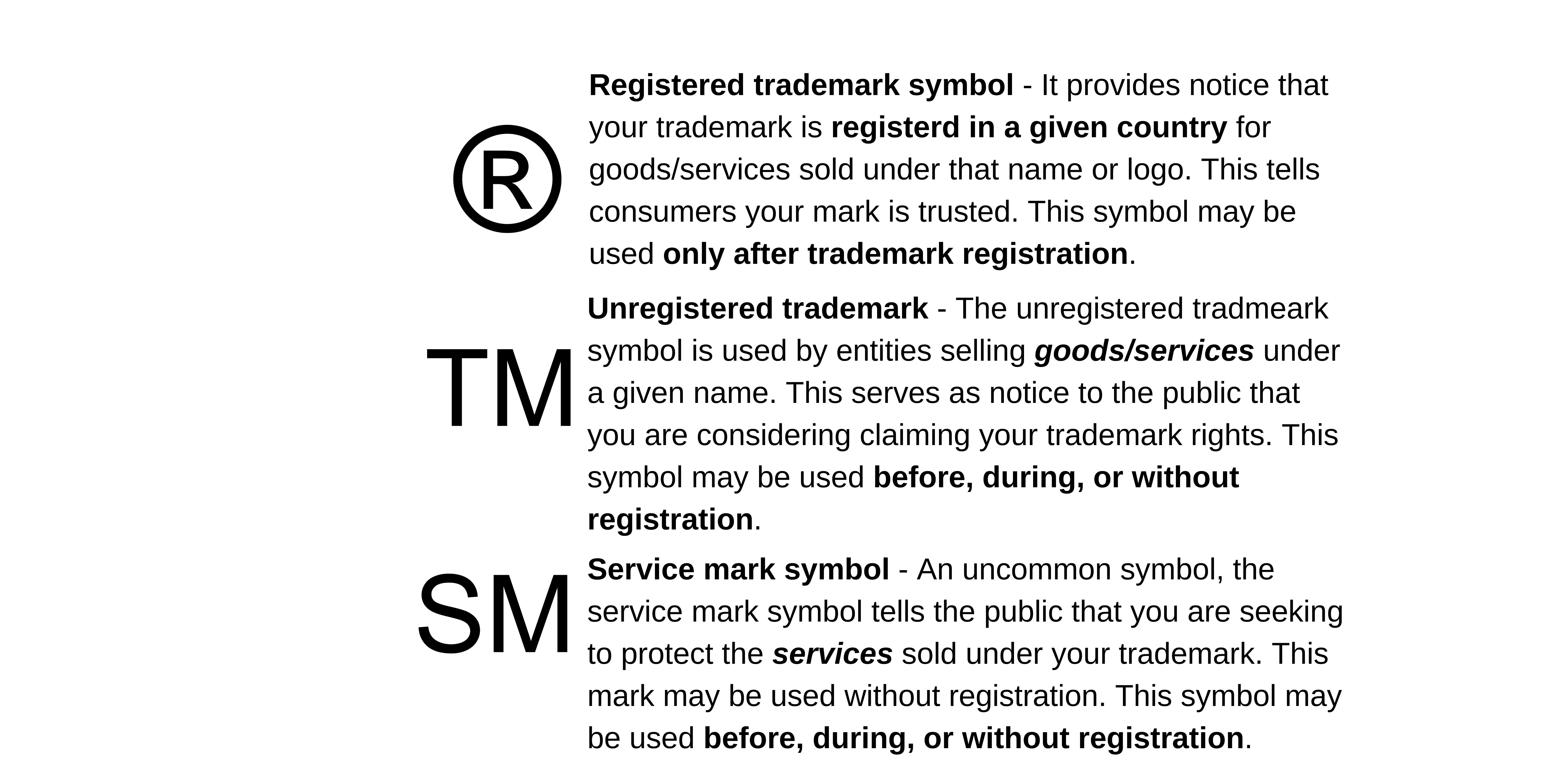
The way “TM” appears on your screen is the result of complex software processing. Whether you type the letters “T” and “M” or use the trademark symbol, the underlying technology treats these inputs with specific logic.
Unicode and the Rendering of Special Characters
The Unicode Consortium is the technical body that ensures that when you send a “™” symbol, the recipient sees the same thing. In HTML, the trademark symbol can be rendered using the entity code ™ or the decimal code ™.
Messaging software uses “text rendering engines” to display these characters. Tech giants like Apple and Google have their own proprietary fonts (San Francisco and Roboto, respectively) that define exactly how the “TM” symbol looks. This ensures that across various gadgets, the visual integrity of the text is maintained, preventing the fragmentation of meaning.
Predictive Text and Auto-Correction Algorithms
Modern smartphone keyboards use Natural Language Processing (NLP) to predict what you mean when you type “TM.” If the algorithm detects that you are discussing a business name, it may suggest the ™ symbol. If you are in a casual conversation, it might suggest “Tomorrow” or “Text Message.”
These AI-driven keyboards are trained on massive datasets of digital text. They recognize the “contextual proximity” of words. If the word “TM” is followed by a question mark at the beginning of a sentence, the software recognizes it as a noun (Text Message). If it follows a statement of fact, the software interprets it as “Trust Me.” This is a prime example of how machine learning is embedded in our daily textual interactions.
The Impact of “TM” and Slang on Professional Digital Security
While “TM” and similar abbreviations are convenient, they present unique challenges in the realm of digital security and corporate tech environments.
Obfuscation and Phishing Risks
In the world of cybersecurity, acronyms can be used for obfuscation. Malicious actors sometimes use “TM” in phishing texts (SMSishing) to mimic automated system alerts. For instance, a text might read: “Your bank account requires verification. Reply TM to receive the link.” Because “TM” is a recognized shorthand for “Text Message,” users may be more likely to trust the interaction, thinking it is a standard technical protocol.
Communication Protocols in Corporate Tech Ecosystems
Within professional software development teams, clarity is paramount. Many technical organizations discourage the use of ambiguous acronyms like “TM” in official documentation or Git commit messages. In these environments, “TM” could be confused with “Task Manager,” “Team Member,” or “Technical Manager.”
To solve this, many companies implement “Style Guides” for digital communication. These guides specify that while “TM” is acceptable in a casual Slack channel, it should be expanded to its full meaning in any code-based environment to prevent technical debt and misunderstanding among global teams.
The Future of Textual Communication in the AI Age
As we move toward a future dominated by Large Language Models (LLMs) and generative AI, the way we use and interpret “TM” in text will continue to change.
Natural Language Processing (NLP) and Slang Recognition
Advanced AI models like GPT-4 are now incredibly adept at understanding “TM” based on context. When an AI processes a transcript of a text conversation, it uses “sentiment analysis” and “contextual embedding” to determine the intended meaning. This means that as we interact more with AI agents—whether through chatbots or voice assistants—the AI will be able to code-switch between the technical, social, and commercial meanings of “TM” seamlessly.
Beyond Text: How Visuals are Replacing Acronyms
We are seeing a trend where text is being supplemented or replaced by “rich media.” In many UI designs, instead of typing “TM” for text message, apps use an envelope or a bubble icon. As haptic feedback and augmented reality (AR) interfaces become more common, the need for two-letter abbreviations may diminish.
However, for the foreseeable future, “TM” remains a cornerstone of the digital dialect. It is a symbol of the efficiency that technology demands and the flexibility that human language provides. Whether it’s a developer promising a fix (“Trust Me”), a legal requirement on a new app logo (“Trademark”), or a simple notification on a legacy system (“Text Message”), “TM” is a small but mighty component of the tech world’s DNA.
By understanding the technical and contextual layers of “TM,” users can navigate the digital space with greater precision and security, ensuring that their messages are not just sent, but correctly decoded by both humans and machines.
aViewFromTheCave is a participant in the Amazon Services LLC Associates Program, an affiliate advertising program designed to provide a means for sites to earn advertising fees by advertising and linking to Amazon.com. Amazon, the Amazon logo, AmazonSupply, and the AmazonSupply logo are trademarks of Amazon.com, Inc. or its affiliates. As an Amazon Associate we earn affiliate commissions from qualifying purchases.