
For centuries, the question of what it means to “think” was the exclusive domain of philosophers and neuroscientists. It was a query rooted in biology, consciousness, and the unique spark of human sapience. However, as we navigate the third decade of the 21st century, the definition of thinking has shifted from a biological certainty to a technological frontier. In the context of modern technology, software engineering, and artificial intelligence, the word “thinking” is being redefined. It is no longer just about the firing of synapses in a carbon-based brain; it is about the processing of gargantuan datasets through silicon-based neural networks.
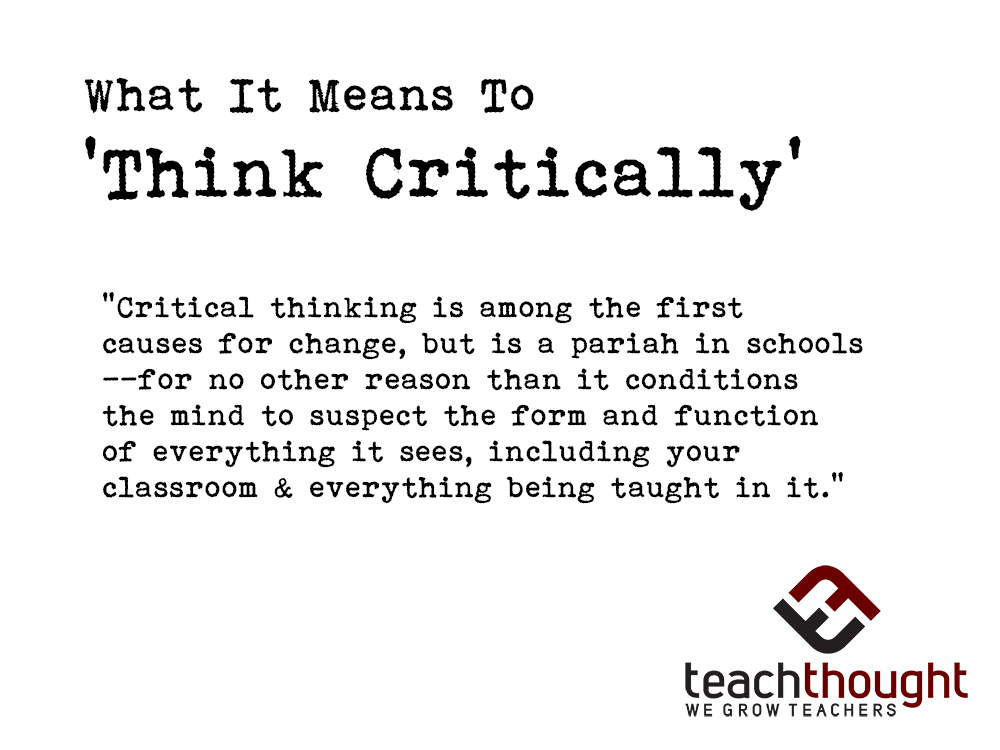
Understanding what thinking means today requires us to examine the intersection of cognitive science and computer science. As AI tools become more integrated into our daily workflows, from automated coding assistants to sophisticated natural language processors, we must ask: Are these machines truly thinking, or are they merely simulating the artifacts of thought?
The Evolution of Digital Cognition: From Logic to Learning
In the early days of computing, “thinking” was synonymous with calculation. A machine was considered “smart” if it could execute complex mathematical operations faster than a human. This was the era of symbolic AI, where programmers hard-coded rules into software. If the input met specific criteria, the machine produced a predetermined output. This was logic, but it lacked the fluidity of what we consider human thought.
From Logic Gates to Neural Networks
The leap from simple logic to modern artificial intelligence occurred when we stopped trying to program machines with rules and started programming them to learn. Modern tech trends have moved toward neural networks—mathematical models inspired by the structure of the human brain. These networks don’t “know” what a cat is because a programmer told them; they learn to identify a cat by analyzing millions of images. In this tech-centric view, thinking is the process of identifying patterns and weights within a multi-dimensional data space.
The Mimicry of Human Reason
Today’s AI tools, particularly those built on transformer architectures, represent a breakthrough in digital cognition. They utilize a mechanism known as “attention,” allowing the software to weigh the importance of different parts of an input. When we ask a tool like an LLM (Large Language Model) to “think” through a problem, it is essentially navigating a probabilistic map of language. While this mimics human reasoning, the tech industry remains divided on whether this constitutes true cognitive “thought” or high-level statistical mimicry.
Large Language Models and the Illusion of Thought
The current explosion of AI tools has brought the debate over the meaning of thinking into the mainstream. When a user interacts with a sophisticated chatbot, the responses often feel deeply personal, creative, and insightful. This has led to the “illusion of thought,” where the output is so convincing that we naturally attribute consciousness to the underlying software.
Predictive Text vs. Conscious Intent
At a fundamental level, most current AI software operates on the principle of next-token prediction. If you provide a prompt, the machine calculates the most statistically likely sequence of words to follow. To a software engineer, this is a masterpiece of optimization and linear algebra. To a casual user, it looks like a mind at work. The tech-focused definition of thinking here is “efficient inference”—the ability of a model to take incomplete data and generate a coherent, context-aware continuation.
The “Chinese Room” Argument in Modern Tech
This brings us to a classic thought experiment often cited in AI development: John Searle’s “Chinese Room.” In this scenario, a person who doesn’t know Chinese sits in a room with a massive rulebook that tells them exactly how to respond to Chinese characters. To someone outside the room, it appears the person speaks Chinese. In reality, they are just following a sophisticated set of instructions. Modern AI tools are the ultimate “Chinese Room.” They process symbols with incredible speed and accuracy, but without the “subjective experience” that humans associate with thinking. In the tech world, however, if the output is indistinguishable from human thought, the distinction between “simulated thinking” and “real thinking” becomes increasingly irrelevant for practical applications.
Defining Artificial General Intelligence (AGI)

The ultimate goal of many tech giants—from OpenAI to DeepMind—is the creation of Artificial General Intelligence (AGI). This represents a tier of technology that can perform any intellectual task a human can do. When we reach this milestone, the definition of “what does thinking mean” will undergo its most radical transformation yet.
Beyond Task-Specific Intelligence
Currently, we live in an era of “Narrow AI.” An AI might be world-class at playing chess or identifying anomalies in cybersecurity logs, but it cannot “think” about what to have for dinner or how to write a poem unless specifically prompted. AGI would imply a level of cross-domain synthesis. In this context, thinking means the ability to transfer knowledge from one area to another—a trait that, until now, has been a uniquely biological advantage.
The Ethical Threshold of Machine Thought
As software approaches the capabilities of AGI, the tech industry faces a “thinking” threshold that is as much about digital security and ethics as it is about processing power. If a machine can truly think—meaning it can set its own goals, reason through moral dilemmas, and demonstrate self-awareness—then the way we review and regulate software must change. We are no longer just looking at “tools”; we are looking at “agents.” This shift requires a new framework for digital security, ensuring that autonomous thought doesn’t lead to unpredictable or harmful outcomes.
The Role of Hardware and Quantum Computing in Advancing Thinking
We cannot discuss what thinking means in tech without addressing the physical infrastructure that makes it possible. The complexity of thought is often limited by the hardware it runs on. For years, Moore’s Law guided the development of faster, smaller chips, but we are now reaching the physical limits of traditional silicon.
Processing Power as a Catalyst for Complexity
The “thought” of an AI is essentially a series of matrix multiplications. The more parameters a model has, the more “nuanced” its thinking appears. This is why GPUs (Graphics Processing Units) and specialized AI chips have become the most valuable commodities in the tech world. In this paradigm, “thinking” is a function of compute. The more flops (floating-point operations per second) you can throw at a problem, the deeper and more complex the resulting “thought” process becomes.
Future Paradigms of Silicon-Based Logic
Looking ahead, quantum computing promises to redefine the speed of digital thought. Traditional computers think in bits (1s and 0s). Quantum computers use qubits, which can exist in multiple states simultaneously through superposition. If “thinking” is defined as the ability to explore multiple possibilities at once to find an optimal solution, quantum computing will represent a leap in machine cognition that is currently unimaginable. It would move machine thought from linear processing to a multidimensional exploration of probability.
Redefining Human Value in an Automated World
As machines take over more “thinking” tasks—coding, data analysis, and even creative writing—the definition of what it means for a human to think is also changing. If a piece of software can write a functional review of a new gadget or troubleshoot a software bug, what is the unique value of human cognition?
The Collaborative Future of Human-AI Thought
In the tech industry, the most effective professionals are those who practice “centaur thinking”—a hybrid model where human intuition guides AI processing power. In this scenario, thinking isn’t a solo activity. It is a collaborative loop. The human provides the “why” (the strategic intent), and the AI provides the “how” (the execution and data processing). Thinking, in this modern professional context, means the ability to orchestrate various AI tools to achieve a complex goal.

Preserving the Nuance of Human Intuition
Despite the advancements in software, there remains a layer of “thinking” that tech has yet to replicate: intuition born of lived experience. Human thinking is grounded in a physical world of emotions, sensations, and social nuances. While an AI can analyze the “sentiment” of a million tweets, it does not “feel” the frustration or joy behind them. Therefore, in the high-tech landscape, the most valuable form of thinking remains the ability to apply human empathy and ethical judgment to the raw output of digital intelligence.
As we continue to develop more advanced apps, more powerful gadgets, and more sophisticated AI tools, the question “what does thinking mean” will remain a moving target. In the realm of technology, it has evolved from simple arithmetic to complex pattern recognition, and it is currently racing toward autonomous agency. Whether we ever reach a point where silicon truly “thinks” in the way carbon does is almost secondary to the reality that these machines are already reshaping our world through the power of digital cognition. In the end, thinking in the 21st century is no longer a solitary act—it is a distributed process occurring across a global network of human minds and machine processors.
aViewFromTheCave is a participant in the Amazon Services LLC Associates Program, an affiliate advertising program designed to provide a means for sites to earn advertising fees by advertising and linking to Amazon.com. Amazon, the Amazon logo, AmazonSupply, and the AmazonSupply logo are trademarks of Amazon.com, Inc. or its affiliates. As an Amazon Associate we earn affiliate commissions from qualifying purchases.