
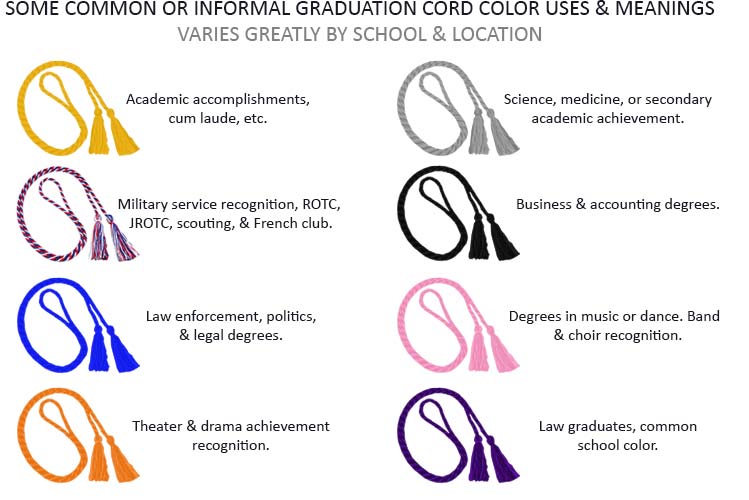
In the structured world of academic regalia, color is rarely an arbitrary aesthetic choice. Every ribbon, hood, and cord draped across a graduate’s shoulders serves as a visual shorthand for a specific journey, achievement, or organizational affiliation. Among the sea of colors that populate a commencement stage, the yellow—or gold—cord is perhaps the most ubiquitous. While its specific meaning can vary depending on the institution, it generally signals a high level of academic excellence, membership in a prestigious honor society, or a specific field of study.
The Symbolism of Academic Honors
At the university level, the yellow or gold cord is most commonly associated with the Latin honors system. While some institutions use different colored cords to distinguish between Cum Laude, Magna Cum Laude, and Summa Cum Laude, the vast majority utilize gold to represent the “gold standard” of scholarly performance.
When a student wears a yellow cord based on their grade point average (GPA), it is a public acknowledgment of their dedication to the curriculum. This practice serves several functions within the academic ecosystem:
- Validation of Rigor: It highlights that the student has maintained a GPA significantly above the institutional average, often requiring a commitment to sustained excellence over four or more years.
- Networking and Recognition: For peers, faculty, and attending family members, the cord acts as a badge of distinction. In an environment where thousands of students may be graduating simultaneously, these markers help identify the top tier of the graduating class.
- A Rite of Passage: Much like the mantle of a scholar, the cord represents the transition from the classroom to the professional world, signaling to future employers that the wearer possesses the discipline required to excel in demanding environments.
Membership in Prestigious Honor Societies
Beyond institutional GPA honors, the yellow cord frequently signifies membership in a national or international honor society. These organizations—such as Sigma Beta Delta for business, Alpha Chi for general scholarship, or specific discipline-based societies like the National Society of Leadership and Success (NSLS)—use their specific cord colors to create a sense of cohesion among members.
The Distinction of Discipline-Specific Societies
When a yellow cord is awarded by a specific department, it often denotes that the graduate has met rigorous criteria within their major. For instance, in many liberal arts or communications departments, a yellow cord might be awarded to students who have contributed to departmental research, published in university journals, or held leadership roles within student-run professional organizations.
The Value of Organizational Identity
These cords are more than just decorative. They represent the graduate’s ability to engage with their community beyond the classroom. By participating in an honor society, a student demonstrates that they have invested in their professional development, networking, and the ethical standards of their chosen field. Wearing the cord at graduation is an act of brand identity; it links the individual to the legacy of the society and the collective achievements of its alumni base.
Departmental and Field-Specific Significance
It is essential to note that the meaning of the yellow cord is not universally standardized across all global institutions. In many schools, the yellow cord is color-coded by the field of study rather than academic performance. In such cases, the color yellow is historically associated with specific disciplines based on the Intercollegiate Code on Academic Costume.

- The Sciences and Social Sciences: In some academic traditions, gold or yellow is designated for the sciences, representing the “light of knowledge” or the tangible value of the discipline.
- Arts and Letters: In other institutions, yellow is utilized to identify graduates of the College of Arts and Sciences.
Because of this variance, the yellow cord functions as a localized language. A student moving from a small private college to a large state university may find that the color coding shifts entirely. This makes the commencement program—the printed guide distributed to guests—a critical document. It translates the visual language of the cords, hoods, and tassels into the specific context of that institution’s history and values.
The Evolution of Regalia: Branding the Graduate
From a branding perspective, the commencement ceremony is the final stage of the “student product” lifecycle. Universities invest heavily in the aesthetic of graduation to reinforce the value of the degree conferred. The use of cords, including the yellow cord, serves as a branding mechanism that builds prestige around the institution’s academic outcomes.
Enhancing the Perceived Value of the Degree
When a university confers a yellow cord upon a student, it is effectively endorsing the graduate’s quality. For the institution, these visual markers serve as a marketing tool. A high density of honor cords on a stage communicates to donors, prospective students, and the public that the institution is a place where high-achieving individuals are cultivated.
The Personal Brand of the Graduate
For the individual, the yellow cord becomes part of a personal narrative. When students post photos on social media or list their honors on a resume, the yellow cord is a tangible piece of proof. It represents the “ROI” of their education. In a competitive job market, being able to articulate the significance of that cord—whether it represents a GPA milestone, leadership, or society membership—is a way to differentiate oneself.
It is important for graduates to view their regalia not just as a ceremonial requirement, but as an asset. The yellow cord serves as a talking point during job interviews or networking events. It invites the question, “What did you do to earn that?” and provides the graduate with an opening to discuss their research projects, their academic discipline, or the societies they supported.
Navigating the Expectations of Graduation Day
As the ceremony approaches, the confusion surrounding the yellow cord is often high. Students frequently ask if they are required to wear it, if they can purchase it themselves, or if there is a penalty for wearing it incorrectly. The answer is rooted in institutional policy.
Most honor societies provide their members with the cord as part of their membership benefits. In contrast, institutional Latin honors cords are usually issued by the university registrar’s office. Misuse of these cords—such as wearing one that was not earned—is generally discouraged or prohibited, as it undermines the integrity of the honor system.

Practical Tips for the Graduating Class
- Check the Official Guide: Always consult the university’s commencement website or the registrar’s handbook. They will explicitly state which colors correspond to which honors and which organizations are officially recognized.
- Respect the Distinction: If you are awarded multiple cords, be mindful of the university’s etiquette regarding the order in which they should be worn. Some schools prefer that honor society cords be worn over institutional honors, or vice-versa.
- Preserve the Asset: These cords are professional souvenirs. Keep them in a safe place. They are not merely fabric; they are a physical embodiment of the hard work and time invested during the undergraduate or graduate experience.
The yellow cord stands as a beacon of achievement, a marker of identity, and a symbol of the transition from learner to expert. While its meaning is dynamic and context-dependent, its purpose remains constant: to shine a light on the dedication and excellence of the graduate. Whether it represents a top-tier GPA or the culmination of years of service to an honor society, the yellow cord is a badge of honor that serves as a fitting end to one chapter and a bright indicator of the potential inherent in the next.
aViewFromTheCave is a participant in the Amazon Services LLC Associates Program, an affiliate advertising program designed to provide a means for sites to earn advertising fees by advertising and linking to Amazon.com. Amazon, the Amazon logo, AmazonSupply, and the AmazonSupply logo are trademarks of Amazon.com, Inc. or its affiliates. As an Amazon Associate we earn affiliate commissions from qualifying purchases.