
The torque converter is a critical, often unsung hero in automatic transmission systems, quietly facilitating the seamless transfer of power from the engine to the drivetrain. While its name might sound esoteric, its function is fundamental to the operation of countless vehicles, from everyday sedans to heavy-duty trucks. Understanding what a torque converter does, and how it performs its intricate dance, is key to appreciating the engineering that makes driving an automatic transmission so effortless. This device acts as a fluid coupling, replacing the mechanical clutch found in manual transmissions, allowing the engine to idle without stalling while the vehicle is stationary and then smoothly transmitting power as the engine speed increases.
The Torque Converter: A Fluid Coupling at Heart
At its core, the torque converter is a sophisticated fluid coupling. Unlike a direct mechanical link, it uses hydraulic fluid to transmit rotational force. This fluid medium is what allows for the characteristic “slippage” that enables smooth starts and stops, a hallmark of automatic transmissions. This fluid coupling design differentiates it significantly from the direct engagement of a clutch in a manual gearbox, offering a more forgiving and user-friendly driving experience.
Components and Their Roles
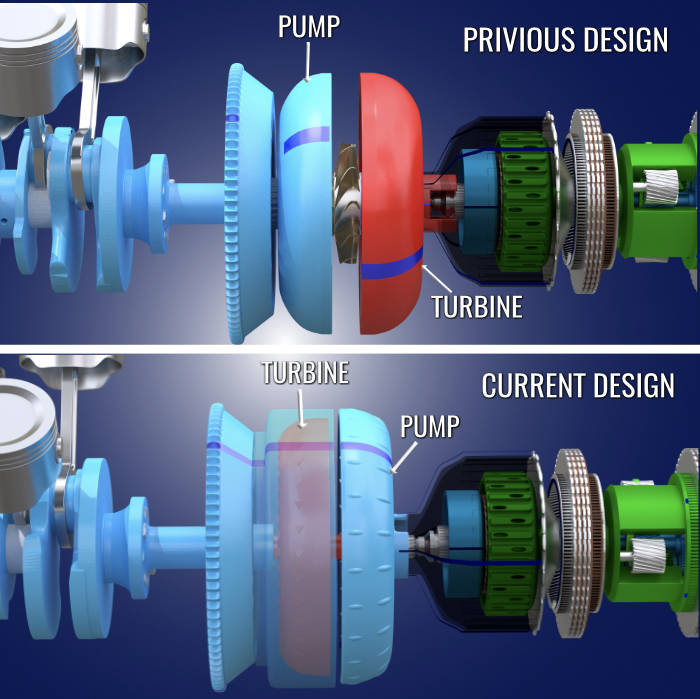
The internal workings of a torque converter are a testament to elegant engineering. It comprises three primary rotating components housed within a sealed torus (donut-shaped) casing filled with transmission fluid.
The Impeller
The impeller is directly connected to the engine’s crankshaft via the flexplate. As the engine rotates, the impeller spins, acting like a centrifugal pump. Its design features a series of angled vanes that push the transmission fluid outwards and into the turbine. The speed at which the impeller spins directly influences the volume and velocity of the fluid it propels, thereby dictating the potential power transfer.
The Turbine
The turbine is positioned opposite the impeller and is connected to the transmission’s input shaft. It is also equipped with vanes, but these are angled in such a way that the incoming fluid from the impeller exerts force, causing the turbine to rotate. The interaction between the fluid and the turbine’s vanes is where the actual power transfer occurs. The faster the impeller spins and the more fluid it pushes, the greater the force exerted on the turbine, leading to increased rotational speed of the transmission’s input shaft.
The Stator
The stator is the most complex and arguably the most crucial component for understanding the torque converter’s “torque multiplication” capability. Located between the impeller and the turbine, the stator is mounted on a one-way clutch, meaning it can rotate freely in one direction but is locked in the opposite direction. Its primary function is to redirect the fluid returning from the turbine back to the impeller.
When the vehicle is accelerating from a stop, there’s a significant difference in speed between the impeller and the turbine. Fluid returning from the turbine is moving at a slower speed and in a direction that would oppose the impeller’s rotation. The stator’s precisely angled vanes intercept this returning fluid and redirect it back towards the impeller in a manner that augments the impeller’s rotation. This redirection effectively “multiplies” the torque being sent to the transmission, providing that extra push needed for initial acceleration. As the turbine speed approaches the impeller speed, the fluid returning from the turbine is no longer moving in an opposing direction, and the stator’s one-way clutch allows it to freewheel, minimizing parasitic losses.
The Torque Converter’s Operational Phases
The torque converter’s operation isn’t a static process; it evolves dynamically with the vehicle’s speed and engine load, typically described in three main phases.
Stall Phase
This is the phase where the engine is running, but the vehicle is stationary. For instance, when you’re at a red light with your foot on the brake. The impeller is spinning with the engine, but the turbine is stationary because the brakes are holding the vehicle. The impeller is actively pushing fluid against the stationary turbine. While there’s significant fluid flow, very little power is actually transferred, and the engine can idle without stalling. This is the essence of the fluid coupling; the engine is disconnected from the drivetrain in a mechanical sense, allowing for independent operation.
Acceleration Phase (Torque Multiplication)
As the driver releases the brake and applies throttle, the engine speed increases, causing the impeller to spin faster. This results in a greater volume and velocity of fluid being propelled towards the turbine. Crucially, at this stage, the stator is locked by its one-way clutch. The fluid returning from the slower-moving turbine strikes the stator vanes and is redirected back to the impeller, reinforcing its rotation. This redirection is what enables torque multiplication. The torque converter can effectively double the engine’s torque output to the transmission during this phase, providing the necessary force to get the vehicle moving quickly. The amount of torque multiplication is dependent on the speed difference between the impeller and the turbine.
Coupling Phase (Lock-up)
As the vehicle’s speed increases and the turbine speed gets closer to the impeller speed, the fluid flow dynamics change. The fluid returning from the turbine is no longer moving in a direction that requires redirection by the stator. In fact, it starts to push against the stator vanes in a way that would cause it to rotate. The stator’s one-way clutch disengages, allowing the stator to spin freely.

In modern torque converters, a further enhancement is often implemented: a lock-up clutch. This is a mechanical clutch integrated within the torque converter. Once the vehicle reaches a certain speed and the impeller and turbine are rotating at nearly the same speed, the lock-up clutch engages. This creates a direct, 1:1 mechanical link between the engine and the transmission input shaft, bypassing the fluid coupling. This “lock-up” significantly improves fuel efficiency by eliminating the slippage inherent in the fluid coupling, which otherwise consumes energy and generates heat. The engine management system typically controls the engagement and disengagement of this lock-up clutch based on speed, throttle position, and engine load.
Advantages and Limitations of the Torque Converter
The torque converter, despite its complexity, brings significant advantages to automatic transmissions, though it also has inherent limitations.
Advantages
The most apparent advantage is the smoothness of operation. The fluid coupling allows for seamless engagement and disengagement of power, resulting in a comfortable and effortless driving experience. The absence of a jarring clutch engagement makes for a refined ride.
Torque multiplication is another key benefit, particularly during acceleration. This feature allows smaller, less powerful engines to provide adequate performance, especially when starting from a standstill or climbing hills. It essentially gives the engine a mechanical advantage when it’s needed most.
The torque converter also acts as a vibration damper. The fluid medium absorbs some of the engine’s torsional vibrations, preventing them from being fully transmitted to the drivetrain, leading to a quieter and smoother operation.
Furthermore, the torque converter provides a fail-safe mechanism. If the engine stalls or the transmission encounters a severe issue, the fluid coupling can disengage, potentially preventing damage to other drivetrain components. It also allows the engine to idle when the vehicle is stopped without the need for the driver to depress a clutch pedal.
Limitations
The primary limitation of a torque converter, especially older designs without a lock-up clutch, is reduced fuel efficiency. The inherent slippage in the fluid coupling, particularly at lower speeds and during acceleration, results in energy loss, which translates to higher fuel consumption compared to a direct mechanical link.
Heat generation is another significant consequence of fluid slippage. The energy lost during torque multiplication and coupling phases is converted into heat, which the transmission fluid must dissipate. This often necessitates larger transmission fluid coolers.
While torque multiplication is an advantage, the power delivery can feel less direct or responsive compared to a manual transmission with a fully engaged clutch, especially during aggressive driving or when immediate power is required. The delay in power transfer, though often imperceptible in daily driving, can be a factor in performance-oriented applications.
The Evolution and Future of Torque Converters
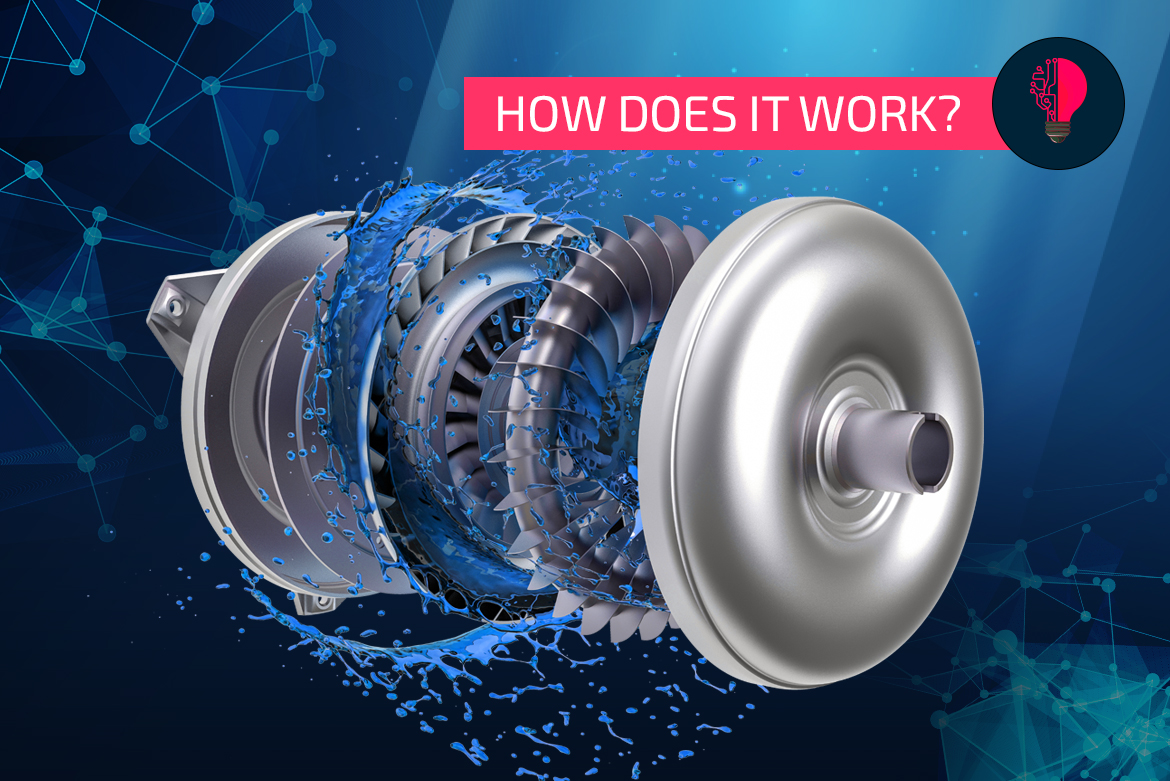
Torque converter technology has seen continuous refinement over the decades, driven by the pursuit of better fuel efficiency, improved performance, and enhanced durability. Early torque converters were relatively simple fluid couplings, but modern units are highly engineered with sophisticated features.
Modern Innovations
The introduction of the lock-up clutch was a monumental step forward, significantly bridging the efficiency gap between automatics and manuals. This has become a standard feature in virtually all modern automatic transmission torque converters.
Advanced stator designs and impeller vane geometries are constantly being optimized to improve torque multiplication characteristics and reduce fluid drag. Materials science has also played a role, with lighter and stronger components contributing to overall efficiency and longevity.
Furthermore, the integration of electronic control systems has allowed for more precise management of the torque converter’s operation, including the lock-up clutch engagement and disengagement points, optimizing for varying driving conditions and driver inputs.
Future Trends
The automotive industry’s relentless push towards electrification and fuel efficiency means that the role and design of torque converters will continue to evolve. While fully electric vehicles eliminate the need for them entirely, the hybrid powertrain is where torque converters will likely continue to play a significant role. In hybrid systems, the torque converter can work in conjunction with electric motors to provide smooth power delivery, enhance regenerative braking, and optimize overall efficiency.
Research continues into novel fluid dynamics and materials that could further reduce parasitic losses and improve heat dissipation. It’s possible that future torque converters will incorporate even more sophisticated variable-ratio fluid couplings or alternative methods of managing rotational force transfer.
In essence, the torque converter, a seemingly simple device, is a masterclass in fluid mechanics and mechanical engineering. It is the unsung facilitator of the automatic transmission, enabling the seamless, comfortable, and accessible driving experience that the vast majority of motorists enjoy today. Its continued evolution ensures its relevance in the dynamic landscape of automotive technology.
aViewFromTheCave is a participant in the Amazon Services LLC Associates Program, an affiliate advertising program designed to provide a means for sites to earn advertising fees by advertising and linking to Amazon.com. Amazon, the Amazon logo, AmazonSupply, and the AmazonSupply logo are trademarks of Amazon.com, Inc. or its affiliates. As an Amazon Associate we earn affiliate commissions from qualifying purchases.