
In the modern era of automotive engineering, the dashboard has transitioned from a simple cluster of analog gauges to a sophisticated digital command center. Among the array of icons that may illuminate during your commute, the Tire Pressure Monitoring System (TPMS) light is one of the most critical, yet frequently misunderstood, indicators. Understanding what this light looks like and the sophisticated technology functioning behind the scenes is essential for maintaining vehicle performance, safety, and fuel efficiency.
Decoding the Visual Language of Automotive Safety Sensors
To the uninitiated, the TPMS light can appear somewhat cryptic. However, its design is governed by international standards to ensure that drivers across the globe can recognize a potential safety issue regardless of the language they speak or the vehicle they drive.

The Anatomy of the Horseshoe Symbol
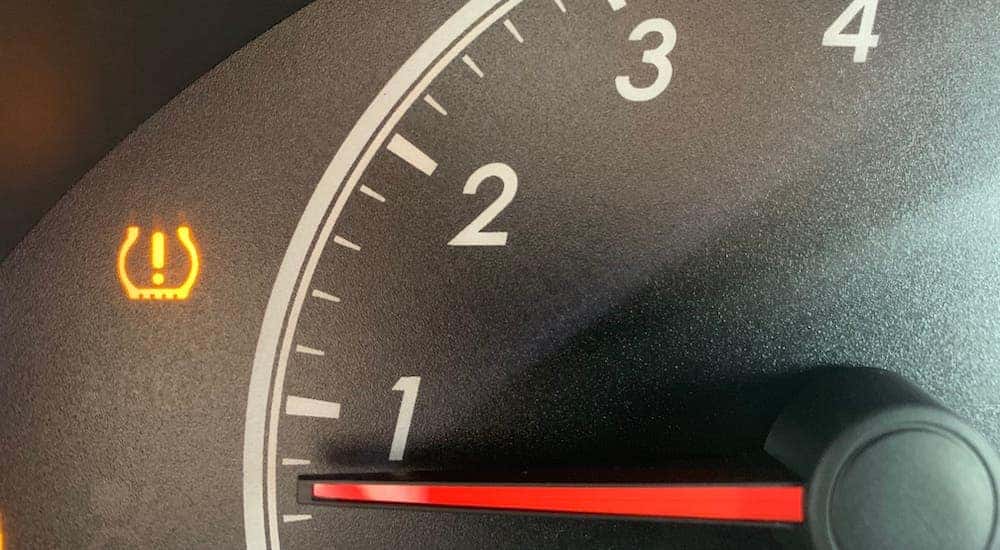
The universal symbol for tire pressure is a yellow or amber icon that resembles a horseshoe with an exclamation point in the center. In technical terms, this “horseshoe” is actually a stylized cross-section of a tire. The bottom of the symbol is flat, representing the part of the tire in contact with the road, while the curved sides represent the sidewalls. The exclamation point serves as a standardized “attention” signal, alerting the driver that the internal pressure of one or more tires has deviated from the manufacturer’s recommended settings.
In some high-end digital cockpits, the light might not be a single icon but rather a graphic representation of the vehicle seen from above. In these “High-Line” systems, the digital display will highlight the specific tire that is under-inflated and often provide a real-time digital readout of the pounds per square inch (PSI) or barometric pressure (BAR) currently detected within the tire.
Color Coding: Why Yellow Matters
In the hierarchy of automotive warning lights, color is a vital piece of communication technology. Red lights typically indicate a critical failure that requires an immediate halt to vehicle operation (such as low oil pressure or high engine temperature). The TPMS light is almost exclusively yellow or amber. In the language of user interface design, this signifies a “cautionary” state. While the vehicle is generally safe to drive for a short distance to a service station, the system is notifying the user that a parameter is outside the optimal range, which could lead to hardware damage or safety risks if left unaddressed.
The Evolution of TPMS Technology: From Analog to Digital
The existence of the tire pressure light is the result of significant advancements in sensor technology and federal safety regulations. Following the TREAD Act in the United States, all vehicles manufactured after 2007 must be equipped with a TPMS. This led to the development of two distinct technological approaches: Direct and Indirect systems.
Direct TPMS: The Hardware-Centric Approach
Direct TPMS is a hardware-heavy solution that relies on Micro-Electro-Mechanical Systems (MEMS). Each wheel is equipped with a physical sensor, usually integrated into the valve stem or strapped to the interior of the rim. These sensors utilize a pressure transducer to measure the air pressure within the tire cavity.
The technology involves:
- Pressure Transducers: These convert physical pressure into an electrical signal.
- Thermometers: Since pressure changes with temperature, the sensor also monitors heat to provide a compensated pressure reading.
- Radio Frequency (RF) Transmitters: The sensor broadcasts data packets—usually at 315MHz or 433MHz—to the vehicle’s Engine Control Unit (ECU) or a dedicated TPMS receiver.
- Lithium-Ion Batteries: These tiny power cells are designed to last between five to ten years, though they are often the primary point of hardware failure in older tech.
Indirect TPMS: The Software-Driven Solution
Unlike its hardware-reliant counterpart, Indirect TPMS does not use physical pressure sensors inside the tires. Instead, it leverages the vehicle’s existing Anti-lock Braking System (ABS) and wheel speed sensors. This is a triumph of software engineering and algorithmic processing.
Indirect TPMS works on the principle that an under-inflated tire has a smaller diameter than a correctly inflated one. Because it is smaller, it must rotate faster to cover the same distance as the other tires. The vehicle’s software constantly monitors the rotational speeds of all four wheels. If the algorithm detects a consistent discrepancy in rotation speeds, it calculates that a tire must be low on pressure and triggers the dashboard icon. While less expensive to maintain, this tech requires a “relearn” or “reset” via the car’s infotainment software whenever tire pressure is adjusted or tires are rotated.
Technical Challenges and Sensor Calibration
The TPMS light does not always indicate a puncture. Because it is a digital sensor network, it is susceptible to environmental variables and electronic interference that can cause the light to illuminate even when the tires are physically intact.
Environmental Impact on Sensor Data
One of the most common tech “glitches” involving the tire pressure light occurs during seasonal transitions. According to the laws of physics—specifically Gay-Lussac’s Law—the pressure of a gas is directly proportional to its temperature. For every 10-degree drop in Fahrenheit, a tire can lose approximately one PSI.
In many modern vehicles, the TPMS threshold is set to trigger when pressure drops 25% below the recommended cold inflation pressure. On a particularly cold morning, the sensors may detect a drop that triggers the light, only for the light to disappear after 10 minutes of driving as the friction generates heat and expands the air. This demonstrates the sensitivity of the MEMS hardware and the precision required in the ECU’s calibration logic.
The Relearn Procedure: Syncing Hardware with Software
When a sensor is replaced or tires are rotated, the vehicle’s central computer often loses track of which sensor is at which corner of the car. This necessitates a “TPMS Relearn Procedure.” This is a software-handshake process where the technician uses an OBD-II (On-Board Diagnostics) tool or a specialized RF activator to “introduce” the sensors to the ECU.
In some advanced vehicle tech stacks, such as those found in BMW or Tesla, the car utilizes “Auto-Locate” technology. This system uses the strength of the RF signal and data from the accelerometer within the sensor to automatically determine the sensor’s position without manual programming. This represents a significant leap in self-diagnostic automotive software.
The Future of Tire Intelligence and IoT Integration
The tire pressure light we see today is merely the precursor to a much more integrated “Intelligent Tire” ecosystem. As we move toward autonomous driving and the Internet of Things (IoT), the technology within our wheels is evolving far beyond a simple yellow exclamation point.
Bluetooth Low Energy (BLE) and the Connected Wheel
Traditional TPMS sensors use low-frequency RF, which can be prone to interference and requires dedicated receivers. The next generation of sensors is moving toward Bluetooth Low Energy (BLE). Tesla was one of the first major manufacturers to adopt BLE sensors in their newer models.
The advantages of BLE tech in tires include:
- Direct Connectivity: Tires can communicate directly with the driver’s smartphone or the vehicle’s cellular gateway without needing specialized automotive receivers.
- Data Richness: Beyond pressure and temperature, BLE sensors can transmit tread depth data, road surface conditions, and load identification.
- Over-the-Air (OTA) Updates: The software managing the tire data can be updated remotely to improve accuracy or add new features, much like a smartphone app.

Machine Learning and Predictive Maintenance
As vehicle fleets become more connected, the data from tire sensors is being fed into cloud-based machine learning models. Instead of a light that turns on after the pressure is low, predictive algorithms can analyze historical pressure decay rates and heat signatures to warn a driver days in advance that a slow leak is developing.
Future iterations of the “tire pressure light” may not look like a horseshoe at all. They may exist as haptic feedback in the steering wheel or as an augmented reality (AR) projection on the windshield, identifying the exact health of the rubber meeting the road. This shift from reactive indicators to proactive data analytics marks the next frontier in automotive technology, ensuring that the simple yellow light remains a foundational pillar of the digital driving experience.
aViewFromTheCave is a participant in the Amazon Services LLC Associates Program, an affiliate advertising program designed to provide a means for sites to earn advertising fees by advertising and linking to Amazon.com. Amazon, the Amazon logo, AmazonSupply, and the AmazonSupply logo are trademarks of Amazon.com, Inc. or its affiliates. As an Amazon Associate we earn affiliate commissions from qualifying purchases.