
In the intricate engineering landscape of automotive steering and suspension systems, few components are as vital—or as frequently misunderstood—as the tie rod. While the average driver may never see this slender, unassuming metal bar, it is the fundamental bridge between the steering wheel in your hands and the tires meeting the asphalt. Understanding the role of the tie rod is essential for any vehicle owner, as its integrity directly dictates the safety, handling, and long-term financial health of your car.
The Mechanical Foundation: Understanding the Steering Linkage
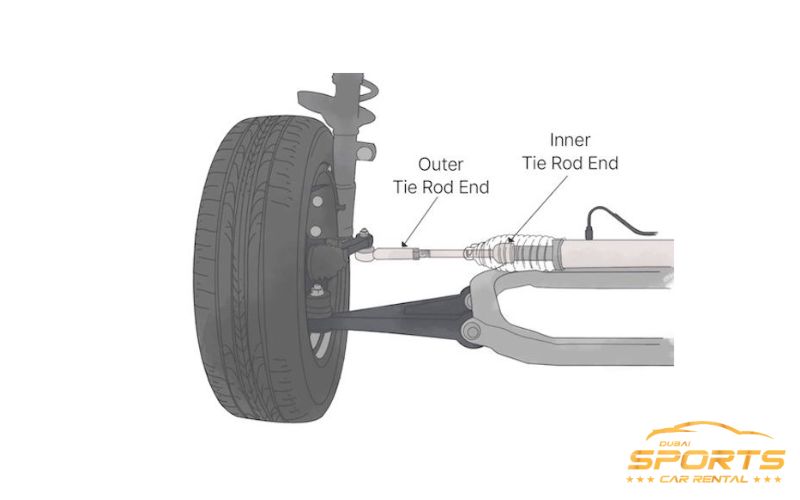
The tie rod is not merely a piece of hardware; it is a critical component of the steering linkage assembly. In most modern rack-and-pinion steering systems, the tie rod serves as the kinetic conduit that translates the rotational force of the steering wheel into the lateral movement required to pivot the front wheels.

How the Assembly Works
The system is anchored by the steering rack, which moves horizontally when you turn the wheel. Attached to each end of this rack are the inner tie rods, which connect via a ball-and-socket joint to the outer tie rods. These outer rods then attach directly to the steering knuckles of your wheel hubs. When you turn the steering wheel, the rack pushes or pulls the tie rods, which in turn force the steering knuckle to pivot, changing the angle of the tires and directing the vehicle’s path.
Material Science and Durability
Because the tie rod must withstand constant vibration, road impact, and varying stress loads, it is typically manufactured from high-strength forged steel or aluminum alloys. The ball joints at either end are engineered to allow for the complex geometry of a vehicle’s suspension, which moves up and down as the car traverses uneven road surfaces. This requires a specialized design that provides both structural rigidity and a necessary range of motion to ensure the tires remain responsive regardless of the suspension’s position.
The Critical Role of Alignment and Vehicle Dynamics
The tie rod’s most significant responsibility, beyond simple movement, is the maintenance of proper wheel alignment. Specifically, the “toe” setting of your vehicle’s wheels is dictated by the adjustment of the tie rod assembly.
Understanding Toe-In and Toe-Out
Toe refers to the symmetry of your tires when viewed from above. If the front of the tires are pointed slightly toward each other, the car has “toe-in.” If they point away from each other, it has “toe-out.” The tie rod is adjustable, allowing a technician to rotate the threaded rod to lengthen or shorten the distance between the steering knuckle and the rack. This fine-tuning is what creates the perfect parallel alignment necessary for straight-line stability and precise cornering.
The Impact of Wear on Handling
As tie rods age, the ball-and-socket joints begin to develop “play” or “slop.” This microscopic looseness is amplified by the weight of the vehicle and the speed of travel. When a tie rod wears out, the connection between the steering wheel and the tire becomes imprecise. A driver may notice a “dead zone” in the steering wheel, where the wheel can be turned slightly without the vehicle changing direction. Left unaddressed, this slop can lead to dangerous steering wandering, where the vehicle feels unstable on the highway and requires constant micro-corrections to maintain a straight line.

Identifying Symptoms of Tie Rod Failure
A failing tie rod is a progressive problem that rarely happens suddenly, provided the owner pays attention to the vehicle’s feedback. Recognizing the early warning signs can save thousands of dollars in secondary repairs.
Unusual Tire Wear Patterns
One of the most immediate indicators of a compromised tie rod is abnormal tire wear. Because a worn tie rod cannot hold the wheel in its specified alignment, the tire will often “scrub” against the road surface at an incorrect angle. If you notice the inside or outside edges of your front tires wearing down significantly faster than the rest of the tread, it is a hallmark sign that your toe settings have drifted due to loose tie rods.
Vibrations and Auditory Cues
The steering system is remarkably sensitive to changes in component integrity. A failing tie rod will often produce a rhythmic knocking or clunking sound, particularly when driving over bumps or while turning the vehicle at low speeds. This noise occurs because the joint has lost its internal lubrication and structural tension, causing the metal-on-metal components to rattle against one another. Furthermore, drivers may experience a distinct vibration in the steering wheel at highway speeds, a result of the tire’s inability to maintain a consistent tracking angle due to the loose linkage.
The “Shake Down” Test
If you suspect your tie rods are failing, a simple diagnostic test can often confirm it. With the vehicle safely raised on jack stands, grasp the front tire at the 3 o’clock and 9 o’clock positions. Attempt to rock the tire back and forth horizontally. Any audible clunking or visible movement in the steering knuckle, while the steering wheel is locked, indicates that the tie rod ends are worn and require immediate replacement.
Financial and Safety Implications of Neglect
Neglecting the tie rods is a classic example of “penny-wise and pound-foolish” vehicle maintenance. While an individual tie rod is a relatively affordable component, the collateral damage of a total failure is immense.
Preventing Secondary Damage
If a tie rod fails completely while the vehicle is in motion, the consequences are catastrophic. The connection between the steering rack and the tire is severed, leading to a total loss of steering control. In such a scenario, the tire may turn independently of the steering wheel, causing the vehicle to veer uncontrollably into opposing traffic or off the roadway. The risk to life and limb is extreme, which is why tie rods are classified as critical safety components.
Cost-Effectiveness of Proactive Replacement
Beyond the safety risks, there is the financial consideration of collateral maintenance. When a tie rod fails, the resulting alignment issues frequently destroy the vehicle’s tires. A set of high-quality tires can cost several times more than the labor and parts required to replace a pair of tie rods. By keeping up with routine inspections during oil changes or tire rotations, a technician can identify “play” in the joint before it reaches the point of failure. Replacing a tie rod before it breaks allows for a focused repair that avoids the need for replacing damaged tires and suspension components that may have been stressed by the improper geometry of a failing linkage.
Maintaining Resale Value and Performance
A vehicle that tracks straight and responds crisply to steering inputs is a vehicle that drives as the manufacturer intended. Modern automotive engineering focuses heavily on the “feel” of the car, and worn suspension components degrade that experience significantly. Prospective buyers often perform a test drive to evaluate steering responsiveness. A loose, wandering steering feel is a major red flag that suggests a history of poor maintenance. By treating the tie rods as wear items—much like brake pads or air filters—you ensure that your vehicle remains not only a safe mode of transportation but also a reliable asset with preserved resale value.
In conclusion, the tie rod is the silent orchestrator of your vehicle’s trajectory. By understanding its mechanical necessity, the importance of its alignment, and the diagnostic indicators of its decay, you empower yourself to make informed decisions about your vehicle’s upkeep. Prioritizing the health of this vital steering component is a commitment to both the mechanical longevity of your investment and the safety of everyone on the road.
aViewFromTheCave is a participant in the Amazon Services LLC Associates Program, an affiliate advertising program designed to provide a means for sites to earn advertising fees by advertising and linking to Amazon.com. Amazon, the Amazon logo, AmazonSupply, and the AmazonSupply logo are trademarks of Amazon.com, Inc. or its affiliates. As an Amazon Associate we earn affiliate commissions from qualifying purchases.